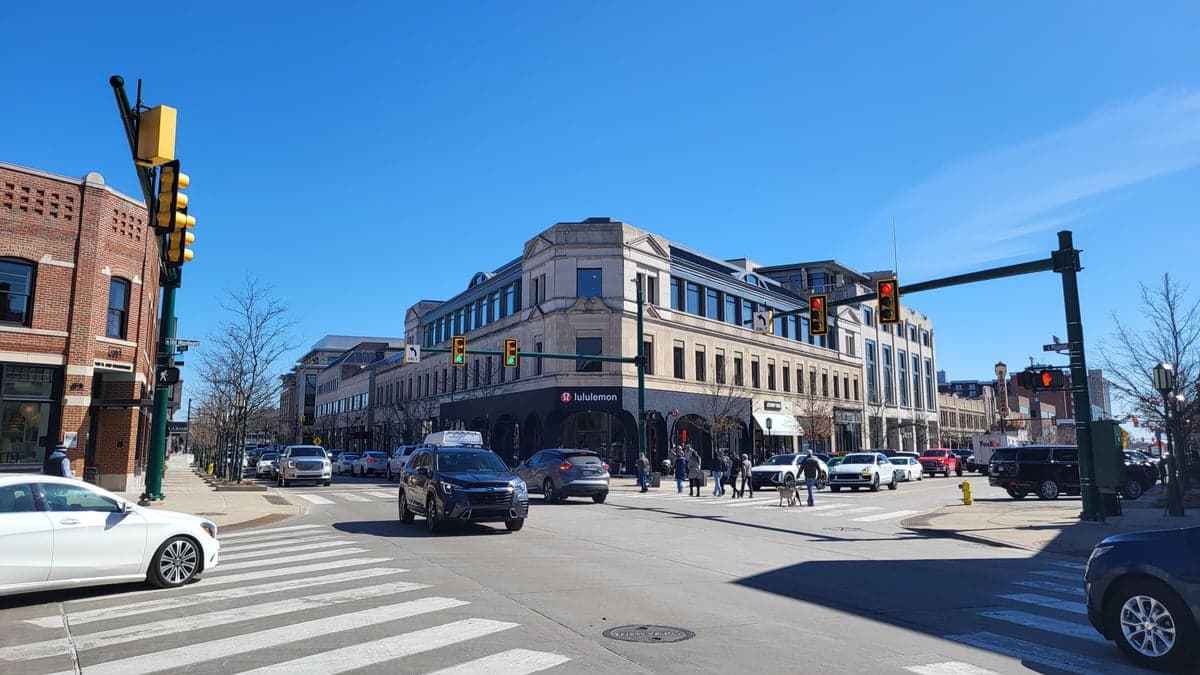
Photo: Wikipedia
Political ClimatePolitical Climate in Birmingham, MI
District shown is the primary district for this city’s centroid. Cities may span multiple districts.
Local Political AnalysisPolitical Analysis of Birmingham, MI
Birmingham, Michigan, is a solidly liberal enclave in a state that’s a pure toss-up, with a Cook Partisan Voting Index of D+9 compared to Michigan’s overall EVEN rating. That’s a huge gap—Birmingham is about as Democratic as the state of New Mexico, while the rest of Michigan is a battleground. Over the last decade, the city has only gotten bluer, driven by an influx of professionals from metro Detroit and a younger, more progressive electorate. In 2020, Joe Biden likely carried Birmingham by a margin closer to 60-40, while the state as a whole was decided by just over 150,000 votes.
How it compares
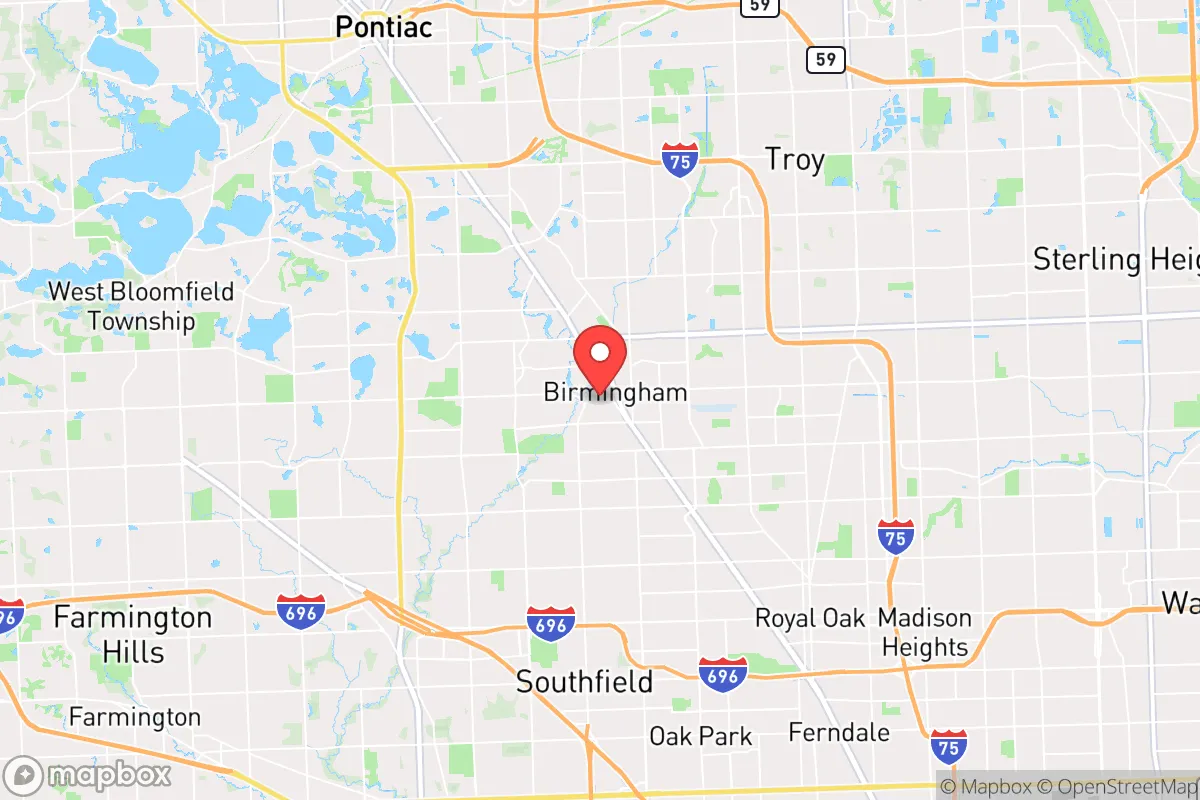
To understand Birmingham’s politics, you have to look at its neighbors. Drive ten minutes south to Bloomfield Hills, and you’re in a wealthy, historically Republican area that’s now trending purple—Bloomfield Township actually flipped to Biden in 2020. Head west to Farmington Hills, and you’ll find another reliably Democratic suburb, though not quite as deep blue as Birmingham. The real contrast is with the exurbs and rural areas: places like Rochester Hills or Oxford still lean Republican, and once you get past Pontiac into northern Oakland County, you’re in solidly red territory. Birmingham’s D+9 rating puts it in a league with Ann Arbor and parts of Grand Rapids’ Eastown, but it’s distinct because it’s a small, dense, walkable city—not a college town. The state’s EVEN rating reflects how the liberal votes of Birmingham, Detroit, and Ann Arbor are balanced by the conservative votes of Macomb County, western Michigan, and the Upper Peninsula.
What this means for residents
For liberal residents, Birmingham is a comfortable place to live. The city council and school board are reliably progressive, and you’ll see Pride flags and Black Lives Matter signs in windows without a second thought. Local policies reflect this: Birmingham has a strong sustainability plan, a human rights ordinance that includes gender identity, and a police department that’s generally seen as community-oriented. For conservative residents, it’s a different story. You’re likely in the minority, especially if you’re vocal about it. That said, the city is not hostile—people are polite, and you can find like-minded folks at the Birmingham Athletic Club or through local Republican groups. The real friction comes on issues like development (density vs. historic preservation) and school funding, where the liberal majority tends to push for higher taxes and more progressive curriculum. In practice, the political climate means Birmingham’s public services are well-funded, its parks are pristine, and its downtown is bustling—but property taxes are high, and the cost of living reflects the demand to live in a blue bubble.
Culturally, Birmingham’s liberalism is more of the “country club Democrat” variety—think wine bars, Tesla SUVs, and fundraisers for the Detroit Symphony. It’s not the activist, protest-heavy vibe you’d find in Ann Arbor. The city’s policy distinctions are subtle but real: it was one of the first in Oakland County to adopt a complete streets policy, and it has a strict tree preservation ordinance. For the long term, Birmingham will likely stay D+9 or even shift left as the state’s overall EVEN rating wobbles. The city’s trajectory is toward more density, more transit-oriented development, and a continued embrace of progressive social norms—but always with a polished, upscale sheen. If you’re moving here, know that you’re buying into a community that votes like a coastal blue city but lives like a Midwestern suburb.

State Political ClimatePolitical Climate in Michigan
State Political AnalysisPolitical Environment in the State
Michigan is the ultimate swing state, with a Cook PVI of EVEN that perfectly captures its knife-edge balance between the two major parties. Over the last 10-20 years, the state has shifted from a reliably blue stronghold in presidential elections (voting for Democrats from 1992 to 2012) to a true battleground that flipped for Trump in 2016, then flipped back for Biden in 2020 by just 154,000 votes. The dominant coalitions are a shrinking, union-heavy, diverse urban base in Southeast Michigan versus a growing, exurban and rural conservative bloc in the western and northern parts of the state, with the critical swing voters living in the suburban ring counties around Detroit and Grand Rapids.
Urban vs. rural divide
The political map of Michigan is a story of three distinct regions. Wayne County (Detroit) and Washtenaw County (Ann Arbor) are the Democratic engine room, delivering massive margins from the city’s Black voters and the university’s liberal white voters. Oakland and Macomb counties north of Detroit are the classic suburban battlegrounds: Oakland has trended blue (Biden won it by 14 points), while Macomb remains the bellwether—it went for Obama twice, then Trump twice, then narrowly for Biden. Out west, Kent County (Grand Rapids) has been slowly trending purple as the city grows more diverse and younger, but the surrounding rural counties—like Ottawa, Allegan, and Livingston—are deeply red. The Upper Peninsula and northern Lower Peninsula (think Traverse City and Gaylord) are culturally conservative but economically populist, often splitting tickets between GOP candidates and Democrats who promise to protect the auto industry and Great Lakes. The real story is the exurban ring—places like Fenton, Howell, and Brighton—where explosive population growth is driving a hard-right shift that now offsets Detroit’s margins.
Policy environment
Michigan’s policy landscape is a patchwork that reflects its swing-state status. Taxes: The state has a flat 4.25% individual income tax (down from 4.35% in 2023 via automatic triggers), and a 6% sales tax. Property taxes are moderate but vary wildly by school district. Regulatory posture: Michigan is a right-to-work state for private-sector workers (law repealed in 2023, but the repeal is being challenged in court), and it remains a union stronghold in practice, especially in manufacturing. Education: School choice is limited—no universal voucher program, but charter schools are widespread in urban areas. The state’s education funding is among the most equitable in the nation due to Proposal A (1994), which centralized school funding. Healthcare: Michigan expanded Medicaid under the Affordable Care Act in 2014, and the state runs its own health insurance marketplace. Election laws: In 2022, voters passed Proposal 2, which enshrined nine days of early voting, automatic voter registration, and no-excuse absentee voting into the state constitution. This makes Michigan one of the most accessible voting states in the country, a fact that deeply divides the electorate.
Recent policy direction
The last two years under a Democratic trifecta (Governor Gretchen Whitmer, state House, and state Senate) have produced a flurry of legislation that signals a clear leftward shift on several fronts. Gun and self-defense law: In 2023, Michigan passed universal background checks for all gun sales and a “red flag” law (extreme risk protection orders), making it one of the stricter states in the Midwest for gun ownership. Parental and education rights: The state repealed its 1931 abortion ban and codified abortion rights into law (via the 2022 Proposal 3 ballot measure), and it banned conversion therapy for minors. Speech and privacy: No major changes—Michigan has no shield law for journalists, but the state constitution’s strong free speech protections remain intact. Medical and bodily autonomy: Proposal 3 (2022) enshrined a broad right to reproductive freedom, including abortion, contraception, and miscarriage care, in the state constitution. Property rights: The state has no statewide zoning reform, but local control remains strong—a double-edged sword for development. Taxation: The 2023 budget included a temporary 0.25% income tax cut, but the overall trajectory is toward higher spending on infrastructure and education. Voting and ballot access: Proposal 2 (2022) made Michigan one of the most voter-friendly states, with same-day registration, no-excuse absentee voting, and early voting. This has been a flashpoint for conservatives who argue it increases fraud risk, though no evidence of widespread fraud has emerged.
Civil unrest & political movements
Michigan has been a national flashpoint for political activism. The 2020 Whitmer kidnapping plot and the Operation Gridlock protests at the state capitol in Lansing (where armed protesters entered the building over COVID-19 restrictions) put the state on the map for right-wing militancy. On the left, the 2020 George Floyd protests in Detroit and Grand Rapids were large and occasionally violent. Immigration politics: Michigan is not a border state, but it has a growing immigrant population in Detroit and Grand Rapids, and the state has a “sanctuary” policy that limits local police cooperation with ICE, though it’s not a formal statewide law. Election integrity: The 2020 election results in Michigan were the subject of intense litigation and conspiracy theories, including the “Stop the Steal” rally at the capitol. In 2022, the state’s Bureau of Elections found no evidence of widespread fraud, but distrust remains high among GOP voters. Secession/nullification rhetoric: There have been fringe calls for the Upper Peninsula to secede and join Wisconsin, but nothing serious. The most visible flashpoint for a new resident would be the constant political advertising—Michigan is the most expensive media market for political ads in the country during presidential cycles.
Projection
Over the next 5-10 years, Michigan is likely to remain a swing state, but the demographics are shifting slowly toward the left. The in-migration pattern is key: people moving into Michigan tend to be retirees from the Sun Belt (often conservative) and remote workers from Chicago and the East Coast (often liberal), creating a tug-of-war. The suburbanization of Grand Rapids and the gentrification of Detroit are both bringing younger, more diverse voters into the electorate. However, the exurban growth in Livingston, Lapeer, and St. Clair counties is reliably red and growing fast. The wild card is climate migration: as the Great Lakes region becomes more attractive due to water access and milder summers, Michigan could see an influx of liberals from drought-stricken states. Realistically, expect the state to remain a toss-up for at least the next two presidential cycles, with control of the legislature flipping back and forth. A new resident moving in now should expect to live in a state where their vote truly matters—and where the political temperature will stay high.
Bottom line for a new resident: If you’re conservative, you’ll find your people in the exurbs and rural areas, but you’ll be fighting uphill on state-level policy for the foreseeable future. If you’re liberal, you’ll have a friendly governor and a friendly constitution, but you’ll need to win every election by a hair. Either way, you’re moving to a state where politics is a contact sport, and your vote is genuinely decisive. The practical takeaway: get used to the ads, get involved locally, and don’t expect the partisan temperature to cool anytime soon.
* Values derived from national, state, county, city and local statistics and may differ in a specific area. Last updated: 2026-10-05T03:56:01.000Z
Narrative content on this page is AI-generated and may contain mistakes. Verify any details that matter before acting on them.
ReloMaps may earn a commission from affiliate links at no extra cost to you.

