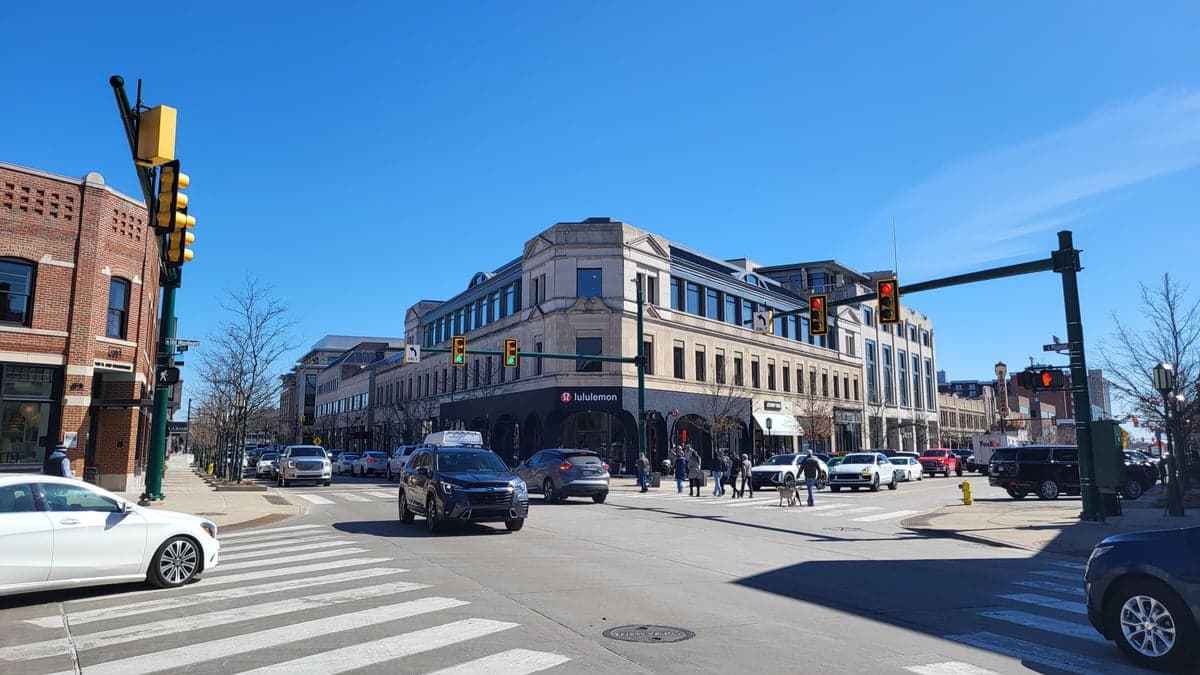
Photo: Wikipedia
Personal Sovereignty in Birmingham, MI
Strong independent fundamentals that actively favor personal liberty and low regulation.
What does Personal Sovereignty tell us?
Personal Sovereignty measures your capacity for self-reliance and independence with minimal government friction. Higher scores mean fewer barriers between you and the way you want to live... but it assumes you have the space you need and good neighbors.
What does this tell us?
Personal Sovereignty measures your capacity for self-reliance and independence with minimal government friction. Higher scores mean fewer barriers between you and the way you want to live... but it assumes you have the space you need and good neighbors.
State Policy
Energy independence: Importer (20% of energy produced in-state)
Personal Liberty
Homesteading

Personal Liberty Analysis
Birmingham, Michigan, offers a distinctive balance of personal sovereignty within a high-amenity suburban setting, where individual autonomy is shaped more by state-level frameworks than by local municipal codes. While Michigan provides a generally permissive environment for self-defense, property rights, and educational choice, Birmingham’s affluent, densely developed character imposes practical limits on self-reliance activities like homesteading. For a relocation-minded reader who values personal freedom, the city delivers strong legal protections for gun ownership and parental rights, but the tax burden and regulatory posture reflect a premium for its curated, walkable lifestyle rather than a low-governance footprint.
Tax burden and regulatory posture in Birmingham and Michigan
Michigan’s overall tax burden is moderate compared to high-tax states like New York or California, but Birmingham sits in Oakland County, which adds its own layer of property taxation. The state levies a flat 4.25% personal income tax, and sales tax is 6% — neither is progressive or punitive. Property taxes in Birmingham are the primary cost: the city’s millage rate typically runs around 30–35 mills (including school, county, and city levies), translating to roughly $7,500–$10,000 annually on a $400,000 home. This is higher than in outlying townships but funds Birmingham’s top-rated public schools, extensive parks, and police services. Regulatory posture at the state level is business-friendly: Michigan is a right-to-work state (though that law was repealed in 2023, effective 2024, so union influence is returning gradually), and there is no state-level rent control or burdensome occupational licensing for most trades. Locally, Birmingham enforces a strict zoning code that limits commercial uses in residential areas and mandates minimum lot sizes of 10,000–20,000 square feet in many neighborhoods. The city’s planning commission reviews exterior alterations, meaning homeowners face some aesthetic oversight — a lighter touch than historic district commissions in places like Ann Arbor, but heavier than unincorporated townships. For a reader seeking minimal regulatory interference, Birmingham’s rules are noticeable but not oppressive; they primarily protect property values rather than restrict personal conduct.
Self-defense and gun law specifics for Birmingham residents
Michigan is a shall-issue state for concealed pistol licenses (CPL), and Birmingham residents benefit from the state’s preemption law, which prohibits local governments from enacting their own firearm ordinances. This means Birmingham cannot ban open carry or restrict magazine capacities beyond state law — a significant sovereignty protection. As of 2024, Michigan requires a purchase license for handguns (issued by local police, typically within 10 days) and a background check for all firearm transfers, including private sales. The state does not ban any specific firearm models, and suppressors are legal with federal paperwork. Stand-your-ground laws apply in Michigan, meaning there is no duty to retreat before using deadly force in self-defense if you are in a place you have a legal right to be. Birmingham’s police department is responsive and professional, but the city’s low violent crime rate (typically under 1 per 1,000 residents for violent offenses) means self-defense scenarios are rare. For a conservative-leaning reader, the key takeaway is that Michigan’s gun laws are among the more permissive in the Midwest, and Birmingham’s local government cannot add restrictions — a clear win for personal sovereignty. However, note that Michigan does have a universal background check law (effective 2024) and a red-flag law (extreme risk protection orders), which some readers may view as encroachments. These are enforced statewide, so Birmingham offers no exemption.
Self-reliance and homesteading viability: lot sizes, zoning, and off-grid feasibility
Birmingham’s dense, suburban character makes traditional homesteading — raising livestock, large gardens, or off-grid living — largely impractical. Most residential lots range from 0.25 to 0.5 acres, and zoning regulations prohibit agricultural uses like chickens, goats, or beekeeping in standard residential districts. The city’s code explicitly bans “farm animals” in R-1 through R-4 zones, and even vegetable gardens must be maintained to avoid nuisance complaints. Off-grid feasibility is essentially zero: Birmingham requires connection to municipal water and sewer, and solar panels are permitted but subject to aesthetic review by the planning commission. Rainwater harvesting is legal but limited to 2,500 gallons per property, and composting is allowed only in enclosed bins. For a reader seeking self-reliance through food production or energy independence, Birmingham is a poor fit. However, the city’s location in Oakland County provides access to nearby townships (e.g., Bloomfield Township, West Bloomfield) where larger lots — 1–5 acres — allow for more homesteading activities. Within Birmingham proper, self-reliance is better expressed through financial independence, home-based businesses (allowed with a home occupation permit), and the ability to walk or bike to daily needs, reducing reliance on automobiles. The city’s walk score of 70 and bike score of 60 support a lifestyle less dependent on external infrastructure, but this is a form of urban self-reliance, not rural autonomy.
Personal liberties: parental rights, medical autonomy, speech, and property
Michigan provides strong protections for parental rights in education. The state does not mandate any specific curriculum on sexuality or gender identity, and parents have the right to opt their children out of any sex education program. Birmingham Public Schools, while academically rigorous, have faced scrutiny from conservative parents over diversity, equity, and inclusion initiatives — but the district generally accommodates opt-outs and parental input. Medical autonomy is mixed: Michigan does not require parental consent for minors to receive certain reproductive health services (including contraception and abortion), which may concern some readers. Vaccine mandates for school attendance exist (MMR, DTaP, polio), but philosophical exemptions were eliminated in 2015; only medical exemptions are now accepted. This is a notable limit on parental sovereignty. Speech and assembly rights are robust: Birmingham’s public spaces, including Shain Park and the city’s sidewalks, are open for expressive activity without a permit for small gatherings, though amplified sound requires approval. Property rights are well-protected: Michigan is a strong private property state, with no statewide rent control and clear eminent domain limits. Birmingham’s zoning is restrictive but predictable, and the city does not engage in aggressive code enforcement for minor infractions. For a reader prioritizing personal liberties, Birmingham offers a high degree of freedom in speech and property, moderate freedom in education, and some constraints in medical autonomy — a typical suburban trade-off.
Overall, Birmingham’s personal sovereignty environment is best described as high in legal protections, moderate in practical autonomy. State law secures gun rights, parental voice in schools, and property protections, while local zoning and tax levels reflect a premium for curated, high-service living. Compared to rural Michigan counties (e.g., Lapeer, Livingston), Birmingham offers less homesteading viability and higher taxes but superior walkability, schools, and community amenities. For a conservative-leaning individual or family who values self-defense rights and educational choice but does not require off-grid capability, Birmingham provides a solid sovereignty foundation within a polished suburban package. The trade-off is clear: you gain legal freedom and a high quality of life, but you cede some practical autonomy in exchange for the benefits of an affluent, regulated community.

* Values derived from national, state, county, city and local statistics and may differ in a specific area. Last updated: 2026-10-05T03:56:01.000Z
Narrative content on this page is AI-generated and may contain mistakes. Verify any details that matter before acting on them.
ReloMaps may earn a commission from affiliate links at no extra cost to you.

