Political ClimatePolitical Climate in Bellemont, AZ
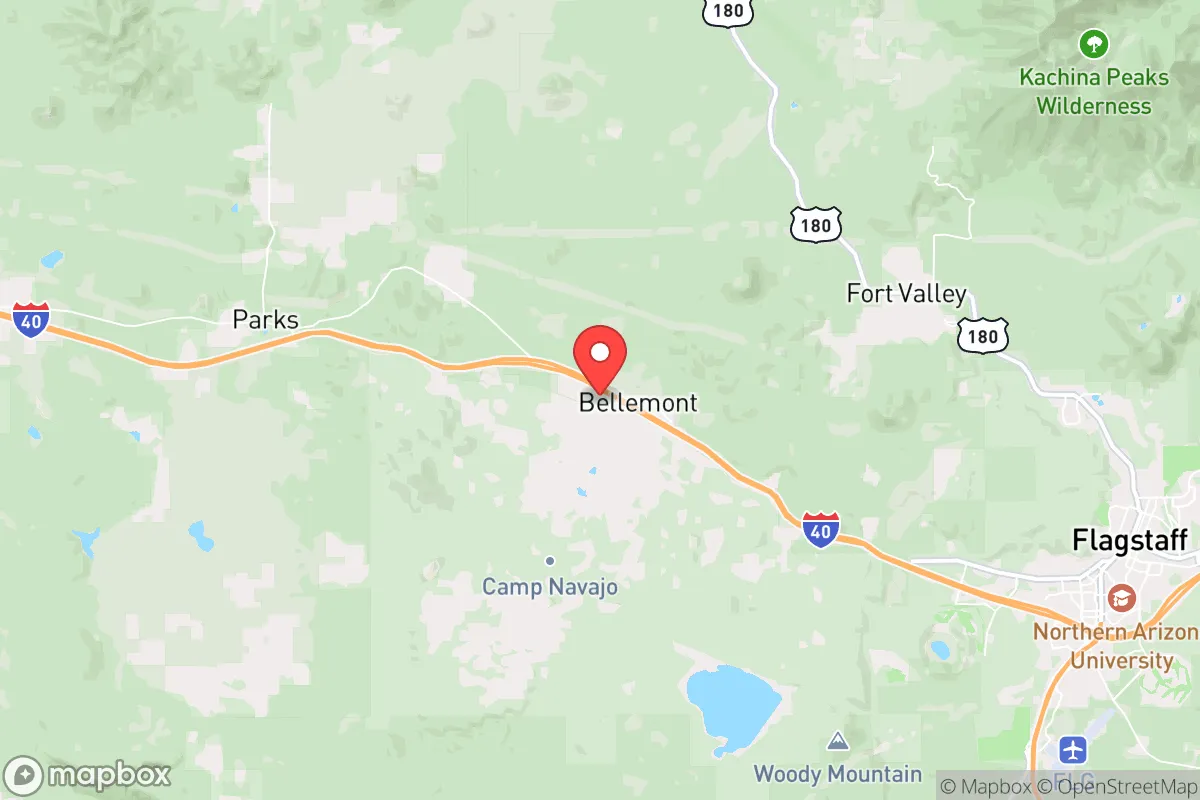
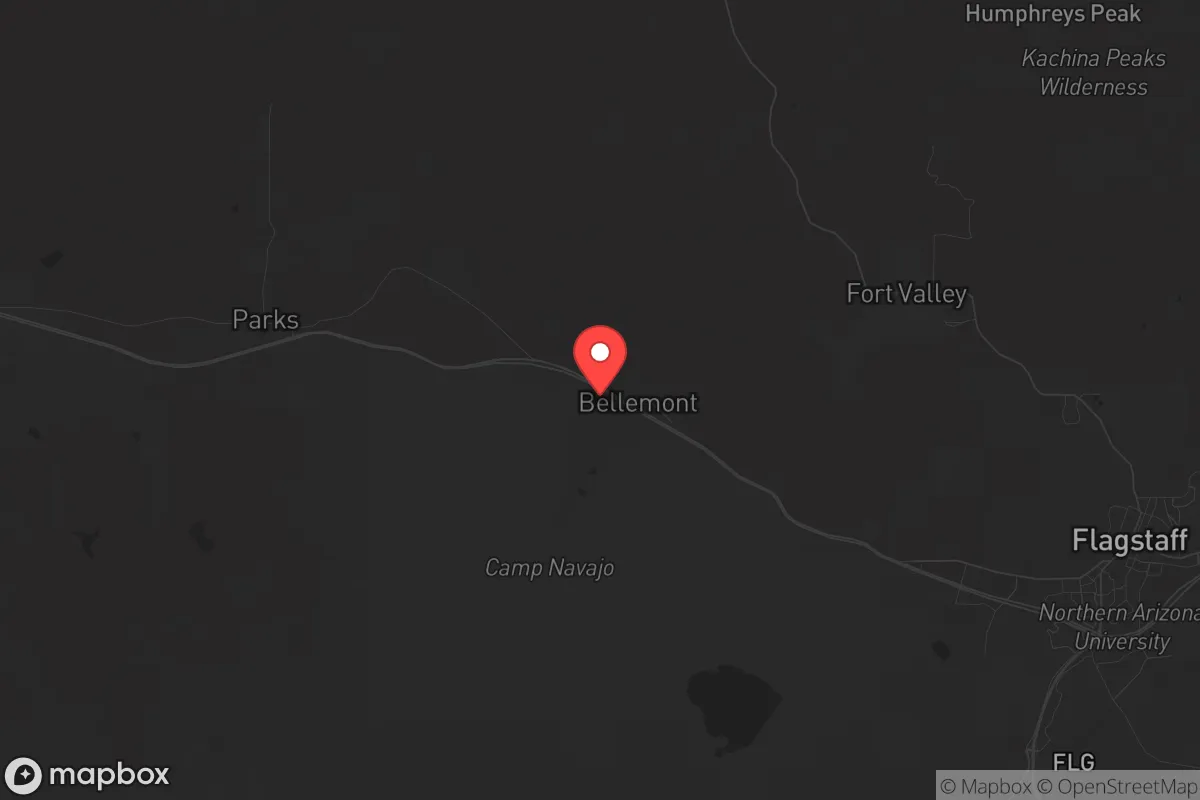
District shown is the primary district for this city’s centroid. Cities may span multiple districts.
Local Political AnalysisPolitical Analysis of Bellemont, AZ
Bellemont, Arizona, sits firmly in conservative territory, with a Cook Partisan Voting Index (PVI) of R+7, meaning the area votes about seven points more Republican than the national average. This stands in stark contrast to the state of Arizona as a whole, which has a Cook PVI of EVEN, reflecting its status as a true swing state. Over the past decade, Bellemont’s political lean has remained steady, even as the broader state has shifted leftward in presidential elections, driven by Maricopa County’s suburban evolution. Locals will tell you that while Flagstaff, just 15 miles east, has become a liberal stronghold with its university and arts scene, Bellemont has held its conservative character, shaped by a mix of longtime ranchers, railroad workers, and newer families seeking quieter, more traditional values.
How it compares
When you stack Bellemont against the rest of Arizona, the difference is stark. The state’s EVEN rating means it’s a battleground where Democrats and Republicans are neck-and-neck, but Bellemont’s R+7 puts it in the same league as deeply red rural counties like Mohave or Yavapai. Nearby Flagstaff, by contrast, leans blue by about D+5, making it a political island in northern Arizona. The contrast is visible in everyday life: Bellemont’s voter registration skews heavily Republican, while Coconino County as a whole is more purple due to Flagstaff’s influence. This means that in local elections, Republican candidates often win by wide margins, whereas statewide races—like the 2024 Senate contest—can be too close to call. For residents, this creates a sense of living in a conservative bubble within a swing state, where national politics feel distant but local policy is deeply red.
What this means for residents
For conservative residents, Bellemont’s lean means their values are reflected in local governance—lower taxes, fewer regulations, and a focus on Second Amendment rights. They can expect their county supervisors and school board members to align with traditional Republican platforms, and they’ll find plenty of like-minded neighbors at community events or the local diner. For liberal residents, the reality is more nuanced. While they may feel outnumbered, they’re not isolated; Flagstaff’s progressive scene is a short drive away, offering cultural events, diverse dining, and political activism. In Bellemont itself, liberals often find that most people are civil and neighborly, even if political signs in yards lean red. The key is that the area’s trajectory is stable—no major demographic shifts are predicted, so the political climate is unlikely to flip anytime soon. That stability can be a comfort for conservatives and a challenge for liberals, but it also means the community remains tight-knit and predictable.
One cultural distinction that sets Bellemont apart is its strong sense of self-reliance and independence, which aligns with its conservative politics but also fosters a live-and-let-live attitude. Unlike the more polarized atmosphere in Phoenix or Tucson, Bellemont’s smaller population means people often know each other across political lines. Policy-wise, you’ll see lower property taxes than in Flagstaff and fewer zoning restrictions, which appeals to those who want space to build or run a small business. The area’s proximity to the San Francisco Peaks and national forest also means environmental issues—like forest management and water rights—are local hot topics, often debated through a conservative lens of property rights and economic use. For anyone moving here, the political climate is a defining feature, but it’s one that comes with a sense of community and a slower pace of life that many find worth the trade-offs.

State Political ClimatePolitical Climate in Arizona
State Political AnalysisPolitical Environment in the State
Arizona is the ultimate swing state in 2026, carrying a Cook Partisan Voting Index of EVEN, meaning it is perfectly balanced between the two major parties. Over the last 20 years, the state has undergone a dramatic transformation from a reliably Republican stronghold—where George W. Bush won by 11 points in 2004—to a fiercely competitive battleground where Joe Biden won by just 10,457 votes in 2020 and Donald Trump reclaimed it by a narrow margin in 2024. The dominant coalitions are now a three-way tug-of-war between the fast-growing, moderate-to-liberal Maricopa County suburbs, the deeply conservative rural and exurban counties, and the increasingly Democratic-leaning urban core of Tucson and Phoenix.
Urban vs. rural divide
The political map of Arizona is defined by a stark urban-rural split, with Maricopa County acting as the entire state's political fulcrum. Phoenix and its inner-ring suburbs like Tempe and Scottsdale have shifted leftward, driven by an influx of out-of-state migrants, younger voters, and a growing Latino electorate. In 2020, Maricopa County—home to 60% of the state's population—flipped blue for the first time since 1948, powered by suburban women and college-educated voters in places like Chandler and Gilbert. Meanwhile, the rural counties tell a different story. Yavapai County (Prescott) and Mohave County (Lake Havasu City) vote Republican by margins of 30 to 40 points, while Pinal County, once a GOP lock, has become a true swing area as Phoenix exurbs expand south toward Tucson. Tucson itself (Pima County) is a Democratic anchor, but the surrounding desert communities like Oro Valley lean conservative, creating a microcosm of the state's overall tension.
Policy environment
Arizona's policy environment is a study in contrasts, reflecting its split political identity. The state has a flat income tax rate of 2.5%, enacted in 2023, making it one of the most tax-friendly states in the West for both individuals and businesses. Property taxes are low, and there is no estate tax. On regulatory posture, Arizona is generally pro-business and right-to-work, with minimal zoning restrictions in most rural counties. Education policy is a flashpoint: the state has one of the nation's most expansive school voucher programs (Empowerment Scholarship Accounts), but per-pupil funding remains near the bottom nationally, leading to frequent teacher walkouts and bond elections. Healthcare policy is mixed—Medicaid expansion was adopted under Governor Jan Brewer in 2013, but the state has not expanded abortion protections beyond the current 15-week ban. Election laws have been in flux: the state requires voter ID at the polls, but mail-in voting is extremely popular, with nearly 80% of ballots cast by mail in 2024.
Recent policy direction
The last five years have seen Arizona lurch in both directions on key liberty issues, depending on which party held the governor's office. On gun and self-defense law, Arizona is a constitutional carry state (permitless carry since 2010) and has a strong Castle Doctrine and Stand Your Ground statute. No significant gun restrictions have passed recently, even under Democratic Governor Katie Hobbs (2023-2027). On parental and education rights, the state expanded school choice dramatically with universal ESA eligibility in 2022, but also passed a "critical race theory" ban in 2021 that remains in effect. On speech and privacy, Arizona has no broad social media content moderation law, but it passed a data privacy act in 2024 giving residents the right to opt out of data collection. On medical and bodily autonomy, the state is in turmoil: a near-total abortion ban from 1864 was briefly reinstated by the state Supreme Court in April 2024, then repealed by the legislature in May 2024, leaving a 15-week ban in place. A ballot initiative to enshrine abortion rights up to viability is expected for the 2026 election. On property rights, Arizona is generally favorable to landowners, with no statewide rent control and strong protections against eminent domain abuse. On taxation, the trend is downward: the flat tax was phased in from 2023-2025, and there is no tax on Social Security benefits. On voting and ballot access, the state has seen intense partisan fights: a 2022 law tightened voter ID requirements for mail ballots, but a 2024 court ruling restored same-day voter registration for certain elections.
Civil unrest & political movements
Arizona has been a hotspot for organized political movements on both sides. The 2020 election audit in Maricopa County, conducted by the state Senate and private contractors, became a national flashpoint for election integrity activists, drawing intense scrutiny and protest from both parties. Immigration politics are ever-present: the state was ground zero for SB 1070 in 2010, and while that law's most controversial provisions were struck down, border security remains a top issue in Yuma and Cochise counties. Activist groups like the Arizona Border Patrol and the Tucson-based Samaritans operate in direct tension, with regular protests at the state capitol. In 2023, a series of pro-Palestinian and pro-Israel demonstrations on Arizona State University's campus in Tempe drew thousands. There is no serious secession or nullification movement, but rural counties like Mohave have passed symbolic "Second Amendment sanctuary" resolutions. A new resident in Phoenix will notice occasional protests at the capitol building, but daily life is generally calm—the political energy is channeled into ballot initiatives and local elections rather than street conflict.
Projection
Over the next 5 to 10 years, Arizona is likely to remain a toss-up state, but the demographic trends favor a slight leftward drift. The state is growing by roughly 100,000 people per year, with most newcomers settling in Maricopa County's suburban cities like Buckeye and Queen Creek—areas that are currently red but trending purple as they become more diverse and educated. The Latino population, now 32% of the state, is younger and increasingly mobilized, which tends to benefit Democrats. However, the Republican Party is also adapting, with a growing base of working-class Hispanic voters in places like Yuma and San Luis. The 2026 election will be a key test: if Democrats win the governorship again and hold the state for a third consecutive presidential cycle, Arizona will be considered a blue-leaning swing state. If Republicans consolidate their 2024 gains, it will remain a pure toss-up. For a new resident, the practical takeaway is that your vote will matter more here than in almost any other state, and the policy environment will continue to swing with each election cycle.
For someone moving to Arizona, the bottom line is that you are entering a state where political outcomes are genuinely uncertain and where your individual vote carries outsized weight. Conservatives will find low taxes, strong gun rights, and school choice, but should expect ongoing fights over abortion and election laws. Liberals will find a growing coalition in the cities and suburbs, but will need to contend with a powerful rural conservative bloc and a state government that can flip party control every two years. The best advice from a long-time resident: get comfortable with political uncertainty, because in Arizona, the only constant is change.
* Values derived from national, state, county, city and local statistics and may differ in a specific area. Last updated: 2026-10-24T16:17:52.000Z
Narrative content on this page is AI-generated and may contain mistakes. Verify any details that matter before acting on them.
ReloMaps may earn a commission from affiliate links at no extra cost to you.

