Demographics of Bellemont, AZ
Historical data isn't available for Bellemont, AZ. Trends shown are for Coconino County, AZ.
Affluence Level in Bellemont, AZ
An upper-middle-class area. Household wealth, education levels, and homeownership run ahead of national benchmarks.
People of Bellemont, AZ
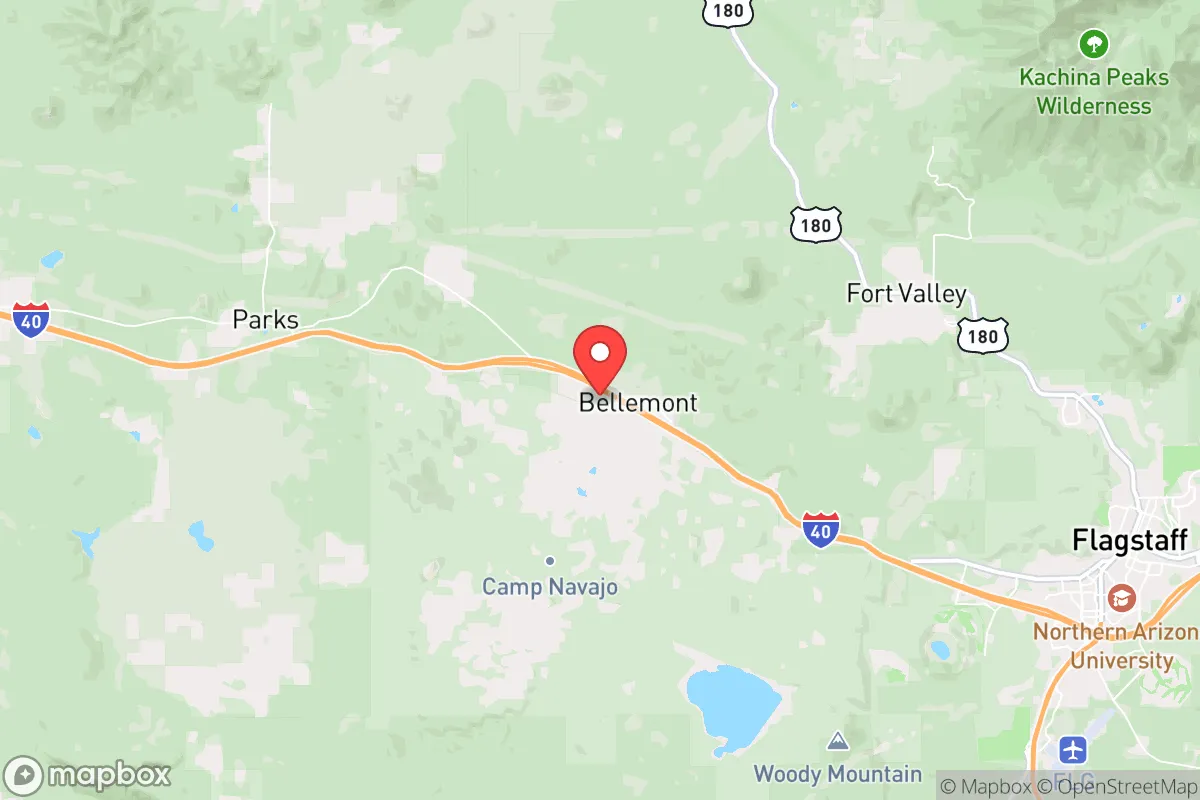
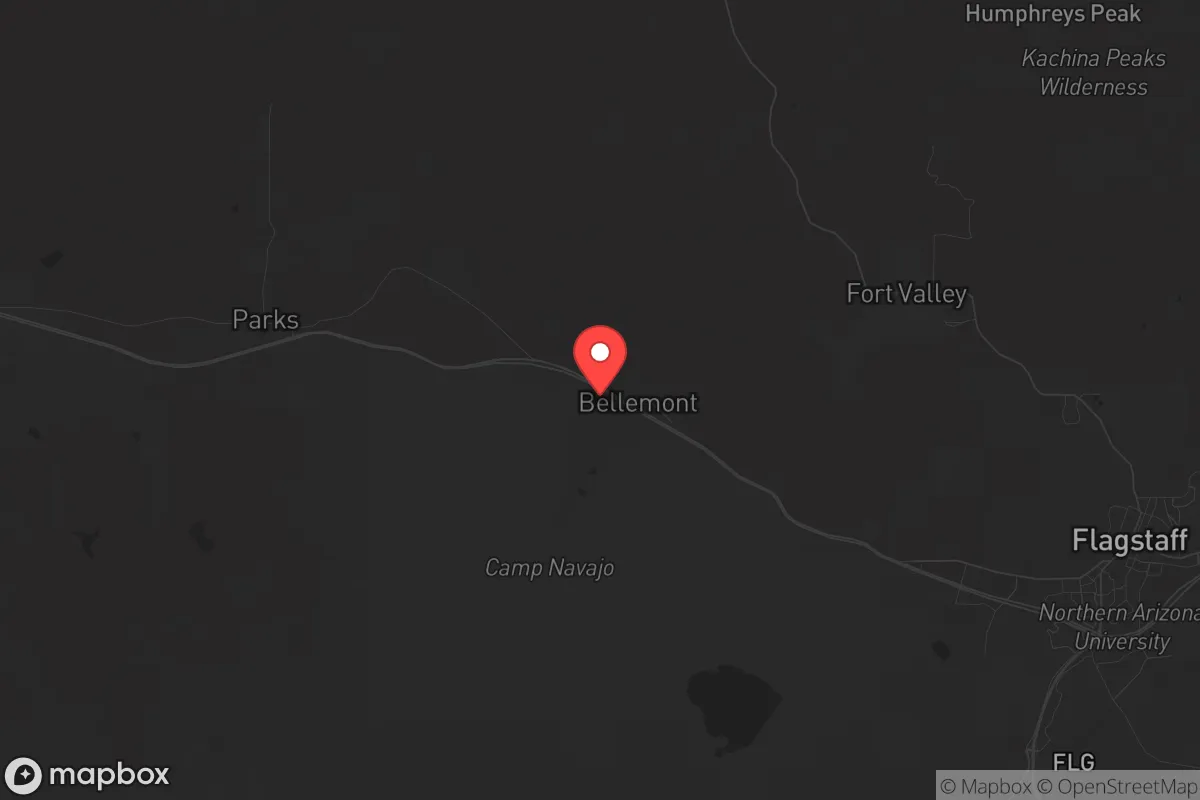
Bellemont, Arizona, is a small, unincorporated community of 1,447 residents that functions as a quiet, low-density bedroom enclave along Interstate 40, roughly 15 miles west of Flagstaff. The population is notably well-educated, with 57.5% holding a college degree, and is characterized by a significant White plurality (44.3%) alongside a substantial Hispanic presence (16.9%) and a small East/Southeast Asian community (4.0%). With a foreign-born population of just 2.9%, Bellemont is a predominantly native-born, family-oriented area where the cultural identity is shaped more by its high-desert setting and proximity to Flagstaff than by a dense, urban social fabric.
How the city was settled and grew
Bellemont’s history as a populated place is almost entirely a 20th-century phenomenon, tied directly to the arrival of the railroad and later the interstate highway. The area was originally part of the traditional territory of the Havasupai and Navajo peoples, but permanent non-Native settlement did not begin in earnest until the early 1900s, when the Atchison, Topeka and Santa Fe Railway established a siding and water stop here. The original handful of railroad workers and their families—predominantly Anglo and Hispanic laborers—settled in what is now the Old Town Bellemont corridor, a narrow strip of homes and small businesses along the old Route 66 alignment. The community remained a tiny whistle-stop for decades, with growth stalling through the Great Depression and World War II. The real population catalyst came in the 1950s and 1960s with the construction of Interstate 40, which bypassed the original town center but made Bellemont a convenient roadside stop for travelers and a cheap land option for Flagstaff-adjacent workers. The I-40 Frontage Road area became the new commercial and residential spine, attracting a mix of white working-class families and Hispanic migrants who came for construction and service jobs tied to the highway economy.
Modern era (post-1965)
After the 1965 Immigration and Nationality Act, Bellemont did not experience the large-scale immigration waves seen in many Sun Belt cities. Instead, its modern demographic story is one of domestic in-migration from other parts of Arizona and the Southwest. The 1970s and 1980s saw the gradual subdivision of large ranch parcels into low-density residential lots, creating neighborhoods like Ponderosa Pines and Mountainaire Estates, which attracted white middle-class families seeking larger lots and lower property taxes than Flagstaff proper. These subdivisions remain predominantly White and owner-occupied today. The Hispanic population, which now stands at 16.9%, grew steadily through the 1990s and 2000s, driven by families moving from Flagstaff and southern Arizona for affordable housing and work in the region's construction, hospitality, and transportation sectors. Hispanic residents are concentrated in the older, more affordable housing stock along the Old Route 66 corridor and in the Bellemont Mobile Home Park, a manufactured-home community that became a landing point for working-class families. The East/Southeast Asian community (4.0%) is a very recent addition, largely composed of professionals and academics employed at Northern Arizona University or Flagstaff Medical Center who chose Bellemont for its lower cost of living; they are scattered across the newer subdivisions rather than forming a distinct ethnic enclave. The Black population is recorded at 0.0%, and there is no measurable Indian subcontinent population, making Bellemont one of the least racially diverse communities in Coconino County.
The future
Bellemont’s population is projected to grow slowly but steadily, driven primarily by spillover from Flagstaff’s escalating housing costs. The community is becoming slightly more diverse, with the Hispanic share expected to rise gradually as younger families move into the more affordable older neighborhoods, while the White share is likely to continue its modest decline. New development is concentrated in the Bellemont Ranch Estates subdivision, a master-planned area of single-family homes on one-acre lots that is attracting a mix of white professionals and a small number of Asian and Hispanic buyers. The cultural identity of Bellemont is evolving from a purely transient highway stop into a more stable, family-oriented exurb, though it remains overwhelmingly native-born and English-dominant. The next 10-20 years will likely see the population approach 2,000, with the community retaining its low-density, car-dependent character while becoming a more permanent home for Flagstaff-adjacent workers who value space and quiet over urban amenities.
For someone moving in now, Bellemont offers a straightforward proposition: a quiet, affordable, and predominantly white and Hispanic exurb with excellent educational attainment levels and very low foreign-born presence. It is not a diverse or cosmopolitan place, but it is a stable, family-oriented community where the population is slowly becoming more varied while retaining its essential character as a high-desert bedroom community.

* Values derived from national, state, county, city and local statistics and may differ in a specific area. Last updated: 2026-10-24T16:17:52.000Z
Narrative content on this page is AI-generated and may contain mistakes. Verify any details that matter before acting on them.
ReloMaps may earn a commission from affiliate links at no extra cost to you.

