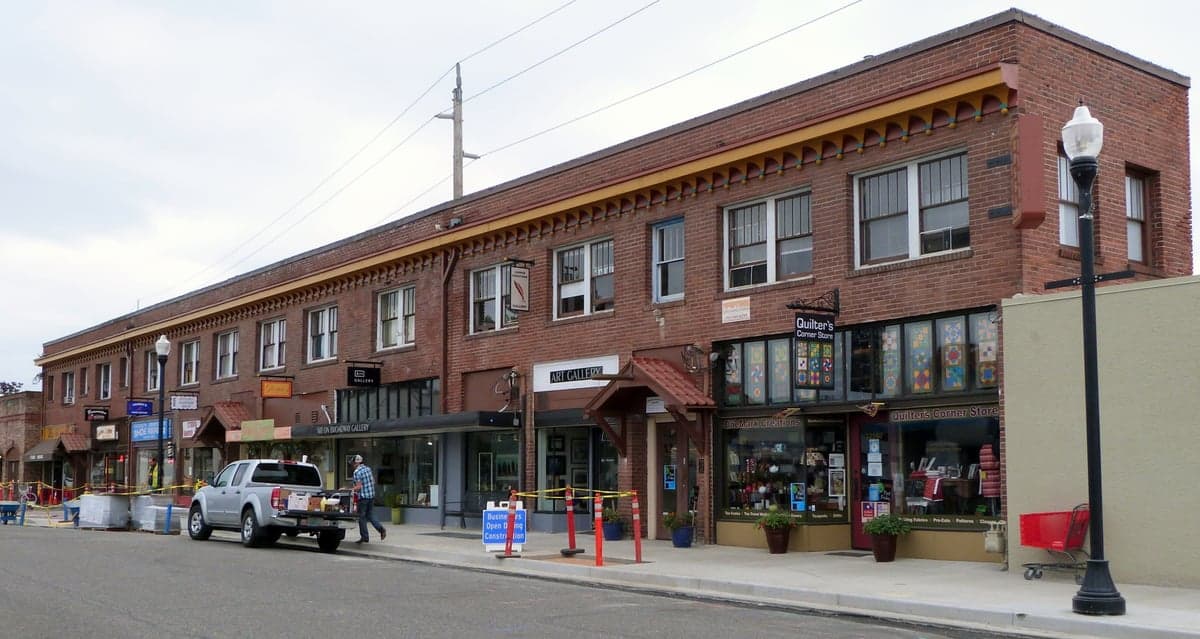
Photo: Wikipedia
Political ClimatePolitical Climate in Beaverton, OR
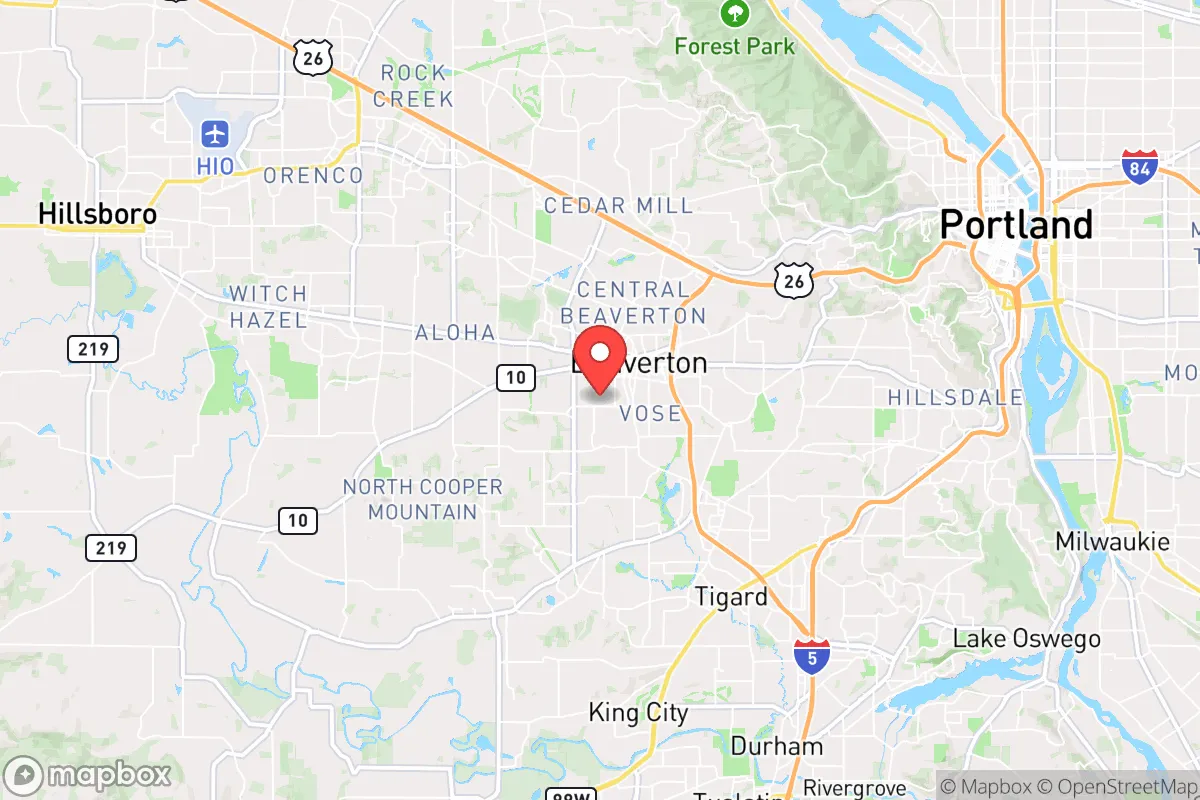
District shown is the primary district for this city’s centroid. Cities may span multiple districts.
Local Political AnalysisPolitical Analysis of Beaverton, OR
Beaverton is a solidly blue city in a blue state, but it’s noticeably more progressive than Oregon as a whole. The Cook PVI of D+20 puts it well to the left of the state’s D+8 rating, meaning local elections here are rarely competitive for Republicans. This isn’t a recent shift—Beaverton has been trending left for decades, driven by a growing tech workforce, a diverse immigrant population, and a younger median age than the rest of the metro area. If you’re looking at the political trajectory, it’s not swinging back; the city’s lean has only deepened since the 2016 and 2020 cycles.
How it compares
To understand Beaverton’s politics, you have to look at the contrast with its neighbors. Drive 15 minutes west to Hillsboro, and you’ll find a similar D+ lean, but with a more moderate streak thanks to a larger manufacturing and agricultural base. Head south to Tigard or Tualatin, and the numbers get closer to the state average—still blue, but with pockets of red in the rural fringes. The real contrast is with places like Sherwood or Newberg, just 20 minutes away, where the Cook PVI flips to R+10 or more. That’s the Oregon divide: Portland’s western suburbs are deeply blue, but you hit conservative territory fast once you cross into Yamhill County. Statewide, Oregon’s D+8 is pulled left by Multnomah County (Portland) and Washington County (Beaverton), while much of the rest of the state—eastern Oregon, the southern valleys—votes reliably Republican. So Beaverton isn’t just blue; it’s a Democratic stronghold even by Oregon standards.
What this means for residents
For liberal residents, the political climate is comfortable. Local government is reliably progressive on housing policy, climate action, and social services. The city council and school board rarely see contested races from the right, so policy debates tend to be about how far left to go, not whether to go left at all. For conservative residents, it can feel isolating. You won’t find many Republican yard signs in Beaverton, and local candidates who identify as conservative often run as independents or moderates. That said, the practical impact is muted: property taxes are moderate, schools are well-funded, and the city’s growth has been managed with a focus on transit and density rather than culture-war issues. Most residents, regardless of party, appreciate the walkable downtown, the MAX light rail access, and the proximity to Portland without the city’s dysfunction. The real friction point is state-level policy—things like Measure 110 (drug decriminalization) or land-use laws—where Beaverton’s progressive base aligns with Salem, but rural Oregon pushes back.
Culturally, Beaverton stands out for its diversity. About 40% of residents are people of color, with large Asian American and Hispanic communities, which shapes local politics around inclusion and representation. You’ll see city materials in multiple languages, and the school district is one of the most diverse in the state. That’s a real difference from whiter, more conservative suburbs like Wilsonville or Canby. The long-term outlook is more of the same: as tech employers like Intel, Nike, and a growing biotech sector draw younger, educated workers, the political lean will only solidify. For anyone moving here, the key takeaway is that Beaverton is a place where progressive values are the baseline, not a debate—and that’s unlikely to change anytime soon.

State Political ClimatePolitical Climate in Oregon
State Political AnalysisPolitical Environment in the State
Oregon has a Cook PVI of D+8, making it a reliably Democratic state in presidential elections, but that number hides a deeply fractured political landscape. Over the past 20 years, the state has shifted from a purple-leaning-blue battleground to a solidly blue coastal stronghold, driven almost entirely by explosive growth in the Portland metro area. At the same time, rural and eastern counties have swung hard to the right, creating one of the most pronounced urban-rural divides in the country—a reality that shapes everything from tax policy to daily life for anyone moving here.
Urban vs. rural divide
The political map of Oregon is essentially two states. The Willamette Valley corridor—Portland, Salem, Eugene, and increasingly Bend—votes overwhelmingly Democratic. Multnomah County (Portland) alone delivers a margin of roughly 300,000 votes for Democratic candidates, enough to cancel out the entire rest of the state. Meanwhile, eastern Oregon counties like Lake, Harney, and Malheur routinely vote 75-80% Republican. The I-5 corridor is the engine of Democratic power, while the rest of the state—ranching communities, timber towns, and high desert settlements—feels politically and culturally disconnected from Portland. Even within the metro area, there are pockets of resistance: Oregon City and Clackamas County have shown more competitive races, and Medford in Jackson County has trended redder as Californians move in seeking lower taxes but bring conservative voting habits.
Policy environment
Oregon has no state sales tax, which is a major draw for conservatives, but it has one of the highest combined state and local income tax rates in the country—top marginal rate hits 9.9% for individuals. Property taxes are capped by Measure 50 (1997), but they vary widely by county. The regulatory posture is distinctly progressive: Oregon has a statewide land-use planning system (SB 100) that limits sprawl, a strict bottle bill, and some of the nation's strongest environmental regulations. Education policy is dominated by the Portland Teachers Union, with per-pupil spending above the national average but middling outcomes. Healthcare is heavily regulated, with a state-run exchange (Cover Oregon) and expanded Medicaid under the Oregon Health Plan. Election laws are among the most accessible in the country: Oregon was the first state to vote entirely by mail (1998), and automatic voter registration at the DMV is standard. There is no voter ID law, which conservatives often cite as a vulnerability, though fraud rates are statistically negligible.
Recent policy direction
The last five years have seen a sharp progressive acceleration. In 2019, the legislature passed the Oregon Family Leave Act (OFLA) and a cap-and-trade bill (HB 2020) that was so controversial Republican senators walked out for weeks to block it. A 2021 law decriminalized possession of small amounts of all drugs (Measure 110), though that was partially rolled back in 2024 due to overdose crises. On guns, Oregon passed Measure 114 in 2022, requiring a permit to purchase and banning magazines over 10 rounds—currently tied up in court. On education, the Student Success Act (2019) poured $2 billion into K-12, but parental rights battles have intensified, with some districts adopting transgender-inclusive policies that have sparked recall campaigns. Property rights remain strong due to Measure 37/49 (2004/2007), which requires compensation for land-use restrictions. On privacy, Oregon has a strong biometric data law (2023) but no comprehensive consumer privacy law yet. Medical and bodily autonomy is protected: Oregon has no abortion restrictions and was the first state to legalize physician-assisted suicide (1994). Voting access expanded further with automatic voter registration and same-day registration (2021).
Civil unrest & political movements
Portland became a national flashpoint during the 2020 George Floyd protests, with months of nightly demonstrations, federal intervention, and property damage that made global headlines. The Pacific Northwest Youth Liberation Front and other far-left groups remain active, though at lower intensity. On the right, the Oregon Republican Party has embraced a more populist, anti-establishment stance, with some county-level officials pushing "constitutional sheriff" movements and Second Amendment sanctuary resolutions—over a dozen counties have declared themselves gun sanctuaries. Immigration politics are tense: Portland is a sanctuary city (1987), and Multnomah County limits cooperation with ICE, while rural counties like Umatilla and Morrow have passed resolutions opposing sanctuary policies. Election integrity remains a hot-button issue: after the 2020 election, some rural counties considered joining the "Big Lie" movement, but no major fraud was found. A 2023 audit confirmed Oregon's mail system is secure. Visible flashpoints include the Portland State University encampment protests (2024) over Gaza, and ongoing clashes at school board meetings in Beaverton and Lake Oswego over curriculum and library books.
Projection
Over the next 5-10 years, Oregon will likely become more Democratic at the state level, but more internally polarized. The Portland metro area continues to grow—Hillsboro and Gresham are adding tens of thousands of new residents, mostly young and left-leaning. Meanwhile, rural counties are losing population and aging, deepening their conservative identity. The wild card is the Bend-Redmond area (Deschutes County), which has flipped from red to purple and may become blue as Californians and Portlanders move in for the outdoor lifestyle. A new resident moving to Oregon in 2026 should expect: continued progressive governance on social and environmental issues, a tax system that punishes high earners, and a state government that is responsive to Portland's priorities. However, the state's direct democracy system (initiatives and referendums) means voters can push back—as they did with Measure 110's partial repeal. The rural-urban cultural divide will not heal; it will calcify.
Bottom line for a new resident: If you're conservative, you'll find like-minded communities in eastern Oregon or the southern Rogue Valley, but you'll be voting against the state government on most issues. If you're liberal, you'll feel at home in the Willamette Valley but may chafe at the cost of living and regulatory density. Either way, Oregon's political reality is one of permanent tension between its urban engine and its rural hinterland—and that tension is baked into the state's DNA. Plan accordingly.
* Values derived from national, state, county, city and local statistics and may differ in a specific area. Last updated: 2026-06-13T10:09:38.000Z
Narrative content on this page is AI-generated and may contain mistakes. Verify any details that matter before acting on them.
ReloMaps may earn a commission from affiliate links at no extra cost to you.

