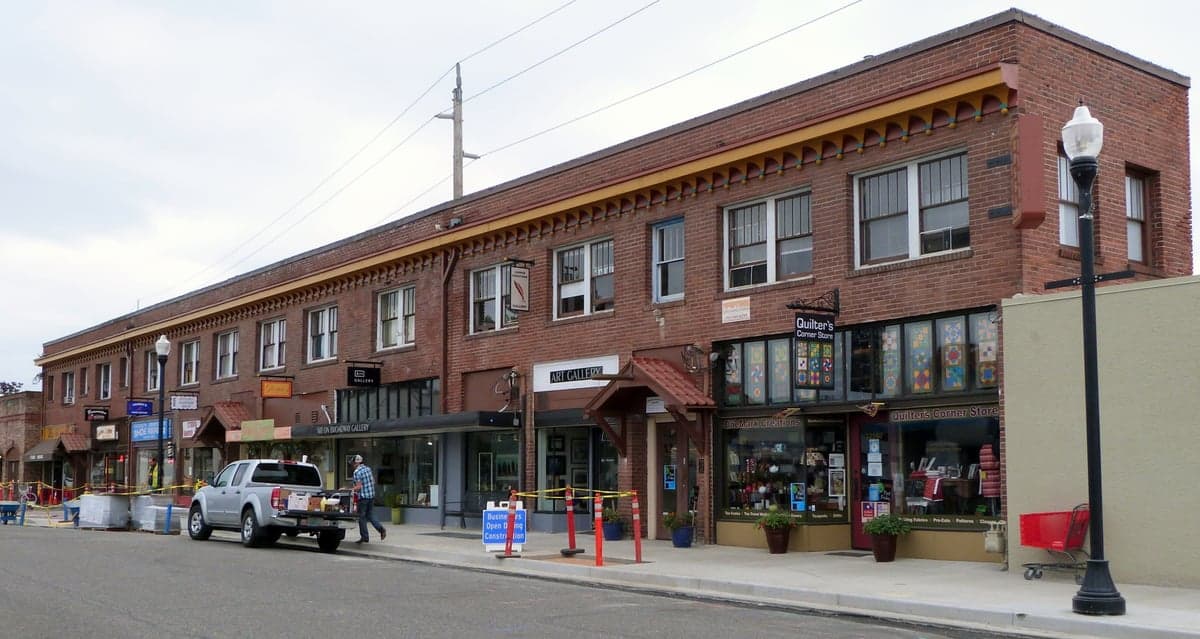
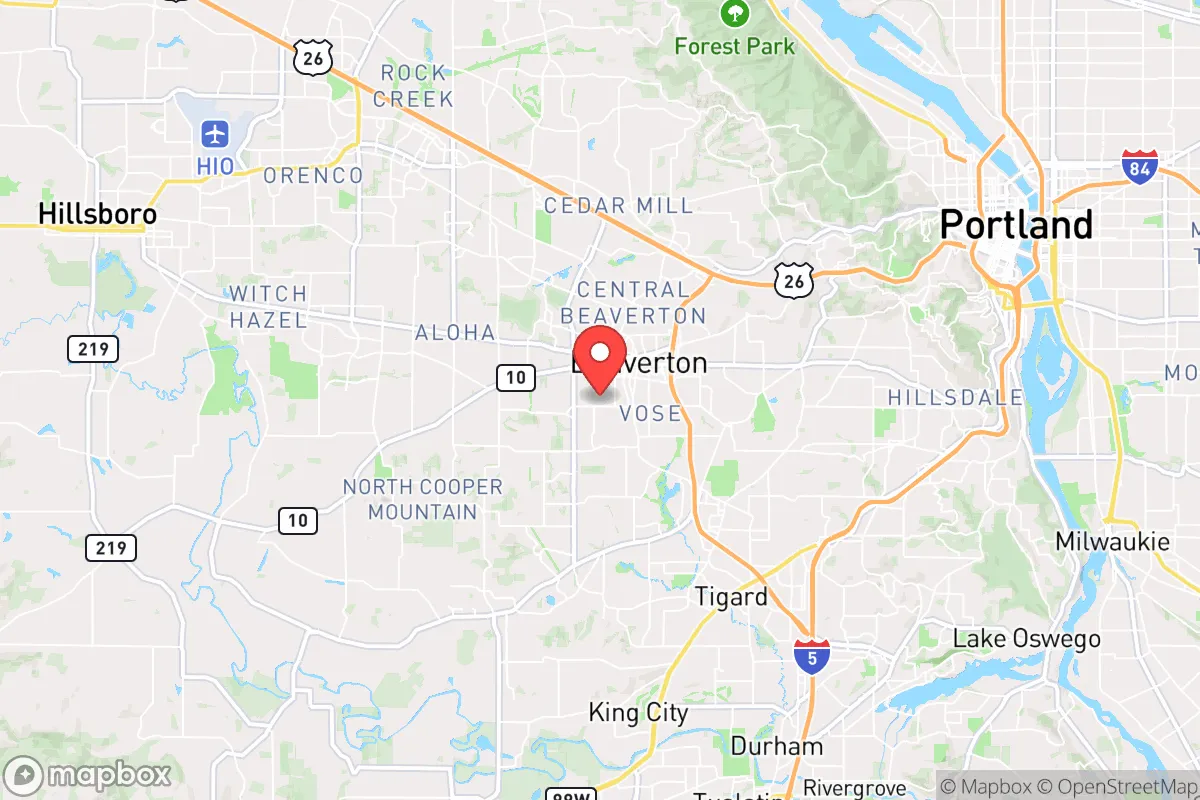
Photo: Wikipedia
Demographics of Beaverton, OR
Affluence Level in Beaverton, OR
A middle-class area roughly in line with national averages across income, home values, education, and employment.
People of Beaverton, OR
The people of Beaverton, Oregon today form a dense, educated, and increasingly diverse suburban population of 97,502, with a distinctive blend of long-standing white families, a substantial Hispanic community, and one of the Portland metro area's largest East and Southeast Asian enclaves. The city is 60.3% white, 17.3% Hispanic, 8.5% East/Southeast Asian, 2.7% Indian (subcontinent), and 2.7% Black, with 49.2% of adults holding a college degree. Beaverton's identity is shaped by its role as a high-tech employment hub—home to Nike's global headquarters and a major Intel campus—which has attracted a professional, globally connected workforce. For a conservative-leaning audience, the city offers a stable, family-oriented suburban environment with strong schools and a notably lower crime rate than neighboring Portland, though its politics lean left overall.
How the city was settled and grew
Beaverton's original population was drawn by the Donation Land Claim Act of 1850, which granted 320 acres to white settlers willing to farm the fertile Tualatin Valley. The first permanent settlers, including the Hall and Denney families, arrived in the late 1840s and 1850s, establishing a rural farming community centered on what is now the Old Town district. The arrival of the Oregon & California Railroad in 1868 transformed Beaverton from a quiet crossroads into a shipping hub for wheat, berries, and timber, attracting a wave of Midwestern and Northern European immigrants—primarily German, Swedish, and Irish—who built homes in the Central Beaverton neighborhood around the train depot. By 1900, the population had reached just 500, and the city remained a small agricultural service center through the Great Depression. The post-World War II era brought the first major suburban boom: returning GIs and their families, aided by the GI Bill, built modest single-family homes in neighborhoods like Vose and West Slope, transforming Beaverton into a bedroom community for Portland. This wave was almost entirely white, drawn by affordable land and the promise of a quiet, safe environment for raising children.
Modern era (post-1965)
The 1965 Hart-Cellar Act opened immigration from Asia and Latin America, but Beaverton's modern demographic transformation truly began in the 1980s and 1990s with the explosive growth of the Silicon Forest tech corridor. Nike moved its headquarters to the Murrayhill area in 1990, and Intel expanded its nearby Ronler Acres campus, creating thousands of high-paying engineering jobs. This drew a highly educated, international workforce: East and Southeast Asian professionals—particularly from China, Taiwan, Vietnam, and Korea—settled in Murrayhill and the South Beaverton neighborhoods near the tech campuses, drawn by top-rated schools in the Beaverton School District. Simultaneously, a growing Hispanic community, largely from Mexico and Central America, arrived to fill construction, landscaping, and service jobs tied to the tech boom. They concentrated in Central Beaverton and the Aloha area (an unincorporated community adjacent to Beaverton), where more affordable housing and established social networks provided a foothold. The Indian (subcontinent) population, while smaller at 2.7%, grew rapidly after 2000, with many professionals in IT and engineering settling in the same Murrayhill and Cooper Mountain neighborhoods as their East Asian counterparts. By 2020, Beaverton had become one of the most diverse cities in Oregon, with a white share (60.3%) well below the state average of 75%.
The future
Beaverton's population is projected to continue diversifying, driven by ongoing tech-sector employment and the city's reputation for excellent schools and relative affordability compared to Portland. The Hispanic share (17.3%) is expected to grow steadily, while the East/Southeast Asian and Indian populations will likely increase as tech companies expand and recruit globally. New development is concentrated in the South Cooper Mountain area, a master-planned community of higher-density housing and mixed-use retail that is attracting a mix of young families and professionals—both white and non-white—dispersing these groups rather than concentrating them in older ethnic enclaves. The white population share will continue to decline gradually, but Beaverton is not becoming a majority-minority city in the near term; rather, it is evolving into a multiethnic, majority-white suburb with significant and visible minority communities. The cultural identity is shifting from a classic 1950s bedroom suburb to a more cosmopolitan, globally connected city, though tensions over growth, traffic, and school crowding remain common topics in local politics.
For someone moving in now, Beaverton offers a stable, family-oriented suburban environment with strong schools and a diverse, educated population—a place where a conservative-leaning family can find good schools and safe neighborhoods, but should expect a politically liberal local government and a population that is increasingly multiethnic and globally minded. The city's trajectory is toward greater density and diversity, not less, making it a solid choice for those who value economic opportunity and community stability over cultural uniformity.

* Values derived from national, state, county, city and local statistics and may differ in a specific area. Last updated: 2026-06-13T10:09:38.000Z
Narrative content on this page is AI-generated and may contain mistakes. Verify any details that matter before acting on them.
ReloMaps may earn a commission from affiliate links at no extra cost to you.

