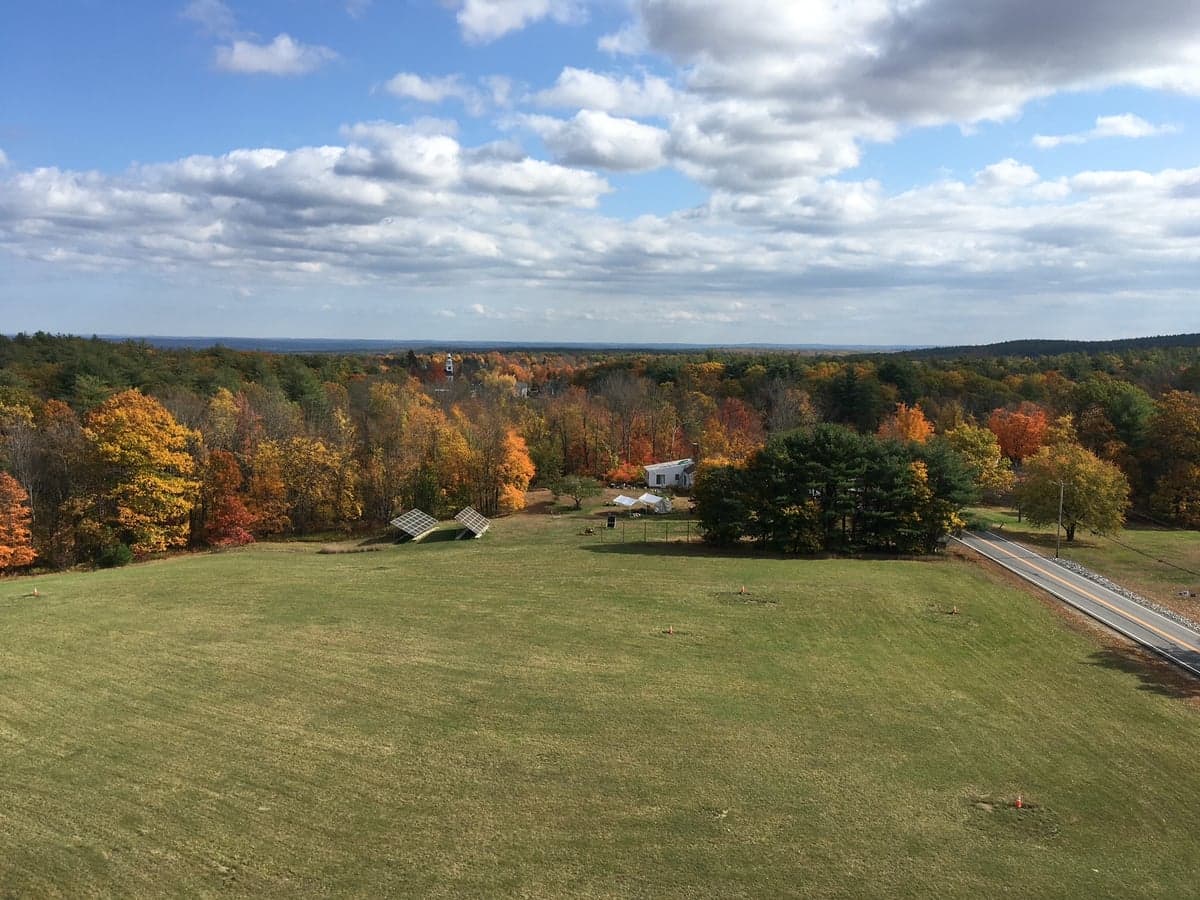
Photo: Wikipedia
Political ClimatePolitical Climate in Ashby, MA
District shown is the primary district for this city’s centroid. Cities may span multiple districts.
Local Political AnalysisPolitical Analysis of Ashby, MA
Ashby, Massachusetts, leans reliably Democratic but with a noticeably more moderate bent than the state as a whole. The town’s Cook Partisan Voting Index (PVI) of D+11 places it four points to the right of Massachusetts’s overall D+15 rating, a gap that reflects Ashby’s rural character and its historical roots as a small farming community. While Democrats have carried the town in every recent presidential election, the margins are thinner than in the Boston suburbs or the liberal strongholds of the Pioneer Valley. In 2020, for instance, Joe Biden won Ashby by roughly 12 points—solid, but far from the 30-point blowouts seen in places like Cambridge or Newton. The trajectory here is subtle: Ashby is slowly trending left, like most of New England, but it’s doing so at a slower pace than the state’s urban centers, meaning the gap between local and state voting patterns is likely to persist.
How it compares
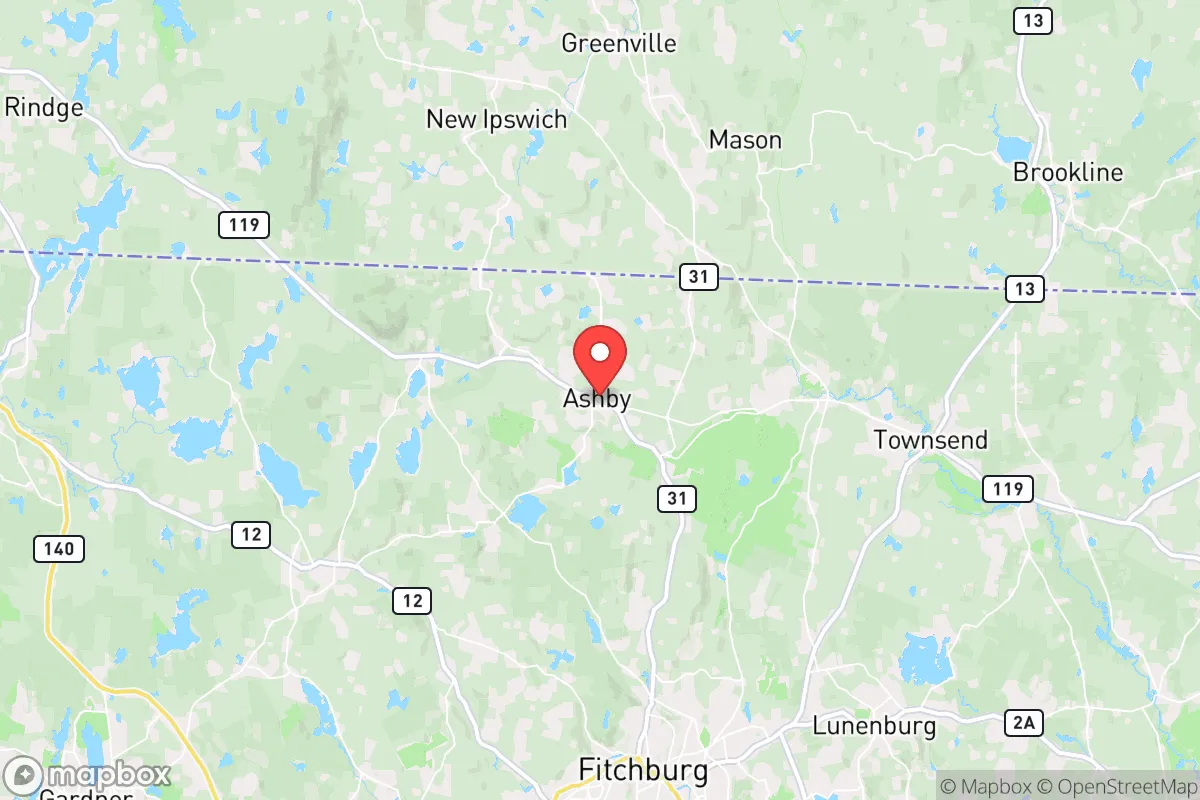
Compared to Massachusetts as a whole, Ashby is a political outlier in its region. The town sits in north-central Middlesex County, near the New Hampshire border, and its voting patterns more closely resemble those of neighboring towns like Townsend (D+9) and Pepperell (D+10) than the deep-blue communities closer to Boston. Drive 20 miles south to Concord or Lexington, and you’ll find PVI ratings of D+25 or higher—places where Republican candidates rarely crack 30%. Ashby’s D+11 means it’s still a safe Democratic seat in most races, but it’s not a lock. In 2022, Republican gubernatorial candidate Geoff Diehl pulled about 38% in Ashby, compared to just 32% statewide. The town’s rural character—large lots, working farms, and a strong sense of local autonomy—creates a political culture that’s less reflexively liberal than the state’s coastal and urban areas. It’s a place where a conservative resident can find common ground with neighbors on issues like property taxes, land use, and school funding, even if national politics divides them.
What this means for residents
For liberal residents, Ashby offers a comfortable political environment where Democratic candidates are the norm, and local government tends to align with progressive priorities on issues like environmental conservation and public education. You won’t feel out of place putting up a Biden sign, and town meetings generally reflect a community-minded, inclusive ethos. For conservative residents, the situation is more nuanced. You’re in the minority, but not a tiny one—roughly 40-45% of your neighbors voted for Trump in 2020, so you’re not isolated. The practical effect is that political debates in Ashby are less heated than in deeply polarized suburbs. Local issues—like maintaining rural roads, preserving open space, or managing the school budget—tend to transcend party lines. The town’s small size (population around 3,500) means personal relationships often override partisan labels. You won’t find the kind of activist energy or ideological purity tests common in Cambridge or Amherst; Ashby’s politics are more about pragmatism than dogma.
The cultural and policy distinctions that set Ashby apart from Massachusetts’s urban core are rooted in its rural identity. The town has no stoplights, no downtown commercial district, and a strong tradition of self-reliance. This translates into a local government that’s lean and cautious with spending—property tax rates are moderate, and there’s resistance to new mandates from Boston. Ashby residents, regardless of party, tend to value their independence from state-level bureaucracy. You’ll hear grumbling about the MBTA Communities Act (which requires multifamily zoning near transit) from both sides of the aisle, because it feels like a one-size-fits-all solution imposed on a town with no train station. In the long term, Ashby will likely continue its slow drift leftward, driven by in-migration from more expensive areas, but its rural character will keep it a few steps behind the state’s political vanguard. For anyone moving here, the takeaway is simple: Ashby is a blue town with a red streak, where neighborliness matters more than party affiliation.

State Political ClimatePolitical Climate in Massachusetts
State Political AnalysisPolitical Environment in the State
Massachusetts is one of the most reliably Democratic states in the country, with a Cook Partisan Voting Index of D+15, meaning it votes about 15 points more Democratic than the national average. Over the last 20 years, the state has shifted from a moderate-blue stronghold to a deep-blue one, driven largely by the Boston metro area’s explosive growth and the exodus of moderate Republicans from the suburbs. In 2024, Kamala Harris won the state by roughly 25 points, but the real story is the collapse of the GOP in the suburbs: places like Lexington, Newton, and Brookline now routinely give Democrats 80% or more of the vote, while the western and central parts of the state have become the last redoubts of conservative-leaning voters.
Urban vs. rural divide
The political map of Massachusetts is a tale of two worlds. The eastern third, anchored by Boston, Cambridge, and Somerville, is the engine of the state’s Democratic dominance. These cities are home to the state’s largest universities, tech hubs, and financial centers, and they vote overwhelmingly blue — often 85-90% Democratic. In contrast, the western and central regions — places like Worcester, Springfield, and the Berkshires — are more mixed. Worcester County, for example, voted for Trump in 2020 by a narrow margin, and the rural towns of the Hill Towns (like Becket and Otis) lean conservative, though they’re often outvoted by the urban centers. The Cape and Islands (Barnstable, Nantucket, Martha’s Vineyard) are a wild card: they trend Democratic but with a strong independent streak, especially on local issues like zoning and tourism. The bottom line: if you’re a conservative, you’ll feel most at home in the central and western towns, but you’ll be a distinct minority in the eastern suburbs and Boston proper.
Policy environment
Massachusetts has a high-tax, high-service policy environment that reflects its Democratic supermajority. The state income tax is a flat 5% (down from 5.15% after a 2022 ballot question), but the sales tax is 6.25%, and property taxes are among the highest in the nation, averaging about 1.2% of home value. The state has a robust regulatory framework: it’s one of the few states with rent control in some cities (Boston, Cambridge), strict environmental regulations (the Global Warming Solutions Act mandates net-zero emissions by 2050), and a strong public education system that spends over $20,000 per student annually. Healthcare is heavily regulated, with the state’s 2006 health reform law serving as a model for the ACA. Election laws are among the most liberal: no-excuse mail-in voting, same-day registration, and early voting are all standard. For a conservative relocator, the tax burden and regulatory density are the biggest shocks — expect to pay more for everything from gas to housing, but also get top-tier schools and infrastructure.
Recent policy direction
The last five years have seen Massachusetts move decisively left on a range of issues. In 2022, the state passed the Work and Family Mobility Act, allowing undocumented immigrants to obtain driver’s licenses. In 2023, the legislature overrode Governor Maura Healey’s veto to pass the Parental Rights in Education Act, which requires schools to notify parents of curriculum changes but stops short of the “don’t say gay” laws seen in other states. On guns, the state passed the Massachusetts Gun Safety Act of 2024, which bans “ghost guns,” requires safe storage, and raises the purchasing age for rifles to 21 — one of the strictest gun laws in the country. On abortion, the state passed the ROE Act in 2020, codifying abortion rights up to 24 weeks and allowing later-term abortions for health reasons. On property rights, the state has a strong “right to farm” law but also allows municipalities to impose rent control and inclusionary zoning. On privacy, the state has a data breach notification law but no comprehensive privacy law like California’s. For a conservative, the gun laws and the driver’s license law are the most contentious; for a liberal, the state’s lack of a public option for healthcare and its high housing costs are the biggest frustrations.
Civil unrest & political movements
Massachusetts has a long history of political activism, but it’s mostly orderly and institutionalized. The 2020 Black Lives Matter protests in Boston were large but peaceful, and the state’s sanctuary city policies (Boston, Cambridge, Somerville, and over a dozen others) have been a flashpoint for immigration politics. The state has a small but vocal secessionist movement — the “New England independence” crowd — but it’s fringe. On the right, the Massachusetts GOP is a shadow of its former self: the party hasn’t won a statewide office since Charlie Baker left in 2022, and its base is concentrated in the central and western towns. Election integrity controversies are minimal; the state’s mail-in voting system was widely praised for its efficiency in 2020 and 2024. The most visible flashpoint for a new resident is likely the sanctuary city debate: in towns like Lawrence and Chelsea, local police are prohibited from cooperating with ICE, which has led to tensions with state and federal authorities. For a conservative, this is a daily reminder of the state’s policy direction; for a liberal, it’s a point of pride.
Projection
Over the next 5-10 years, Massachusetts is likely to become even more Democratic, driven by two trends: the continued growth of the Boston metro area (which is attracting young, educated, left-leaning professionals) and the aging of the state’s conservative rural population. The state’s in-migration is heavily skewed toward the eastern suburbs, while the western counties are losing population. This means the political center of gravity will shift further east, and the GOP will become even more marginalized. However, there’s a wild card: housing costs. If the state fails to build enough housing (and it’s currently in a severe shortage), it could drive out the very young families that are its future. The state’s MBTA Communities Act, which requires towns near transit to allow multifamily housing, is a step in the right direction, but it’s being fought tooth and nail in the suburbs. For a conservative moving in now, expect to be a permanent minority in state politics, but with some local influence in the central and western towns. For a liberal, expect the policy environment to continue moving left, but with growing frustration over the cost of living.
For a new resident, the bottom line is this: Massachusetts is a state where your political views will be in the minority if you’re conservative, but you’ll find like-minded communities in the central and western towns. The high taxes and strict regulations are a trade-off for excellent schools, low crime, and a strong social safety net. If you’re moving here, be prepared for a culture that values collective action over individual liberty, and be ready to pay for it. But if you can afford it, the quality of life is hard to beat — just don’t expect the politics to change anytime soon.
* Values derived from national, state, county, city and local statistics and may differ in a specific area. Last updated: 2026-09-28T16:56:07.000Z
Narrative content on this page is AI-generated and may contain mistakes. Verify any details that matter before acting on them.
ReloMaps may earn a commission from affiliate links at no extra cost to you.

