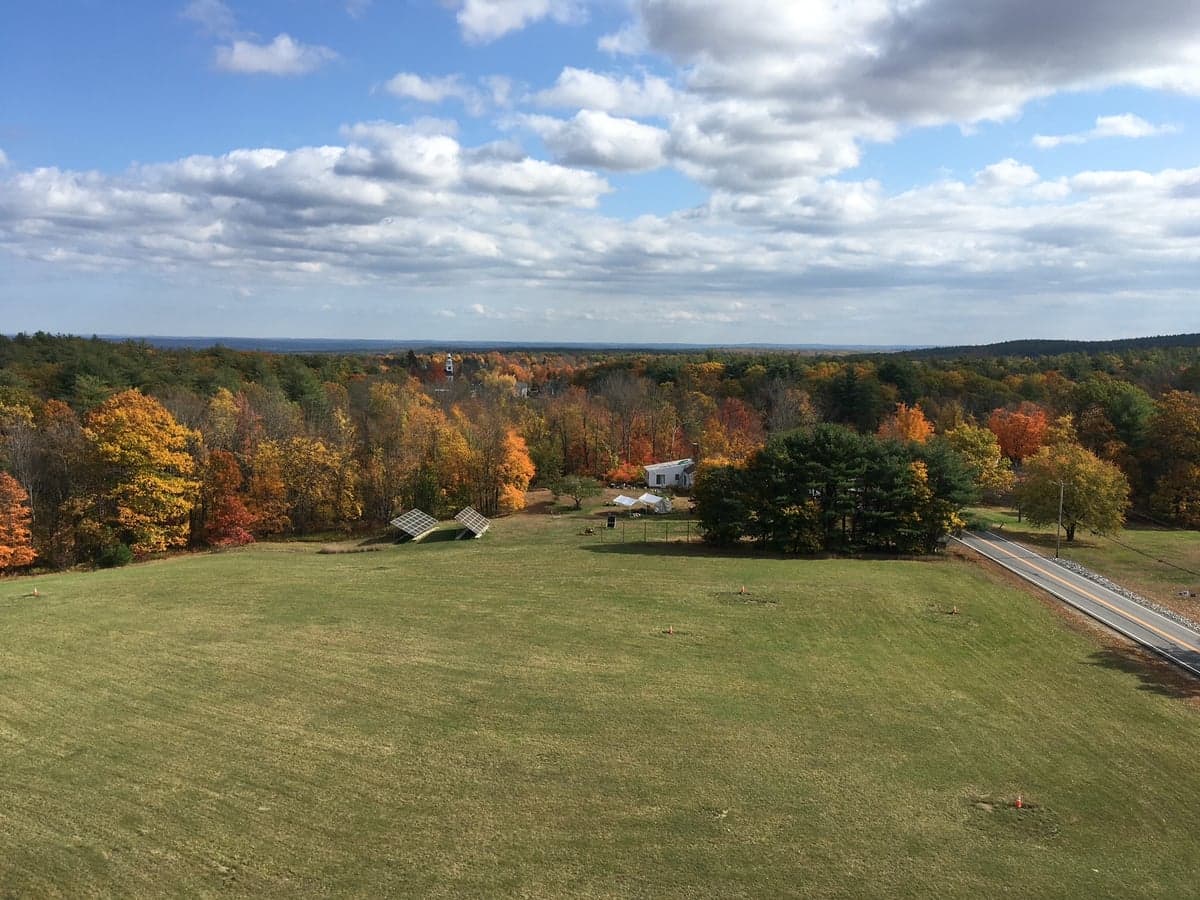
Photo: Wikipedia
Personal Sovereignty in Ashby, MA
Moderate friction. Expect trade-offs in some aspect of personal liberty and independence.
What does Personal Sovereignty tell us?
Personal Sovereignty measures your capacity for self-reliance and independence with minimal government friction. Higher scores mean fewer barriers between you and the way you want to live... but it assumes you have the space you need and good neighbors.
What does this tell us?
Personal Sovereignty measures your capacity for self-reliance and independence with minimal government friction. Higher scores mean fewer barriers between you and the way you want to live... but it assumes you have the space you need and good neighbors.
State Policy
Energy independence: Importer (5% of energy produced in-state)
Personal Liberty
Homesteading

Personal Liberty Analysis
Ashby, Massachusetts, offers a notably higher degree of personal sovereignty than most communities in the state, largely due to its rural character, minimal local government footprint, and a population that values self-reliance. While Massachusetts is often perceived as a high-regulation state, Ashby’s practical autonomy environment is shaped more by what the town does not do—aggressive zoning enforcement, heavy local taxation, or restrictive land-use policies—than by state-level mandates. For a single individual or family prioritizing independence, Ashby represents a pocket of relative freedom within a state that otherwise leans interventionist, particularly in areas like firearms regulation and property development.
Tax burden and regulatory posture in a rural Massachusetts town
Ashby’s tax burden is moderate by Massachusetts standards but high nationally, with a 2024 residential property tax rate of approximately $16.50 per $1,000 of assessed value, translating to roughly $4,950 annually on a $300,000 home. The town has no local sales tax (the state rate is 6.25%) and no local income tax, but residents pay the state’s flat 5.0% income tax. The regulatory posture is light-touch at the local level: Ashby has no town-wide zoning overlay for agricultural uses, no noise ordinances that restrict typical rural activities, and a building department that processes permits quickly for standard residential projects. However, the state’s Massachusetts Environmental Policy Act (MEPA) and Wetlands Protection Act can impose delays on any project disturbing more than one acre or affecting buffer zones, which is a real constraint for landowners planning ponds, driveways, or large outbuildings. The town’s annual budget is lean—around $8 million—and it contracts with the state for most services, meaning minimal local bureaucracy. For a reader comparing to New Hampshire towns, Ashby’s tax burden is about 15-20% higher, but its regulatory environment is similar to many rural New Hampshire communities, with the key difference being state-level mandates on energy efficiency (Stretch Code) and septic system design (Title 5).
Self-defense and gun law specifics in Ashby
Massachusetts has some of the strictest firearm laws in the nation, and Ashby residents must comply fully with state statutes. The state requires a License to Carry (LTC) for both open and concealed carry, which is issued by the Ashby Police Department after a background check, fingerprinting, and a 16-hour safety course. Ashby is a “shall-issue” town in practice—the police chief has historically approved LTC applications for residents who pass the background check, with no known pattern of denials for lawful applicants. However, the state’s 2014 Maura Healey enforcement policy and the 2024 “H.4885” law ban the sale of many common semi-automatic rifles (including AR-15 variants), limit magazine capacity to 10 rounds, and require all firearm transfers to go through a licensed dealer. Self-defense law in Massachusetts does not have a “Stand Your Ground” statute; instead, residents have a duty to retreat if safely possible before using deadly force, except in one’s own home (the “Castle Doctrine” applies). In practice, this means that a confrontation on your Ashby property—say, in the driveway or barn—could legally require retreat before using force, which is a significant limitation for those who prioritize self-defense autonomy. The town has no local gun ordinances beyond state law, and there is no local registry or additional permitting. For a reader coming from a more permissive state (e.g., Texas or New Hampshire), the adjustment is substantial: you cannot buy a standard-capacity magazine, and you must renew your LTC every six years with a fee of $100. The practical workaround for many Ashby gun owners is to maintain a low profile and rely on the town’s rural isolation—neighbors are sparse, and enforcement of state gun laws is minimal unless an incident occurs.
Self-reliance and homesteading viability: lot sizes, zoning, and off-grid feasibility
Ashby’s zoning is exceptionally permissive for self-reliance activities. The minimum lot size in the town’s Residential-Agricultural district is 2 acres, and many parcels in the northern and western parts of town are 5-10 acres or larger, often with existing agricultural exemptions. The town allows keeping of livestock (chickens, goats, sheep, and up to two horses) by right on lots of 2 acres or more, with no permit required for up to 10 chickens. Beekeeping is allowed without registration. The zoning bylaw explicitly permits “home occupations” like woodworking, small engine repair, and farm stands selling produce grown on-site, provided they do not generate excessive traffic or noise. Off-grid feasibility is high: the town has no ordinance requiring connection to municipal water or sewer (most homes use private wells and septic), and solar panels are allowed as-of-right with no height restriction beyond the state’s 35-foot limit for residential structures. However, full off-grid living (no grid electricity) is technically allowed but requires a Title 5 septic system and a drilled well meeting state potable water standards. The town’s building inspector does not enforce the state’s “Stretch Energy Code” on existing homes unless a major renovation occurs, so you can keep an older home with oil heat and wood stoves without penalty. The main constraint is the state’s Board of Health regulations on composting toilets—they are permitted only as an alternative system with a variance, which is rarely granted. For a homesteader, the practical reality is that you can raise most of your own food, heat with wood, and generate solar power, but you will need a conventional septic system and a grid connection for backup. The town’s rural character means that neighbors are typically supportive of self-reliance activities—many residents already have wood piles, chicken coops, and gardens—and the local agricultural commission actively promotes farm-to-table initiatives.
Personal liberties: parental rights, medical autonomy, speech, and property
Parental rights in Ashby are generally respected, but Massachusetts state law imposes some constraints. The state’s 2022 “Parental Rights in Education” law (Chapter 71, Section 32A) requires school districts to notify parents of any changes in a student’s health or well-being, but it does not require parental consent for a child’s participation in LGBTQ+ student groups or for access to school-based mental health counseling. Ashby’s school district (part of the North Middlesex Regional School District) has a policy of notifying parents of any “significant changes” in a child’s emotional or physical health, but the interpretation is left to individual principals. Medical autonomy is limited by state mandates: Massachusetts requires vaccination for school attendance (with medical and religious exemptions, but no philosophical exemption), and the state’s 2020 “Jessica’s Law” requires all children under 8 to be in a federally approved car seat or booster seat. For adults, the state has legalized recreational marijuana (since 2016), but Ashby has opted out of allowing retail dispensaries within town limits, so residents must drive to Fitchburg or Leominster to purchase. Speech and assembly rights are fully protected under the First Amendment, and Ashby has no local ordinances restricting political signs, leafleting, or public gatherings. Property rights are strong at the local level: the town has no historic district commission, no tree preservation bylaw, and no sign ordinance beyond the state’s billboard ban. However, the state’s Chapter 40B affordable housing law can override local zoning for developments that include 20-25% affordable units, which is a real concern for residents who fear denser development. The town’s current housing stock is 90% single-family homes on large lots, and the planning board has consistently rejected 40B proposals, but the state can force a project if the town falls below 10% affordable housing (Ashby is at about 6%). For a reader who values property autonomy, the key takeaway is that you can build, fence, and use your land largely as you wish, but you cannot prevent a future 40B development on adjacent land.
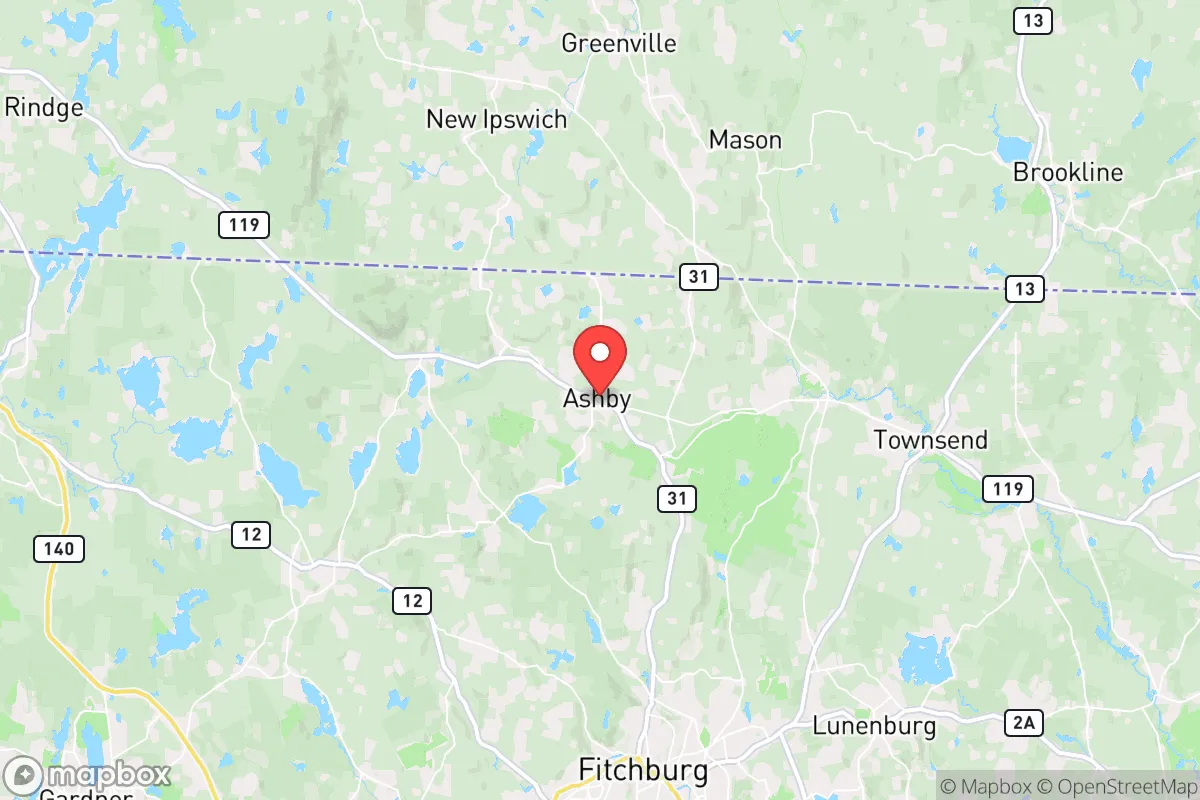
Overall, Ashby offers a high degree of personal sovereignty relative to most Massachusetts communities, comparable to rural towns in New Hampshire’s Monadnock region but with the added burden of state-level gun control and environmental regulations. For a conservative-leaning individual or family, the trade-off is clear: you gain the ability to live a self-reliant, low-regulation rural life with supportive neighbors and minimal local government, but you must accept state mandates on firearms, education, and healthcare that are more restrictive than in neighboring New Hampshire or Vermont. The town’s isolation—30 miles from the nearest major city (Fitchburg) and 50 miles from Boston—means that state enforcement is sporadic, and many residents simply operate under the radar. If your priority is maximum autonomy in land use, food production, and daily life, Ashby is a strong choice within Massachusetts. If your priority is unrestricted gun rights or zero vaccine mandates, you will need to cross the border into New Hampshire, where towns like Jaffrey or Rindge offer similar rural character with fewer state-level constraints.

* Values derived from national, state, county, city and local statistics and may differ in a specific area. Last updated: 2026-09-28T16:56:07.000Z
Narrative content on this page is AI-generated and may contain mistakes. Verify any details that matter before acting on them.
ReloMaps may earn a commission from affiliate links at no extra cost to you.

