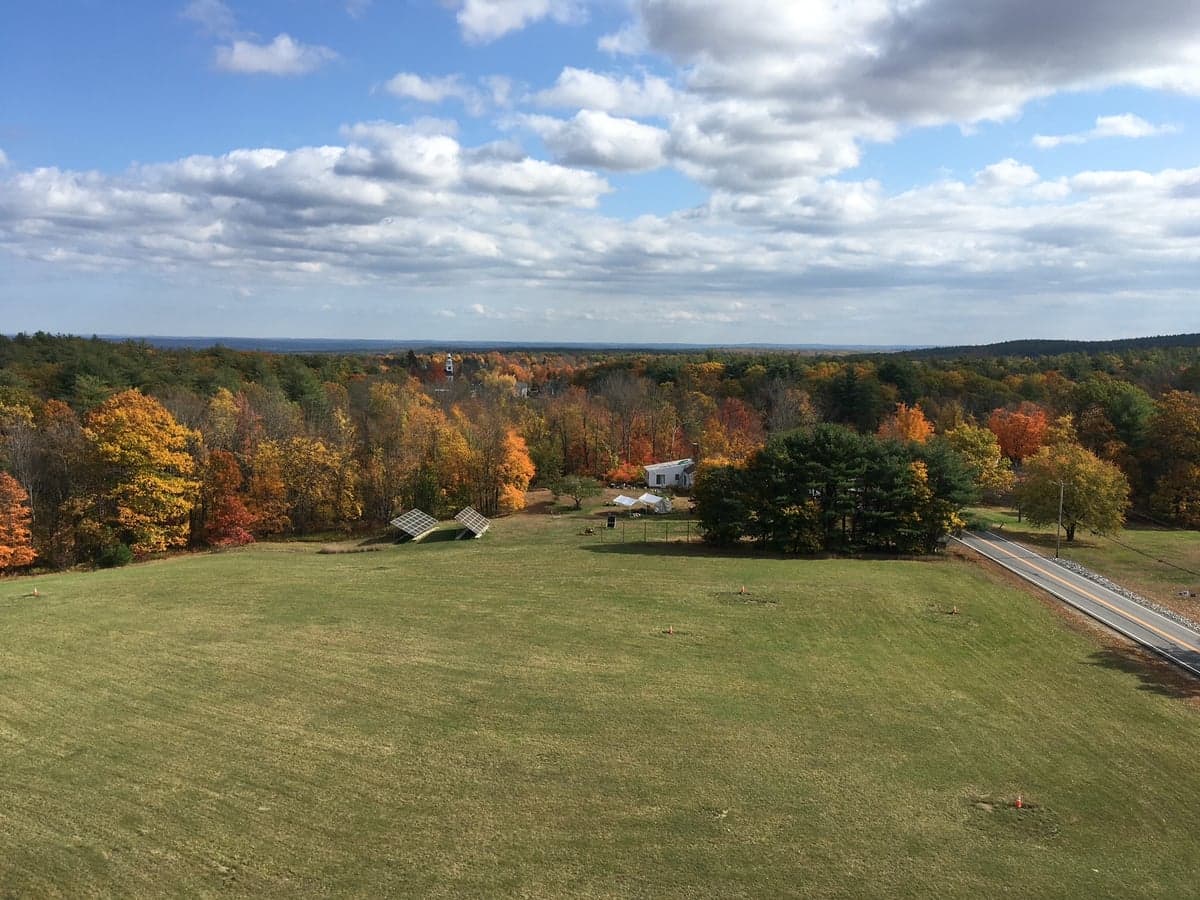
Photo: Wikipedia
Demographics of Ashby, MA
Affluence Level in Ashby, MA
An upper-middle-class area. Household wealth, education levels, and homeownership run ahead of national benchmarks.
People of Ashby, MA
Ashby, Massachusetts, is a small, tight-knit rural community of 3,188 residents that remains overwhelmingly white (94.2%) and native-born, with a foreign-born population of just 0.5%. The town’s character is defined by its historic New England village center, working farms, and a strong sense of local self-reliance, attracting families and individuals seeking a quiet, low-density lifestyle away from the sprawl of Boston. With a college-educated rate of 42.4%, Ashby’s population is more educated than the national average, yet it retains a distinctly homogeneous demographic profile that has changed little over the past half-century.
How the city was settled and grew
Ashby was first settled in the 1730s as part of the Massachusetts Bay Colony’s westward expansion, incorporated as a separate town in 1767. The original population was almost entirely of English Puritan stock, drawn by land grants offered to veterans of King Philip’s War and later the French and Indian War. These early families established subsistence farms and small mills along the Nashua River and its tributaries. The historic Ashby Village (centered around the Common on Main Street) became the civic and commercial hub, while outlying areas like West Ashby and South Ashby developed as clusters of farmsteads. A modest wave of Irish immigrants arrived in the mid-19th century to work on the Fitchburg Railroad and in local shoe factories, settling primarily in the North Ashby area near the rail line. However, unlike many Massachusetts mill towns, Ashby never attracted large numbers of French-Canadian, Italian, or Eastern European immigrants, remaining overwhelmingly English-stock through the early 1900s. The town’s population peaked at around 1,500 in the 1840s, then declined as agriculture mechanized and younger generations moved to cities.
Modern era (post-1965)
Ashby’s modern growth began in the 1970s and 1980s as a bedroom community for commuters to Fitchburg, Leominster, and the Route 128 tech corridor. The 1965 Hart-Cellar Act had virtually no effect on Ashby’s demographics; the town’s foreign-born population remains negligible. Instead, domestic in-migration from within Massachusetts drove growth, with families seeking larger lots and lower taxes. New subdivisions like Pine Hill Estates and Birchwood Acres were built on former farmland in the southern and eastern parts of town, attracting mostly white, middle-class families from the Boston suburbs. The town’s Hispanic population grew from near zero to 3.5% by 2020, concentrated in scattered single-family homes rather than any distinct neighborhood. The Asian population (East/Southeast Asian) stands at just 0.1%, and the Indian-subcontinent population at 0.3% — both too small to form a visible community. Ashby’s Black population is recorded at 0.0%. The town’s population rose from 1,800 in 1970 to 3,188 in 2020, a steady but modest increase that reflects its limited housing stock and lack of rental apartments.
The future
Ashby’s population is projected to remain stable or grow very slowly over the next 10–20 years, constrained by zoning that favors large-lot single-family homes and limited water/sewer infrastructure. The town’s demographic profile is unlikely to become significantly more diverse. The small Hispanic population may grow incrementally through natural increase and a few new families, but the foreign-born share will likely stay below 1%. Younger families moving in are predominantly white, often relocating from higher-cost areas in eastern Massachusetts for the lower property prices and rural atmosphere. The Ashby Village area is seeing some infill development of single-family homes, while West Ashby remains largely undeveloped forest and farmland. The town’s cultural identity — rooted in town meeting government, volunteer fire departments, and agricultural fairs — shows no signs of shifting. The biggest demographic change may be an aging population, as many long-time residents retire in place and younger families with children remain a smaller share.
For someone moving in now, Ashby offers a stable, homogeneous, and deeply traditional New England small town. It is not a place of rapid change or growing diversity, but rather a community where the population is slowly turning over while retaining its essential character. The trade-off is clear: a quiet, safe, and predictable environment with strong community ties, but with limited ethnic or cultural variety and few amenities beyond the basics.

* Values derived from national, state, county, city and local statistics and may differ in a specific area. Last updated: 2026-09-28T16:56:07.000Z
Narrative content on this page is AI-generated and may contain mistakes. Verify any details that matter before acting on them.
ReloMaps may earn a commission from affiliate links at no extra cost to you.

