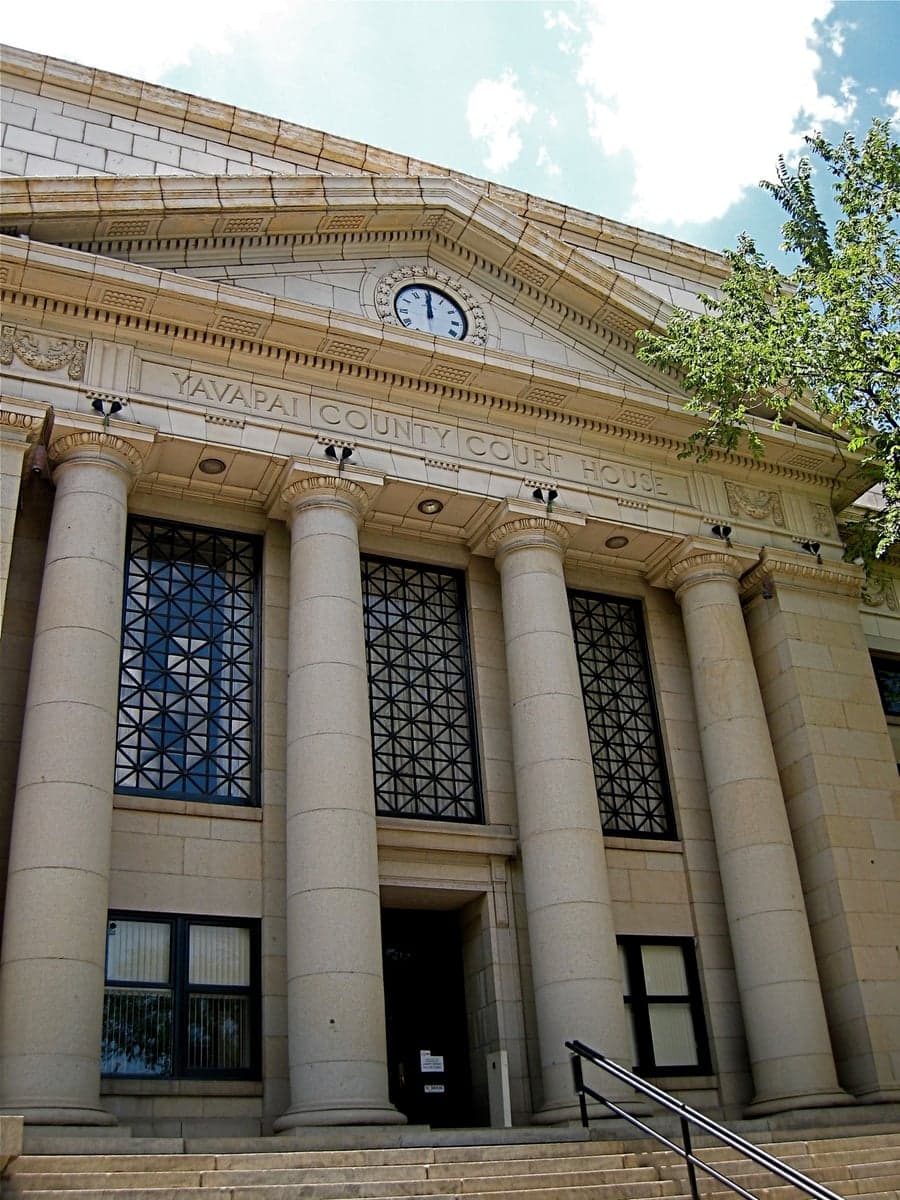
Photo: Wikipedia
Political ClimatePolitical Climate in Yavapai County
Showing district-level results — no local-only data available.
Local Political AnalysisPolitical Analysis of Yavapai County
Yavapai County is reliably Republican, with a Cook PVI of R+7, making it significantly more conservative than Arizona as a whole, which sits at EVEN. The county has voted for the GOP presidential candidate in every election since 2000, often by double-digit margins, though the margin has narrowed slightly in recent cycles as the state has trended purple. This isn't a monolith, though—the political geography is far from uniform, and the local flavor of conservatism here is distinct from the national brand.
How it compares
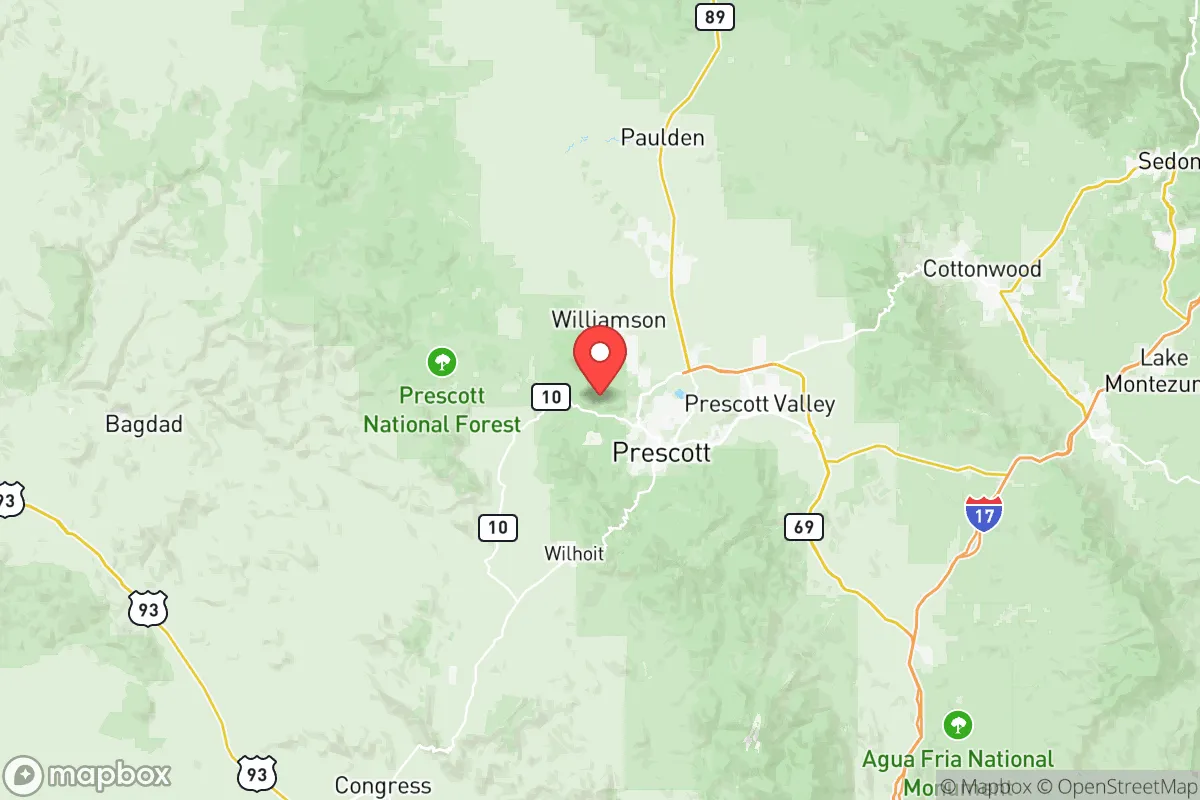
The R+7 rating puts Yavapai County about seven points to the right of the national average, while Arizona's EVEN rating means the state is a pure toss-up. That gap is driven largely by Maricopa County's shift toward Democrats, which Yavapai's rural and exurban voters have not followed. Within the county, the political spectrum is wide. Prescott is the conservative anchor, reliably voting 60-65% Republican in most races, with its historic downtown and ranching culture reinforcing a traditional Western libertarian streak. Prescott Valley and Chino Valley are even redder, often pushing 70% GOP, fueled by retirees and working-class families who moved from California and other blue states specifically for lower taxes and fewer regulations. On the other end, Sedona is the county's blue outlier, with precincts that regularly vote 55-60% Democratic, driven by its artist community, tourism economy, and higher concentration of out-of-state transplants. Cottonwood and Clarkdale are more mixed, with swing precincts that can tip either way depending on the race—these are the areas to watch if the county ever tightens further. The Verde Valley as a whole is the county's most competitive region, where local issues like water rights and land use often matter more than national party labels.
What this means for residents
For conservative residents, Yavapai County feels like a stronghold where their values are reflected in local policy—low taxes, minimal land-use restrictions, and a sheriff's office that publicly emphasizes Second Amendment rights. The county commission and most city councils are solidly Republican, so conservative priorities generally advance without much friction. For liberal residents, the reality is more about finding community within the blue pockets. Sedona offers a progressive enclave with its own local politics, but countywide, Democrats have little structural power. That said, the growing number of remote workers and retirees from blue states is slowly shifting the cultural tone, especially in the Verde Valley, where you'll see more Harris-Walz yard signs mixed in with the Trump flags. The practical impact is that local elections often turn on personality and local issues rather than party affiliation, so a moderate Democrat with a strong record can sometimes win a seat on a school board or town council, especially in Cottonwood or Clarkdale.
Culturally, Yavapai County is defined by a live-and-let-live Western independence that predates the current partisan divide. You'll find gun shows and farmers markets coexisting, and the same person who votes straight-ticket Republican might also support local conservation efforts or oppose a new mining operation. The county's policy distinctions from the state include a more aggressive stance on water rights and growth management—Prescott has been fighting state-level pressure to allow higher-density development—and a local political culture that is skeptical of both Phoenix and Washington. The trajectory is toward slow diversification, but the R+7 lean is likely to hold for the foreseeable future, with the real action being in the swing precincts of the Verde Valley as the county's population continues to grow.

State Political ClimatePolitical Climate in Arizona
State Political AnalysisPolitical Environment in the State
Arizona has transformed from a reliably Republican stronghold into the nation’s premier political battleground, with a Cook Partisan Voting Index of EVEN. Over the past two decades, the state has shifted from voting for George W. Bush by double digits to flipping for Joe Biden in 2020 by just 10,457 votes, and then re-electing a Democratic governor, Katie Hobbs, in 2022 while also sending a Republican legislature back to Phoenix. The dominant coalition is now a tense standoff between a growing, diverse urban-suburban bloc centered in Maricopa County and a deeply conservative rural and exurban base that still holds significant legislative power.
Urban vs. rural divide
The political map of Arizona is essentially a story of Maricopa County versus everything else. Maricopa County, home to Phoenix, Mesa, Chandler, and Scottsdale, casts about 60% of the state’s votes and has shifted from ruby red to purple to light blue over the last decade. The city of Tucson and Pima County provide a reliable Democratic base in the south, while Flagstaff in Coconino County is a liberal mountain enclave. The rest of the state—places like Yavapai County (Prescott), Mohave County (Lake Havasu City), and Pinal County (Casa Grande)—is overwhelmingly Republican. The key suburban battlegrounds are in Maricopa’s sprawling suburbs: Gilbert and Chandler have trended toward Democrats, while Surprise and Buckeye remain conservative strongholds. The rural-urban divide is stark: in 2020, Biden won Maricopa by about 2 points, while Trump carried the rest of the state by roughly 20 points.
Policy environment
Arizona’s policy environment reflects its divided government. The state has a flat income tax rate of 2.5%, passed in 2021, making it one of the most tax-competitive states in the West. Property taxes are low, and there is no estate tax. The regulatory posture is generally business-friendly, with a right-to-work law and limited zoning in most rural counties. Education policy is a flashpoint: the state has a robust school choice system, including Empowerment Scholarship Accounts (ESAs) that allow public funds to follow students to private or homeschool settings, but public school funding per pupil remains near the bottom nationally. Healthcare policy is mixed—Arizona expanded Medicaid under the Affordable Care Act, but the state does not have its own insurance exchange. Election laws have been a major focus: the state requires ID to vote, has no-excuse mail-in voting (which is used by over 80% of voters), and recently passed laws tightening ballot security, including signature verification requirements and restrictions on ballot drop boxes.
Recent policy direction
The last few years have seen Arizona lurch in both directions simultaneously, depending on the issue. On gun and self-defense law, the state is permissive: constitutional carry (permitless carry) was signed into law in 2010, and there are no state-level magazine capacity limits or assault weapon bans. On parental and education rights, the ESA program was expanded to all students in 2022, making Arizona the most expansive school choice state in the nation. On speech and privacy, the state passed a law in 2022 prohibiting social media platforms from deplatforming political candidates, though it was blocked in court. On medical and bodily autonomy, the landscape is volatile: a near-total abortion ban from 1864 was briefly revived by the state supreme court in 2024, then repealed by the legislature, leaving a 15-week ban in place. A ballot measure to enshrine abortion rights up to fetal viability is expected in 2024. On property rights, Arizona is a strong "right-to-farm" state, limiting nuisance lawsuits against agricultural operations. On taxation, the 2021 flat tax cut was paired with a reduction in the top marginal rate, and the state has no tax on Social Security benefits. On voting and ballot access, the legislature has passed multiple bills tightening election procedures, including a 2022 law requiring proof of citizenship for federal voter registration, which is currently under legal challenge.
Civil unrest & political movements
Arizona has been a hotbed of organized political activism on both sides. The "Stop the Steal" movement was particularly active here, with protests at the state capitol in Phoenix and the infamous "audit" of Maricopa County’s 2020 election results, which dragged on for months and became a national spectacle. Immigration politics are ever-present: the state was ground zero for SB 1070 in 2010, and while that law was largely struck down, border security remains a top issue, with the governor deploying the National Guard to the border in 2023. There is no sanctuary city policy in Arizona; in fact, state law prohibits sanctuary policies. On the left, the "Red for Ed" teacher walkout in 2018 was one of the largest labor protests in the country, and grassroots organizing around abortion rights and voting access has been intense. Election integrity controversies have not subsided: the state’s 2022 gubernatorial race was decided by less than 1 point, and the losing candidate, Kari Lake, has continued to challenge the result. A new resident will notice political yard signs, campaign volunteers at grocery stores, and a general sense that every election feels like a knife fight.
Projection
Over the next 5-10 years, Arizona is likely to remain a competitive swing state, but the demographic trends favor Democrats in presidential elections and Republicans in state-level races. The state is growing fast—about 1.5% per year—driven by domestic migration from California and the Midwest. New arrivals tend to be younger and more diverse, which helps Democrats, but many are also retirees from conservative areas who lean Republican. The key variable is Maricopa County: if its suburban women and Latino voters continue to drift left, the state will become reliably blue in presidential years. However, the Republican legislature has shown a willingness to use its power to shape election laws and district maps, which could slow that shift. A new resident moving in now should expect a decade of close elections, divided government, and high political engagement. The state will not flip to safe Democratic or safe Republican anytime soon—it will remain a battleground where every vote counts.
For a new resident, the bottom line is that Arizona offers a low-tax, business-friendly environment with a conservative tilt on fiscal and gun policy, but a volatile and unpredictable landscape on social issues like abortion and education. If you are conservative, you will find a state that respects gun rights, school choice, and limited government, but you will also have to contend with a competitive political environment where your vote matters. If you are liberal, you will find a state where your vote also matters, but where the legislature is often hostile to your priorities. Either way, you are moving to a place where politics is not background noise—it is a daily reality. Be prepared to pay attention, because in Arizona, every election is a close one.
* Values derived from national, state, county, city and local statistics and may differ in a specific area. Last updated: 2026-06-21T00:18:44.000Z
Narrative content on this page is AI-generated and may contain mistakes. Verify any details that matter before acting on them.
ReloMaps may earn a commission from affiliate links at no extra cost to you.

