
Photo: Wikipedia
Quality of Life in Yavapai County
A livable area that tracks near national norms for affordability, walkability, and neighborhood health.
What does Quality of Life tell us?
Quality of Life measures an area by evaluating factors like cost of living, nearby amenities, country club access, airport proximity, socioeconomic signals and neighborhood character. For large states, this is a general average — quality of life can vary dramatically between metro areas, suburbs, and rural communities within the same state.
What does this tell us?
Quality of Life measures an area by evaluating factors like cost of living, nearby amenities, country club access, airport proximity, socioeconomic signals and neighborhood character. For large states, this is a general average — quality of life can vary dramatically between metro areas, suburbs, and rural communities within the same state.
Cost of Living
21% above national average
59%
The Real Cost of Living in Yavapai County for 2026
| Tier | Individual | Family (4) |
|---|---|---|
| Survival | $20k | $38k |
| Comfortable | $76k | $112k |
| Luxury | $118k+ | $183k+ |
| Elite (Top 5%) | $139k+ | $216k+ |
Quality-of-Life Analysis
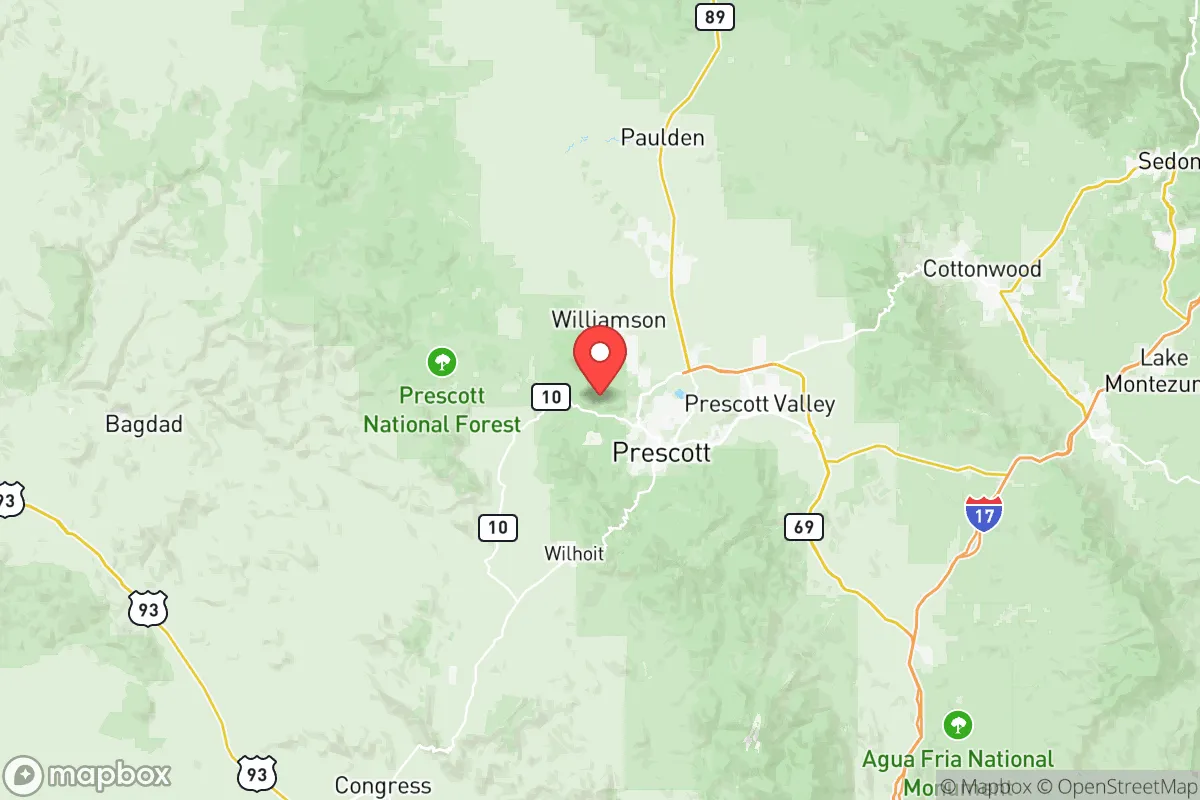
Yavapai County, Arizona, offers one of the most dramatic quality-of-life spectrums in the Southwest, ranging from the bustling, amenity-rich city of Prescott to remote, off-grid homesteads in the Bradshaw Mountains. The county’s character shifts noticeably as you move between its three main population corridors—the Prescott Quad-City area, the Verde Valley, and the high-elevation pine forests around Williams—attracting retirees, remote workers, outdoor enthusiasts, and traditional ranching families to distinctly different corners of the region.
Largest town(s) & population centers
Prescott, the county seat and largest city (pop. ~48,000), anchors the western side of the county and functions as the region’s commercial and cultural hub. Daily life here centers around a walkable historic downtown with the iconic Courthouse Plaza, a robust calendar of festivals, and a strong healthcare infrastructure anchored by Yavapai Regional Medical Center. The adjacent communities of Prescott Valley (pop. ~50,000) and Chino Valley (pop. ~13,000) form a contiguous suburban corridor with big-box retail, master-planned subdivisions, and a younger, more family-oriented demographic. In the Verde Valley, Cottonwood (pop. ~12,000) and Sedona (pop. ~10,000) offer a different rhythm: Cottonwood is a working-class town with a revitalized Old Town district and a growing wine-tourism scene, while Sedona is a high-end tourism and retirement magnet defined by red-rock views, art galleries, and luxury resorts. The average commute across the county is 22.9 minutes, reflecting the spread-out nature of development—Prescott Valley residents often commute 15–20 minutes into Prescott for work, while Sedona workers may drive 30 minutes from affordable housing in Cottonwood or Camp Verde.
Smaller towns & rural pockets
Beyond the population centers, Yavapai County contains dozens of smaller communities that each offer a distinct flavor of rural Arizona living. Camp Verde, straddling I-17, is a historic farming and ranching town with a growing population of equestrian-property owners and artists attracted by its lower land prices. Mayer and Spring Valley, along the Highway 69 corridor, are unincorporated areas where five-acre hobby ranchettes and manufactured-home parks sit alongside working cattle operations. Jerome, a former copper-mining town perched on Cleopatra Hill, has reinvented itself as a tourist destination and artist enclave with steep, winding streets and panoramic views. Bagdad, in the far western part of the county, remains a company-owned mining town where most residents work for Freeport-McMoRan’s copper mine. Paulden, north of Chino Valley, is a fast-growing rural area where residents trade municipal services for larger lots and lower property taxes. Ash Fork, on historic Route 66, is a small railroad and ranching community with a distinct Western character and a population under 1,000.
Cost & lifestyle range
The county’s overall cost-of-living index of 121 (21% above the U.S. average) masks wide internal variation. At the high end, Sedona’s median home value exceeds $900,000, and its tourism-driven economy means higher prices for groceries, dining, and services. Prescott’s median home value of roughly $550,000 and median rent of $1,258 place it above the county median of $392,900 but still below Sedona. At the lower end, Cottonwood, Camp Verde, and Paulden offer median home values in the $320,000–$380,000 range, with rents often $200–$300 below the county median. Rural properties in Mayer, Bagdad, and Ash Fork can fall below $250,000 for a fixer-upper or older manufactured home, though buyers trade that affordability for longer drives to grocery stores, limited healthcare access, and well/septic maintenance. Property taxes remain low across the county—typically 0.5%–0.7% of assessed value—but homeowners in unincorporated areas pay for private trash service and may lack natural gas hookups.
The resident who thrives in Yavapai County is one who understands that the county is not a single community but a collection of distinct microclimates—both literal and figurative. Retirees and remote workers with means gravitate to Prescott’s four-season weather and cultural amenities or to Sedona’s dramatic scenery. Families seeking affordable homeownership and good schools often settle in Prescott Valley or Cottonwood. Homesteaders, ranchers, and those seeking maximum privacy find their niche in the rural pockets of Mayer, Paulden, or the remote stretches of Yavapai County’s 8,128 square miles. The common thread is a tolerance for driving: the county’s spread-out geography means that accessing jobs, healthcare, and shopping almost always requires a car, but the trade-off is a level of space, scenery, and lifestyle choice that few other Arizona counties can match.

Crime in Yavapai County
Crime rates similar to the national median for U.S. locations.
Violent CrimeViolent Crime Analysis
Property CrimeProperty Crime Analysis
Crime Analysis
Yavapai County, Arizona, presents a mixed safety profile that varies significantly between its urban corridors and rural expanses. With a violent crime rate of 372 incidents per 100,000 residents and a property crime rate of 1,496.4 per 100,000, the county sits above the national average for violent offenses but below the national average for property crime. These aggregate figures, however, mask sharp contrasts between communities like Prescott, Prescott Valley, and Cottonwood versus smaller towns such as Sedona, Chino Valley, and Camp Verde.
Crime in context
Yavapai County's violent crime rate of 372 per 100,000 is roughly 6% higher than the national average of approximately 350 per 100,000, but notably lower than Arizona's statewide rate of about 430 per 100,000. The property crime rate of 1,496.4 per 100,000 is about 20% below the national average of roughly 1,900 per 100,000, placing Yavapai in a more favorable position for theft and burglary risks. These numbers reflect a region where property offenses—particularly vehicle theft and larceny—are the dominant concern, while violent incidents remain relatively concentrated. The county's geography, spanning from the Prescott metropolitan area to the Verde Valley and remote high desert, means that crime density is not uniform. Prescott and Prescott Valley, as the largest population centers, account for a disproportionate share of reported incidents, while rural areas near Bagdad and Mayer see far lower volumes.
What residents experience
Residents in Yavapai County most frequently encounter property crimes such as theft from vehicles, burglary, and vandalism, particularly in commercial zones and tourist-heavy areas like Sedona's Uptown district and Prescott's Whiskey Row. Violent crime, while less common, is not evenly distributed: Cottonwood and Clarkdale have reported higher rates of aggravated assault and domestic violence relative to their populations, often tied to substance abuse and transient populations. In contrast, Chino Valley and Dewey-Humboldt consistently report lower crime rates, with many residents describing a small-town atmosphere where neighbors watch out for one another. The county's judicial landscape is a critical factor: Yavapai County is served by a conservative District Attorney's office that emphasizes prosecution and sentencing, which contributes to a perception of accountability. However, some residents express concern that progressive-leaning policies in nearby Maricopa County—including cash bail reform and diversion programs—can spill over into Yavapai as offenders relocate or travel north. This dynamic is particularly relevant in Prescott Valley, which has seen an uptick in property crime linked to individuals from the Phoenix metro area.
Neighborhood-level variation is pronounced. Within Prescott, the historic downtown area and the Granite Dells corridor experience higher foot traffic and opportunistic theft, while gated communities and newer subdivisions near the Prescott Country Club report minimal incidents. In Sedona, the tourist economy drives a unique crime pattern: vehicle break-ins at trailheads and hotel parking lots are common, but violent crime is rare. Camp Verde and Rimrock, straddling the I-17 corridor, see elevated drug-related offenses but lower overall violent crime. For prospective residents, the safest bets are typically Chino Valley, Dewey-Humboldt, and the rural outskirts of Prescott, where population density is low and community policing is strong. Those considering Cottonwood or Clarkdale should research specific subdivisions, as crime is not uniform even within those towns. Overall, Yavapai County offers a livable safety environment for those who choose their neighborhood carefully and remain aware of the regional crime patterns tied to tourism and proximity to larger metro areas.
* Values derived from national, state, county, city and local statistics and may differ in a specific area. Last updated: 2026-06-21T00:18:44.000Z
Narrative content on this page is AI-generated and may contain mistakes. Verify any details that matter before acting on them.
ReloMaps may earn a commission from affiliate links at no extra cost to you.

