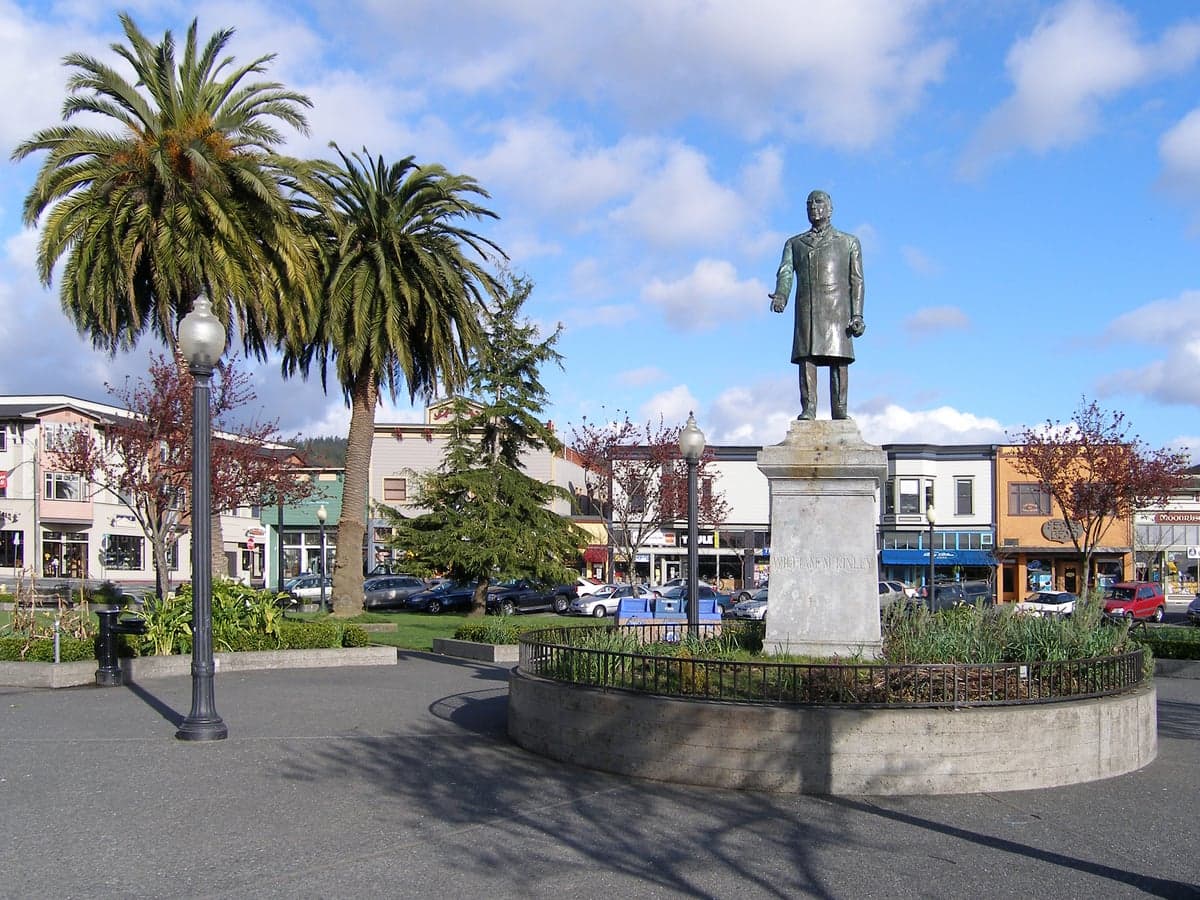
Photo: Wikipedia
Personal Sovereignty in Arcata, CA
Viable for self-reliance. Generally workable, though some barriers may limit total independence.
What does Personal Sovereignty tell us?
Personal Sovereignty measures your capacity for self-reliance and independence with minimal government friction. Higher scores mean fewer barriers between you and the way you want to live... but it assumes you have the space you need and good neighbors.
What does this tell us?
Personal Sovereignty measures your capacity for self-reliance and independence with minimal government friction. Higher scores mean fewer barriers between you and the way you want to live... but it assumes you have the space you need and good neighbors.
State Policy
Energy independence: Importer (33% of energy produced in-state)
Personal Liberty
Homesteading

Personal Liberty Analysis
Arcata, California, presents a complex personal sovereignty environment where the city’s progressive local governance often clashes with the state’s heavy regulatory framework, creating a mixed bag for those prioritizing autonomy. While California’s statewide tax burden and regulatory density are among the highest in the nation, Arcata’s unique character—shaped by Humboldt State University (now Cal Poly Humboldt) and a strong environmentalist culture—offers specific niches for self-reliance, particularly around homesteading and alternative lifestyles. For a conservative-leaning individual or family, the trade-offs are stark: you gain access to a community that tolerates non-conformity in daily life, but you face significant constraints on gun rights, property use, and parental control over education.
Tax burden and regulatory posture in Humboldt County
California’s state-level tax burden is the highest in the U.S., with a top marginal income tax rate of 13.3% and a state sales tax rate of 7.25% (Arcata adds a local rate, bringing the total to roughly 8.5% as of 2026). Property taxes are capped at 1% of assessed value under Proposition 13, but annual increases are limited to 2%, which benefits long-term owners but not new buyers facing inflated home prices. Arcata’s regulatory posture is notably interventionist at the local level: the city enforces strict rent control (the Arcata Rent Control Ordinance, passed in 2016), limits short-term rentals to 90 days per year, and mandates inclusionary zoning requiring 15% of new developments to be “affordable.” For a self-reliant individual, the permitting process for home additions or accessory dwelling units (ADUs) is streamlined relative to other California cities—permits for ADUs under 1,200 square feet are typically approved within 60 days—but still more burdensome than in states like Texas or Idaho. The city’s Climate Action Plan (CAP) imposes energy-efficiency mandates on new construction, adding 5-10% to building costs. Overall, the regulatory environment is heavy-touch on housing and business operations, but lighter on personal lifestyle choices like alternative medicine or communal living arrangements.
Self-defense and gun law specifics in Arcata
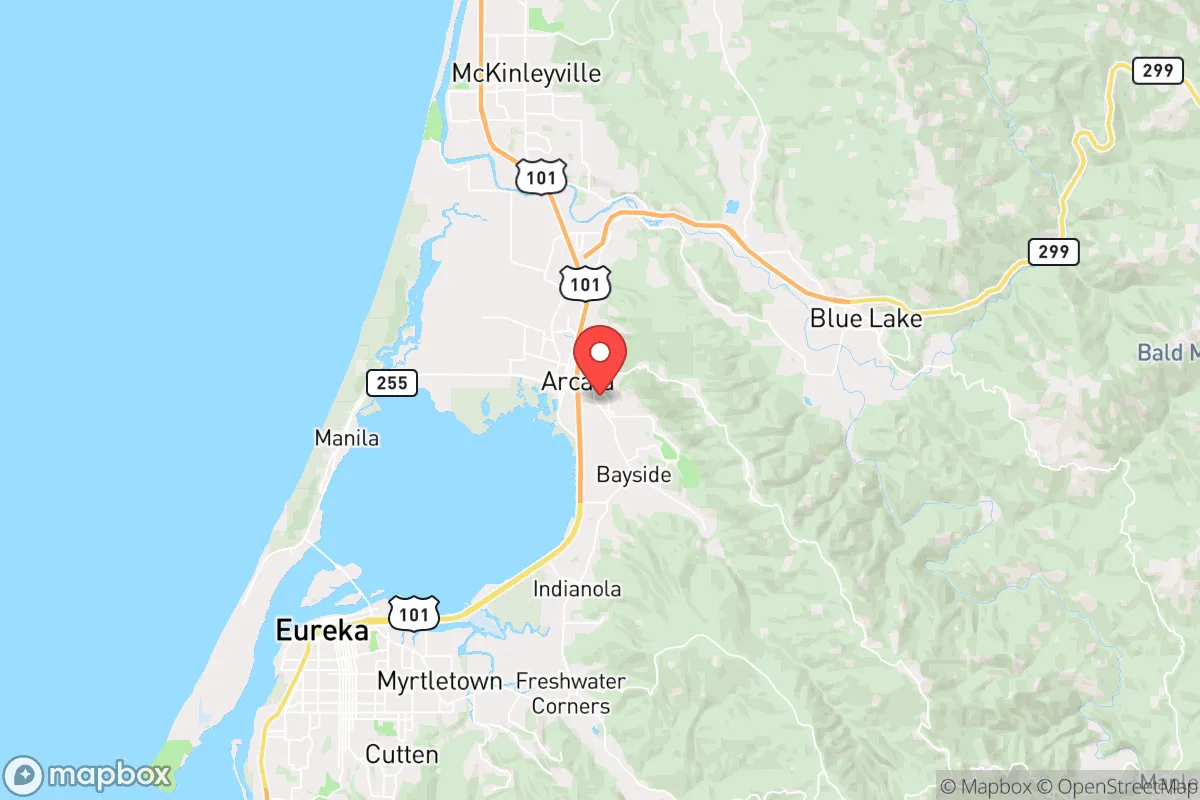
California’s gun laws are among the strictest in the nation, and Arcata residents must comply fully. The state bans “assault weapons” (defined by a feature-based test), limits magazine capacity to 10 rounds, and requires a 10-day waiting period for all firearm purchases. A Firearm Safety Certificate (FSC) is mandatory for any purchase, and ammunition sales are tracked through a state database. Concealed carry (CCW) permits are issued by the Humboldt County Sheriff’s Office, which is relatively permissive compared to urban counties: as of 2025, the sheriff’s office reported a 70% approval rate for CCW applications, though the process requires a 16-hour training course, a background check, and a “good cause” statement (though the Bruen decision has weakened this requirement). Open carry is prohibited in incorporated areas like Arcata. The city itself has no additional gun ordinances beyond state law, but the political climate is strongly anti-gun—the Arcata City Council has passed symbolic resolutions supporting state-level gun control. For a self-defense-minded individual, owning a handgun for home defense is feasible but heavily regulated, and carrying for personal protection outside the home is possible only with a CCW permit that requires time and money to obtain. The nearest gun stores and ranges are in Eureka (10 miles south) or McKinleyville (5 miles north), with limited options within Arcata proper.
Self-reliance and homesteading viability: lot sizes, zoning, and off-grid feasibility
Arcata’s zoning code allows for significant self-reliance opportunities, particularly for those willing to navigate the permitting system. Residential lots in the city average 5,000 to 7,000 square feet, but many older neighborhoods (like the “Swain’s Addition” area) have lots up to 10,000 square feet. The city’s Urban Growth Boundary (UGB) limits sprawl, keeping land prices high—median lot values in Arcata exceed $200,000—but within the boundary, backyard chickens, beekeeping, and vegetable gardens are explicitly permitted without a permit. Goats and larger livestock are restricted to parcels over 1 acre, which are rare inside city limits. Off-grid living is legally challenging: the city requires connection to municipal water and sewer for any habitable structure, and solar panels must be grid-tied to qualify for net metering. However, the county’s “rural residential” zones outside Arcata (e.g., in Bayside or Fieldbrook) allow for fully off-grid systems with composting toilets and rainwater catchment, provided a septic permit is obtained. The county’s building department is known for being pragmatic about alternative construction methods (straw bale, cob, earthships) as long as they meet structural and fire safety codes. For a homesteader, the trade-off is clear: inside Arcata, you can garden and keep small livestock but must stay grid-connected; outside the UGB, you can achieve near-total self-sufficiency but face a 15-20 minute drive to grocery stores and schools.
Personal liberties: parental rights, medical autonomy, speech, and property
California’s statewide policies significantly constrain parental rights in education. The state mandates LGBTQ+ inclusive curriculum (FAIR Education Act) and prohibits schools from notifying parents if a child changes their gender identity or pronouns—a policy that has sparked legal challenges but remains in effect as of 2026. School choice is limited: Arcata’s public schools (Arcata High, Sunny Brae Middle) are zoned, and charter options are scarce (only one charter, the Arcata School of the Arts, exists within city limits). Homeschooling is legal but requires filing a Private School Affidavit with the state and meeting subject-area requirements; the Humboldt County Office of Education is generally hands-off but does conduct annual reviews. Medical autonomy is mixed: California protects abortion access and gender-affirming care, but vaccine mandates for school attendance (including COVID-19 and MMR) remain in place. The state’s “Right to Try” law allows terminally ill patients access to experimental treatments, but alternative medicine practitioners (naturopaths, herbalists) are licensed and regulated, limiting unapproved therapies. Free speech is broadly protected in public spaces—Arcata’s Plaza is a traditional soapbox venue—but the city has a “hate speech” ordinance that can be used to restrict certain expressions. Property rights are the weakest area: California’s coastal zone regulations (administered by the California Coastal Commission) give the state veto power over development within 1,000 yards of the coast, which covers much of Arcata. The city’s rent control and just-cause eviction ordinances further limit what a landlord can do with their property. For a property owner, the ability to use your land as you see fit is heavily circumscribed by state and local rules.
Compared to other areas in the Pacific Northwest or Mountain West, Arcata offers a unique but constrained sovereignty package. The tax burden is high, gun laws are restrictive, and property rights are weak—but the community’s tolerance for alternative lifestyles, the availability of large rural lots for homesteading, and the relatively permissive CCW environment in Humboldt County provide specific freedoms that are hard to find in more urbanized parts of California. For a conservative-leaning individual, Arcata is not a haven of personal autonomy in the libertarian sense, but it is a place where you can carve out a self-reliant life if you are willing to work within—and occasionally around—a dense regulatory framework. The key is to focus on the county’s rural zones and to accept that state-level constraints on education and self-defense are non-negotiable trade-offs for living in one of the most beautiful, ecologically rich regions of the country.

* Values derived from national, state, county, city and local statistics and may differ in a specific area. Last updated: 2026-10-05T17:08:23.000Z
Narrative content on this page is AI-generated and may contain mistakes. Verify any details that matter before acting on them.
ReloMaps may earn a commission from affiliate links at no extra cost to you.

