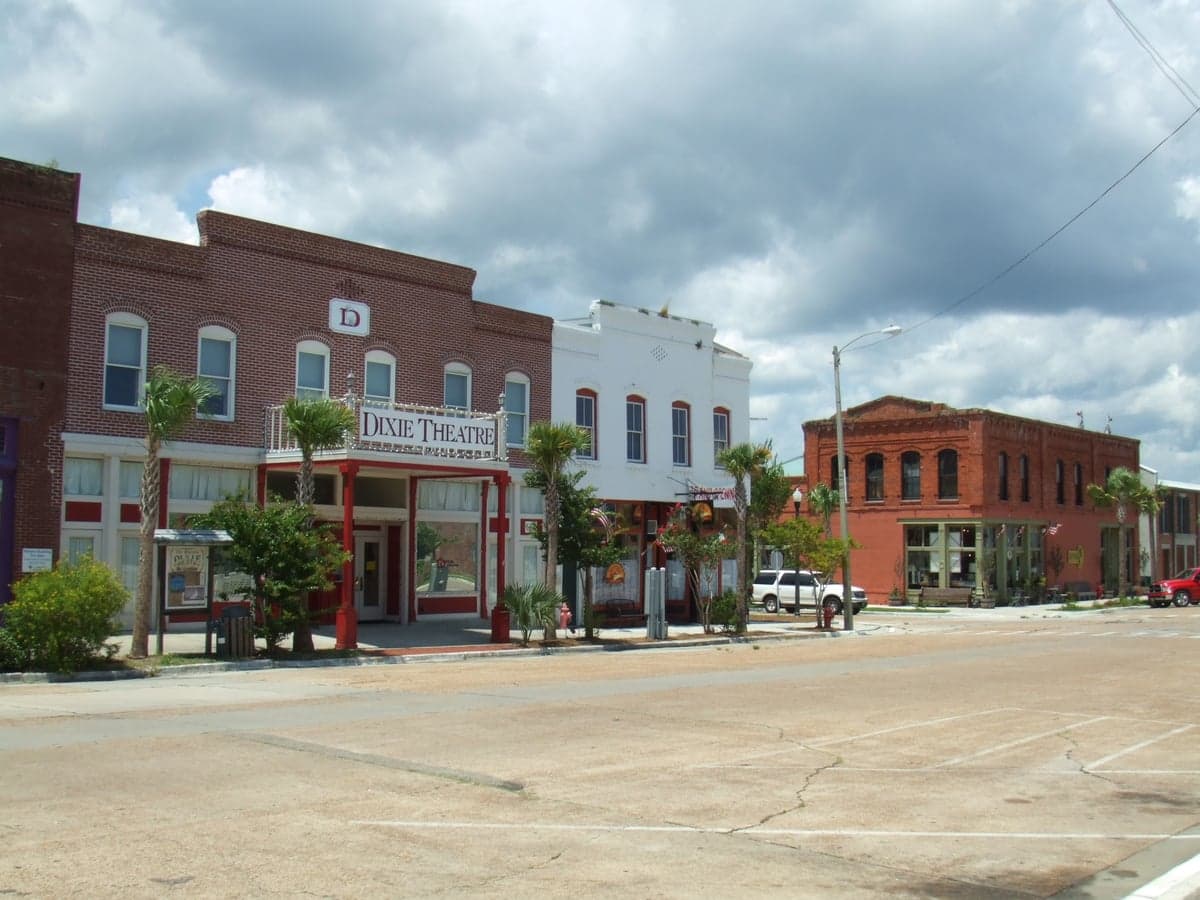
Photo: Wikipedia
Political ClimatePolitical Climate in Apalachicola, FL
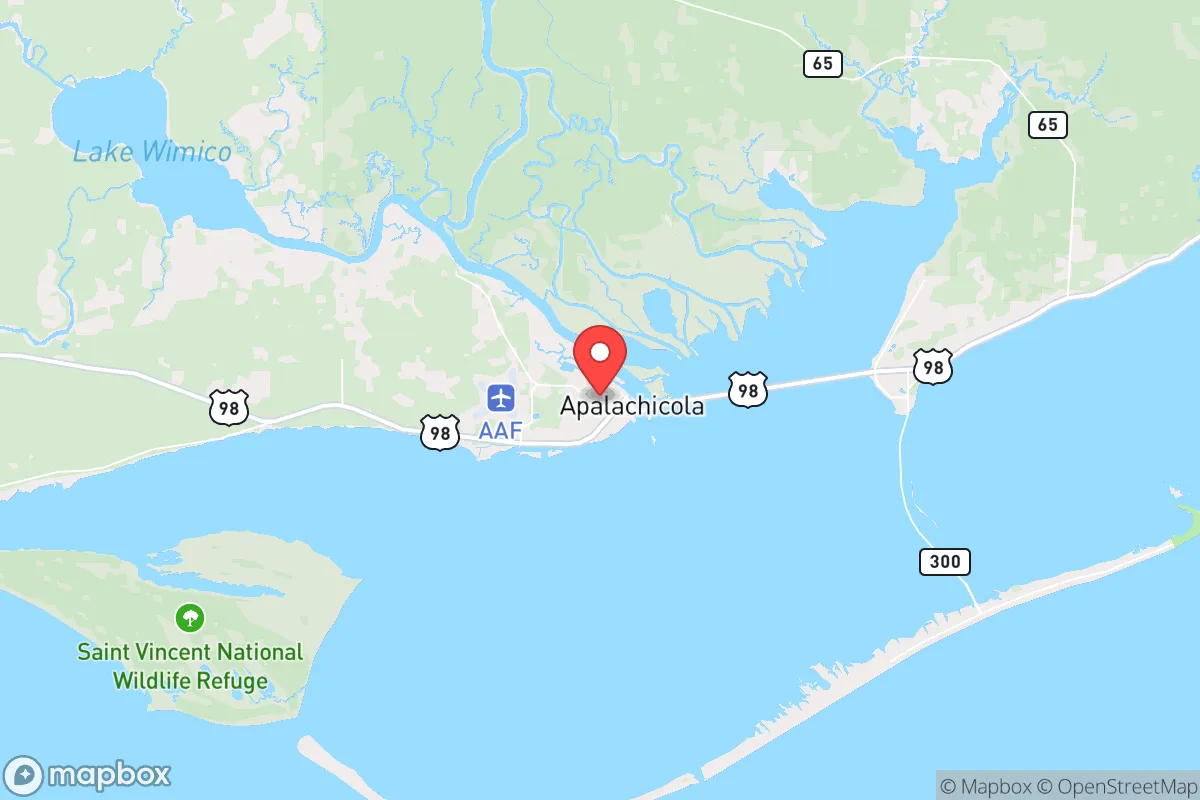
District shown is the primary district for this city’s centroid. Cities may span multiple districts.
Local Political AnalysisPolitical Analysis of Apalachicola, FL
Apalachicola leans solidly Republican, with a Cook PVI of R+8 that places it well to the right of the national average. This isn't a recent shift—the area has been reliably red for decades, though the margin has tightened slightly as younger families and remote workers trickle in from more liberal parts of the state. Locals will tell you that Franklin County as a whole has always voted conservative, but Apalachicola itself, with its historic fishing and tourism economy, has a slightly more moderate streak than the rural stretches to the north and east.
How it compares
Compared to the rest of Florida, Apalachicola is noticeably more conservative. While Florida as a state is a purple-to-lean-red battleground (with a Cook PVI that's effectively neutral in recent cycles), Apalachicola's R+8 rating puts it in the same ballpark as deeply red areas like the Panhandle's inland counties. For context, nearby cities like Tallahassee (about 75 miles north) lean heavily Democratic, while Panama City (about 70 miles west) is even more Republican than Apalachicola. The contrast is stark: drive 30 minutes inland to places like Carrabelle or Eastpoint, and you'll find even stronger GOP majorities, with some precincts voting 70-80% Republican in recent presidential elections. Apalachicola's waterfront and tourism sector bring in a mix of seasonal residents and retirees from blue states, which softens the red edge a bit—but the underlying political culture remains deeply conservative, especially on issues like gun rights, taxes, and local land use.
What this means for residents
For conservative residents, Apalachicola feels like home. Local government is dominated by Republicans, and the county commission and city council rarely face serious opposition on fiscal or regulatory matters. Churches and civic clubs are active, and the annual Apalachicola Oyster Festival is as much a celebration of local identity as it is a political rallying point. For liberal residents, life is generally comfortable but requires some navigation. You'll find like-minded neighbors in the arts community and among the newer transplants, but open progressive activism is rare and can draw side-eye. The local Democratic Party chapter is small and mostly focused on social events rather than hard campaigning. That said, the area's small size means personal relationships often trump party labels—your neighbor might be a Trump voter but will still help you haul a boat trailer out of the mud. The practical reality is that policy debates here are less about national culture wars and more about local issues: oyster bed restoration, hurricane preparedness, and keeping the downtown historic district from being overrun by chain stores.
Culturally, Apalachicola stands apart from much of Florida. It lacks the sprawling subdivisions and megachurches of the state's interior, and its economy is still tied to the water in a way that feels more Gulf Coast than Sun Belt. The political climate here is less about partisan fireworks and more about a quiet, lived conservatism that values tradition, self-reliance, and a slow pace of life. If you're moving from a blue state, you'll notice the absence of progressive infrastructure—no farmers' market co-ops, no bike lanes, no city-funded diversity initiatives. But you'll also find a community that's genuinely welcoming to newcomers who respect the local way of doing things. The trajectory is toward slow, modest growth, with the political lean likely to hold steady at R+8 or drift slightly redder as retirees from red states continue to discover the Forgotten Coast. For anyone considering a move, the takeaway is simple: Apalachicola is a place where your politics matter less than your willingness to pitch in during a storm or share a beer on the dock.

State Political ClimatePolitical Climate in Florida
State Political AnalysisPolitical Environment in the State
Florida has shifted from a quintessential battleground state to a solidly Republican-leaning one over the past decade, with a partisan lean of roughly +3 to +5 points in statewide races as of 2026. The dominant coalition is a mix of conservative retirees from the Midwest and Northeast, Cuban and Venezuelan exiles in South Florida, and growing numbers of transplants from blue states seeking lower taxes and fewer restrictions. The trajectory has been unmistakable: in 2008 and 2012, Florida was a true toss-up (Obama won it by 2.9 points in 2012), but by 2020 Trump carried it by 3.4 points, and in 2022 Governor Ron DeSantis won re-election by a staggering 19.4 points, with Republicans flipping Miami-Dade County for the first time in two decades.
Urban vs. rural divide
The political map of Florida is a textbook study in geographic polarization. The major metros—Miami-Dade, Broward (Fort Lauderdale), and Palm Beach County—historically anchored the Democratic vote, but that’s changing fast. Miami-Dade, once a Democratic stronghold, voted for DeSantis by 11 points in 2022, driven by Cuban and Venezuelan voters who view the GOP as tougher on socialism and crime. Meanwhile, the Tampa Bay area (Hillsborough and Pinellas counties) remains a competitive swing region, with St. Petersburg leaning left and the suburbs of Tampa trending right. The I-4 corridor, stretching from Daytona Beach through Orlando to Lakeland, is the classic battleground: Orange County (Orlando) is reliably blue, but neighboring Osceola and Polk counties have moved sharply red as transplants from Puerto Rico and the Midwest settle there. Rural north Florida—places like the Panhandle (Pensacola, Panama City) and the interior (Gainesville, Ocala)—is deeply conservative, with many counties delivering 70-80% of the vote for Republicans. The only reliably blue strongholds left are Alachua County (Gainesville, home to the University of Florida), Leon County (Tallahassee, the state capital), and Broward County (Fort Lauderdale), which still votes Democratic by double digits.
Policy environment
Florida’s policy environment is defined by a low-tax, low-regulation posture that appeals strongly to conservative relocators. There is no state income tax, which is a major draw for high-earners and retirees. The corporate tax rate is a flat 5.5%, and the state has a right-to-work law (no mandatory union membership). Property taxes are capped by the Save Our Homes amendment, which limits annual increases to 3% for homesteaded properties—a huge benefit for long-term homeowners but a barrier for new buyers, who often face higher effective rates. Education policy has been a flashpoint: the state has one of the nation’s largest school voucher programs (the Family Empowerment Scholarship), and in 2022 it passed the Parental Rights in Education Act (HB 1557, dubbed “Don’t Say Gay” by critics), which restricts classroom instruction on sexual orientation and gender identity in grades K-3. Healthcare policy is mixed: Florida did not expand Medicaid under the Affordable Care Act, leaving roughly 800,000 low-income residents uninsured, but it has a robust private insurance market and a growing telehealth sector. Election laws have been tightened: in 2021, SB 90 imposed stricter voter ID requirements, limited drop boxes, and restricted third-party ballot collection—changes that were upheld by courts but drew sharp partisan criticism.
Recent policy direction
Florida’s recent legislative direction has been aggressively conservative, with a focus on individual liberties as defined by the right. In 2023, the state passed a permitless carry law (HB 543), allowing any law-abiding adult to carry a concealed firearm without a license or training—a major shift from its previous “shall-issue” system. The same year saw the expansion of the “Stand Your Ground” law, removing the requirement that a person retreat before using deadly force in public. On education, the “Stop WOKE Act” (HB 7) banned workplace and classroom training that promotes certain concepts about race and privilege, though parts were blocked by federal courts. Parental rights were further strengthened with the “Parental Bill of Rights” (HB 5), which gives parents the right to review all instructional materials and opt their children out of any activity they find objectionable. On medical and bodily autonomy, Florida banned abortion after six weeks in 2023 (HB 7), with exceptions for rape, incest, and the life of the mother—a law that took effect after the state Supreme Court upheld a 15-week ban. Privacy and surveillance are less protected: Florida has no comprehensive data privacy law, and law enforcement can access cell-site location data without a warrant in many cases. Property rights are strong, with no state-level rent control (preempted by state law) and a robust homestead exemption that shields primary residences from creditors. Voting access has been tightened, but early voting and mail-in voting remain widely available—though drop boxes are now limited to early voting sites and must be monitored.
Civil unrest & political movements
Florida has seen its share of political flashpoints, though large-scale civil unrest has been relatively contained compared to other states. The 2020 George Floyd protests in Miami, Orlando, and Jacksonville were significant but largely peaceful, with some property damage in downtown Miami. The state’s immigration politics are front and center: Florida passed SB 1718 in 2023, one of the toughest anti-illegal immigration laws in the country, requiring hospitals to ask about immigration status, mandating E-Verify for all employers, and invalidating out-of-state driver’s licenses for undocumented immigrants. This law sparked protests from immigrant rights groups and led to a noticeable exodus of some undocumented workers from the state. Sanctuary city policies are explicitly banned by state law (since 2019), and local governments that try to adopt them face loss of state funding. Election integrity remains a hot-button issue: after the 2020 election, Florida conducted a full audit of its results (finding no widespread fraud), but the state’s Republican leadership has continued to push for stricter laws, including a new Office of Election Crimes and Security that investigates voter fraud. Organized activist movements are active on both sides: the Florida Democratic Party has struggled to maintain a foothold outside of Broward and Orange counties, while groups like Moms for Liberty (founded in Florida) have become powerful in school board races and local politics. A new resident would notice the ubiquity of political yard signs, especially in suburban and rural areas, and the heavy presence of conservative media (talk radio, Fox News) in public spaces.
Projection
Over the next 5-10 years, Florida is likely to remain a Republican-leaning state, but the margin could narrow as demographic shifts continue. The state is growing by roughly 300,000-400,000 new residents per year, many from blue states like New York, California, and Illinois. While these transplants often move for lower taxes and less regulation, they also bring more moderate or even liberal social views, particularly on issues like abortion and LGBTQ rights. The Hispanic vote is the wild card: Cuban and Venezuelan voters are solidly Republican, but Puerto Ricans and younger Latinos in Central Florida lean more Democratic. If the GOP can continue to win 45-50% of the Hispanic vote (as it did in 2022), it will remain dominant. However, if the Democratic Party can rebuild its ground game in Miami-Dade and among suburban women, the state could become competitive again by 2030. Climate change is an underappreciated factor: rising sea levels and more intense hurricanes are already driving up insurance costs, which could slow in-migration from coastal areas and shift the political calculus. For now, expect continued conservative governance on taxes, education, and immigration, with occasional moderation on environmental issues (the state has invested heavily in Everglades restoration and coastal resilience).
For a new resident, the bottom line is this: Florida offers a low-tax, high-freedom environment that is particularly attractive to conservatives, with a political culture that values individual responsibility and limited government. Liberals will find a state where their votes are less impactful in statewide races but where local control in cities like Miami Beach, Orlando, and St. Petersburg still allows for progressive policies on housing, transit, and public health. The practical takeaway is that your daily life will be shaped more by your county and city than by the state—choose your location carefully. If you want a conservative bubble, look at The Villages, Naples, or the Panhandle. If you want a more mixed environment, the Tampa Bay area or the Space Coast offer a balance. And if you’re liberal, Broward or Orange counties are your best bet for feeling politically at home.
* Values derived from national, state, county, city and local statistics and may differ in a specific area. Last updated: 2026-11-05T17:47:29.000Z
Narrative content on this page is AI-generated and may contain mistakes. Verify any details that matter before acting on them.
ReloMaps may earn a commission from affiliate links at no extra cost to you.

