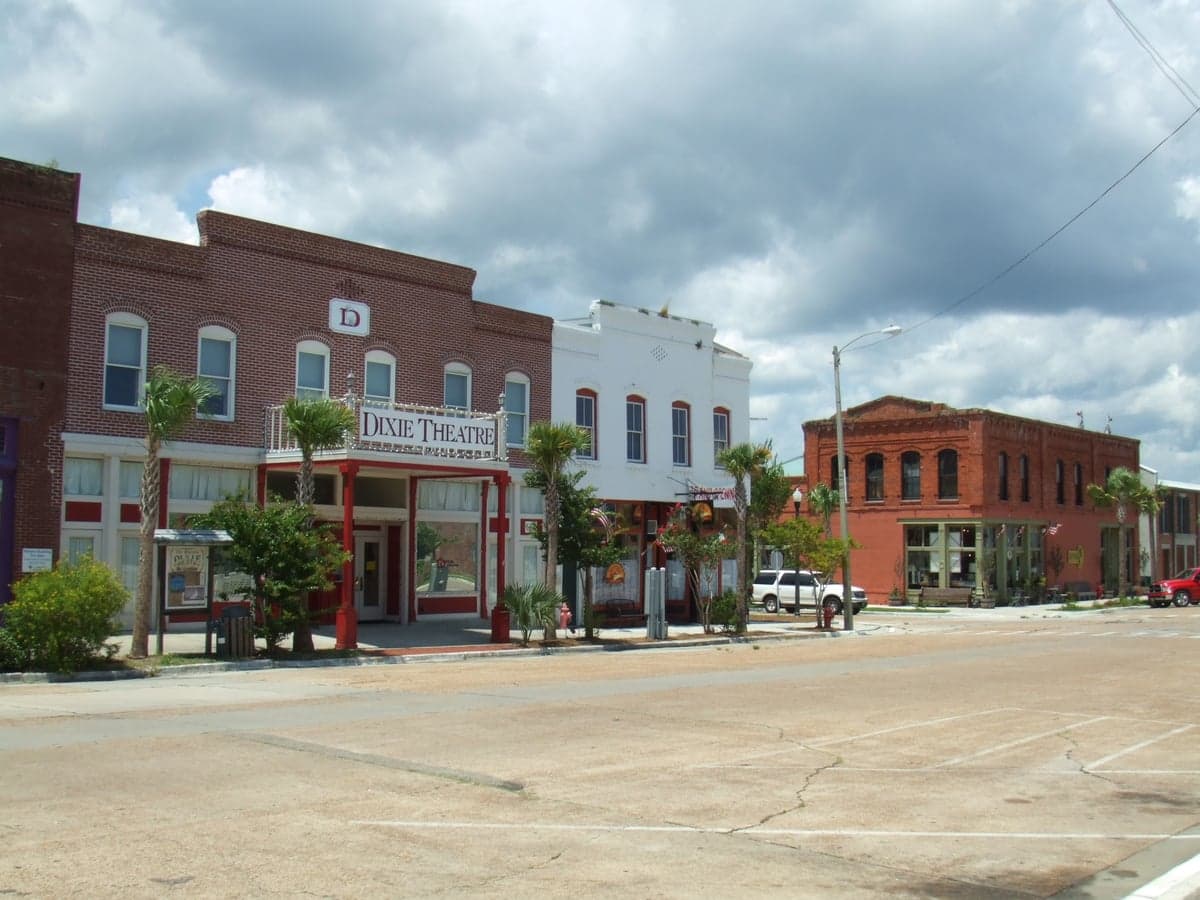
Photo: Wikipedia
Personal Sovereignty in Apalachicola, FL
Viable for self-reliance. Generally workable, though some barriers may limit total independence.
What does Personal Sovereignty tell us?
Personal Sovereignty measures your capacity for self-reliance and independence with minimal government friction. Higher scores mean fewer barriers between you and the way you want to live... but it assumes you have the space you need and good neighbors.
What does this tell us?
Personal Sovereignty measures your capacity for self-reliance and independence with minimal government friction. Higher scores mean fewer barriers between you and the way you want to live... but it assumes you have the space you need and good neighbors.
State Policy
Energy independence: Importer (12% of energy produced in-state)
Personal Liberty
Homesteading

Personal Liberty Analysis
Apalachicola, Florida, offers a notably high degree of personal sovereignty, rooted in Florida’s broader state-level commitment to limited government, low taxation, and strong individual rights. For those prioritizing autonomy, this small Gulf Coast town provides a regulatory environment that is generally light-touch, particularly when compared to more densely populated or politically progressive regions of the country. The combination of no state income tax, permissive self-defense laws, and a rural, low-density setting creates a foundation where self-reliance is not just possible but practically encouraged, though specific local zoning and environmental regulations do impose some constraints.
Tax burden and regulatory posture in Apalachicola
Florida’s tax structure is a major draw for sovereignty-minded individuals. The state levies no personal income tax, meaning every dollar earned stays in the resident’s pocket. Sales tax in Franklin County, where Apalachicola is located, is 7.5% (6% state plus 1.5% county), which is moderate but not excessive. Property taxes are also relatively low, with Franklin County’s millage rate hovering around 8.5 mills, translating to roughly $850 per $100,000 of assessed value. This is significantly lower than the national average and far below rates in states like New York or Illinois. The regulatory posture at the state level is deliberately business-friendly, with streamlined permitting processes and a general presumption against overregulation. Locally, Apalachicola’s small-town character means fewer bureaucratic layers, but the city does enforce building codes and zoning ordinances, particularly in the historic district and along the waterfront. Environmental regulations tied to the Apalachicola River and Bay—critical for the oyster industry—can be stringent, affecting property use near waterways. Overall, the tax burden is light, and regulatory friction is low for most residential and small-business activities, though anyone planning commercial or waterfront development should expect some oversight.
Self-defense and gun law specifics in Florida
Florida is a strong Second Amendment state, and Apalachicola residents enjoy some of the most permissive self-defense laws in the nation. The state operates under a “stand your ground” statute, which eliminates any duty to retreat before using deadly force if a person reasonably believes it is necessary to prevent death or great bodily harm. Florida also has a constitutional carry law (effective July 1, 2023), meaning no permit is required to carry a concealed firearm for anyone 21 or older who is legally allowed to possess a gun. Open carry is generally restricted, but concealed carry without a permit is fully legal. There is no state-level firearm registration, no waiting period for long guns, and no magazine capacity limits. The permitting process for those who still want a concealed carry license (useful for reciprocity in other states) is straightforward, requiring a background check and a short training course. Local law enforcement in Franklin County is generally supportive of gun rights, and there are no county-level restrictions that exceed state law. For anyone prioritizing the right to self-defense, Apalachicola offers a legal environment that is among the most freedom-oriented in the country.
Self-reliance and homesteading viability: lot sizes, zoning, and off-grid feasibility
Apalachicola’s rural character makes it a viable location for homesteading and off-grid living, though with some caveats. Residential lot sizes within the city limits are typically small—often a quarter-acre or less—but unincorporated Franklin County offers larger parcels, with many lots ranging from 1 to 10 acres at affordable prices (often under $5,000 per acre). Zoning in the county is minimal, with no county-wide building codes outside of the city, though septic system permits and well permits are required by the state health department. Off-grid feasibility is high: solar power is practical given the area’s 230+ sunny days per year, and many residents use rainwater collection or private wells for water. However, the city of Apalachicola does require connection to municipal water and sewer for properties within its limits, which limits full off-grid independence there. The county allows composting toilets and alternative waste systems with proper permitting. Gardening and small livestock (chickens, goats) are generally permitted, though the city has some restrictions on farm animals within residential zones. The biggest challenge for self-reliance is the limited local food infrastructure—there is no major grocery store within the city (the nearest full-service supermarket is in Eastpoint, about 10 minutes away), so growing your own food or buying from local fishermen and farmers is almost a necessity for a truly self-sufficient lifestyle. Overall, the area is very friendly to homesteading, especially outside city limits, with low land costs and minimal regulatory barriers.
Personal liberties: parental rights, medical autonomy, speech, and property
Florida has become a national leader in protecting certain personal liberties, particularly around parental rights and medical autonomy. The state’s Parental Bill of Rights (enacted in 2021) gives parents explicit authority over their children’s education, healthcare, and upbringing, including the right to opt out of any school curriculum or activity. School choice is robust, with charter schools, private schools, and homeschooling all widely available and lightly regulated. In Apalachicola, the local public schools (Franklin County Schools) are small, but many families choose homeschooling or virtual schooling, which the state supports with tax-credit scholarships. On medical autonomy, Florida has passed laws restricting vaccine mandates and prohibiting discrimination based on vaccination status, and it has also enacted protections for medical conscience rights. The state does not have a right-to-try law for terminally ill patients, but it does allow direct primary care agreements outside of insurance. Free speech is strongly protected under the Florida Constitution, and the state has passed laws limiting social media censorship and protecting religious expression in public spaces. Property rights are also strong: Florida has a homestead exemption that protects a primary residence from creditors (up to a certain value), and eminent domain is restricted to public uses with just compensation. In Apalachicola, property taxes are low, and there are no rent control laws. The main constraint on property rights comes from environmental regulations tied to the Apalachicola Bay, which can restrict development near the water. For a reader prioritizing personal liberties, Apalachicola offers a legal environment that is among the most protective in the Southeast, especially regarding family and medical decisions.
Overall, Apalachicola provides a sovereignty profile that is strong by national standards, particularly for those who value low taxes, gun rights, and parental control. The town’s small size and rural setting amplify the sense of autonomy, as residents face fewer bureaucratic hurdles than in larger Florida cities like Miami or Orlando. The main trade-offs are the limited local economy and the need to travel for specialized services, but for someone willing to embrace self-reliance, the regulatory and tax environment is among the lightest in the country. Compared to other small towns in the South, Apalachicola stands out for its combination of state-level freedom protections and a genuinely low-pressure local government, making it a solid choice for anyone seeking to maximize personal sovereignty.

* Values derived from national, state, county, city and local statistics and may differ in a specific area. Last updated: 2026-11-05T17:47:29.000Z
Narrative content on this page is AI-generated and may contain mistakes. Verify any details that matter before acting on them.
ReloMaps may earn a commission from affiliate links at no extra cost to you.

