Photo: Wikipedia
Political ClimatePolitical Climate in Ajo, AZ
District shown is the primary district for this city’s centroid. Cities may span multiple districts.
Local Political AnalysisPolitical Analysis of Ajo, AZ
Ajo, Arizona, leans heavily Democratic, with a Cook Partisan Voting Index (PVI) of D+13, making it one of the most reliably blue communities in a state that is otherwise a pure toss-up. The state of Arizona as a whole carries a Cook PVI of EVEN, meaning it is perfectly balanced between the two major parties. This means Ajo is a political outlier—a deep-blue island in a purple state, and its voting patterns have been consistent for decades, driven by a unique mix of local history, demographics, and economic realities.
How it compares
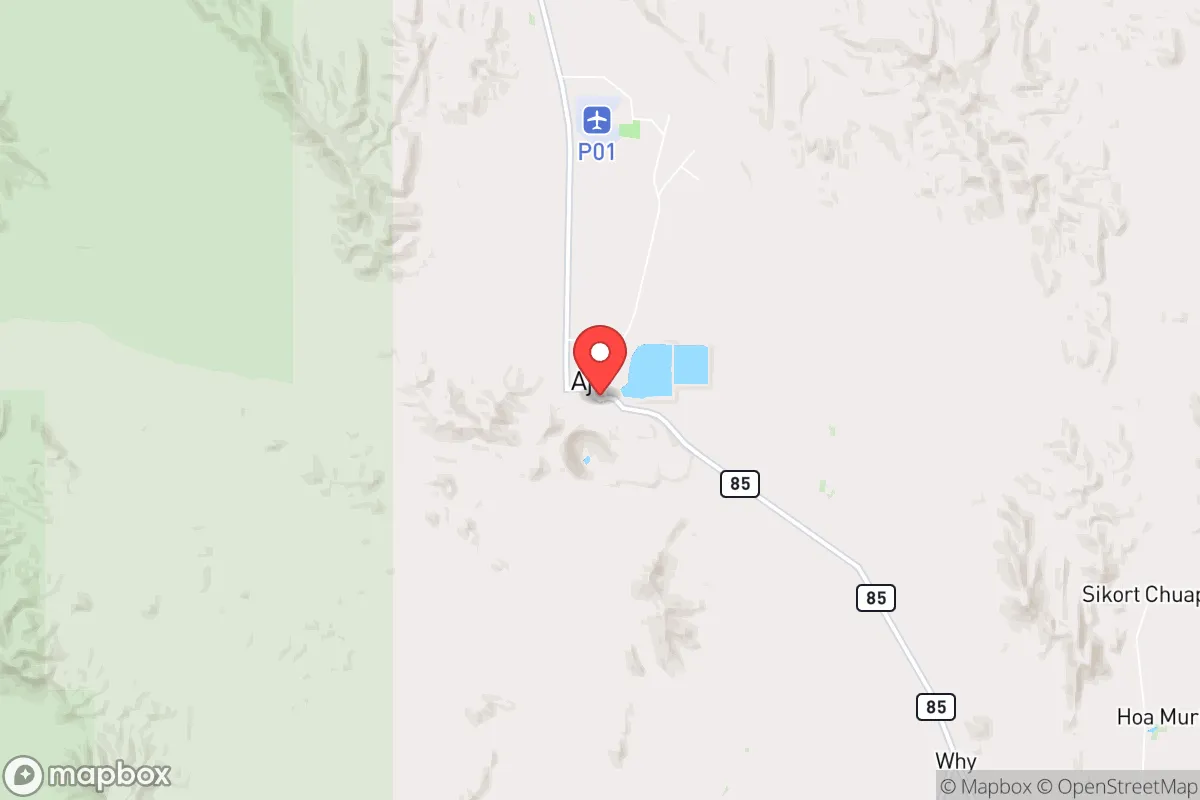
To understand Ajo’s political climate, you have to look at the surrounding region. The town sits in western Pima County, far from the liberal stronghold of Tucson (which is D+15) and even farther from the conservative bastions of Maricopa County. Drive 40 miles east to the small town of Why, Arizona, or 60 miles north to Gila Bend, and you’ll find communities that lean more Republican, reflecting the broader rural trend in Arizona. Ajo’s D+13 rating is a stark contrast to the state’s EVEN PVI, which is pulled to the center by the massive, competitive suburbs of Phoenix and the reliably red rural areas. In the 2020 presidential election, Ajo precincts voted for Joe Biden by a margin of roughly 2-to-1, while neighboring Pinal County (just to the east) went for Donald Trump by a similar ratio. This split isn’t new—Ajo has voted Democratic in every presidential election since at least 2000, while Arizona flipped from red to purple only in the last decade.
What this means for residents
For liberal residents, Ajo offers a rare sense of political comfort in a state where many rural areas feel hostile. Local elections tend to be decided in Democratic primaries, and progressive policies—like support for public lands conservation and immigrant rights—are broadly popular. The town’s large Latino population (over 60% of residents) and its history as a copper mining hub have fostered a working-class Democratic identity that feels authentic, not coastal. For conservative residents, life in Ajo can be more isolating politically, but it’s not oppressive. The local economy is small, and most people know each other, so political disagreements rarely escalate. You’ll still see Trump signs on a few front yards, and the local gun culture is strong regardless of party. The real friction comes from state-level politics: Ajo’s representatives in the Arizona Legislature are almost all Democrats, but the state government in Phoenix is controlled by Republicans, meaning local priorities—like funding for the nearby Organ Pipe Cactus National Monument or water rights—often get sidelined.
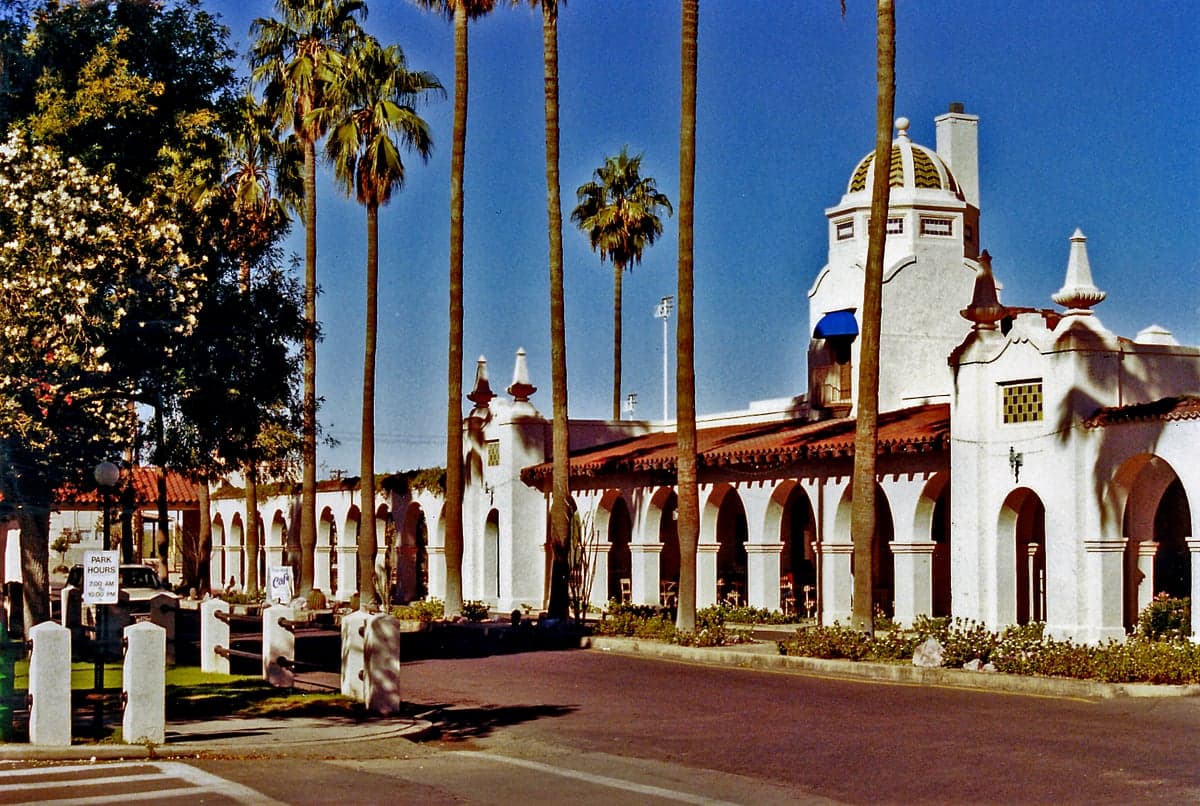
Culturally, Ajo feels distinct from the rest of Arizona. The town’s historic Spanish colonial revival architecture and its status as a gateway to the Sonoran Desert give it a laid-back, border-town vibe that’s more akin to Bisbee than to Phoenix. There’s a strong sense of community self-reliance, partly because the nearest major city (Tucson) is 120 miles away. Policy-wise, Ajo has embraced local control: the town council has passed resolutions supporting sanctuary city policies, and the local school district is one of the few in the state to offer bilingual education programs. These moves are popular locally but put Ajo at odds with state laws, like the 2010 SB 1070 immigration enforcement bill. For anyone moving here, the key takeaway is that Ajo’s politics are deeply rooted in its geography and history—it’s not a place that swings with national trends. If you’re a liberal, you’ll feel at home; if you’re a conservative, you’ll find a community that values neighborliness over partisanship, but you’ll need to accept that your vote will rarely carry the day locally.

State Political ClimatePolitical Climate in Arizona
State Political AnalysisPolitical Environment in the State
Arizona is the ultimate swing state in 2026, with a Cook PVI of EVEN that perfectly captures its knife-edge balance. Over the past 20 years, the state has shifted from a reliably Republican stronghold—where George W. Bush won by 11 points in 2004—to a purple battleground where Joe Biden eked out a 0.3% win in 2020 and Donald Trump reclaimed it by 2.5% in 2024. The dominant coalitions are a fast-growing, diverse Maricopa County suburban bloc (think Phoenix, Mesa, Chandler) that leans center-right but is trending left, pitted against a deeply red rural and exurban interior (Prescott, Yavapai County, Cochise County) and a reliably blue urban core in Tucson and Flagstaff. For a conservative-leaning relocator, the practical reality is that your vote matters here more than almost anywhere else in the country, and the state’s policy environment reflects that constant tug-of-war.
Urban vs. rural divide
The political map of Arizona is a story of three distinct Arizonas. Maricopa County, home to 60% of the state’s population, is the decisive battleground. Its sprawling suburbs—Chandler, Gilbert, Scottsdale—were once GOP strongholds but have shifted toward the center as tech and finance workers move in from California and the Midwest. In 2024, Trump won Maricopa by just 1.5 points, down from 3.5 in 2020. Meanwhile, Tucson (Pima County) and Flagstaff (Coconino County) are solidly Democratic, driven by university populations and a growing Latino electorate. The rural and exurban counties—Yavapai (Prescott), Mohave (Lake Havasu City), Cochise (Sierra Vista), and Pinal (Casa Grande)—vote Republican by 20-30 points, powered by retirees, veterans, and ranching families. The divide isn’t just partisan; it’s cultural. A resident in Prescott Valley will experience a very different Arizona than someone in downtown Phoenix, with the former prioritizing gun rights and low taxes, and the latter focusing on transit and environmental policy.
Policy environment
Arizona’s policy environment is a mixed bag that reflects its swing-state status. Taxes: The state has a flat income tax rate of 2.5% (enacted in 2023), one of the lowest in the nation, and no estate tax. Sales tax averages 8.4% but varies by city. Regulatory posture: Generally business-friendly, with right-to-work laws and minimal zoning in rural areas, though Phoenix and Tucson have stricter land-use rules. Education: Arizona is a national leader in school choice, with universal Empowerment Scholarship Accounts (ESAs) available to all K-12 students since 2022—a major draw for conservative families. Public school funding per pupil remains below the national average, however. Healthcare: The state expanded Medicaid under the Affordable Care Act in 2014, but the program (AHCCCS) faces periodic budget fights. Election laws: Arizona has no-excuse mail-in voting (used by 80% of voters), but also requires voter ID at the polls. The state’s election integrity has been a flashpoint since 2020, with the controversial “audit” of Maricopa County ballots in 2021. For a conservative, the policy mix offers low taxes and school choice, but the election system may feel less secure than in red states like Texas or Florida.
Recent policy direction
The last five years have seen Arizona lurch right on some fronts and hold center on others. Gun and self-defense law: In 2024, the legislature passed a permitless carry law (HB 2670), allowing concealed carry without a permit—a win for Second Amendment advocates. Parental and education rights: The 2022 ESA expansion was paired with a ban on “critical race theory” and “sexually explicit” materials in schools (HB 2495), though enforcement has been uneven. Speech and privacy: No major state-level speech restrictions, but local governments in Tucson and Flagstaff have passed non-discrimination ordinances that sometimes clash with religious liberty claims. Medical and bodily autonomy: This is the biggest flashpoint. In 2024, the state Supreme Court upheld a near-total abortion ban from 1864, but the legislature quickly repealed it, replacing it with a 15-week ban (no exceptions for rape or incest). A ballot initiative to enshrine abortion rights up to viability is expected in 2026. Property rights: Strong, with no state-level rent control and relatively low property taxes (0.62% effective rate). Taxation: The flat tax is locked in, but a 2024 ballot measure to require a supermajority for tax increases failed. Voting and ballot access: In 2025, the legislature passed a law requiring proof of citizenship for federal voter registration (the “SAVE Act” state version), which is being challenged in court. The net direction: a conservative tilt on guns, taxes, and education, but a volatile middle on abortion and elections.
Civil unrest & political movements
Arizona has been a national epicenter for political activism since 2020. The “Stop the Steal” movement was particularly intense here, with the Maricopa County ballot audit drawing national attention and protests outside the state capitol in Phoenix. On the left, the #RedForEd teacher walkouts in 2018 were the largest in U.S. history, leading to a 20% pay raise. Immigration politics are a constant undercurrent: Cochise County and Yuma are frontline areas for border crossings, and the state has passed multiple laws (SB 1070 in 2010, and a 2024 law making illegal entry a state crime) that are both cheered by conservatives and challenged in court. Sanctuary policies are limited—Tucson and Phoenix have “welcoming city” ordinances but don’t fully refuse cooperation with ICE. Election integrity remains a live issue: in 2024, a group of Republican legislators tried to decertify the state’s electronic voting machines, and the secretary of state’s office has been under constant legal pressure. For a new resident, you’ll see yard signs and bumper stickers that are more polarized than in most states, and local news is dominated by these fights. It’s not a place where politics stays quiet.
Projection
Over the next 5-10 years, Arizona is likely to remain a swing state, but the demographic trends favor a slow leftward drift. The state is growing by about 1.5% annually, with most newcomers coming from California and the Midwest—many are moderate conservatives or independents who lean right on taxes but left on social issues like abortion and marijuana (recreational use has been legal since 2020). The Latino population, now 32% of the state, is trending more Democratic but is not monolithic; many Latino voters in Yuma and Santa Cruz County are Catholic and socially conservative. The biggest wildcard is the 2026 abortion ballot initiative: if it passes, it could turbocharge Democratic turnout and flip the state legislature. Conversely, if the GOP can hold the line on election integrity messaging and keep the border issue front and center, they may retain a narrow edge. For a conservative moving in now, expect to live in a state where your vote is genuinely contested, where the legislature may flip every 2-4 years, and where policy on abortion, guns, and education will be a pendulum. The rural areas will stay red; the suburbs will be the battlefield.
Bottom line for a new resident: If you’re a conservative family, Arizona offers low taxes, school choice, and a strong gun culture, but you’ll need to be comfortable with political uncertainty and a state government that can swing left on social issues. If you’re a liberal, you’ll find a vibrant urban scene and growing political power, but you’ll face a legislature that is often hostile to your priorities. The practical takeaway is that Arizona rewards engagement—your vote, your activism, and your choice of city (red Prescott vs. purple Chandler vs. blue Tucson) will shape your daily experience more than in a solidly red or blue state. It’s a place where politics is a contact sport, and you’ll be on the field whether you like it or not.
* Values derived from national, state, county, city and local statistics and may differ in a specific area. Last updated: 2026-09-07T02:05:17.000Z
Narrative content on this page is AI-generated and may contain mistakes. Verify any details that matter before acting on them.
ReloMaps may earn a commission from affiliate links at no extra cost to you.

