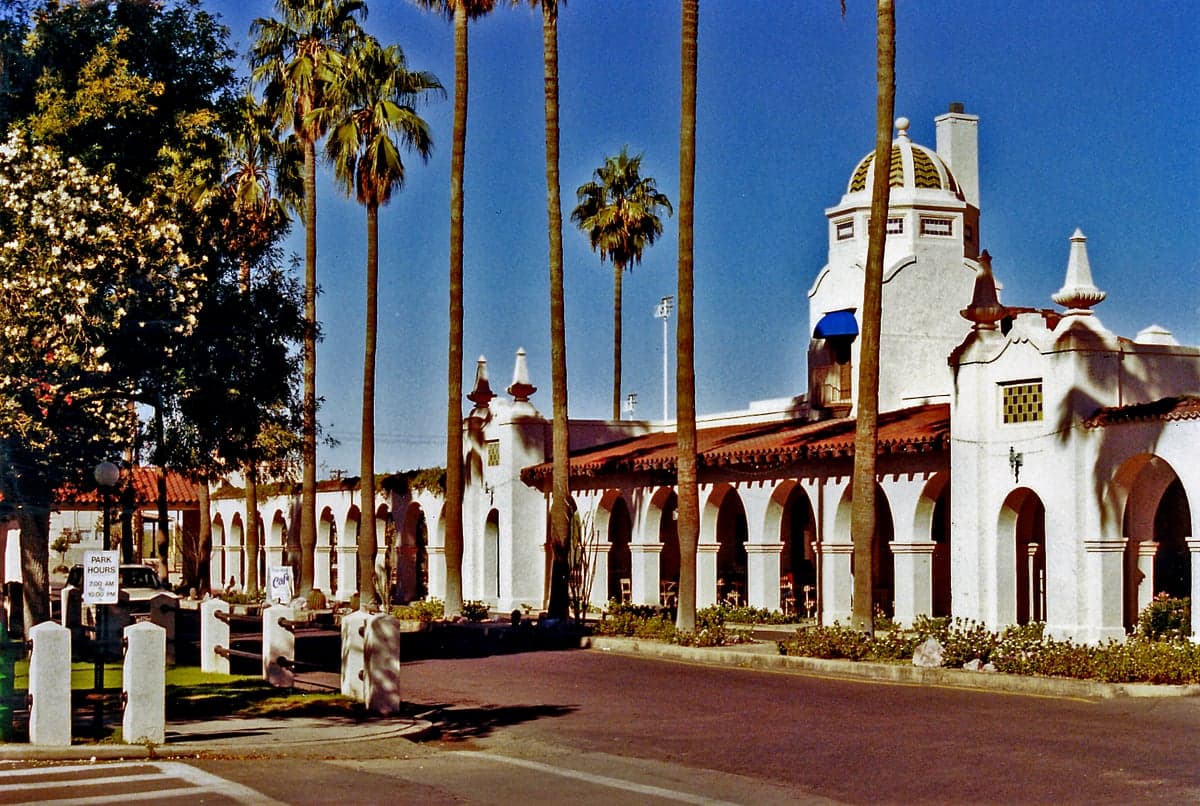
Photo: Wikipedia
Strategic Assessment of Ajo, AZ
Meaningful friction. Expect exposure to either population pressure, blast zones, or natural disaster risk. Consider buying a retreat property.
What does the Strategic Assessment tell us?
Our Strategic Assessment grades tactical survivability of an area. Major population centers, military targets, fallout zones, natural disasters, and border exposure all drive risk — lower exposure means a more defensible position in a crisis.
This is heavily inspired by Joel Skousen's Strategic Relocation book. Highly recommended you checkout the book ($)What does this tell us?
Our Strategic Assessment grades tactical survivability of an area. Major population centers, military targets, fallout zones, natural disasters, and border exposure all drive risk — lower exposure means a more defensible position in a crisis.
This is heavily inspired by Joel Skousen's Strategic Relocation book. Highly recommended you checkout the book ($)Strategic Pillars

Key Distances
Regional Safe Places
Below is our recommended "safe zones" in Arizona and the surrounding area based on our strategic heuristics. For most people, it's unrealistic to live in a “safe zone” full-time due to work, family or other personal reasons. They tend to be more rural. However, many of these areas are perfect for second homes and retreat properties that double as a vacation home or even a short-term rental.
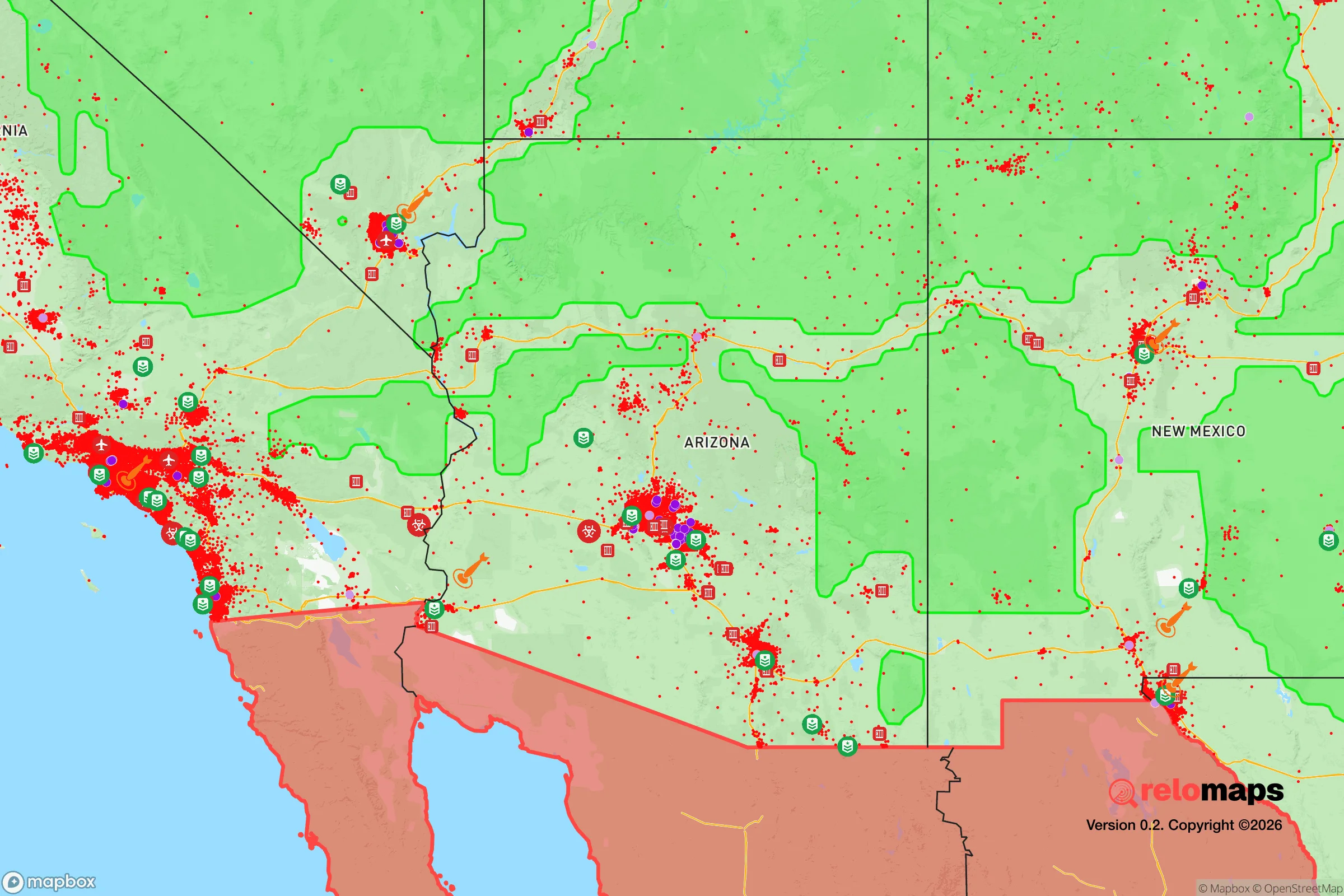
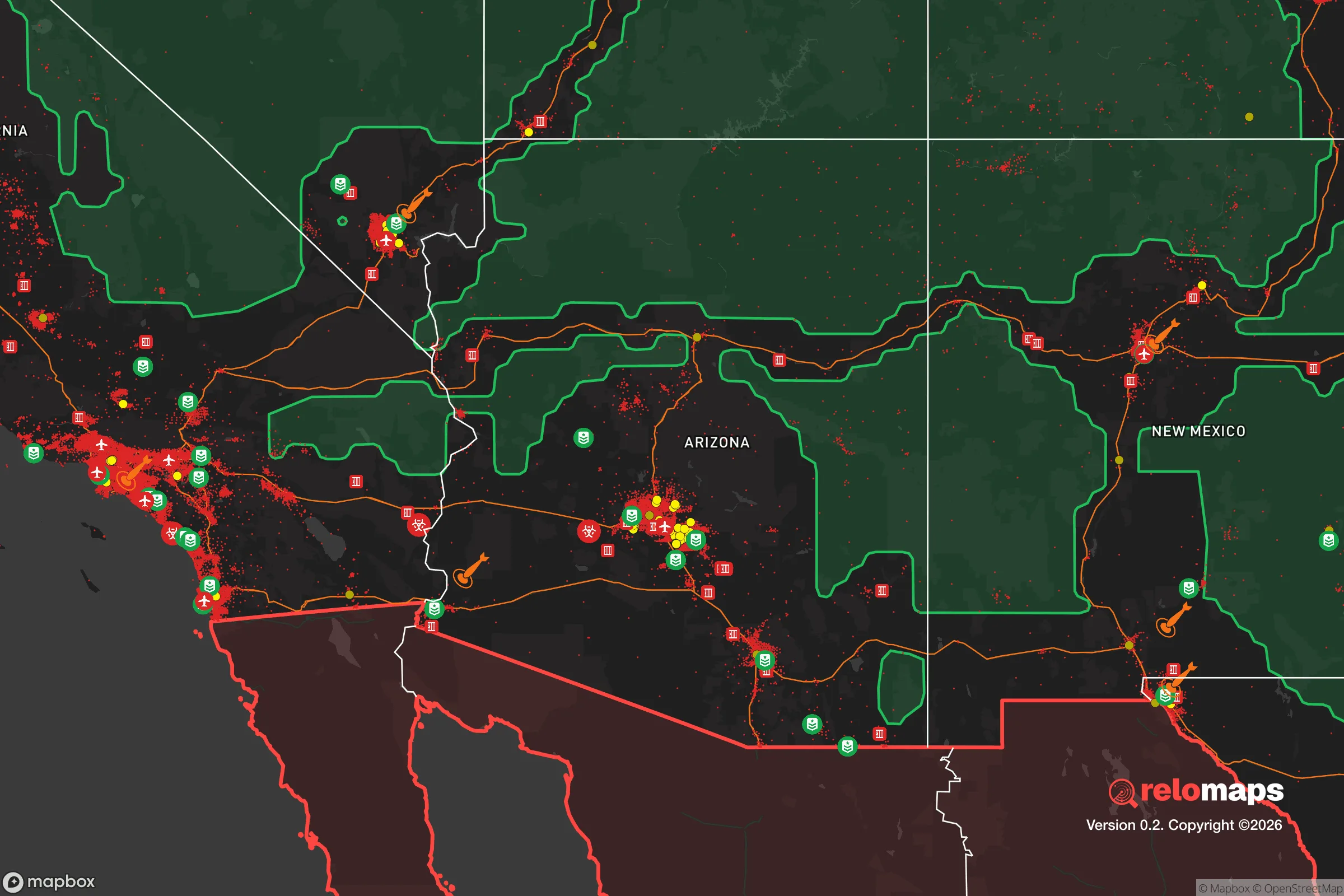


Important Note: For informational purposes only. This does not mean nothing bad ever happens in the green zones. Please use common sense. This is based on public data and modeled with AI. We tried to take a conservative approach but mistakes happen. We update this regularly as new information becomes available.
Solar Generator Recommendations
Backup power matters more here than in safer locations. We've picked three solar generators across budgets and capacity tiers — start with the budget unit if you only need a few essentials, or step up if you want to run a fridge and HVAC for days at a time.

Jackery Portable Power Station Explorer 300
Budget OptionPower on the Go: Weighing only 11 lbs, it's convenient to set up and store with book-sized foldable solar panels

BLUETTI Portable Power Station AC180
Designed for both indoor and outdoor scenarios, AC180 is highly capable as it has a robost capacity and continuous output power.

EF ECOFLOW DELTA Pro Ultra Power Station
Upgraded PickEcoFlow DELTA Pro Ultra is a whole-home energy system designed to grow with your family. Integrated with the Smart Home Panel 2, it scales to meet your evolving energy needs — keeping your home powered, intelligent, and secure through every stage of life.
We earn a commission, at no additional cost to you.
Strategic Assessment Analysis
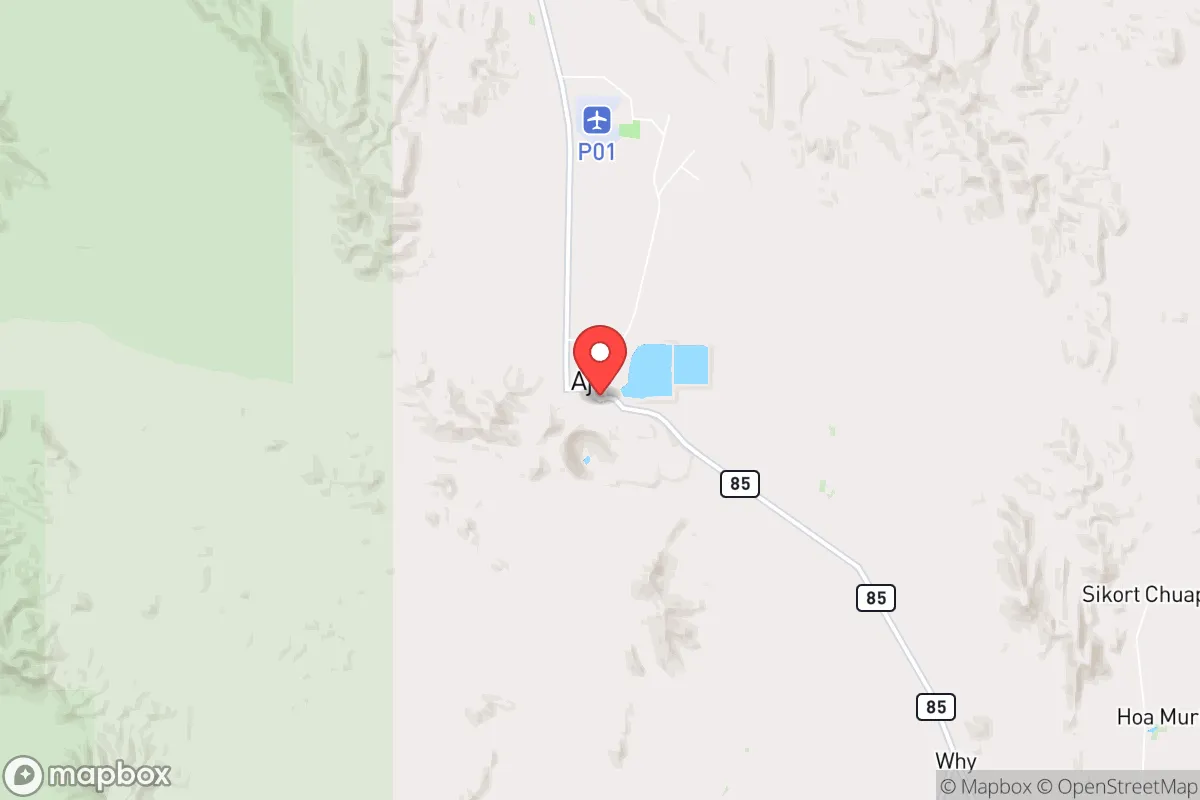
Ajo, Arizona, presents a compelling case for the relocation-minded individual or family prioritizing resilience and self-sufficiency, though its strategic value is deeply tied to understanding its isolation and the trade-offs that come with it. Located in the Sonoran Desert roughly 40 miles north of the U.S.-Mexico border and 120 miles west of Tucson, Ajo offers a unique combination of extreme remoteness, a mild winter climate, and access to a historic, small-town infrastructure that has weathered economic booms and busts. For the conservative-leaning reader thinking seriously about disaster readiness, Ajo’s primary advantage is its distance from major population centers and the associated risks of civil unrest, supply chain collapse, or fallout from a man-made event, but this isolation also demands a high degree of pre-planning and self-reliance.
Geographic position and natural advantages for long-term self-sufficiency
Ajo’s location is its strongest asset for resilience. The town sits within the Organ Pipe Cactus National Monument and the Sonoran Desert National Monument, surrounded by vast, federally protected lands that buffer it from urban sprawl. This means a low population density—roughly 3,000 residents in the town proper—and minimal through-traffic, as the main highway (AZ-85) dead-ends at the border. The region’s mild winter temperatures (average highs in the 60s and 70s from November to March) reduce heating fuel demands and allow for year-round outdoor activity, including gardening and water harvesting. The area’s low annual rainfall (under 10 inches) is a constraint, but the historic Ajo Copper Mine and surrounding washes indicate a reliable groundwater table, with the San Cristobal Valley Aquifer providing a potential deep-water source. The terrain is flat to gently rolling, offering defensible sightlines and multiple egress routes via dirt roads into the Barry M. Goldwater Air Force Range to the east and the Tohono O'odham Nation to the south, though these require high-clearance vehicles and knowledge of the landscape.
Risks, exposures, and proximity to fallout-relevant landmarks
While Ajo’s isolation is a strength, it is not immune to risks. The most significant exposure is its proximity to the U.S.-Mexico border, which brings periodic drug trafficking and illegal immigration activity, though violent crime rates in Ajo itself remain low compared to national averages. The Barry M. Goldwater Air Force Range to the east is a live-fire training area, meaning occasional military aircraft noise and the theoretical risk of stray ordnance, but this is a minor concern for most relocators. More critically, Ajo is downwind of potential fallout zones from a major event at the Palo Verde Nuclear Generating Station (near Phoenix, roughly 100 miles north) or a high-altitude detonation over a major city like Phoenix or Tucson. Prevailing winds in the region are from the west and southwest, which would carry fallout from Phoenix toward the east, not directly toward Ajo. However, a ground-level release from Palo Verde could push contamination southward under certain weather patterns. The town’s distance from major military installations like Davis-Monthan Air Force Base (Tucson) and Luke Air Force Base (Phoenix) reduces its likelihood of being a secondary target, but its position near the border could make it a staging area for federal response operations, potentially drawing unwanted attention. Natural hazards include extreme heat (summer highs exceeding 110°F), flash flooding in arroyos during monsoon season (July-September), and the risk of wildfire in the surrounding desert scrub. The area is seismically stable, with no significant fault lines nearby.
Practical resilience for a relocator: food, water, energy, and defensibility
For a relocator serious about self-sufficiency, Ajo requires a deliberate approach to infrastructure. Water is the single most critical factor. The town’s municipal water supply comes from the Ajo Well Field, which draws from the aquifer, but a long-term grid failure would necessitate private wells or rainwater harvesting. The average annual rainfall of 9.5 inches means a 1,000-square-foot roof could collect roughly 5,000 gallons per year—enough for basic drinking and hygiene for a family of four, but not for irrigation. Food production is challenging but possible. The growing season is long (February through November), but the intense heat and low humidity require shade structures, drip irrigation, and soil amendments. Traditional desert crops like tepary beans, mesquite pods, and prickly pear are well-suited, and the Ajo Community Garden provides a model for cooperative growing. Energy independence is feasible given the region’s 300+ sunny days per year; solar panels with battery storage can easily meet a household’s needs, and the town’s low electricity demand means net metering is available through Trico Electric Cooperative. Defensibility is high due to the town’s layout: a compact core with a single main road in and out (AZ-85), surrounded by open desert that provides clear sightlines. The historic Ajo Plaza and surrounding adobe buildings offer natural cover and chokepoints, while the abandoned mine shafts and tailings piles to the north could serve as fallback positions or storage. However, the lack of a local police force (the Pima County Sheriff’s Office covers the area) means community policing and mutual aid agreements are essential for security.
The overall strategic picture for Ajo is one of a high-risk, high-reward outpost for the prepared relocator. Its isolation from major cities and military targets is a genuine advantage for those seeking to avoid the chaos of a widespread collapse, but that same isolation demands a level of self-sufficiency that few are ready for. The climate is harsh but predictable, the water supply is finite but manageable with planning, and the community is small enough that social cohesion is possible. For a conservative-leaning individual or family willing to invest in solar, water storage, and desert-adapted agriculture, Ajo offers a defensible, low-profile base with a deep history of frontier resilience. It is not a place for the unprepared or the faint of heart, but for those who treat relocation as a strategic decision, it represents one of the more viable options in the Southwest for long-term survival without the risks of urban proximity.

* Values derived from national, state, county, city and local statistics and may differ in a specific area. Last updated: 2026-09-07T02:05:17.000Z
Narrative content on this page is AI-generated and may contain mistakes. Verify any details that matter before acting on them.
ReloMaps may earn a commission from affiliate links at no extra cost to you.

