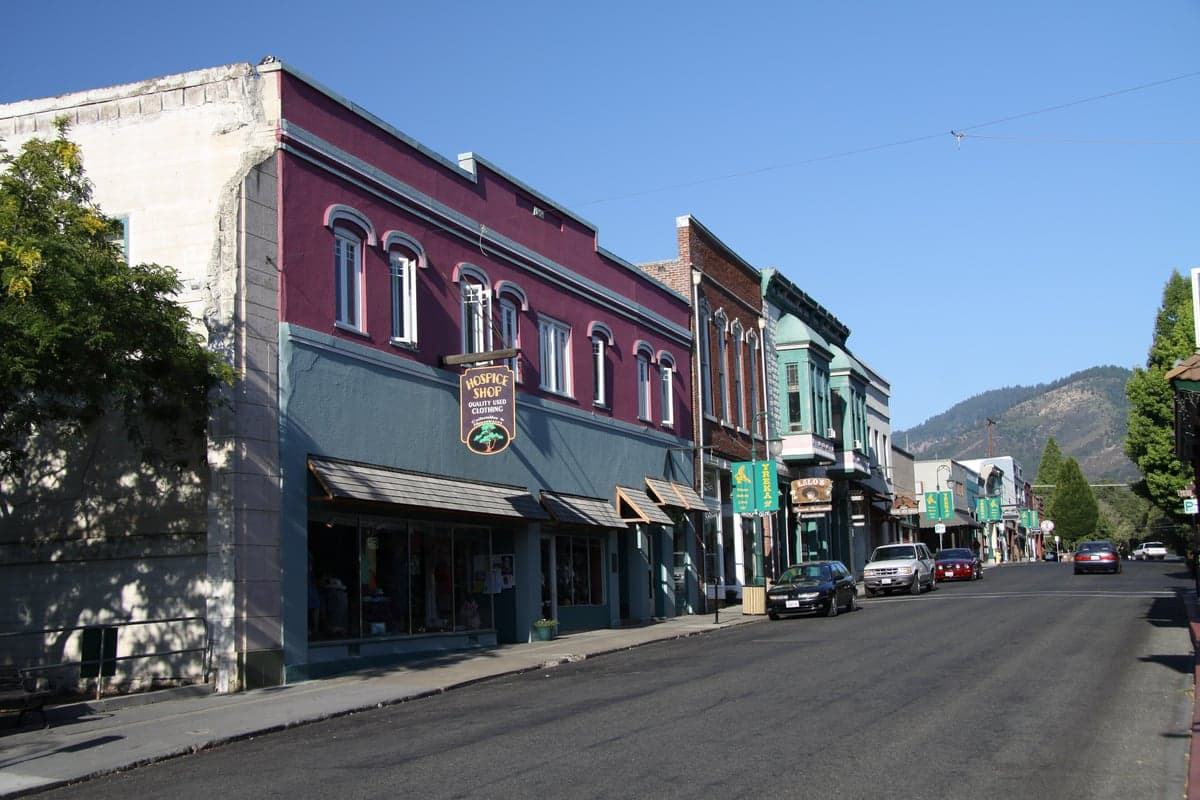
Photo: Wikipedia
Political ClimatePolitical Climate in Yreka, CA
District shown is the primary district for this city’s centroid. Cities may span multiple districts.
Inherited from parent state — no local data available.
Local Political AnalysisPolitical Analysis of Yreka, CA
Yreka leans heavily Republican, and it’s not a subtle thing—it’s the kind of place where you’ll see more Trump signs than yard flowers during election season. Siskiyou County, where Yreka sits, voted about +33 points Republican in the 2024 presidential race, a margin that’s actually widened a bit since 2020. That puts Yreka in a different universe from California’s coastal strongholds like San Francisco or Los Angeles, but it’s pretty typical for the far northern part of the state, where timber and ranching roots run deep. The trajectory here is steady red, with no real sign of flipping—if anything, the area’s politics have hardened as the state’s overall policies have drifted left.
How it compares
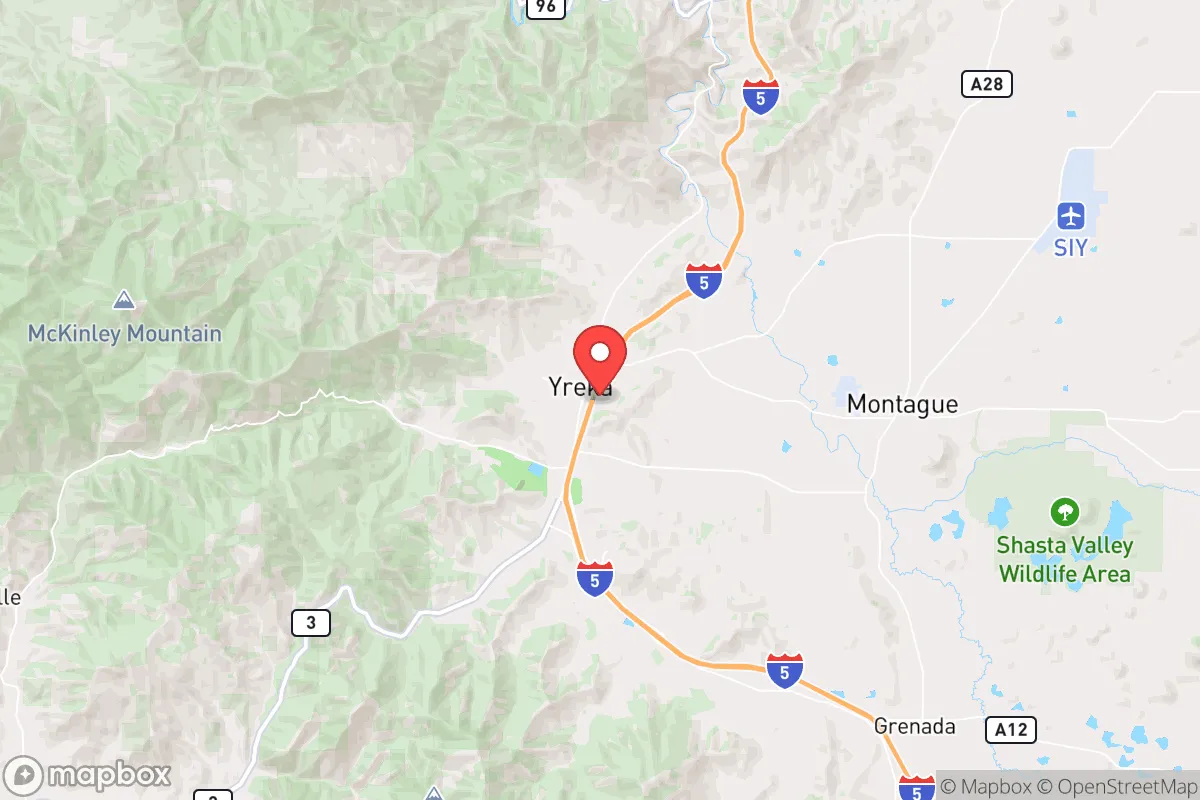
Compared to California as a whole, Yreka is an outlier. The state’s Cook PVI is listed as unknown, but anyone who’s watched elections knows California is solidly Democratic at the statewide level—think +20 points for Biden in 2020. Yreka’s voting patterns are closer to what you’d see in rural Idaho or eastern Oregon than to the rest of California. Nearby towns like Mount Shasta and Weed are a bit more mixed, with a small but visible liberal presence tied to the outdoor recreation and spiritual tourism crowd, but they’re still conservative by state standards. Drive an hour south to Redding, and you’re in even redder territory—Shasta County is reliably +30 Republican. So Yreka isn’t alone up here; it’s part of a regional bloc that feels politically disconnected from Sacramento and the Bay Area.
What this means for residents
For conservative residents, Yreka feels like a refuge. You can talk politics at the hardware store without getting side-eyed, and local officials tend to push back on state mandates—like when the county declared itself a “Second Amendment sanctuary” a few years back. But for liberal residents, it can be isolating. There’s no real Democratic Party infrastructure to speak of; the local party meetings might draw a dozen people. That said, most folks get along day-to-day—politics doesn’t dominate every conversation like it does in more polarized cities. The practical effect is that state-level policies on housing, energy, and water often feel imposed from afar, and locals grumble about regulations that make sense in Los Angeles but not in a town of 7,500 where people heat with wood stoves.
Culturally, Yreka is distinct from the California stereotype. There’s a strong libertarian streak—people want to be left alone, whether that means driving a lifted truck or keeping chickens in the backyard. The local paper, the Siskiyou Daily News, covers county board meetings and high school sports, not coastal politics. Over the next decade, I’d expect the political divide to stay wide, but not necessarily to get nastier. The real tension will be over water rights and wildfire management, where local needs clash with state environmental goals. If you’re moving here, just know that your vote won’t change California’s electoral map, but your voice will carry weight at the town council level—and that’s where most of the stuff that actually affects your life gets decided anyway.

State Political ClimatePolitical Climate in California
State Political AnalysisPolitical Environment in the State
California is a deeply blue state, with Democrats holding every statewide office and supermajorities in both legislative chambers, but that monolithic label hides a far more complex reality. The state hasn't voted Republican in a presidential election since 1988, and in 2024, Kamala Harris carried it by roughly 20 points. Yet over the last 10-20 years, the dominant political story isn't just Democratic dominance—it's a slow, steady erosion of that dominance in the interior, driven by a massive red shift in the Central Valley and Inland Empire, even as the coastal metros have hardened their blue lean. For a conservative relocator, the practical takeaway is that you'll live under one-party rule at the state level, but your day-to-day political experience will vary enormously depending on whether you land in San Francisco, Bakersfield, or Orange County.
Urban vs. rural divide
The political map of California is a study in extremes. The entire coastline from Santa Barbara north through San Francisco and up to the Oregon border is solidly Democratic, with San Francisco and Los Angeles County delivering margins of 70-80% for Democratic candidates. These metros drive the state's overall lean because they contain roughly 60% of the population. But drive an hour inland, and the landscape flips. The Central Valley—places like Bakersfield (Kern County), Fresno, and Modesto—votes as red as rural Texas, with Kern County going +20 for Trump in 2024. The Inland Empire, anchored by Riverside and San Bernardino, is the state's true battleground: it's trending red fast as working-class families move east from LA, and in 2024, Riverside County flipped to Trump by a narrow margin. Even in the Bay Area, there are pockets of red: Simi Valley in Ventura County and parts of Santa Clarita north of LA consistently vote Republican. The rural north—Redding and Shasta County—is as conservative as any place in America, with secessionist sentiment running high. The divide isn't just geographic; it's cultural. Coastal Californians tend to be college-educated and work in tech or entertainment, while inland residents are more likely to work in agriculture, logistics, or manufacturing, and they feel increasingly alienated from Sacramento's priorities.
Policy environment
California's policy environment is defined by high taxes, heavy regulation, and expansive government services. The state has a progressive income tax with a top marginal rate of 13.3% (the highest in the nation), a state sales tax that can exceed 10% in some cities, and some of the highest gas taxes in the country. Property taxes are capped at 1% of assessed value under Proposition 13, but reassessment on sale means new buyers face much higher bills than long-term owners. The regulatory posture is aggressive: California has its own environmental agency (CARB) that sets emissions standards stricter than federal law, and its own workplace safety and labor laws that go far beyond OSHA. On education, the state spends roughly $20,000 per pupil, but outcomes are mediocre—only about half of students meet state standards in reading and math. Healthcare is heavily regulated, with the state running its own insurance exchange (Covered California) and expanding Medi-Cal to cover all low-income adults regardless of immigration status. Election laws are among the most liberal in the country: universal mail-in voting, same-day registration, and no voter ID requirement. For a conservative, the policy environment feels like a wall of mandates and costs, but for a liberal, it's a model of progressive governance.
Recent policy direction
The last five years have seen California accelerate in a distinctly progressive direction, with a series of laws that directly affect the liberties a relocator might weigh. On gun and self-defense law, the state passed SB 2 in 2023, which effectively bans carrying firearms in most public places—including parks, hospitals, and any business that doesn't post a sign allowing it—and raised the permit age to 21. The law is being challenged in court, but for now, concealed carry is nearly impossible in practice. On parental and education rights, AB 1955 (2024) prohibits school districts from requiring teachers to notify parents if a child changes their gender identity, effectively overriding local school board policies. This has become a major flashpoint, with several conservative school boards suing the state. On speech and privacy, the state passed the California Age-Appropriate Design Code (2022), which requires tech platforms to default to the highest privacy settings for minors, but critics argue it could chill free speech online. On medical and bodily autonomy, California has become a "sanctuary" for abortion, passing a 2022 constitutional amendment enshrining abortion rights and spending millions to fund travel for out-of-state patients. On property rights, the state has tightened rent control (AB 1482, 2019) and made it harder to evict tenants, but has also preempted local bans on accessory dwelling units, which has boosted housing supply in some areas. On taxation, the trend is toward higher taxes on the wealthy, with a 2024 ballot measure (Prop 5) that would have made it easier to raise property taxes on commercial properties failing narrowly. On voting and ballot access, the state has moved to all-mail elections and automatic voter registration at the DMV, which has boosted turnout but also raised concerns about ballot security among conservatives. The overall direction is clear: California is doubling down on progressive governance, with little appetite for compromise on the issues that matter most to conservative relocators.
Civil unrest & political movements
California has a long history of political activism, and the last decade has seen both left and right movements flare up visibly. The 2020 George Floyd protests were among the largest and most destructive in the state, with significant property damage in Los Angeles, San Francisco, and Oakland, and a lasting impact on public perception of crime and policing. On the right, the "State of Jefferson" movement—which advocates for the secession of rural northern California and southern Oregon—has gained traction in counties like Siskiyou and Modoc, though it remains a fringe effort. Immigration politics are a constant flashpoint: California is a "sanctuary state" under SB 54 (2017), which limits local law enforcement cooperation with federal immigration authorities. This has led to high-profile standoffs between the state and the Trump administration, and it remains a deeply polarizing issue. Election integrity controversies have been less intense than in some states, but conservative activists have raised concerns about the state's universal mail-in voting system, particularly after the 2020 election when California took weeks to count all ballots. Visible flashpoints a new resident would notice include the regular presence of homeless encampments in major cities—a direct result of the state's permissive policies on public camping—and the frequent clashes between pro-Palestinian and pro-Israel protesters on college campuses, especially at UCLA and UC Berkeley. For a conservative moving in, the political temperature can feel high, but it's mostly concentrated in the coastal cities; inland, life is quieter and more traditionally American.
Projection
Over the next 5-10 years, California's political trajectory is likely to be one of slow, grinding polarization. The coastal metros will continue to get bluer, driven by an influx of young, college-educated professionals and immigrants, while the interior will get redder as working-class families flee high housing costs and taxes. The key demographic shift is the continued exodus of middle-class families to Texas, Arizona, and Nevada—California lost a net 340,000 residents to other states between 2021 and 2024, and those leaving tend to be more moderate or conservative. This self-selection means the state's electorate is becoming more uniformly liberal, which will likely lead to even more progressive policies. However, there are limits: the state's housing crisis is so severe that it's creating a backlash, with local governments in places like San Diego and San Jose beginning to loosen zoning laws to allow more building, even if it means overriding environmental reviews. The biggest wildcard is the state's fiscal health: California's budget is heavily dependent on capital gains taxes from the wealthy, and a sustained market downturn could force painful cuts to the social programs that define the state's identity. For a conservative moving in now, the realistic expectation is that the state will remain solidly blue for the foreseeable future, but the practical experience will depend on where you settle. If you choose Bakersfield or Redding, you'll live in a conservative bubble with local representation that reflects your values, even as Sacramento ignores you. If you choose Los Angeles or San Francisco, you'll be immersed in a progressive culture that may feel alienating.
For a new resident, the bottom line is this: California offers unmatched economic opportunity, natural beauty, and cultural diversity, but it comes with a political price tag. You will pay high taxes, navigate heavy regulation, and live under laws that may conflict with your values on guns, education, and speech. However, the state is not a monolith—choose your city wisely, and you can find a community that feels like home. The key is to understand that state politics will always lean left, but local politics can lean right, and your quality of life will be shaped more by your county and city government than by Sacramento. If you can afford the cost of living and tolerate the policy environment, California remains a place of immense possibility. If you can't, the exodus to red states will continue to accelerate.
* Values derived from national, state, county, city and local statistics and may differ in a specific area. Last updated: 2026-10-29T07:39:57.000Z
Narrative content on this page is AI-generated and may contain mistakes. Verify any details that matter before acting on them.
ReloMaps may earn a commission from affiliate links at no extra cost to you.

