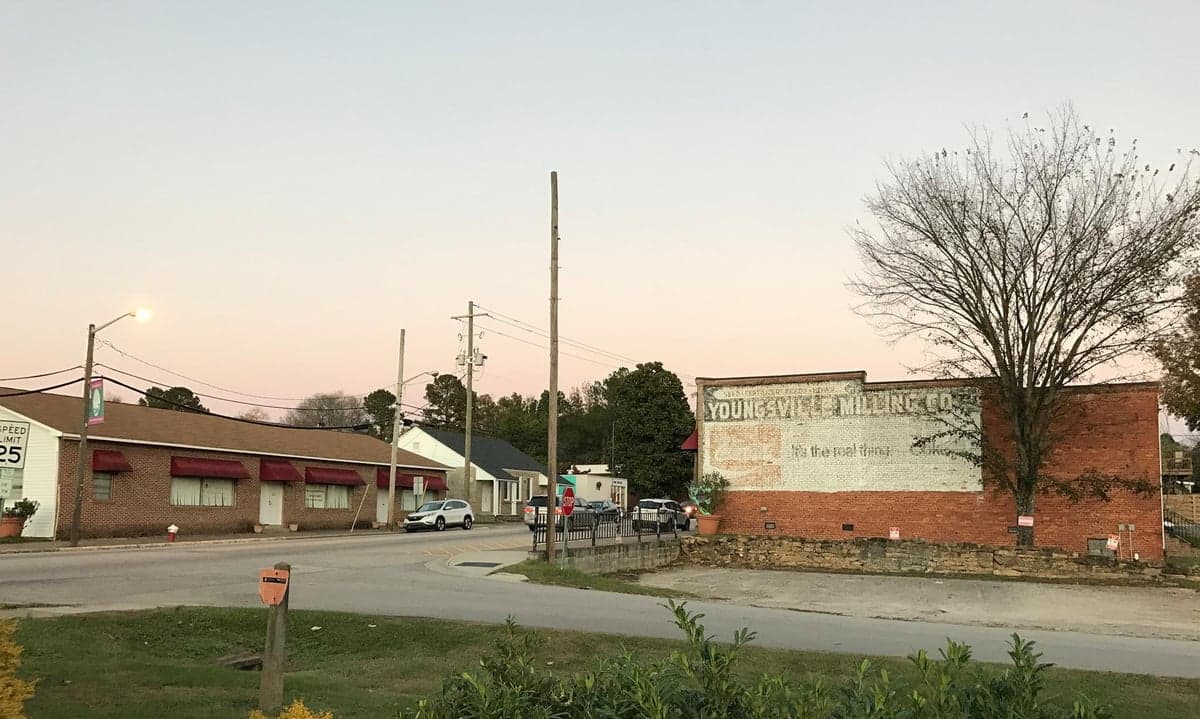
Photo: Wikipedia
Quality of Life in Youngsville, NC
Above-average quality of iife. The area offers a reasonable cost of living, decent mobility, and a mix of neighborhood amenities.
What does Quality of Life tell us?
Quality of Life blends cost of living, nearby amenities, socioeconomic signals, and neighborhood character. City-level scores represent the whole municipality; individual neighborhoods can differ.
What does this tell us?
Quality of Life blends cost of living, nearby amenities, socioeconomic signals, and neighborhood character. City-level scores represent the whole municipality; individual neighborhoods can differ.
Cost of Living
16% above national average
The Real Cost of Living in Youngsville, NC for 2026
| Tier | Individual | Family (4) |
|---|---|---|
| Survival | $18k | $34k |
| Comfortable | $78k | $114k |
| Luxury | $112k+ | $173k+ |
| Elite (Top 5%) | $134k+ | $208k+ |
54%
The Area Signal
A metric tracking the socioeconomic signals of the area.
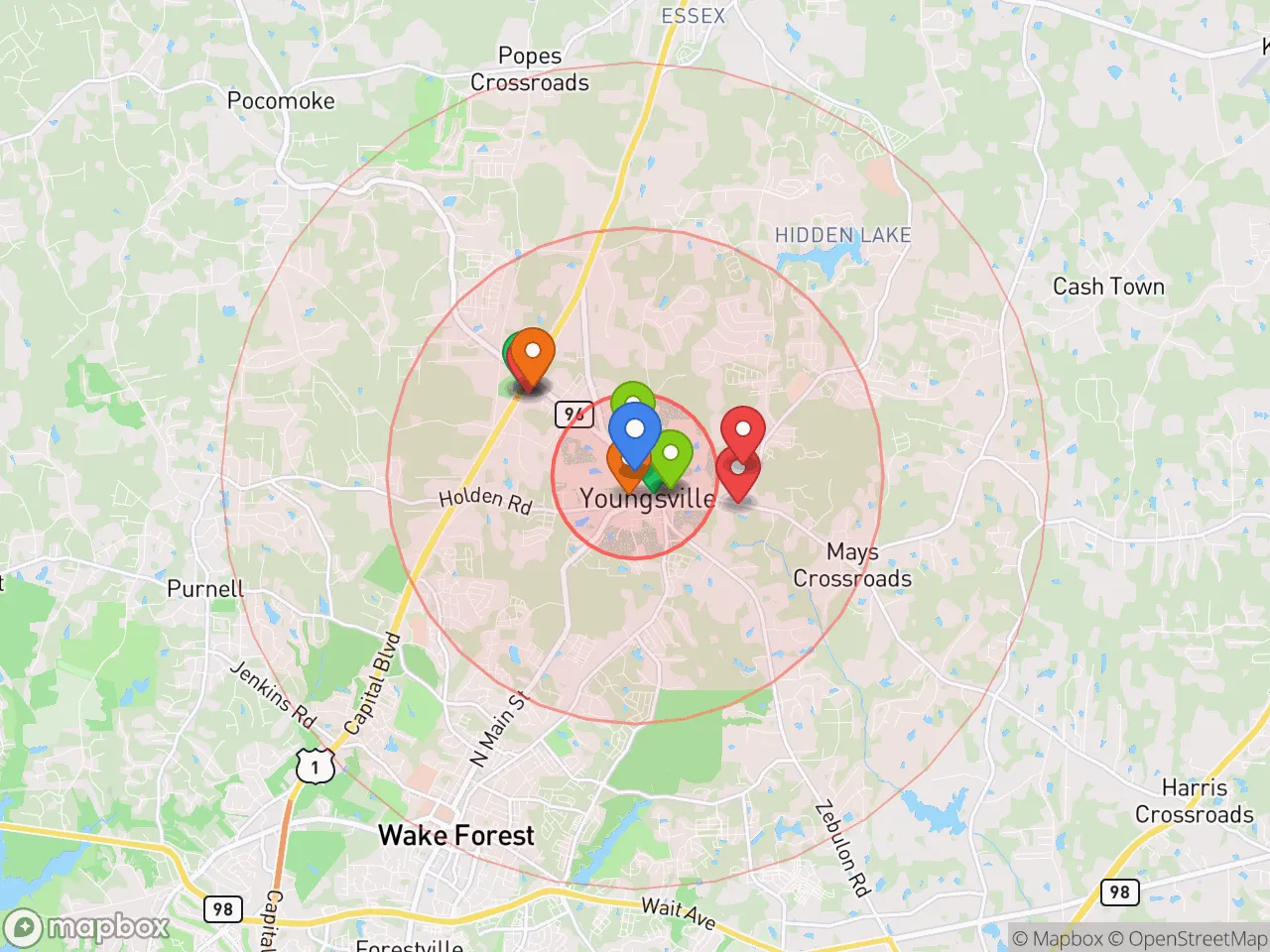
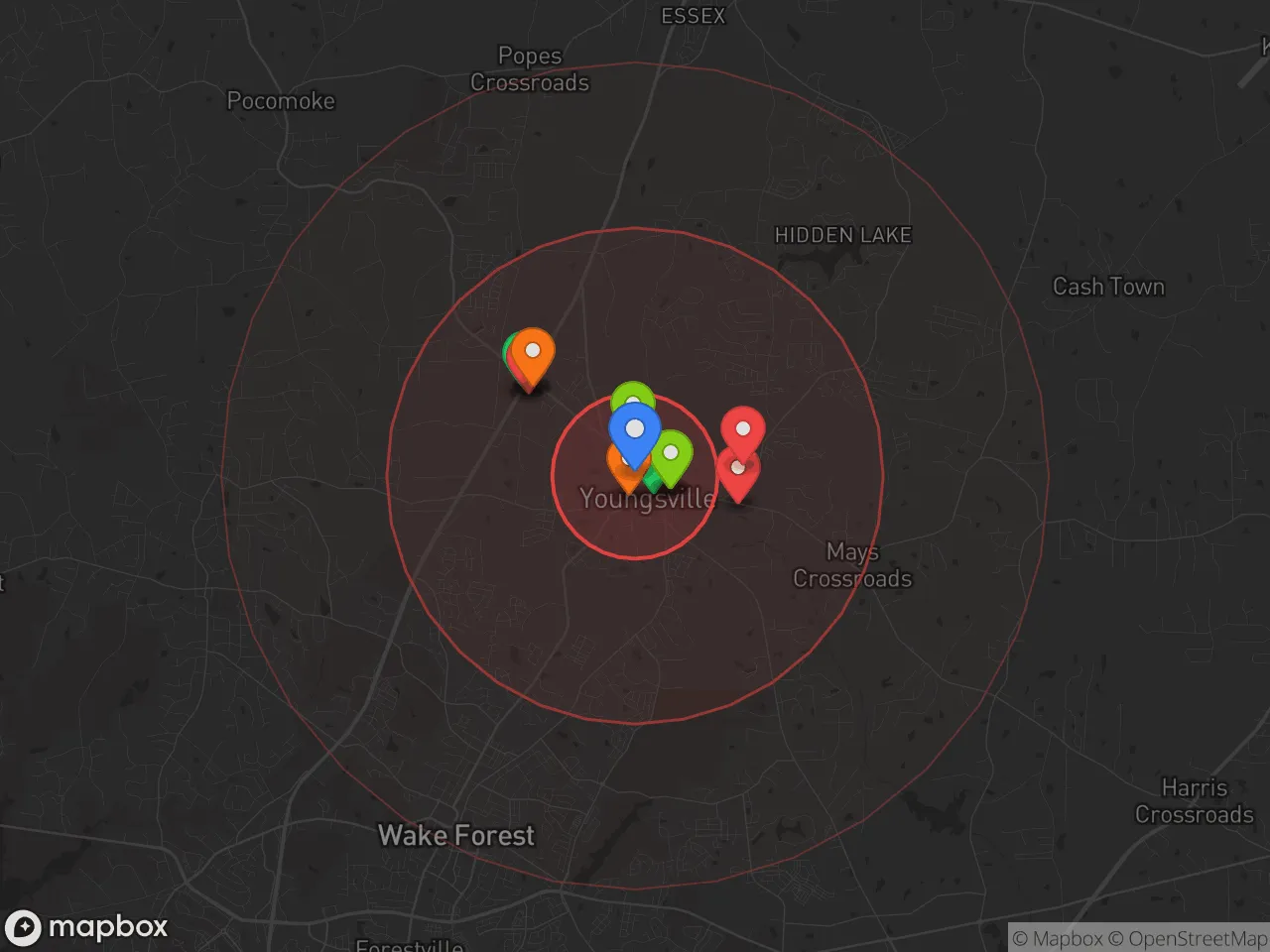
Hobbies
Explore the areaGroceries
0 within 10 miles
Gas
0 within 10 miles
Hospital
0 within 20 miles
Airport
RDU — Raleigh–Durham International
Post Office
Critical Amenities
Quality-of-Life Analysis
Youngsville, North Carolina, is an affluent, fast-growing suburb of Raleigh that attracts families and professionals seeking a quieter, more spacious alternative to the urban core. With a cost-of-living index of 116 (16% above the U.S. average), the town’s residents are predominantly upper-middle-class homeowners, many of whom commute to Research Triangle Park or downtown Raleigh for work. The median household income hovers well above the state average, reflecting a community built around stability, education, and suburban comfort.
Cost of living, housing prices, and how Youngsville compares to nearby towns
Youngsville’s cost of living is notably higher than the national average, driven almost entirely by housing. The median home value sits at $404,500, which is roughly 15-20% higher than in neighboring Franklinton but still below the $450,000+ median in Wake Forest or the $500,000+ in central Raleigh. Renters face a more moderate market, with a median rent of $1,139 — significantly lower than the $1,400+ typical in Wake Forest, making Youngsville a relative bargain for those not ready to buy. Property taxes in Franklin County are slightly lower than in Wake County, which helps offset the higher home prices for buyers. However, the trade-off is a longer average commute of 29.4 minutes, as most employment centers lie 20-30 miles south. For comparison, residents of Wake Forest average a 26-minute commute, while those in Raleigh proper average 23 minutes. The extra drive time is a common concession for the larger lots and newer construction homes that define Youngsville’s housing stock.
Schools, local amenities, and what daily life feels like in Youngsville
Daily life in Youngsville centers on its highly rated Franklin County Schools, particularly Youngsville Elementary School and Franklinton High School, both of which consistently earn above-average state test scores. The town itself is small — roughly 2,500 residents — so most errands require a short drive to Wake Forest’s retail corridor along U.S. 1, which offers grocery stores, big-box retailers, and dining options. For recreation, Youngsville Community Park provides sports fields, walking trails, and a playground, while the nearby Falls Lake State Recreation Area offers boating, fishing, and hiking within a 15-minute drive. The town lacks a traditional downtown or nightlife; instead, the rhythm is family-oriented, with weekend farmers’ markets, youth sports leagues, and community events like the annual Youngsville Christmas Parade. Healthcare access is solid, with WakeMed North Hospital in Raleigh about 20 minutes away and several urgent-care clinics in Wake Forest. The absence of a major hospital within town limits is a noted drawback for older residents or those with chronic conditions.
Youngsville is best suited for families and remote workers who prioritize space, newer homes, and good schools over urban amenities and short commutes. The town’s rapid growth — the population has nearly doubled since 2010 — means infrastructure like roads and water systems are under constant expansion, but the trade-off is a tight-knit, low-crime community with strong property values. Singles or young professionals seeking nightlife or walkability will find Youngsville too quiet; those looking for a safe, family-centric base within striking distance of Raleigh’s job market will find it an excellent fit.

Crime in Youngsville, NC
Lower crime rates than 77% of comparable U.S. locations.
Violent CrimeViolent Crime Analysis
Property CrimeProperty Crime Analysis
Crime Analysis
Youngsville, North Carolina, reports a violent crime rate of 162.9 per 100,000 residents and a property crime rate of 2,035.8 per 100,000, figures that place it below national averages but above some neighboring Franklin County communities. While the town itself is small and generally quiet, its proximity to the Raleigh-Durham metro area means it is subject to the broader criminal justice policies of a large, liberal-leaning region. Residents should weigh these local statistics against the potential impact of progressive prosecutorial trends that can affect public safety across the entire metro area.
Crime in context
Youngsville’s violent crime rate of 162.9 per 100,000 is roughly half the national average of 380 per 100,000, making it a comparatively safe town for violent offenses like assault and robbery. However, its property crime rate of 2,035.8 per 100,000 is slightly above the national average of 1,954 per 100,000 and significantly higher than the statewide North Carolina average of approximately 1,800 per 100,000. This property crime figure is driven largely by larceny and vehicle break-ins, which are common in bedroom communities near major employment centers. The town’s location within the Raleigh-Durham metro area is a key factor: larger cities like Raleigh and Durham have seen rising property crime rates in recent years, and some of that activity spills into surrounding towns like Youngsville.
What residents experience
Daily life in Youngsville is marked by a low risk of violent confrontation, but property crime is a recurring concern. Residents frequently report thefts from unlocked vehicles and packages taken from porches, especially in neighborhoods near major roads like US-1 and NC-96. The Franklin County Sheriff’s Office and Youngsville Police Department maintain a visible presence, but the town’s small force (fewer than 15 sworn officers) means response times can be slower for non-emergency property crimes. A significant factor for potential movers is the broader judicial environment: Wake and Durham counties, which dominate the metro area’s legal system, have elected progressive district attorneys who emphasize diversion programs and reduced incarceration for property and drug offenses. Critics argue this approach leads to more repeat offenders cycling back into communities, increasing the likelihood of property crime in suburbs like Youngsville. For families, this means that while the town itself feels safe, the regional justice philosophy can undermine local safety efforts.
Neighborhood-level variation is notable. Established subdivisions like Traditions and the area around Youngsville Elementary School report lower property crime rates, while rental-heavy developments and streets closer to the US-1 corridor see higher incident counts. The town’s rural character—with many homes on large lots—also means that properties farther from main roads are more vulnerable to isolated thefts. Prospective residents should check specific neighborhood crime maps and consider that the metro area’s progressive judicial policies may keep property crime elevated even in otherwise quiet towns like Youngsville.
* Values derived from national, state, county, city and local statistics and may differ in a specific area. Last updated: 2026-11-13T11:05:16.000Z
Narrative content on this page is AI-generated and may contain mistakes. Verify any details that matter before acting on them.
ReloMaps may earn a commission from affiliate links at no extra cost to you.

