
Photo by Balazs Busznyak on Unsplash
Political ClimatePolitical Climate in York, ME
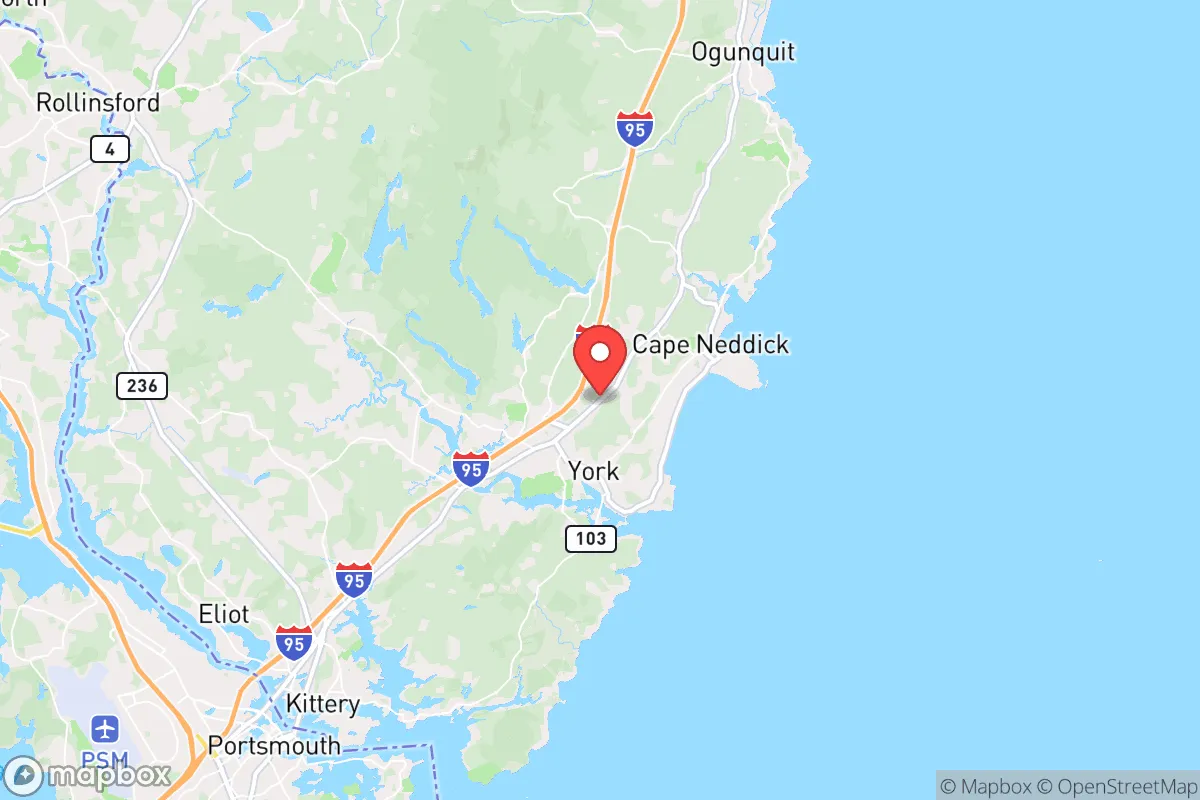
District shown is the primary district for this city’s centroid. Cities may span multiple districts.
Local Political AnalysisPolitical Analysis of York, ME
York, Maine, leans decisively Democratic, with a Cook Partisan Voting Index (PVI) of D+11, making it one of the most reliably blue communities in southern Maine. This isn't a recent shift; the town has been trending leftward for over a decade, driven by an influx of professionals from the Boston metro area and a growing population of younger families who prioritize environmental protection and social services. While the rest of York County is a patchwork of purple and red towns, York itself has become a consistent stronghold for Democratic candidates, often delivering margins that mirror Portland's more urban districts.
How it compares
Compared to the rest of Maine, York is an outlier. The state as a whole is famously independent and split, with a Cook PVI that is effectively neutral—it's one of the few states that has voted for both Barack Obama and Donald Trump. York's D+11 rating places it far to the left of the state's average. For context, neighboring towns like Kittery and Ogunquit are also blue, but less intensely so, while towns just a few miles inland—like South Berwick or Eliot—are more competitive, often swinging between parties. Drive 20 minutes west to Sanford or north to Alfred, and you'll find reliably Republican territory. This creates a sharp political border right along the coast, where York's liberal lean stands in stark contrast to the more conservative interior of the county.
What this means for residents
For liberal residents, York's political climate means their values are broadly reflected in local governance. The town council and school board tend to be progressive, supporting initiatives like renewable energy investments, robust public school funding, and strict land-use regulations that limit coastal development. For conservative residents, it can feel like swimming against the tide. While they are a minority, they are not silenced; local elections often see competitive races, and the town's independent streak means that fiscal conservatism still has a voice, especially on issues like property taxes and small business regulations. The practical reality is that York is a place where you can have a civil conversation with a neighbor who voted differently, but the dominant culture is unmistakably left-of-center.
One of the most telling cultural distinctions is the town's approach to growth and tourism. York's political leadership has consistently favored managed growth and environmental conservation, policies that often frustrate developers and business owners who want more commercial expansion. This is a direct reflection of the D+11 lean: the electorate prioritizes preserving the town's character and natural beauty over aggressive economic development. You see this in the strict short-term rental ordinances, the push for open space preservation, and the vocal opposition to large-scale chain stores. For a newcomer, this means York feels more like a curated coastal village than a booming resort town—a deliberate choice that its politically engaged residents defend fiercely. Looking ahead, the trajectory seems set: as long as the Boston exodus continues and housing prices stay high, York's political complexion will likely remain blue, even as the rest of the state continues its unpredictable dance between the parties.

State Political ClimatePolitical Climate in Maine
State Political AnalysisPolitical Environment in the State
Maine has a reputation as a swing state, but the reality on the ground is more nuanced: it’s a state with a deeply split political personality, where the coastal, urbanized south votes reliably Democratic and the vast, rural interior and north lean just as reliably Republican. Over the last 20 years, the state has shifted from a classic “blue dog” Democratic stronghold to a state where Democrats control the legislature and governor’s office, but only because they dominate the populous southern counties. The 2020 and 2024 presidential elections saw Maine’s 2nd Congressional District (the rural, northern half) vote for Donald Trump by comfortable margins, while the 1st District (the southern coast) went heavily for Joe Biden and Kamala Harris. This split isn’t new, but it’s become more pronounced, and it defines every political conversation in the state.
Urban vs. rural divide
The political map of Maine is essentially a story of two states. The southern coastal corridor—Portland, South Portland, Brunswick, and Biddeford—drives the Democratic vote. These are the areas with the state’s population growth, its largest employers (like Maine Medical Center, IDEXX Laboratories, and WEX Inc.), and a steady influx of out-of-state transplants, many from Massachusetts and New York. In contrast, the vast 2nd Congressional District, which covers everything north of Augusta and west to the New Hampshire border, is anchored by smaller cities like Bangor, Lewiston, and Presque Isle. These areas have seen population decline, a struggling mill and paper industry, and a strong cultural attachment to hunting, fishing, and self-reliance. The divide is so stark that in 2016 and 2020, Maine became the only state in the nation to split its electoral votes by congressional district. A relocator moving to Portland will find a very different political environment than someone settling in Caribou or Augusta.
Policy environment
Maine’s state-level policy leans left, but with a pragmatic, New England twist. The state has a progressive income tax with a top marginal rate of 7.15%, and a sales tax of 5.5% that exempts most groceries and prescription drugs. Property taxes are high—among the top 10 in the nation—which is a major concern for conservative relocators. The regulatory environment is generally business-friendly for small-scale operations but can be burdensome for larger developments, especially in coastal zones. Education policy is dominated by the state’s 260 school administrative units, many of which are tiny and rural; school choice is limited compared to states like Florida or Arizona, though charter schools exist in a small number. Healthcare is a major issue: Maine expanded Medicaid under the Affordable Care Act via a 2017 ballot initiative, and the state runs its own health insurance marketplace. Election laws are relatively accessible: same-day voter registration is allowed, and absentee voting is no-excuse. The state uses ranked-choice voting for federal and state primary elections, a system that has been controversial among conservatives who argue it dilutes traditional voting power.
Recent policy direction
Over the past five years, Maine’s Democratic trifecta (governor, House, Senate) has passed a series of laws that signal a clear leftward trajectory. On gun policy, the state passed a “red flag” law in 2019 and, after the Lewiston mass shooting in October 2023, enacted a 72-hour waiting period for firearm purchases and expanded background checks for private sales—a significant shift in a state with a deep hunting culture. On education and parental rights, Maine has been a flashpoint: the state’s “transgender sanctuary” law (LD 1735) allows minors to receive gender-affirming care without parental consent in certain circumstances, and the state’s public schools are required to follow a “Maine Learning Results” curriculum that includes LGBTQ+ inclusive materials. On speech and privacy, Maine passed one of the nation’s strongest internet privacy laws (LD 946) in 2019, requiring ISPs to get opt-in consent before selling browsing data. On property rights, the state has a strong “right to farm” law that protects agricultural operations from nuisance lawsuits, but also has some of the strictest land-use regulations in the Northeast, particularly in the unorganized territories. On taxation, the state has not followed the national trend of cutting income taxes; instead, it has expanded the Earned Income Tax Credit and created a “Thrive Maine” program offering student loan relief for certain workers. For a conservative relocator, the bottom line is that Maine’s policy environment is becoming more progressive, especially on social issues, while maintaining a relatively moderate fiscal posture.
Civil unrest & political movements
Maine is not known for large-scale civil unrest, but it has its share of organized political movements. The most visible in recent years has been the gun rights movement, which mobilized heavily after the Lewiston shooting and the subsequent legislative response. The “Maine Gun Owners” group and local Second Amendment sanctuaries—over 200 towns passed resolutions declaring themselves sanctuaries from state gun laws—are a real force. On the left, the Maine People’s Alliance and the Maine Women’s Lobby are active, particularly on housing, healthcare, and climate policy. Immigration politics are less heated than in border states, but there have been flashpoints: Portland’s status as a “sanctuary city” (officially, it limits cooperation with ICE) has drawn criticism from conservatives, and the arrival of asylum seekers in Portland and Lewiston has strained local services. There is a small but vocal secessionist movement in northern Maine—the “State of Northern Maine” proposal, which has no real legislative traction but reflects deep frustration with Augusta. Election integrity controversies have been relatively muted compared to other states, though the 2020 and 2024 elections saw some localized disputes over absentee ballot processing in rural counties. A new resident in Portland will see more political activism and protest than someone in Fort Kent, where the political culture is quieter and more consensus-driven.
Projection
Over the next 5-10 years, Maine’s political trajectory is likely to continue its current pattern: the southern coast will become more Democratic and more progressive, while the rural interior will become more Republican and more culturally conservative. The key demographic driver is in-migration: Maine is one of the fastest-aging states in the nation, but it is also attracting remote workers and retirees from Massachusetts, New York, and California, who tend to be more liberal. This will likely keep the governorship and legislature in Democratic hands for the foreseeable future, but the 2nd Congressional District will remain a competitive Republican seat. The wild card is housing: if the state fails to build enough housing to accommodate new residents, the political backlash could shift some suburban and exurban areas toward more moderate or libertarian candidates. For a conservative relocator, the practical implication is that Maine will not become a red state in the next decade, but it will remain a place where conservative voices have real power in the legislature and in local government, especially in the northern and western counties. The state’s political culture is still one of independence and pragmatism, even if the partisan labels are hardening.
For someone moving to Maine, the bottom line is this: your experience of the state’s politics will depend almost entirely on where you settle. If you choose Portland or its suburbs, you will be in a reliably Democratic environment with progressive policies on social issues, high taxes, and a strong regulatory state. If you choose Bangor, Lewiston, or a rural town like Dover-Foxcroft, you will find a more conservative, libertarian-leaning culture with lower housing costs, a stronger sense of local autonomy, and a political landscape where your vote carries more weight. The state’s famous “independent” streak is real, but it is increasingly channeled through the two major parties. A conservative relocator will find allies in the northern and western parts of the state, but should expect to be in the minority at the state level for the foreseeable future.
* Values derived from national, state, county, city and local statistics and may differ in a specific area. Last updated: 2026-10-11T02:47:28.000Z
Narrative content on this page is AI-generated and may contain mistakes. Verify any details that matter before acting on them.
ReloMaps may earn a commission from affiliate links at no extra cost to you.

