
Photo by Balazs Busznyak on Unsplash
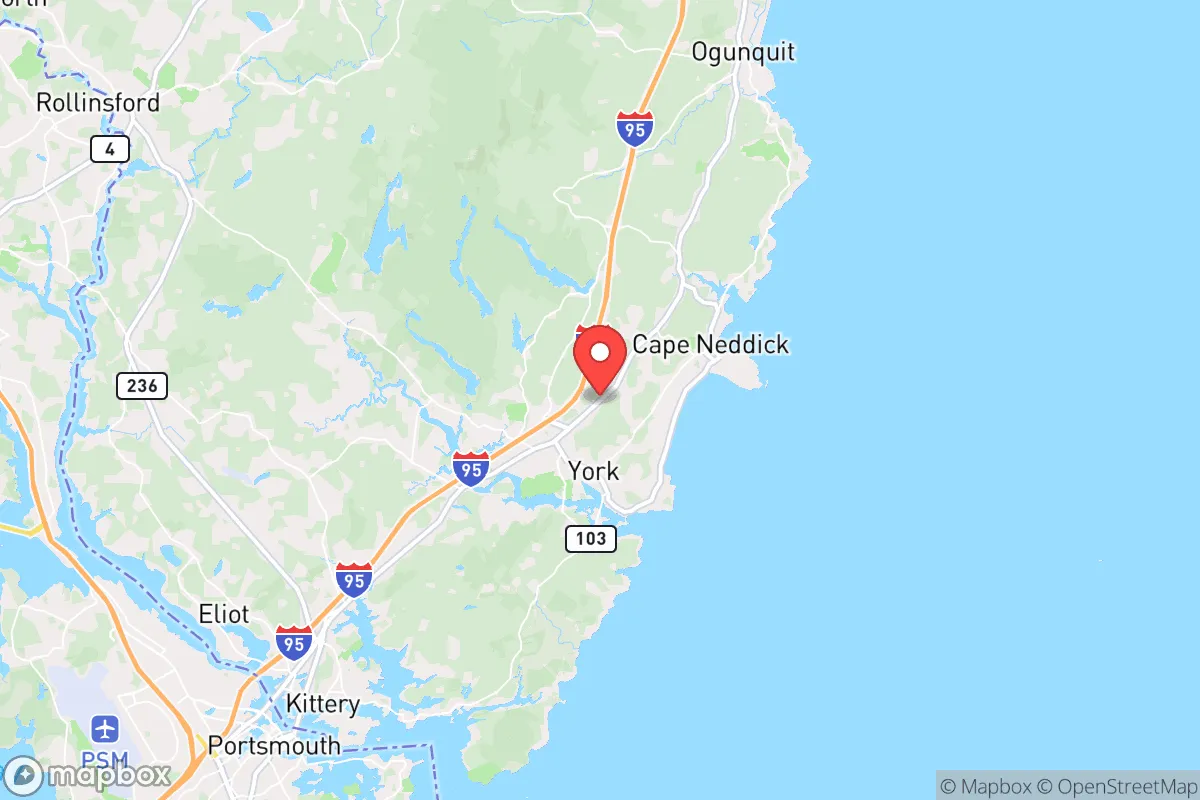
Personal Sovereignty in York, ME
Viable for self-reliance. Generally workable, though some barriers may limit total independence.
What does Personal Sovereignty tell us?
Personal Sovereignty measures your capacity for self-reliance and independence with minimal government friction. Higher scores mean fewer barriers between you and the way you want to live... but it assumes you have the space you need and good neighbors.
What does this tell us?
Personal Sovereignty measures your capacity for self-reliance and independence with minimal government friction. Higher scores mean fewer barriers between you and the way you want to live... but it assumes you have the space you need and good neighbors.
State Policy
Energy independence: Importer (30% of energy produced in-state)
Personal Liberty
Homesteading

Personal Liberty Analysis
York, Maine, offers a moderate level of personal sovereignty that balances traditional New England community governance with a meaningful degree of individual autonomy, though it is not a low-regulation frontier. The town operates within a state framework that is generally permissive on self-defense and property rights but carries a higher-than-average tax burden and a structured regulatory environment that limits off-grid living. For a relocation-minded individual or family prioritizing independence, York represents a middle ground where personal freedoms are respected within established legal and municipal boundaries, rather than a jurisdiction that prioritizes minimal government interference above all else.
Tax burden and regulatory posture in York, Maine
Maine’s tax climate is among the heaviest in the nation, and York residents feel that directly. The state imposes a progressive income tax with a top marginal rate of 7.15%, and the statewide sales tax is 5.5%, though York County adds a local option of 0.5% for a combined 6.0% on most goods. Property taxes in York are notably high, with an effective rate around 1.2% to 1.4% of assessed home value, driven by strong coastal property values and the cost of local services. The regulatory posture in York is structured but not oppressive; the town enforces a comprehensive zoning ordinance that governs land use, setbacks, and building permits, and the state-level Department of Environmental Protection has authority over coastal development, wetlands, and shoreline construction. This means that while a property owner can generally use their land as they wish, any significant alteration—especially near the coast—requires permitting and review. For a reader accustomed to minimal oversight, this will feel like a moderate-to-heavy regulatory environment; for someone from a more restrictive state like Massachusetts or California, it will feel manageable but not laissez-faire.
Self-defense and gun law specifics in York
Maine is a strong Second Amendment state, and York residents benefit from a legal framework that prioritizes individual rights to keep and bear arms. The state has permitless carry for both open and concealed handguns for anyone 21 or older who is legally allowed to possess a firearm, effective since 2015. No state permit is required to purchase a rifle, shotgun, or handgun, though federal background checks apply at licensed dealers. Maine does not have a red flag law, nor does it require registration of firearms, and there is no waiting period for purchases. The state preempts local gun ordinances, meaning York cannot enact its own restrictions stricter than state law. Self-defense law in Maine follows the Castle Doctrine, with no duty to retreat when a person is in their home or place of business and reasonably believes force is necessary to prevent imminent death or great bodily harm. Outside the home, Maine law does impose a duty to retreat if safely possible before using deadly force, which is a nuance compared to true Stand Your Ground states. For practical purposes, a law-abiding resident in York can carry a firearm for personal protection with minimal bureaucratic hurdles, but should understand the retreat requirement in public spaces.
Self-reliance and homesteading viability in York
York’s zoning and lot size regulations make true off-grid homesteading challenging but not impossible, especially for those willing to work within the system. Minimum lot sizes in the town’s residential zones typically range from one to two acres, though some areas have smaller lots near the village centers. The town does allow accessory dwelling units, home occupations, and keeping of small livestock like chickens on most residential properties, but larger animals such as goats, sheep, or horses require a minimum of two acres and a special permit in some districts. Off-grid living—meaning no connection to municipal water, sewer, or electric—is legally possible but heavily regulated. The Maine Subsurface Wastewater Rules require a state-approved septic system for any dwelling, and the York Sewer District has authority over connections in serviced areas. Solar panels are permitted and encouraged, but net metering rules require interconnection with the grid; true battery-only off-grid systems are allowed but must meet building and electrical codes. Rainwater collection is legal in Maine without restriction, which is a plus for self-reliance. The town’s building code follows the Maine Uniform Building and Energy Code, which adds cost and complexity to any new construction or major renovation. For a family wanting to grow food, keep chickens, install solar, and reduce reliance on municipal services, York is viable but requires navigating permits and inspections—it is not a place where one can simply buy land and build a cabin without oversight.
Personal liberties in York: parental rights, medical autonomy, speech, and property
Maine’s legal environment provides a mixed picture for personal liberties that a conservative-leaning reader should weigh carefully. On parental rights, Maine law recognizes parents as the primary decision-makers for their children’s education, medical care, and upbringing, but the state has mandatory vaccination requirements for school attendance (with medical and religious exemptions available, though philosophical exemptions were eliminated in 2021). Homeschooling is legal and relatively straightforward, requiring only a simple notice of intent and an annual assessment, with no state-mandated curriculum. Medical autonomy in Maine is generally respected for adults, but the state has a robust public health infrastructure and has shown willingness to mandate public health measures during emergencies. On speech and expression, Maine has no unique restrictions beyond federal law, and York is a community where diverse political views are expressed openly, though the coastal New England culture leans left-of-center in the village and more conservative in the outlying areas. Property rights are well-protected under Maine law, with strong protections against eminent domain abuse following the Kelo decision; the state prohibits takings for economic development purposes. However, the state’s shoreland zoning and wetland protection laws do impose meaningful restrictions on what a coastal property owner can do with their land, which is a significant consideration for anyone buying near the water. Overall, a resident in York enjoys substantial personal freedoms in day-to-day life, but should expect a legal framework that balances individual rights with community and environmental regulations.
Compared to other regions in New England, York offers a relatively high degree of personal sovereignty, especially on gun rights and homeschooling, but it falls well short of the autonomy found in states like New Hampshire or much of the inland West. The tax burden is heavy, the regulatory environment is structured but navigable, and the legal protections for self-defense and property are solid. For a relocation-minded individual or family who values independence but also wants the stability of a well-governed coastal community with good schools and low crime, York represents a reasonable compromise—not a libertarian haven, but a place where a self-reliant person can live freely within a clear set of rules.

* Values derived from national, state, county, city and local statistics and may differ in a specific area. Last updated: 2026-10-11T02:47:28.000Z
Narrative content on this page is AI-generated and may contain mistakes. Verify any details that matter before acting on them.
ReloMaps may earn a commission from affiliate links at no extra cost to you.

