Photo: Wikipedia
Quality of Life in Laramie County
A livable area that tracks near national norms for affordability, walkability, and neighborhood health.
What does Quality of Life tell us?
Quality of Life measures an area by evaluating factors like cost of living, nearby amenities, country club access, airport proximity, socioeconomic signals and neighborhood character. For large states, this is a general average — quality of life can vary dramatically between metro areas, suburbs, and rural communities within the same state.
What does this tell us?
Quality of Life measures an area by evaluating factors like cost of living, nearby amenities, country club access, airport proximity, socioeconomic signals and neighborhood character. For large states, this is a general average — quality of life can vary dramatically between metro areas, suburbs, and rural communities within the same state.
Cost of Living
2% above national average
84%
The Real Cost of Living in Laramie County for 2026
| Tier | Individual | Family (4) |
|---|---|---|
| Survival | $17k | $32k |
| Comfortable | $63k | $93k |
| Luxury | $129k+ | $199k+ |
| Elite (Top 5%) | $151k+ | $234k+ |
Quality-of-Life Analysis
Laramie County offers a spectrum of living environments that range from the state capital’s urban core to quiet, unincorporated farming communities, drawing everyone from government professionals and military families to ranchers and remote workers. The county’s character shifts noticeably as you move outward from Cheyenne, with each zone offering distinct trade-offs in convenience, space, and pace of life. With a cost-of-living index of 102 (just 2% above the national average) and a median home value of $324,900, the county provides relatively affordable access to both city amenities and wide-open spaces.
Largest town(s) & population centers
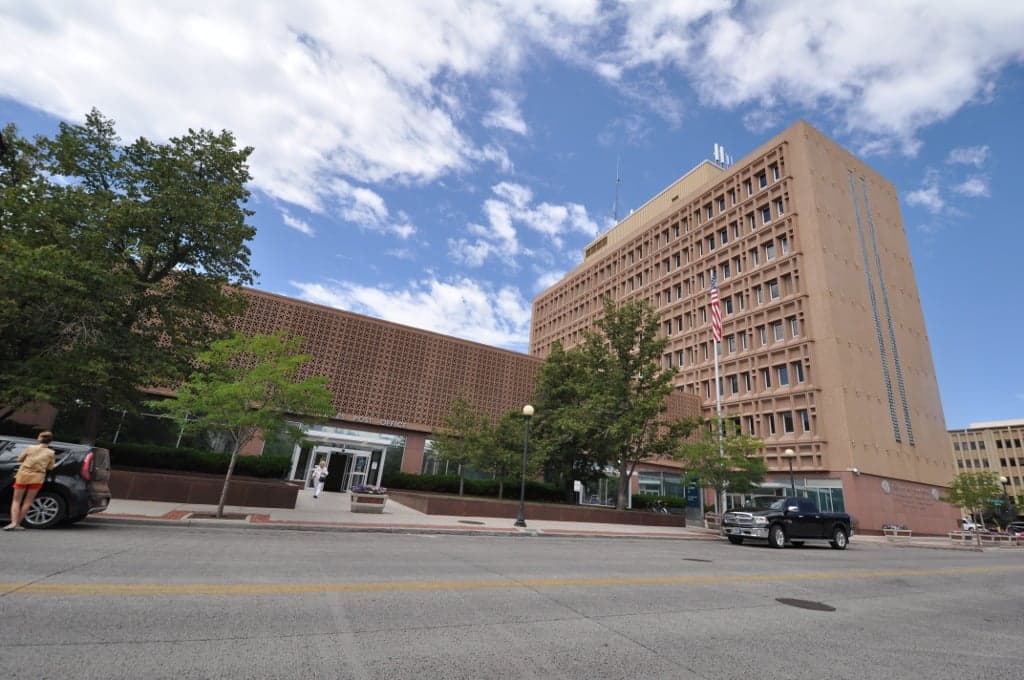
Cheyenne is the dominant population center, home to roughly 65,000 residents and serving as the economic and cultural hub of the county. Daily life here revolves around state government offices, the F.E. Warren Air Force Base, and a growing healthcare sector anchored by Cheyenne Regional Medical Center. The city offers a compact downtown with local breweries, the Wyoming State Museum, and seasonal events like Cheyenne Frontier Days. Commute times are notably short — the county average is just 17.9 minutes — meaning most residents can reach work, schools, or shopping within a 15- to 20-minute drive. Housing in Cheyenne leans toward single-family homes on modest lots, with median rents around $1,080 making it one of the more affordable state capitals in the U.S. for renters.
Smaller towns & rural pockets
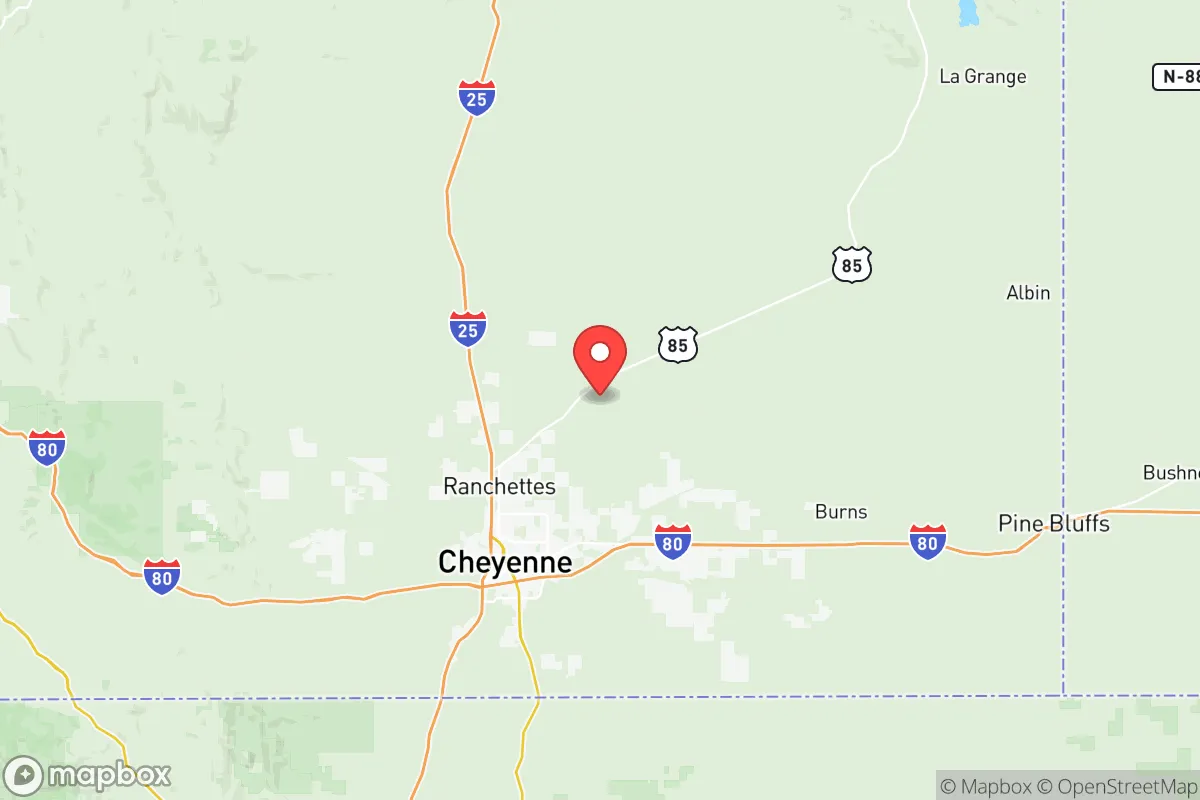
Outside Cheyenne, the county contains several smaller communities that offer a quieter, more agrarian lifestyle. Pine Bluffs (pop. ~1,200) sits near the Nebraska border and is known for its strong agricultural roots, annual Potato Festival, and a slower pace where neighbors still know each other by name. Burns (pop. ~300) and Albin (pop. ~180) are unincorporated hamlets where daily life centers on farming, ranching, and local churches — amenities are minimal, so residents typically drive 20–30 minutes to Cheyenne for groceries, healthcare, and schools. The rural areas between these towns consist of sprawling ranchlands and wind-swept plains, where homes sit on acreage and the nearest neighbor may be a mile away. These pockets appeal strongly to those seeking privacy, land for livestock, or a complete escape from suburban noise.
Cost & lifestyle range
The cost of living varies noticeably across the county, though it remains below national averages in most categories. At the higher end, Cheyenne’s newer subdivisions — such as those near Storey Boulevard or South Cheyenne — see median home values above $400,000, with homes on larger lots commanding premiums. At the lower end, older homes in central Cheyenne or fixer-uppers in Pine Bluffs can fall below $250,000, making entry-level ownership feasible. Renters face a similar spread: a two-bedroom apartment in Cheyenne’s core averages $1,080, while comparable units in Burns or Albin may rent for $800–$900 but offer far fewer nearby services. The lifestyle trade-off is clear: Cheyenne provides walkable downtown blocks, chain retailers, and the county’s only hospital, while the smaller towns trade those conveniences for lower housing costs, larger lots, and a community where everyone knows your truck.
This county works best for people who value straightforward, no-frills living and are comfortable driving 15–30 minutes for most errands. Government employees, Air Force personnel, and remote workers tend to settle in Cheyenne for its job base and short commutes, while ranchers, farmers, and retirees seeking land gravitate toward the rural edges. The overall character is practical and self-reliant — Laramie County rewards those who know what they want from a place and don’t mind a bit of wind to get it.

Crime in Laramie County
Generally safer than 71% of comparable U.S. locations.
Violent CrimeViolent Crime Analysis
Property CrimeProperty Crime Analysis
Crime Analysis
Laramie County, home to Wyoming’s capital city of Cheyenne, reports a violent crime rate of 171.9 incidents per 100,000 residents and a property crime rate of 1,012.8 per 100,000. While these figures place the county below the national average for violent offenses, property crime remains a more pressing concern, particularly in Cheyenne’s central corridors and the unincorporated communities of South Cheyenne and Fox Farm-College. The county’s overall safety picture is shaped by a mix of suburban stability in areas like Ranchettes and rural isolation in towns such as Burns and Pine Bluffs, where crime is far less frequent.
Crime in context
Laramie County’s violent crime rate of 171.9 per 100,000 is roughly 40% lower than the national average of 285 per 100,000, but it is higher than the statewide Wyoming average of approximately 150 per 100,000. Property crime, at 1,012.8 per 100,000, sits near the national average of 1,100 per 100,000 but is elevated compared to the rest of Wyoming, where the state average hovers around 900 per 100,000. The disparity is largely driven by Cheyenne, which accounts for the vast majority of the county’s population and crime reports. Smaller towns like Albin and Carpenter see negligible crime, while the city of Cheyenne concentrates the county’s thefts, burglaries, and motor vehicle thefts along the I-25 and I-80 corridors. The Laramie County District Attorney’s office, which prosecutes cases across the county, has faced criticism from residents for a perceived leniency in plea bargaining, particularly in property crime cases, a concern that echoes broader frustrations with progressive-leaning judicial philosophies that prioritize rehabilitation over incarceration.
What residents experience
For most residents of Laramie County, the daily reality of crime is defined by property offenses rather than violent confrontations. Theft from vehicles and burglaries are the most commonly reported crimes, especially in Cheyenne neighborhoods near the downtown core and the South Greeley area. Violent crime, while rare, is concentrated in specific pockets: Cheyenne’s west side and the area around the Union Pacific rail yard have seen higher rates of aggravated assault and robbery. In contrast, the bedroom communities of Ranchettes and the rural township of Burns report violent crime rates near zero, offering a markedly safer living environment. Residents in these areas often cite the lack of a progressive district attorney’s influence as a factor in maintaining local order, as the county’s judicial district covers the entire county, meaning a single prosecutorial philosophy applies from Cheyenne to Pine Bluffs. This has led some families to choose homes in the county’s eastern or northern reaches, where sheriff’s deputies respond more quickly and community watch programs are more active.
Neighborhood-level variation is significant. Cheyenne’s historic downtown and the South Side see the highest crime density, while the newer subdivisions near the Cheyenne Regional Airport and the Fox Farm area experience moderate property crime but very little violence. The unincorporated community of South Cheyenne, which borders the city limits, has a reputation for higher theft rates due to its proximity to major highways and a transient population. Conversely, the town of Pine Bluffs, 45 miles east of Cheyenne, and the village of Albin report crime rates so low that residents often leave doors unlocked. For those considering a move to Laramie County, the safest bets are the outlying towns and the Ranchettes area, where the combination of low population density, strong community ties, and distance from Cheyenne’s urban crime patterns creates a markedly different safety profile. The county’s overall crime picture is manageable, but the influence of the district attorney’s office and the concentration of property crime in Cheyenne are factors that prospective residents should weigh carefully when choosing a specific neighborhood.
* Values derived from national, state, county, city and local statistics and may differ in a specific area. Last updated: 2026-07-11T13:11:11.000Z
Narrative content on this page is AI-generated and may contain mistakes. Verify any details that matter before acting on them.
ReloMaps may earn a commission from affiliate links at no extra cost to you.

