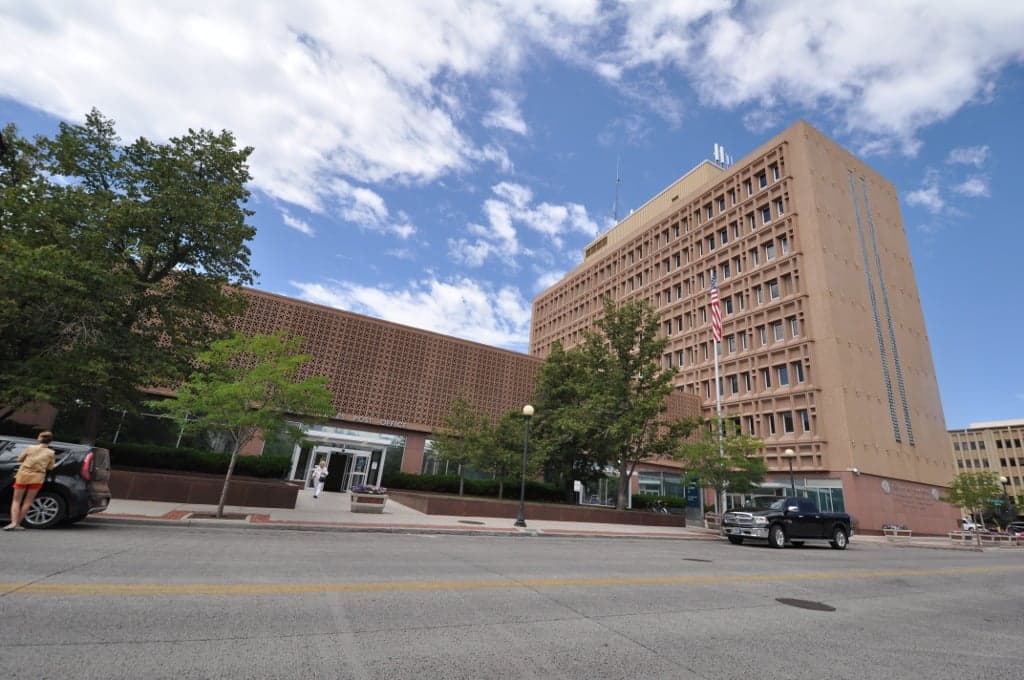
Photo: Wikipedia
Personal Sovereignty in Laramie County
Viable for self-reliance. Generally workable, though some barriers may limit total independence.
What does Personal Sovereignty tell us?
Personal Sovereignty measures your capacity for self-reliance and independence with minimal government friction. Higher scores mean fewer barriers between you and the way you want to live... but it assumes you have the space you need and good neighbors.
What does this tell us?
Personal Sovereignty measures your capacity for self-reliance and independence with minimal government friction. Higher scores mean fewer barriers between you and the way you want to live... but it assumes you have the space you need and good neighbors.
State Policy
Energy independence: Net exporter (800% of energy produced in-state)
Personal Liberty
Homesteading

Personal Liberty Analysis
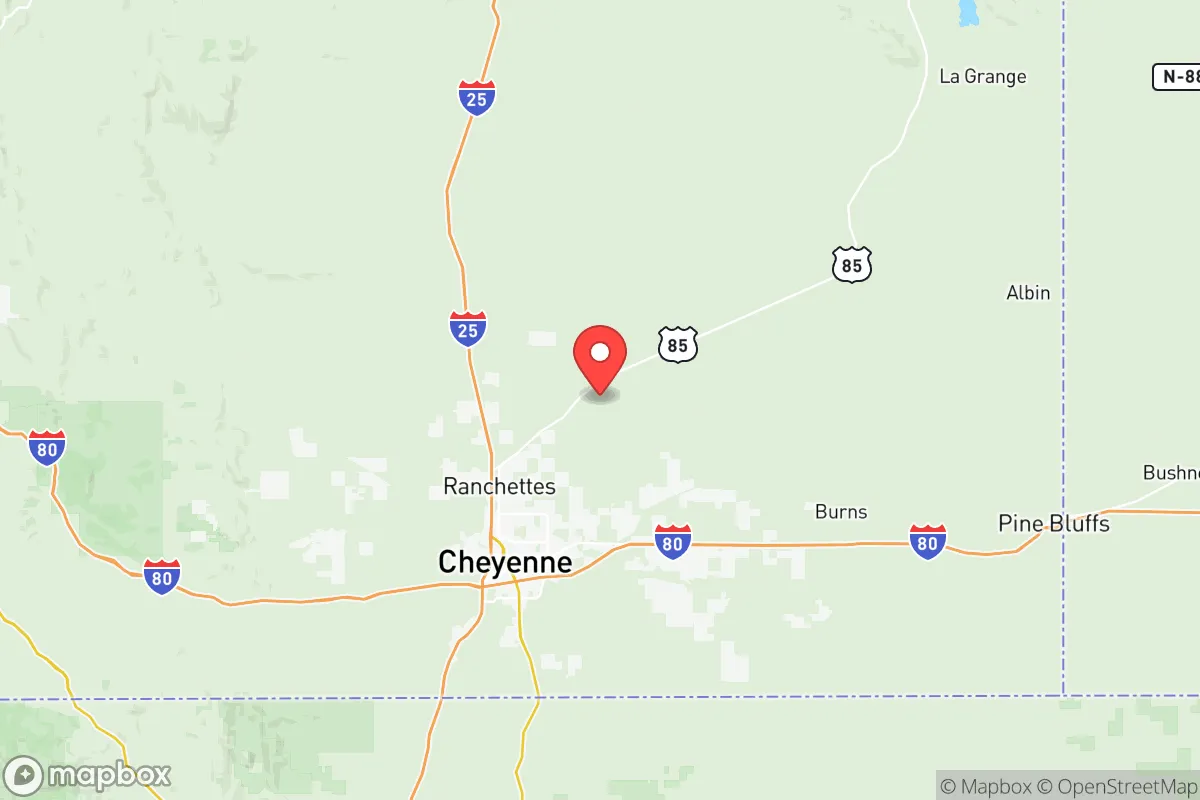
Laramie County, anchored by Cheyenne, offers a personal sovereignty environment that is among the most permissive in the Rocky Mountain region, driven by Wyoming's state-level constitutional protections and a deeply ingrained culture of self-reliance. The county strikes a balance between the limited government services typical of rural Wyoming and the necessary infrastructure of a state capital, meaning residents enjoy significant autonomy in daily life, property use, and personal defense, but must contend with a modest regulatory floor set by the city of Cheyenne. For individuals and families prioritizing freedom from government overreach, Laramie County presents a compelling case, though the specific degree of personal sovereignty varies noticeably between Cheyenne's urban core and the unincorporated expanses of the county.
Tax burden and regulatory posture in Laramie County
Wyoming's tax structure is a primary driver of personal sovereignty here, and Laramie County residents benefit directly from the state's absence of a personal income tax. The county's sales tax rate sits at a competitive 5.5% (4% state, 1% county, 0.5% Cheyenne-specific), which is moderate for the region but low by national standards. Property taxes are among the lowest in the nation, with Laramie County levying an effective rate around 0.6% of assessed value, and the state offers a residential property tax exemption that further reduces the burden for homeowners. The regulatory posture is light-touch compared to Front Range cities in Colorado; there is no state-level building code mandate for single-family homes in unincorporated areas, though Cheyenne and the town of Pine Bluffs enforce local codes. Business licensing is straightforward, and there are no onerous occupational licensing requirements for common trades. The county's planning department is generally permissive with land use, but prospective homesteaders should note that subdivisions within a mile of Cheyenne's city limits fall under the city's extraterritorial jurisdiction, which imposes platting and road standards that do not apply in remote areas like Burns or Albin.
Self-defense and gun law specifics in Cheyenne and rural areas
Wyoming is a constitutional carry state, and Laramie County fully reflects that posture. Any law-abiding adult 21 or older may carry a concealed firearm without a permit, and the state preempts local firearm ordinances, meaning Cheyenne cannot enact restrictions stricter than state law. Open carry is legal without a permit. The county sheriff's office issues concealed carry permits for reciprocity purposes, and the process is shall-issue with no discretionary denial. Stand-your-ground and castle doctrine protections are codified in state statute, providing broad legal latitude for self-defense in the home, vehicle, or any place a person has a right to be. Gun culture is deeply embedded; the Cheyenne Shooting Complex offers public ranges, and private land in areas like Carpenter and Granite Canon is commonly used for recreational shooting. There are no magazine capacity restrictions, no firearm registration, and no waiting periods. The only notable limitation is that carrying in government buildings and K-12 schools is prohibited, though vehicles on school parking lots are generally exempt. For the self-defense-minded individual, Laramie County offers near-maximum legal freedom within the United States.
Self-reliance and homesteading viability across the county
Homesteading and off-grid living are viable in Laramie County, but feasibility depends heavily on location. Unincorporated areas outside of Cheyenne's planning jurisdiction allow for significant self-reliance: rainwater catchment is legal and unregulated, composting toilets are permitted with a simple septic permit, and there are no county-level restrictions on solar panel installation or wind turbines for personal use. Minimum lot sizes in agricultural zoning are 35 acres, which preserves the rural character of areas like Hillsdale and Meriden. However, within Cheyenne's city limits and its one-mile extraterritorial jurisdiction, building codes require engineered foundations, electrical permits, and connection to municipal water and sewer where available, which raises costs for off-grid setups. The town of Pine Bluffs has its own zoning code but is generally more lenient than Cheyenne. Water access is the primary constraint: well drilling is permitted on parcels of one acre or more, but groundwater depths in the High Plains aquifer vary from 100 to over 300 feet, making drilling costs significant. The county's arid climate (roughly 14 inches of annual precipitation) means dryland farming is marginal, and most serious homesteaders rely on irrigation rights or hauled water. The regulatory environment is supportive of self-reliance, but the physical environment demands capital and planning.
Personal liberties in daily life and family autonomy
Wyoming law provides strong protections for personal liberties that directly affect families and individuals in Laramie County. Parental rights are explicitly protected under state statute, with a presumption that parents have the fundamental right to direct the upbringing, education, and healthcare of their minor children. Medical autonomy is broad: there is no state vaccine mandate for adults, and the state passed legislation prohibiting discrimination against unvaccinated individuals in public accommodations and employment. During the COVID-19 pandemic, Laramie County saw minimal business closure orders compared to neighboring Colorado counties, and Cheyenne's mask mandate was short-lived and weakly enforced. Speech and assembly rights are robust; the county has no local hate speech ordinances or content-based restrictions on public expression. Property rights are strongly protected by Wyoming's constitution, which requires just compensation for any regulatory taking, and the county's planning department is generally deferential to landowners. The only notable friction point is that Cheyenne's city council has occasionally pursued nuisance property ordinances that some residents view as overreach, but these are limited to the urban core and do not affect rural property owners in Burns or Albin.
Overall, Laramie County ranks among the top-tier jurisdictions in the United States for personal sovereignty, particularly for those who choose to live outside Cheyenne's city limits. The combination of no income tax, constitutional carry, strong property rights, and minimal regulatory interference creates an environment where self-reliant individuals and families can operate with substantial freedom. The primary trade-off is that this autonomy comes with limited public services: rural residents must arrange their own trash disposal, snow removal, and emergency response, and the county's volunteer fire departments in areas like Granite Canon have response times measured in tens of minutes rather than single digits. For the relocation-minded reader who values independence over convenience, Laramie County delivers a sovereignty profile that rivals any rural county in the West, with the added benefit of Cheyenne's modest urban amenities within a short drive.

* Values derived from national, state, county, city and local statistics and may differ in a specific area. Last updated: 2026-07-11T13:11:11.000Z
Narrative content on this page is AI-generated and may contain mistakes. Verify any details that matter before acting on them.
ReloMaps may earn a commission from affiliate links at no extra cost to you.

