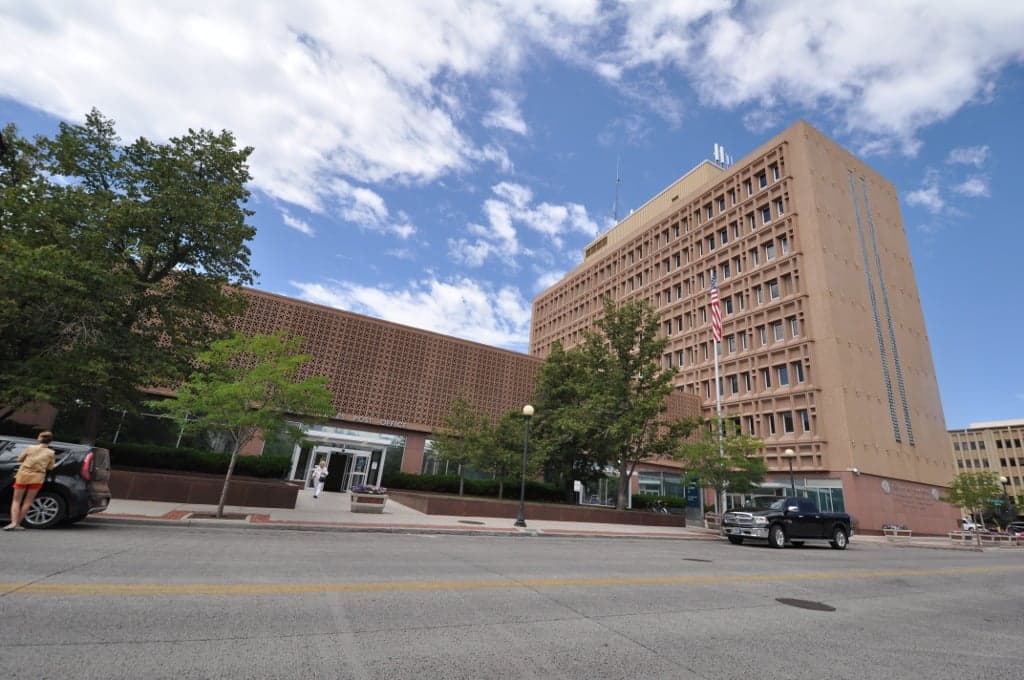
Photo: Wikipedia
Political ClimatePolitical Climate in Laramie County
Showing state-level results — no local-only data available.
Local Political AnalysisPolitical Analysis of Laramie County
Laramie County is the most reliably Republican large county in Wyoming, with a Cook Partisan Voting Index of R+23 that makes it roughly 10 points redder than the state as a whole. The county has voted for the GOP presidential candidate by margins exceeding 30 points in every election since 2000, and that trend has only accelerated — Donald Trump carried the county by 38 points in 2020 and 42 points in 2024. But if you spend time in Cheyenne, the county seat and home to 65,000 of the county's 100,000 residents, you'll find the political reality is more layered than the raw numbers suggest, with a meaningful Democratic minority concentrated in the city's older neighborhoods and a growing libertarian streak among younger voters that doesn't always align with the party line.
How it compares to the rest of Wyoming
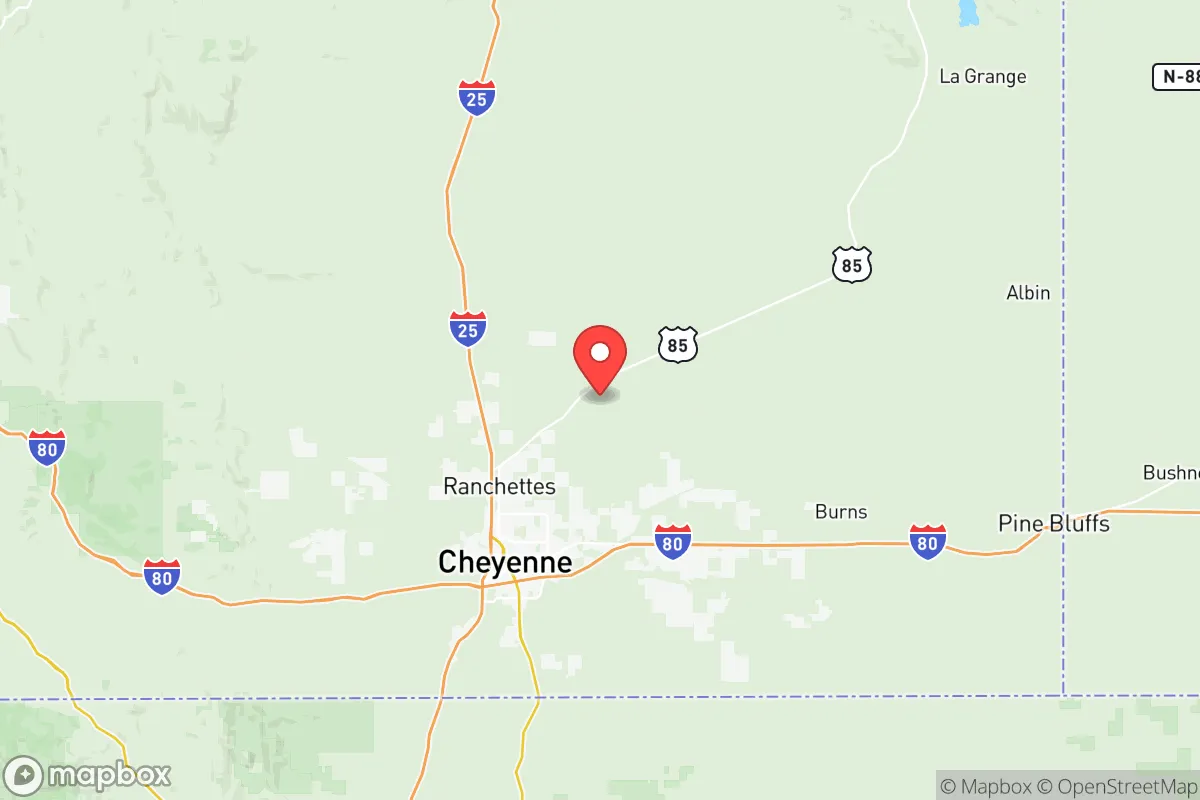
Wyoming as a whole is deeply red — it hasn't voted for a Democratic presidential candidate since 1964 — but Laramie County is actually more Republican than the state average. That's counterintuitive if you assume the capital city would be more moderate, but Cheyenne's economy is heavily tied to state government, the railroad, and F.E. Warren Air Force Base, all institutions that lean conservative. By contrast, Teton County (Jackson Hole) is the state's only reliably blue county, while Albany County (Laramie, home to the University of Wyoming) swings back and forth. Within Laramie County itself, the political geography breaks down like this: the rural areas north and east of Cheyenne — places like Burns, Pine Bluffs, and Albin — vote Republican by margins of 70-80%. The city of Cheyenne is more competitive, with precincts around the state capitol and the older south side occasionally breaking 40-45% Democratic in local races. The swing precincts are in the newer subdivisions on Cheyenne's west side, where voters are younger, more educated, and more likely to split their tickets — they'll vote for a Republican for president but a Democrat for state legislature if the candidate is moderate on education funding.
What this means for residents
For conservative residents, Laramie County is about as comfortable as it gets politically. The county commission is reliably Republican, the state legislative delegation is overwhelmingly GOP, and local policy on taxes, land use, and gun rights reflects that majority. Property taxes are low, there's no state income tax, and the county government takes a hands-off approach to development. For liberal residents, the picture is more complicated but not hopeless. Cheyenne has a small but active Democratic Party organization, and the city itself has elected a few Democratic mayors in recent decades — most recently Marian Orr, who served from 2017 to 2021 as a Republican but governed from the center. The real friction point is social policy: Laramie County was the site of the 1998 Matthew Shepard murder, and while the community has worked hard on LGBTQ+ inclusion since then, the county's elected officials remain overwhelmingly conservative on social issues. Abortion access, for example, is effectively nonexistent — the nearest provider is in Fort Collins, Colorado, about 45 minutes south.
The cultural and policy distinctions that set Laramie County apart from the rest of Wyoming are subtle but real. The county is more urbanized and more economically diverse than the state's rural counties, which means issues like public transit, affordable housing, and downtown revitalization get more attention in local politics here than they do in, say, Sublette County. The presence of F.E. Warren Air Force Base brings a steady influx of military families from outside Wyoming, which slightly moderates the county's politics — these voters tend to be conservative on national security but less ideological on local issues like school funding and infrastructure. Looking ahead, the county's political trajectory is likely to stay red but could shift slightly toward the center as Cheyenne's west side grows and the city's economy diversifies beyond government and agriculture. The libertarian streak in Wyoming politics — the "leave us alone" ethos — is stronger in Laramie County than the partisan label suggests, and that creates room for pragmatic candidates of either party who focus on local issues rather than national culture wars.

State Political ClimatePolitical Climate in Wyoming
State Political AnalysisPolitical Environment in the State
Wyoming is one of the most reliably Republican states in the nation, with a partisan lean that has only deepened over the past two decades. In the 2024 presidential election, Donald Trump carried the state by roughly 40 points, a margin that has held steady or widened since 2016. The dominant coalition is a blend of rural ranchers, energy-sector workers, and libertarian-leaning conservatives who prize low taxes and minimal government interference. While the state has always been red, the shift from a more pragmatic, "live-and-let-live" Western conservatism to a harder-edged, nationalized Republicanism has been the defining political arc of the last 10–20 years.
Urban vs. rural divide
The political map of Wyoming is starkly divided between its few small cities and its vast rural expanse. Cheyenne, the capital and largest city, leans Republican but is the most competitive area in the state, with Laramie County occasionally electing moderate Republicans and even a few Democrats to local office. Casper (Natrona County) is reliably red but has a more pragmatic, energy-industry-driven conservatism. The real engine of the state's rightward tilt is the rural interior: counties like Sublette, Lincoln, and Johnson routinely vote 80%+ Republican. Teton County, home to Jackson Hole, is the lone blue outlier—a wealthy, tourism-driven enclave that votes Democratic by wide margins, but its population is too small to shift the statewide balance. Laramie (Albany County), home to the University of Wyoming, is a second, smaller blue pocket, though it has been trending slightly redder in recent cycles.
Policy environment
Wyoming's policy environment is defined by a deep commitment to low taxation and limited regulation. There is no state income tax, and property taxes are among the lowest in the nation, though they have been rising with home values. The state's regulatory posture is heavily pro-energy, with streamlined permitting for oil, gas, and coal extraction. Education policy is locally controlled, with school choice options limited to charter schools and homeschooling—no voucher program exists yet, though it has been debated. Healthcare policy is conservative: the state has not expanded Medicaid under the Affordable Care Act, leaving a coverage gap for low-income adults. Election laws are moderately restrictive: voter ID is required, same-day registration is not available, and mail-in voting requires an excuse. The state has no "red flag" gun law and allows permitless carry of firearms.
Recent policy direction
Over the past five years, Wyoming has moved decisively to the right on a broad set of issues. In 2021, the legislature passed a near-total abortion ban, which took effect after the Dobbs decision in 2022, with exceptions only for rape, incest, and life of the mother. On gun rights, the state enacted permitless carry in 2021 and passed a "Second Amendment Preservation Act" in 2022 that purports to nullify federal firearms restrictions. Parental rights in education were strengthened with a 2023 law requiring schools to notify parents of curriculum changes and allowing them to opt their children out of certain instruction. On property rights, the state has resisted federal land control through ongoing litigation and rhetoric, though actual transfer of federal lands has not occurred. Privacy and surveillance laws are minimal—Wyoming has no comprehensive data privacy statute. Voting access has been tightened: the 2021 session eliminated same-day voter registration and shortened the absentee ballot request window. The state has also banned transgender girls from participating in female school sports (2023) and restricted gender-affirming care for minors (2024).
Civil unrest & political movements
Wyoming is not a hotbed of street-level political unrest, but it has seen organized movements on both sides. The most visible flashpoint in recent years has been the debate over federal land management, with the "sagebrush rebellion" rhetoric resurging in rural counties like Fremont and Sweetwater, where residents have clashed with the Bureau of Land Management over grazing and drilling access. Anti-government sentiment is present but mostly expressed through legal challenges and county-level resolutions, not protests. On the left, climate activists have staged small but persistent demonstrations in Jackson and Laramie against fossil fuel development, though these have not escalated into major unrest. Immigration politics are relatively quiet—Wyoming has a small foreign-born population and no sanctuary city policies. Election integrity controversies flared after 2020, with some counties conducting hand-count audits, but no major fraud was found. The state's libertarian streak means that while political rhetoric is heated, actual civil unrest is rare.
Projection
Over the next 5–10 years, Wyoming's political trajectory is likely to remain deeply conservative, but with some interesting crosscurrents. In-migration from blue states—particularly to Teton County and, to a lesser extent, Laramie—could slowly moderate the state's politics in those pockets, but the rural majority will keep the state red. The energy transition away from coal will be a major stressor: as coal jobs decline, the state may face pressure to diversify its economy, which could open the door to more moderate economic policies. However, the legislature's current direction suggests a doubling down on cultural conservatism and resistance to federal authority. A new resident moving in now should expect a state that remains reliably Republican, with low taxes and limited government services, but also one where the culture wars are intensifying rather than cooling off.
For a new resident, the bottom line is this: Wyoming offers a political environment that is overwhelmingly conservative, with low taxes, strong gun rights, and a hands-off approach to daily life. Liberal residents will find themselves in a clear minority, especially outside of Jackson and Laramie, but the state's libertarian ethos means that as long as you don't try to change things, you'll largely be left alone. Conservatives will find a state that aligns with their values on most issues, but should be prepared for a political culture that is increasingly nationalized and polarized, even in this small, rural state.
* Values derived from national, state, county, city and local statistics and may differ in a specific area. Last updated: 2026-07-11T13:11:11.000Z
Narrative content on this page is AI-generated and may contain mistakes. Verify any details that matter before acting on them.
ReloMaps may earn a commission from affiliate links at no extra cost to you.

