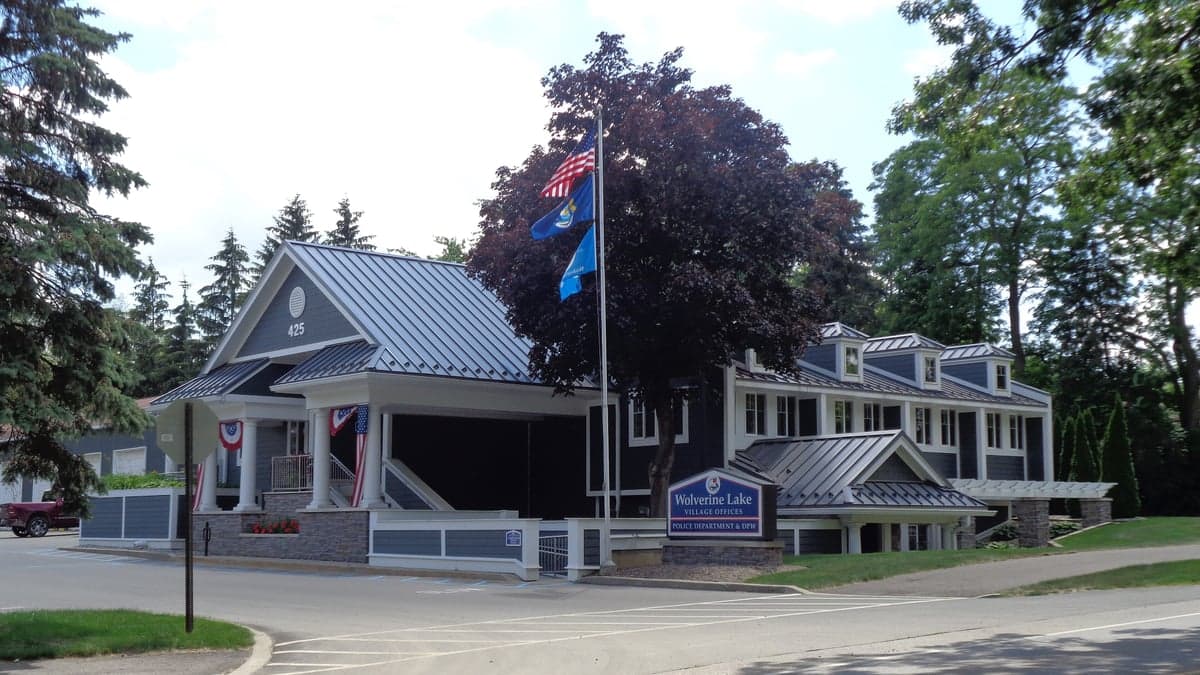
Photo: Wikipedia
Political ClimatePolitical Climate in Wolverine Lake, MI
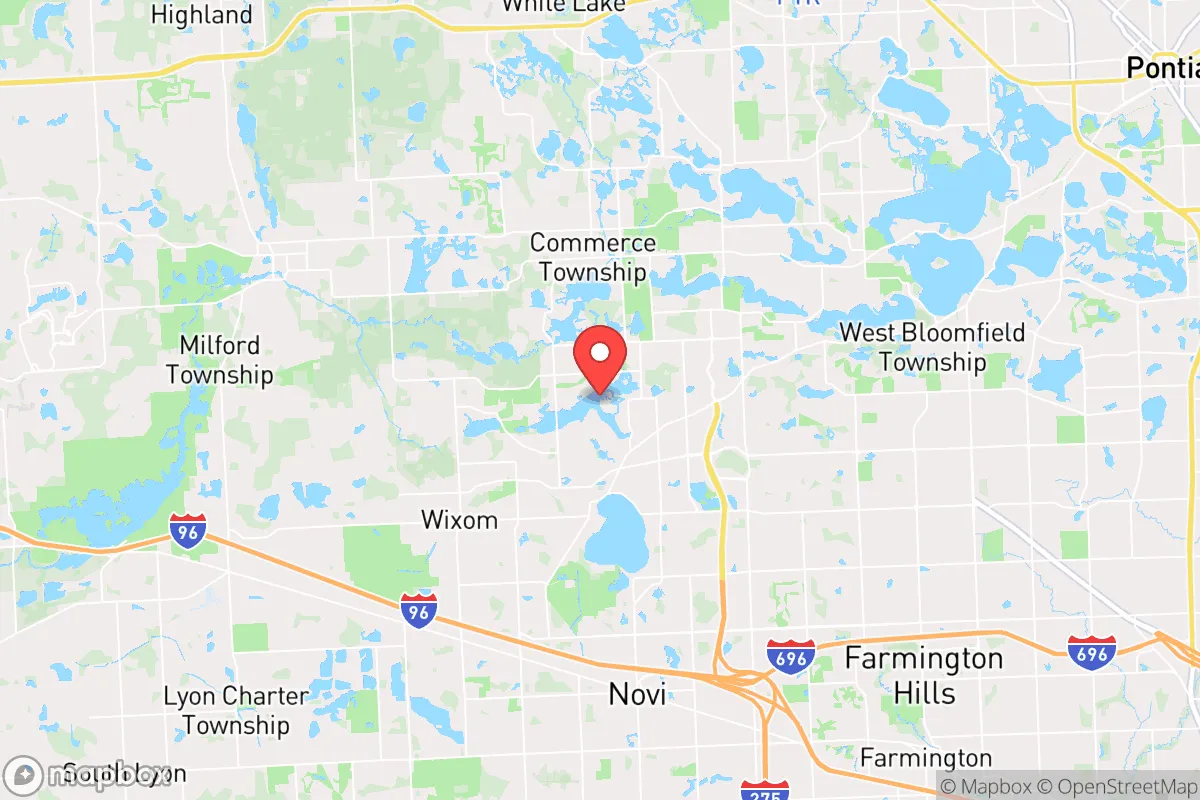
District shown is the primary district for this city’s centroid. Cities may span multiple districts.
Local Political AnalysisPolitical Analysis of Wolverine Lake, MI
Wolverine Lake leans solidly Democratic, with a Cook PVI of D+9, making it one of the more reliably blue spots in Oakland County. That’s a pretty stark contrast to the state of Michigan as a whole, which sits at EVEN on the same index—a pure swing state that flipped from Trump in 2016 to Biden in 2020 and back to Trump in 2024. If you’ve been around here long enough, you’ve seen the shift: the lake communities used to be more mixed, but over the last decade or so, the precincts around the water have trended steadily left, mirroring the broader suburban drift toward Democrats that’s reshaped places like nearby Walled Lake and Commerce Township.
How it compares
Wolverine Lake’s D+9 rating puts it well to the left of its immediate neighbors. Head west a few miles into Milford or Highland Township, and you’ll find areas that lean Republican by 5 to 10 points—places where Trump signs still outnumber Harris signs in any given election cycle. Even within Oakland County, which as a whole is D+13, Wolverine Lake is a bit more moderate than the ultra-blue strongholds of Ferndale or Royal Oak, but it’s definitely not a purple zone. The real contrast is with the rest of Michigan: the state’s EVEN rating means that while Wolverine Lake reliably sends Democrats to Lansing, the surrounding region—and the state legislature—can flip hard depending on turnout in the rural west and the Upper Peninsula. In practice, that means a Wolverine Lake resident’s vote for governor or Senate is often canceled out by a voter in Livingston County, just 15 miles away, where the PVI is R+14.
What this means for residents
For liberal residents, the local political reality is pretty comfortable. You’ll see Democratic yard signs along the lakefront, and the township board and school board elections tend to reflect the area’s lean. But don’t expect a progressive echo chamber—the local culture is still Midwestern practical, not activist-heavy. For conservative residents, life here isn’t hostile, but you’ll be in the minority at the ballot box. The practical effect is that local zoning, lake management, and school funding decisions are made by officials who lean left, but the day-to-day is neighborly. You’ll still see Trump flags on boats in the summer, and the local diner doesn’t check your voter registration. The real friction comes on state-level issues like gun laws or school choice, where Wolverine Lake’s representatives vote one way and the state legislature often goes another.
Culturally, Wolverine Lake has a distinct identity that softens the political edges. It’s a small, tight-knit lake community where people care more about water quality and boat access than national politics. The annual Fourth of July parade and the lake association meetings are where you’ll see the real cross-section of the town—Republicans and Democrats alike griping about the same algae blooms and jet ski noise. That local focus keeps the political temperature lower than you’d expect for a D+9 enclave in a swing state. Looking ahead, the trajectory is likely more of the same: the lake’s proximity to Detroit’s suburbs and the steady influx of younger families from Ann Arbor and Novi will probably nudge it a point or two bluer, but the state-level EVEN rating means Wolverine Lake will remain a blue island in a purple sea for the foreseeable future.

State Political ClimatePolitical Climate in Michigan
State Political AnalysisPolitical Environment in the State
Michigan is a true battleground state, with a Cook PVI of EVEN that perfectly captures its split personality. Over the past 20 years, it has swung from reliably blue (voting for Democrats in every presidential election from 1992 to 2012) to a toss-up that flipped for Trump in 2016, then flipped back for Biden in 2020 by just 154,000 votes. The dominant coalitions are a shrinking, union-heavy, diverse urban base in Southeast Michigan versus a growing, more conservative, and increasingly exurban and rural population in the western and northern parts of the state. The long-term trajectory is a slow reddening of the suburbs and exurbs, even as Detroit and Ann Arbor remain deeply blue, making the state a perpetual knife-edge.
Urban vs. rural divide
The political map of Michigan is a story of three distinct regions. The urban core of Detroit and its inner-ring suburbs like Southfield and Dearborn are overwhelmingly Democratic, driven by strong Black and Arab-American voting blocs. Ann Arbor, home to the University of Michigan, is the state’s most liberal city, consistently voting 80%+ Democratic. In contrast, the western side of the state—Grand Rapids, Holland, and Traverse City—is the heart of conservative Michigan. Grand Rapids itself has become more competitive (it voted for Biden in 2020), but its surrounding Kent County suburbs and the rural areas north and west remain deeply red. The real battleground is the ring of suburban counties around Detroit: Macomb County (a classic Reagan Democrat stronghold that went for Trump twice) and Oakland County (once a GOP bastion, now a suburban swing county that Biden won). The rural Upper Peninsula and northern Lower Peninsula lean Republican, but with low population density, they don't offset the metro Detroit vote as much as they used to.
Policy environment
Michigan’s policy environment is a mixed bag that reflects its divided government. The state has a flat income tax rate of 4.25%, which was reduced from 4.35% in 2023 via a trigger law. Property taxes are relatively high, with an average effective rate of 1.54%, but the Proposal A system (1994) caps annual increases for homeowners at 5% or inflation, whichever is lower, so long-time residents pay far less than newcomers. Sales tax is 6%, with no local add-ons. On education, Michigan has a robust school choice system, including charter schools and inter-district open enrollment, but funding per pupil is below the national average. The state’s regulatory posture is moderate—not as business-friendly as Indiana or Ohio, but not as restrictive as California. Election laws are relatively accessible: no-excuse absentee voting was passed by voters in 2018 via Proposal 3, and same-day voter registration is available. However, voter ID is required at the polls (with a signed affidavit as an alternative).
Recent policy direction
The last few years have seen a sharp leftward shift on several fronts, driven by Democratic control of the governorship and both legislative chambers from 2023-2024. In 2023, the legislature repealed Michigan’s right-to-work law (which had been in place since 2012) and restored prevailing wage requirements for state construction projects. They also expanded the Elliott-Larsen Civil Rights Act to include sexual orientation and gender identity. On gun policy, a 2023 package passed universal background checks, safe storage requirements, and red flag laws—a major change in a state with a strong hunting culture. On abortion, voters enshrined a constitutional right in 2022 via Proposal 3, overturning a 1931 ban. Parental rights have been a flashpoint: the state’s 2023 LGBTQ+ nondiscrimination law includes provisions that some conservative groups argue could limit parental notification about school curriculum. On property rights, Michigan has no statewide rent control (preempted by law), and zoning remains largely local. The state also legalized recreational marijuana in 2018 via ballot initiative, with a 10% excise tax. On voting, the 2022 ballot initiative Proposal 2 expanded early voting and drop boxes, and mandated independent redistricting (which took effect in 2022). The net effect: a relocator who values gun rights and union-free workplaces will find the state less friendly than a decade ago, while someone prioritizing abortion access or LGBTQ+ protections will find it more aligned.
Civil unrest & political movements
Michigan has been a national flashpoint for political activism. The 2020 Whitmer kidnapping plot and the armed protests at the state capitol over COVID-19 restrictions put the state in the headlines. The “Wolverine Watchmen” militia group was involved, and the incident highlighted a deep vein of anti-government sentiment in rural areas. On the left, the 2020 racial justice protests in Detroit and Grand Rapids were large but largely peaceful. Immigration politics are less heated than in border states, but Dearborn and Hamtramck have become sanctuary cities, and the state’s large Arab-American population (the highest per capita in the U.S.) has made Michigan a center of debate over Israel-Palestine policy, with significant protests in 2023-2024. Election integrity remains a live issue: Trump’s 2020 loss in Michigan by 154,000 votes led to the “Stop the Steal” movement, and the 2024 election saw intense scrutiny of absentee ballot processing in Detroit. The independent redistricting commission, created by voters in 2018, has reduced gerrymandering but also created more competitive districts, fueling both parties’ organizing efforts.
Projection
Over the next 5-10 years, Michigan is likely to remain a toss-up, but the demographic trends favor a slow rightward drift. The exurban counties around Detroit—Livingston County (already deeply red), Macomb County, and parts of Oakland County—are growing faster than Detroit and Ann Arbor. The state’s population is aging and slightly declining, with net domestic out-migration to Sun Belt states, but international immigration (especially to the Arab-American and Asian communities in Southeast Michigan) offsets some losses. The 2024 election will be a key test: if Trump wins Michigan again, it will confirm the state’s shift to a lean-Republican battleground; if Democrats hold it, the urban coalition may still be strong enough. For a new resident, expect continued partisan gridlock on major issues, with ballot initiatives (rather than the legislature) driving big changes on taxes, abortion, and voting. The state’s economic diversification—away from auto manufacturing toward tech, healthcare, and clean energy—may slowly moderate the politics of places like Grand Rapids and Ann Arbor, but the rural-urban divide will only deepen.
For a conservative relocator, Michigan offers a mixed bag: low taxes and school choice, but a recent leftward lurch on guns, unions, and social policy. For a liberal relocator, the state provides strong abortion protections, a growing clean energy sector, and a vibrant urban culture, but high property taxes and a powerful rural conservative minority that can block major initiatives. The bottom line: Michigan is a state where your vote truly matters, and where the political climate varies dramatically depending on whether you settle in Grand Rapids, Detroit, or Traverse City. If you’re moving here, pick your county carefully—it will define your experience more than the state’s overall lean.
* Values derived from national, state, county, city and local statistics and may differ in a specific area. Last updated: 2026-10-10T00:27:27.000Z
Narrative content on this page is AI-generated and may contain mistakes. Verify any details that matter before acting on them.
ReloMaps may earn a commission from affiliate links at no extra cost to you.

