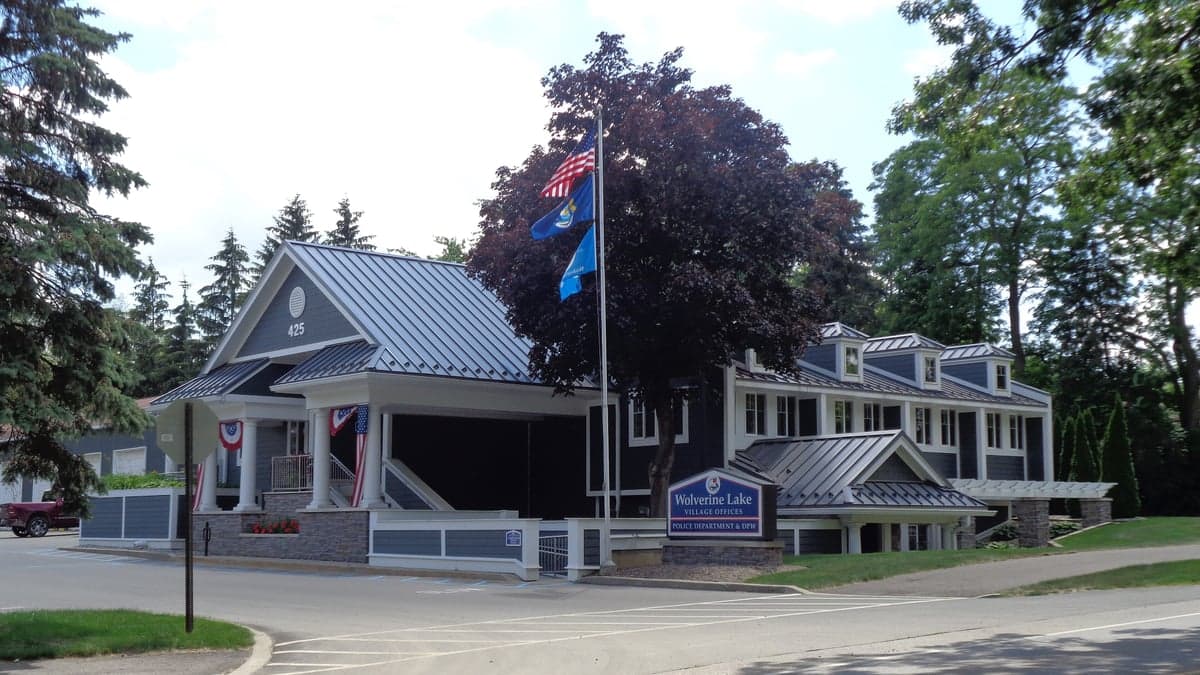
Photo: Wikipedia
Strategic Assessment of Wolverine Lake, MI
Multiple tactical vulnerabilities. Population density, target proximity, or disaster risk are likely compounding. A retreat property and exit planning is required.
What does the Strategic Assessment tell us?
Our Strategic Assessment grades tactical survivability of an area. Major population centers, military targets, fallout zones, natural disasters, and border exposure all drive risk — lower exposure means a more defensible position in a crisis.
This is heavily inspired by Joel Skousen's Strategic Relocation book. Highly recommended you checkout the book ($)What does this tell us?
Our Strategic Assessment grades tactical survivability of an area. Major population centers, military targets, fallout zones, natural disasters, and border exposure all drive risk — lower exposure means a more defensible position in a crisis.
This is heavily inspired by Joel Skousen's Strategic Relocation book. Highly recommended you checkout the book ($)Strategic Pillars

Key Distances
Regional Safe Places
Below is our recommended "safe zones" in Michigan and the surrounding area based on our strategic heuristics. For most people, it's unrealistic to live in a “safe zone” full-time due to work, family or other personal reasons. They tend to be more rural. However, many of these areas are perfect for second homes and retreat properties that double as a vacation home or even a short-term rental.


Important Note: For informational purposes only. This does not mean nothing bad ever happens in the green zones. Please use common sense. This is based on public data and modeled with AI. We tried to take a conservative approach but mistakes happen. We update this regularly as new information becomes available.
Solar Generator Recommendations
Backup power matters more here than in safer locations. We've picked three solar generators across budgets and capacity tiers — start with the budget unit if you only need a few essentials, or step up if you want to run a fridge and HVAC for days at a time.

Jackery Portable Power Station Explorer 300
Budget OptionPower on the Go: Weighing only 11 lbs, it's convenient to set up and store with book-sized foldable solar panels

BLUETTI Portable Power Station AC180
Designed for both indoor and outdoor scenarios, AC180 is highly capable as it has a robost capacity and continuous output power.

EF ECOFLOW DELTA Pro Ultra Power Station
Upgraded PickEcoFlow DELTA Pro Ultra is a whole-home energy system designed to grow with your family. Integrated with the Smart Home Panel 2, it scales to meet your evolving energy needs — keeping your home powered, intelligent, and secure through every stage of life.
We earn a commission, at no additional cost to you.
Strategic Assessment Analysis
Wolverine Lake, Michigan, presents a mixed strategic picture for the relocation-minded reader focused on resilience and self-sufficiency. Its primary advantage is a quiet, semi-rural character within commuting distance of Detroit and Ann Arbor, but this proximity to major population and industrial centers is also its most significant vulnerability. The village sits in Oakland County, a region that is both a potential target in a major conflict due to its automotive and defense supply chains and a zone of high population density that could become a liability in a widespread crisis. For the serious prepper, Wolverine Lake offers a decent starting point for a layered resilience plan, but it is not a remote or inherently defensible location.
Geographic position and natural advantages for self-sufficiency
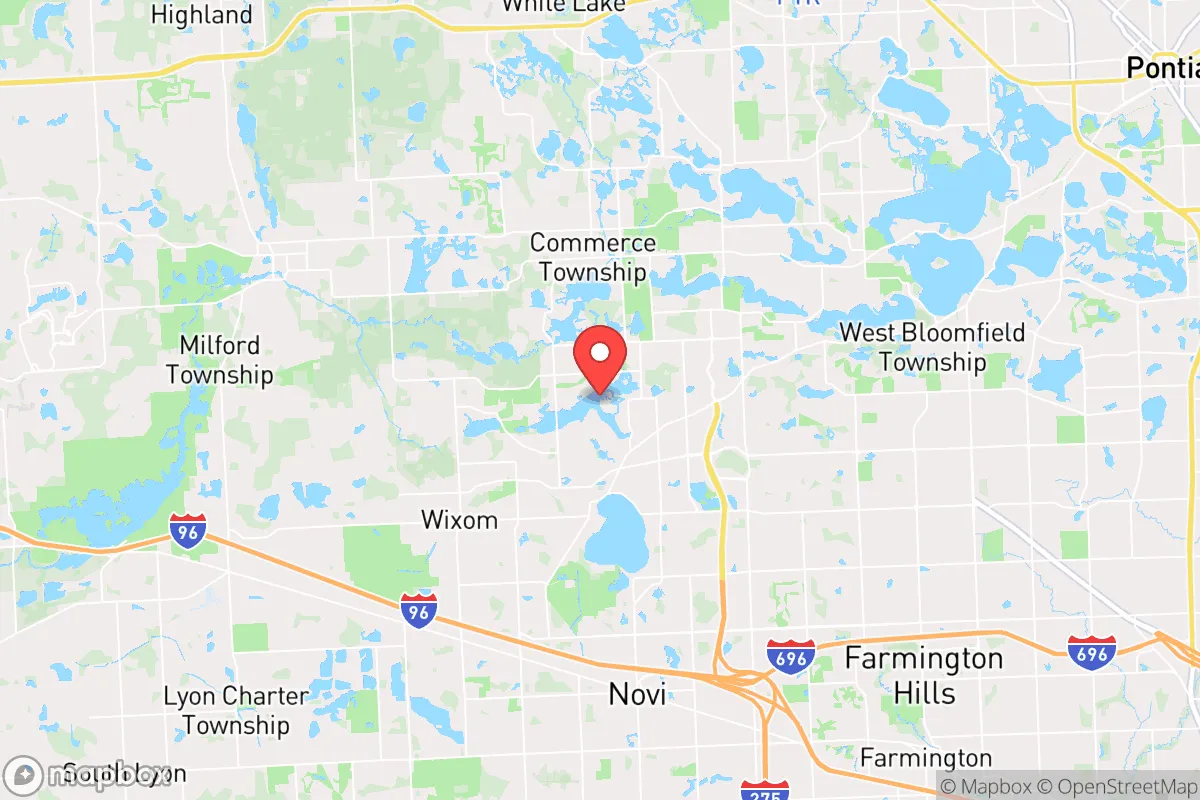
Wolverine Lake benefits from a location that balances access to resources with a degree of natural separation from the densest urban corridors. The village is situated in a chain of lakes, giving residents direct access to a substantial freshwater source—a critical asset for any long-term resilience strategy. The surrounding landscape is a mix of second-growth hardwood forest, wetlands, and low-density residential parcels, which provides some natural cover and potential for small-scale hunting, foraging, and timber harvesting. The area's glacial topography, with its rolling hills and kettle lakes, offers natural drainage and reduces the risk of large-scale flooding, though low-lying properties near the lake itself can experience seasonal high water. The local climate, with cold winters and moderate summers, presents a challenge for year-round food production, but the growing season (roughly May through October) is sufficient for a well-planned garden. The village's position roughly 40 miles northwest of Detroit and 20 miles west of Pontiac places it outside the immediate blast and fallout zones of those cities, but well within the range of secondary effects like refugee flow and supply chain disruption. The proximity to I-96 and M-5 provides evacuation routes north and west, but these same roads would become chokepoints in a crisis.
Risks, exposures, and proximity to fallout-relevant landmarks
The most serious risk for Wolverine Lake is its location within the broader Detroit-Warren-Ann Arbor metropolitan area, a region with significant strategic value. Oakland County is home to numerous automotive R&D centers, defense contractors, and critical infrastructure, including the Detroit Metropolitan Airport and the Willow Run Airport (a former bomber plant and current air cargo hub). In a major conflict or terrorist event, these are plausible targets for conventional or asymmetric attack. The fallout risk from a nuclear detonation at such targets would depend on wind patterns, but Wolverine Lake lies generally upwind of Detroit's prevailing westerlies, offering some protection. However, the village is within 30 miles of the Fermi 2 nuclear power plant in Monroe County, a facility that, while well-regulated, represents a low-probability, high-consequence risk for radiological release. Natural hazards are less dramatic but more probable: severe thunderstorms, tornadoes (Oakland County is in a moderate-risk zone), and winter ice storms that can knock out power for days. The area's aging electrical grid, with many overhead lines running through wooded areas, is a known vulnerability. The local water supply is groundwater-dependent, and while the lake itself is a backup source, it would require filtration and boiling. The village's population of roughly 4,000 is small, but it is surrounded by higher-density suburbs like Walled Lake and Commerce Township, meaning a crisis would bring significant population movement through the area.
Practical resilience for a relocator: food, water, energy, and defensibility
For a relocator serious about self-sufficiency, Wolverine Lake offers a mixed bag of practical assets and liabilities. Water is the strongest asset: the lake itself provides a year-round, renewable source, though it requires treatment (filtration, boiling, or chemical purification) due to recreational use and runoff. A well on the property is ideal, but many homes in the village are on municipal water from the Detroit system, which is vulnerable to disruption. Food production is feasible but limited by lot sizes—most parcels are under an acre, making large-scale gardening or livestock challenging. Community gardens exist in nearby Walled Lake, but a relocator would need to secure a larger rural property (e.g., in western Oakland County or Livingston County) for serious food autonomy. Local farmers' markets and u-pick farms are available seasonally, but they are not a crisis-proof supply. Energy resilience is achievable with investment: the area has decent solar potential (about 4.5 peak sun hours per day), and many homes have basements suitable for battery storage. Natural gas is widely available for heating and cooking, but a grid-down scenario would require a backup generator or wood stove. Defensibility is the weakest point. Wolverine Lake is a classic suburban village with multiple road access points, no natural chokepoints, and a layout that is difficult to secure. The village police department is small (fewer than 10 officers), and mutual aid from surrounding agencies would be strained in a regional crisis. The community is not gated or walled, and the lake itself provides a potential approach vector. For a relocator prioritizing security, a more remote property in northern Michigan or the Upper Peninsula would be far superior.
The overall strategic picture for Wolverine Lake is one of moderate resilience with significant caveats. It is a viable location for a relocator who wants to maintain access to urban employment and services while building a layered resilience plan centered on water, backup power, and a well-stocked pantry. The lake is a genuine asset, and the community's small size and relative affluence mean that neighbors are likely to be capable and cooperative. However, the area's proximity to major targets, its suburban defensibility challenges, and its dependence on regional infrastructure mean it is not a retreat or a bug-out location. For the reader who is serious about long-term self-sufficiency and willing to trade convenience for security, Wolverine Lake is a decent base camp—but not a final destination. The smartest approach would be to treat it as a primary residence with robust preparations, while maintaining a secondary, more remote property as a fallback. In a severe crisis, the village's best hope is that its residents have prepared well enough to ride out the first few weeks, after which the situation will depend entirely on regional stability.

* Values derived from national, state, county, city and local statistics and may differ in a specific area. Last updated: 2026-10-10T00:27:27.000Z
Narrative content on this page is AI-generated and may contain mistakes. Verify any details that matter before acting on them.
ReloMaps may earn a commission from affiliate links at no extra cost to you.

