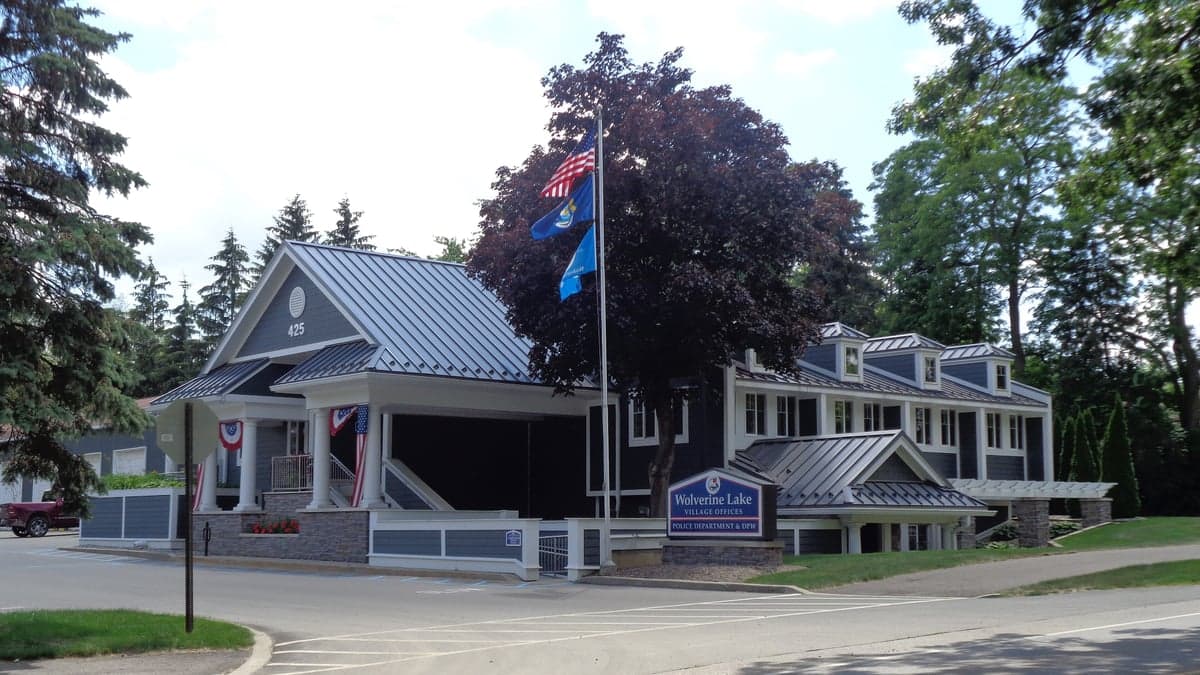
Photo: Wikipedia
Demographics of Wolverine Lake, MI
Affluence Level in Wolverine Lake, MI
A middle-class area roughly in line with national averages across income, home values, education, and employment.
People of Wolverine Lake, MI
Today, Wolverine Lake, Michigan is a small, tight-knit community of 4,476 residents, characterized by its predominantly white population (87.5%) and a notably higher-than-average college education rate (37.9%) compared to the state median. The city’s identity is rooted in its lakeside setting and quiet suburban character, with a modest foreign-born population of 4.8% and a growing Hispanic community (5.1%) that is beginning to add new cultural layers. Residents value the area’s low crime rates, strong local schools, and proximity to Detroit’s job market, making it a stable choice for families seeking a slower pace without sacrificing urban access.
How the city was settled and grew
Wolverine Lake’s human history begins not with colonial settlement but with the post-World War II suburban boom. The area was originally part of Commerce Township, a sparsely populated farming and logging region in Oakland County. The lake itself—a 100-acre spring-fed body of water—was the primary draw for early 20th-century vacationers from Detroit, who built seasonal cottages along its shores. The first permanent residents were largely working-class families of Northern European descent (German, Polish, and Irish) who arrived in the 1940s and 1950s, drawn by affordable lakefront lots and the promise of a rural retreat within commuting distance of the city. These early settlers clustered in what is now the Lakeside Drive and South Shore Drive neighborhoods, where many original cottages have since been replaced by year-round homes. The city was officially incorporated in 1964, a move driven by residents who wanted local control over zoning and lake management as the area transitioned from seasonal to permanent living.
Modern era (post-1965)
The post-1965 period saw Wolverine Lake solidify its identity as a bedroom community. The 1970s and 1980s brought a wave of white-collar professionals—engineers, managers, and small business owners—who built larger homes on the remaining vacant lots, particularly in the Woodland Hills and Lakeview Estates subdivisions. These new residents were overwhelmingly white and native-born, reflecting the broader demographics of Oakland County at the time. The city’s population peaked around 5,000 in the 1990s and has since stabilized near 4,500. The foreign-born share (4.8%) is modest, with the largest immigrant groups being East/Southeast Asian (2.2%) and a small but growing Hispanic population (5.1%). The Asian community, primarily of Chinese and Korean ancestry, has concentrated in the newer Willow Creek subdivision, drawn by the area’s highly rated Walled Lake Consolidated Schools. The Black population remains very small (0.7%), and there is no measurable Indian subcontinent population (0.0%). The city’s racial and ethnic composition has shifted only slightly since 2000, with the white share declining from 93% to 87.5%, while the Hispanic share has more than doubled from 2.1% to 5.1%.
The future
Wolverine Lake’s population is projected to remain stable or grow modestly over the next decade, driven by infill development on the few remaining vacant parcels and the conversion of older seasonal cottages into permanent homes. The city is becoming slightly more diverse, with the Hispanic and East/Southeast Asian shares expected to continue their gradual increase, though the overall character will remain predominantly white and native-born. New residents are likely to be drawn from the same professional and managerial class that has defined the city since the 1970s, attracted by the lake lifestyle and the strong reputation of Walled Lake Schools. The East Lake Drive corridor, which connects to the newly expanded M-5 highway, is seeing the most new construction, with a mix of custom homes and small-lot subdivisions. The city’s cultural identity is evolving from a purely recreational lake community into a more diverse, year-round suburb, though it remains a place where neighbors know each other and community events like the annual Fourth of July parade on the lake are central to social life.
For someone moving in now, Wolverine Lake offers a stable, family-oriented environment with a strong sense of place and a demographic trajectory that is slowly diversifying but remains overwhelmingly white and middle-class. The city is not undergoing rapid change; rather, it is a mature suburb where the key decisions are about preserving the lake’s water quality, managing aging infrastructure, and maintaining the quiet character that has long defined it. Newcomers will find a community that values its history and is cautiously open to the modest shifts that come with the next generation of residents.

* Values derived from national, state, county, city and local statistics and may differ in a specific area. Last updated: 2026-10-10T00:27:27.000Z
Narrative content on this page is AI-generated and may contain mistakes. Verify any details that matter before acting on them.
ReloMaps may earn a commission from affiliate links at no extra cost to you.

