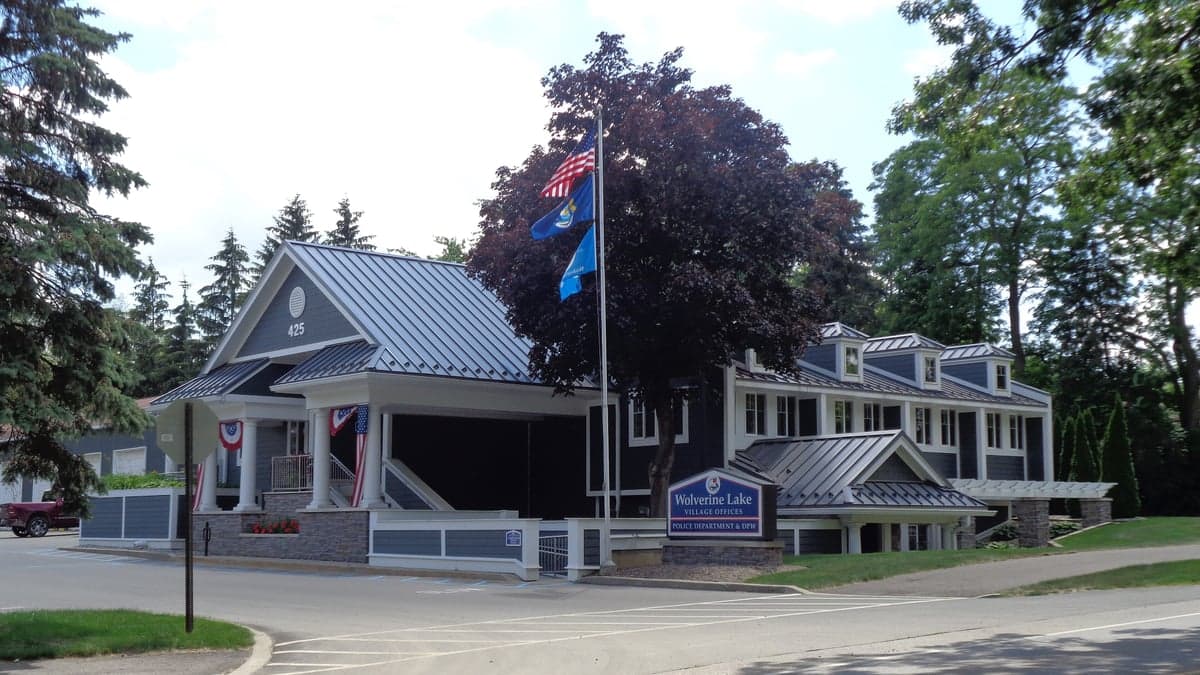
Photo: Wikipedia
Personal Sovereignty in Wolverine Lake, MI
Strong independent fundamentals that actively favor personal liberty and low regulation.
What does Personal Sovereignty tell us?
Personal Sovereignty measures your capacity for self-reliance and independence with minimal government friction. Higher scores mean fewer barriers between you and the way you want to live... but it assumes you have the space you need and good neighbors.
What does this tell us?
Personal Sovereignty measures your capacity for self-reliance and independence with minimal government friction. Higher scores mean fewer barriers between you and the way you want to live... but it assumes you have the space you need and good neighbors.
State Policy
Energy independence: Importer (20% of energy produced in-state)
Personal Liberty
Homesteading

Personal Liberty Analysis
Wolverine Lake, Michigan, offers a notably high degree of personal sovereignty relative to many suburban enclaves in the Metro Detroit region, largely due to Michigan’s status as a right-to-work state, its permissive self-defense laws, and the village’s own light-touch municipal governance. For individuals and families prioritizing independence, the environment here balances the privacy of lakefront living with the practical freedoms of a state that has consistently moved toward expanding personal autonomy in recent years. The key trade-offs involve property taxes that are moderate for the region and a regulatory code that, while present, is far less intrusive than what you would find in neighboring Oakland County communities like Birmingham or Novi.
Tax burden and regulatory posture: How Michigan’s policies shape local freedom
Michigan’s overall tax burden is competitive for the Midwest, ranking 15th lowest in the nation for combined state and local taxes as of 2025. Wolverine Lake residents pay a state income tax of 4.25% (flat rate) and a sales tax of 6%, with no local income tax—a significant advantage over cities like Detroit or Grand Rapids that layer on additional levies. Property taxes in the village average around 1.5% of assessed value, which is slightly above the national median but typical for Oakland County’s high-service communities. However, Michigan’s Proposal A (1994) caps annual property tax increases at the rate of inflation or 5%, whichever is lower, until a property is sold—meaning long-term homeowners enjoy predictable, slowly rising tax bills. The regulatory posture at the village level is best described as “hands-off but orderly.” Wolverine Lake has no overly burdensome business licensing requirements for home-based enterprises, and zoning ordinances are straightforward, focusing mainly on waterfront setbacks and septic system maintenance. There is no local rent control, no plastic bag ban, and no municipal energy mandates. For a conservative-leaning audience, the key takeaway is that Michigan’s state preemption laws prevent local governments from enacting stricter regulations than the state on firearms, short-term rentals, and occupational licensing—a significant check on local overreach.
Self-defense and gun law specifics: Michigan’s shall-issue and stand-your-ground framework
Michigan is a shall-issue state for concealed pistol licenses (CPL), meaning the county sheriff must issue a permit if the applicant meets statutory requirements—no discretion, no subjective “good cause” requirement. Oakland County, where Wolverine Lake sits, processes CPL applications efficiently, typically within 45 days. The state also has a stand-your-ground law (MCL 780.972), which eliminates any duty to retreat before using deadly force in any place where a person has a legal right to be. This is a critical protection for homeowners and individuals who carry. Michigan does not require a permit to openly carry a handgun, though a CPL is needed for concealed carry. Notably, the state has no firearm registration, no magazine capacity limits, and no “assault weapon” ban—a stark contrast to neighboring states like Illinois. The village itself has no additional firearm ordinances, and the local police department (which serves about 4,400 residents) is known for a pro-Second Amendment posture. For families, the ability to store firearms in vehicles on school property is restricted under federal law (Gun-Free School Zones Act), but Michigan law does not add extra restrictions beyond that. The practical reality: a resident can legally carry a firearm for self-defense in most public spaces, including parks and restaurants that serve alcohol (provided they are not consuming).
Self-reliance and homesteading viability: Lot sizes, zoning, and off-grid feasibility
Wolverine Lake is not a rural homesteading paradise—it is a suburban lake community with lot sizes averaging 0.25 to 0.5 acres. However, the village’s zoning code does permit accessory dwelling units (ADUs), backyard chickens (with a permit), and small-scale vegetable gardens without HOA-style restrictions. The village has no city-wide composting mandate, and rain barrels are allowed. For those seeking true off-grid living, the constraints are real: the village requires connection to municipal water and sewer in most areas, and solar panel installations must comply with building codes but are not prohibited. The real opportunity for self-reliance lies in the surrounding area. Within a 15-minute drive, rural Oakland and Livingston counties offer 5- to 20-acre parcels with agricultural zoning, where you can keep livestock, install septic systems, and generate your own power without municipal interference. Michigan’s “Right to Farm” Act (MCL 286.473) provides strong protections for agricultural activities, even in suburban fringe areas, as long as they follow generally accepted practices. For the typical Wolverine Lake resident, self-reliance means growing a substantial garden, keeping a few chickens, and possibly installing a backup generator—not living off the grid entirely. The village’s location on a chain of lakes also provides a natural resource for fishing and small-scale water collection, though all waterfront property is privately owned and subject to Michigan’s inland lakes and streams regulations.
Personal liberties: Parental rights, medical autonomy, speech, and property
Michigan has become a battleground for personal liberties, but the current legal landscape is favorable for conservative-leaning residents. Parental rights are strongly protected under state law: Michigan’s Revised School Code (MCL 380.10) affirms that parents have the primary responsibility for the education and care of their children, and the state does not mandate any specific curriculum on gender identity or sexual orientation in K-12 schools. Wolverine Lake is served by the Walled Lake Consolidated School District, which has a parental notification policy for any changes to a student’s official records. On medical autonomy, Michigan is a mixed bag: the state has no vaccine mandate for adults, but COVID-era emergency orders did require masks in schools (now expired). The state does not require a prescription for ivermectin or hydroxychloroquine, and pharmacists can dispense them under collaborative practice agreements. Abortion is legal up to fetal viability under a 2022 state constitutional amendment, but parental consent is required for minors. Property rights are robust: Michigan has no statewide rent control, no inclusionary zoning mandates, and no transfer taxes on real estate sales. The village’s short-term rental ordinance is minimal—no cap on the number of permits, just a requirement to register and pay a modest fee. Free speech protections are standard under the First Amendment, and Michigan has no “hate speech” laws that criminalize protected expression. The practical effect for a resident: you can fly any flag on your property, post political signs (within size limits), and speak your mind at village council meetings without fear of censorship.
Overall, Wolverine Lake offers a sovereignty profile that is significantly stronger than what you would find in coastal blue states or even in many Michigan cities like Ann Arbor or Detroit. The combination of a shall-issue gun regime, no local income tax, strong property rights, and a village government that stays out of lifestyle choices creates an environment where personal autonomy is the default. The main limitations are the suburban lot sizes (which constrain full homesteading) and the state’s income tax, which is moderate but not zero. For a family or individual who values independence and is willing to accept the trade-offs of suburban infrastructure (water/sewer hookups, zoning for density), Wolverine Lake ranks as one of the more freedom-respecting communities in Southeast Michigan. The closest comparison would be a smaller, lakefront version of a Texas or Florida suburb—minus the heat and hurricanes, but with the same emphasis on letting people live their own lives.

* Values derived from national, state, county, city and local statistics and may differ in a specific area. Last updated: 2026-10-10T00:27:27.000Z
Narrative content on this page is AI-generated and may contain mistakes. Verify any details that matter before acting on them.
ReloMaps may earn a commission from affiliate links at no extra cost to you.

