
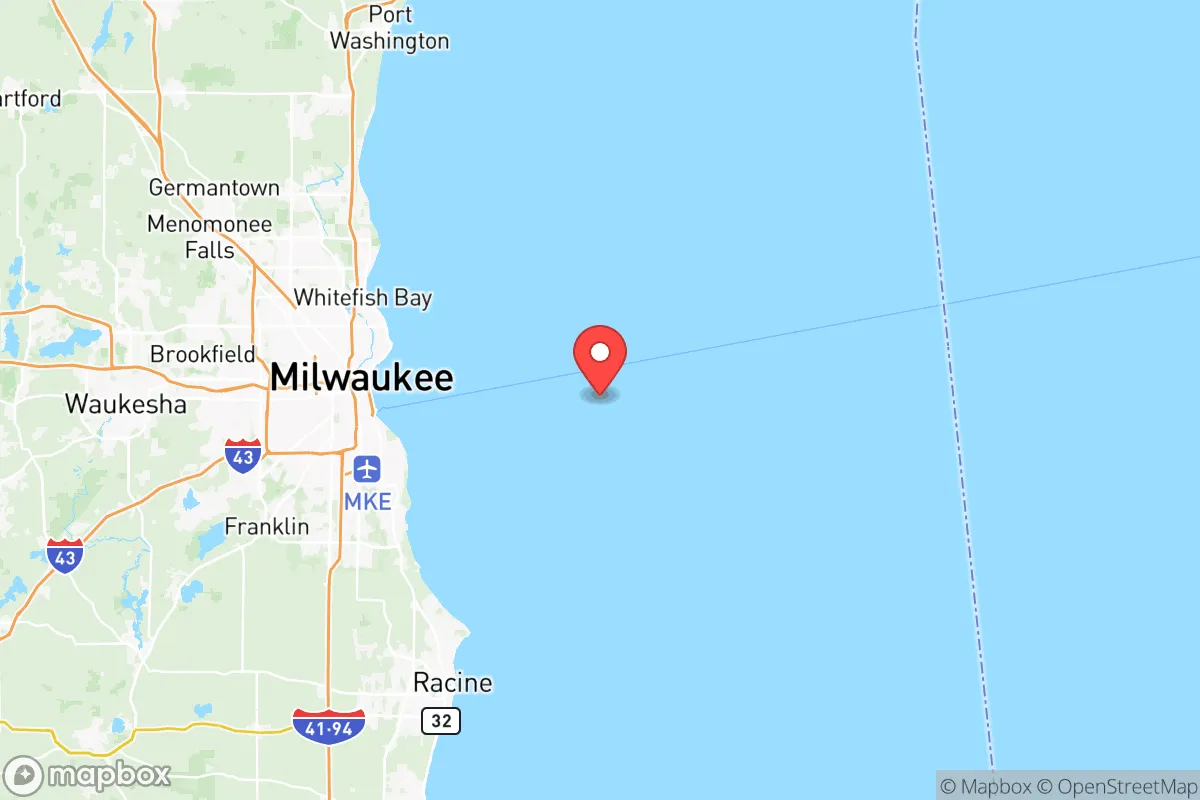
Photo: Wikipedia
Quality of Life in Milwaukee County
A livable area that tracks near national norms for affordability, walkability, and neighborhood health.
What does Quality of Life tell us?
Quality of Life measures an area by evaluating factors like cost of living, nearby amenities, country club access, airport proximity, socioeconomic signals and neighborhood character. For large states, this is a general average — quality of life can vary dramatically between metro areas, suburbs, and rural communities within the same state.
What does this tell us?
Quality of Life measures an area by evaluating factors like cost of living, nearby amenities, country club access, airport proximity, socioeconomic signals and neighborhood character. For large states, this is a general average — quality of life can vary dramatically between metro areas, suburbs, and rural communities within the same state.
Cost of Living
14% below national average
100%
The Real Cost of Living in Milwaukee County for 2026
| Tier | Individual | Family (4) |
|---|---|---|
| Survival | $17k | $32k |
| Comfortable | $42k | $62k |
| Luxury | $112k+ | $174k+ |
| Elite (Top 5%) | $141k+ | $218k+ |
Quality-of-Life Analysis
Milwaukee County offers a surprisingly broad quality-of-life spectrum, from the dense, walkable urban core of Milwaukee proper to quiet, suburban villages and even small agricultural pockets near the county line. With a cost of living index of 86 (14% below the national average), a median home value of $216,500, and a median rent of $1,069, the county attracts everyone from young professionals seeking nightlife and career opportunities to families prioritizing school districts and retirees looking for lower-maintenance, quieter communities. The average commute of just over 22 minutes is notably short for a major metropolitan area, making it feasible to live in a slower-paced suburb while working in the city.
Largest town(s) & population centers
The dominant population center is the city of Milwaukee, home to roughly 570,000 residents. Daily life here is defined by walkable neighborhoods like the East Side, Bay View, and Walker’s Point, each with distinct character—from historic mansions and lakefront parks to craft breweries and industrial lofts. The city offers major employers such as Froedtert Hospital, Northwestern Mutual, and Rockwell Automation, along with cultural anchors like the Milwaukee Art Museum and the Harley-Davidson Museum. For those seeking a more suburban big-city experience, Wauwatosa (pop. ~48,000) blends a vibrant village center with the massive Mayfair Mall and the Milwaukee County Grounds park system. West Allis (pop. ~60,000) offers more affordable housing stock and a working-class feel, with the Wisconsin State Fair Park anchoring community events. Greenfield and Franklin provide additional suburban options with good schools and easy freeway access, appealing to families and commuters.
Smaller towns & rural pockets
Milwaukee County is largely developed, but genuine small-town character persists in a few places. Greendale (pop. ~14,000) is a planned community from the 1930s, featuring a charming village square, the historic Greendale Original neighborhood, and the popular Southridge Mall area—yet it retains a quiet, walkable feel. St. Francis (pop. ~9,500) hugs the Lake Michigan shoreline south of Milwaukee, offering a small-town lakeside atmosphere with a strong sense of community and the expansive Lake Parkway trail. Cudahy (pop. ~18,000) is a classic inner-ring suburb with a distinct downtown, a historic amusement park (Seven Seas), and a more industrial-residential mix. The most rural-feeling area within the county is the far southwestern corner, around Muskego (part of which extends into Waukesha County) and the unincorporated area of New Berlin (mostly Waukesha County, but a small portion lies in Milwaukee County). Here, you’ll find larger lots, horse farms, and a slower pace, though these areas are increasingly rare as development pushes outward.
Cost & lifestyle range
The cost spread across Milwaukee County is significant. At the high end, Whitefish Bay and Shorewood (both north of Milwaukee) feature median home values well above $400,000, with top-rated schools, lakefront access, and a dense, walkable commercial corridor along Oakland Avenue. These villages attract professionals and families willing to pay a premium for proximity to the city and excellent public education. At the lower end, neighborhoods in Milwaukee’s central city (e.g., the Near West Side, parts of the North Side) and older suburbs like West Milwaukee and South Milwaukee offer median home values closer to $150,000–$180,000. Renters find the most affordable options in these areas, with one-bedroom apartments often under $900. The lifestyle range is equally broad: a resident in Riverwest (Milwaukee) might bike to a punk show and a farmers market, while someone in Greendale might spend weekends at the village pool and the Wehr Nature Center. The key trade-off is space and school quality versus urban energy and walkability.
Milwaukee County is best suited for those who want access to a major city’s amenities—professional sports, a world-class art museum, diverse dining, and a strong job market—without the high costs of coastal metros. Families thrive in the inner-ring suburbs with strong school systems, while young professionals and creatives are drawn to the city’s affordable neighborhoods and cultural scene. Retirees often prefer the quieter lakefront villages or the more suburban towns like Franklin and Greendale. The county’s compact size and short commute mean that even a resident in a rural pocket near Muskego can be downtown in under 30 minutes, making it a uniquely flexible place to live across a wide range of budgets and lifestyles.

Crime in Milwaukee County
Generally safer than 61% of comparable U.S. locations.
Violent CrimeViolent Crime Analysis
Property CrimeProperty Crime Analysis
Crime Analysis
Milwaukee County presents a complex safety picture defined by a sharp divide between its urban core and surrounding suburbs. The county's overall violent crime rate of 236.8 per 100,000 residents and property crime rate of 996.9 per 100,000 mask significant variation, with Milwaukee itself driving the bulk of serious offenses while communities like Wauwatosa, Brookfield, and Greendale report far lower incident numbers. Readers considering relocation should understand that safety outcomes are heavily influenced by jurisdiction-specific policing strategies and the progressive judicial philosophy prevalent in Milwaukee County's court system.
Crime in context
Milwaukee County's violent crime rate of 236.8 per 100,000 sits notably above the national average of roughly 380 per 100,000, though this headline figure is misleading. The city of Milwaukee accounts for the overwhelming majority of homicides, aggravated assaults, and robberies, while suburban communities within the same county report rates comparable to or below state averages. Property crime at 996.9 per 100,000 also exceeds national benchmarks, driven largely by motor vehicle theft and larceny in the city and near-downtown neighborhoods. Milwaukee's violent crime rate is approximately 3.5 times higher than the Wisconsin state average, but that gap narrows dramatically when isolating suburban jurisdictions. The county's District Attorney office, operating under a progressive prosecutorial model emphasizing diversion and reduced incarceration, has drawn criticism for plea deals that critics argue fail to hold repeat offenders accountable, a pattern visible in cases originating from the downtown Milwaukee and near-south side districts.
What residents experience
Daily safety experience in Milwaukee County depends almost entirely on zip code. Residents in Wauwatosa, Brookfield, and Greendale typically encounter low property crime and virtually no violent crime, with police departments that maintain traditional enforcement approaches. In contrast, neighborhoods on Milwaukee's north side, including the Harambee and Lindsay Heights areas, experience concentrated violent crime tied to gang activity and drug markets. Property crime, particularly vehicle break-ins and theft, is a concern even in relatively safe areas like Shorewood and Whitefish Bay, where proximity to Milwaukee's higher-crime corridors creates spillover effects. The county's reliance on cashless bail and pretrial release programs, championed by progressive judges in the Milwaukee County Circuit Court, has resulted in numerous high-profile cases where defendants awaiting trial for violent offenses committed additional crimes while released, eroding public confidence in the justice system's ability to protect law-abiding residents.
Neighborhood-level variation within Milwaukee itself is extreme. The East Side and Bay View areas, popular with young professionals, report moderate property crime but relatively low violent crime, while the Sherman Park and Washington Park neighborhoods experience elevated rates of both. South Milwaukee and Cudahy offer middle-ground safety profiles, with property crime rates higher than western suburbs but violent crime significantly below Milwaukee's citywide average. For families and retirees, the safest choices remain the western and northern suburbs—Brookfield, Elm Grove, Mequon, and Germantown—where police response times are shorter and community-oriented policing remains the norm. Prospective residents should examine block-level crime maps rather than countywide statistics, as Milwaukee County's 236.8 violent crime rate obscures the reality that many of its 19 municipalities are genuinely safe places to live and raise children.
* Values derived from national, state, county, city and local statistics and may differ in a specific area. Last updated: 2026-06-16T22:34:19.000Z
Narrative content on this page is AI-generated and may contain mistakes. Verify any details that matter before acting on them.
ReloMaps may earn a commission from affiliate links at no extra cost to you.

