
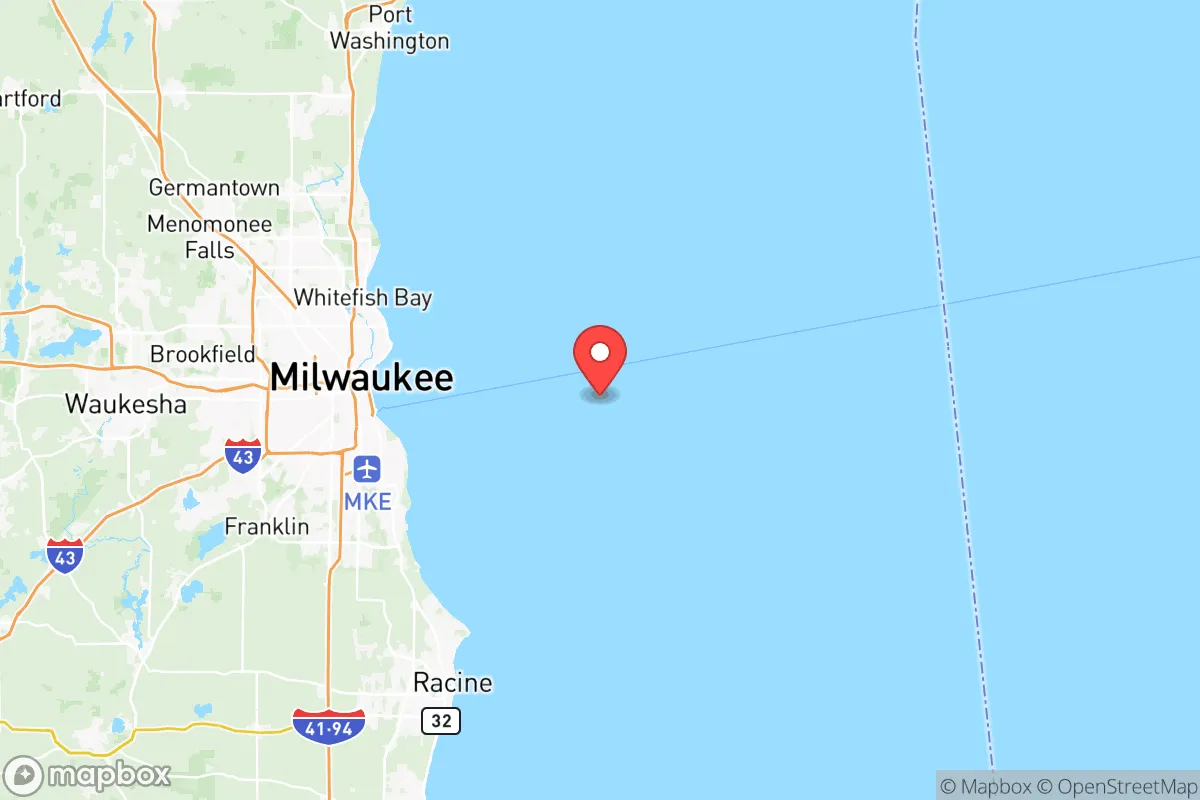
Photo: Wikipedia
Personal Sovereignty in Milwaukee County
Viable for self-reliance. Generally workable, though some barriers may limit total independence.
What does Personal Sovereignty tell us?
Personal Sovereignty measures your capacity for self-reliance and independence with minimal government friction. Higher scores mean fewer barriers between you and the way you want to live... but it assumes you have the space you need and good neighbors.
What does this tell us?
Personal Sovereignty measures your capacity for self-reliance and independence with minimal government friction. Higher scores mean fewer barriers between you and the way you want to live... but it assumes you have the space you need and good neighbors.
State Policy
Energy independence: Importer (15% of energy produced in-state)
Personal Liberty
Homesteading

Personal Liberty Analysis
Milwaukee County presents a complex personal sovereignty environment where state-level preemption on firearms and property rights clashes with a dense urban regulatory apparatus, creating a landscape that varies significantly by municipality. While Wisconsin is a shall-issue concealed carry state with a preemption law that limits local gun ordinances, Milwaukee County itself enforces some of the state's most restrictive local regulations, particularly in the City of Milwaukee, where rental licensing, noise codes, and business permitting are notably heavy. For a freedom-oriented individual, the county offers a mixed bag: strong state-level protections on self-defense and property use, but a local governance culture that leans interventionist, especially in the urban core.
Tax burden and regulatory posture across Milwaukee County
Milwaukee County's tax burden is among the highest in Wisconsin, driven by a county-wide sales tax of 0.5% (on top of the state's 5%) and property tax rates that average roughly 2.2% of assessed value in the City of Milwaukee, compared to about 1.8% in suburban towns like Franklin or Oak Creek. The county's regulatory posture is most visible in the City of Milwaukee, where rental properties require annual inspections, business licenses are tiered by industry, and zoning codes are detailed and strictly enforced. In contrast, Greendale and Greenfield maintain lighter touch on home-based businesses and accessory dwelling units, though all municipalities must comply with county-wide stormwater management and building codes. The overall regulatory environment is moderate-to-heavy: you can operate a small repair shop from a garage in Hales Corners with minimal fuss, but opening a food truck in downtown Milwaukee requires navigating multiple city departments.
Self-defense and gun law specifics in Milwaukee County
Wisconsin is a shall-issue state for concealed carry, meaning permits are issued to any qualified applicant without discretionary denial, and the state preempts local governments from enacting their own firearm ordinances. This preemption is critical: while the City of Milwaukee has passed symbolic resolutions opposing state gun laws, it cannot legally ban concealed carry in parks or require additional waiting periods. However, practical realities differ: Wauwatosa and Brookfield (the latter is in Waukesha County but adjacent) have gun-friendly cultures with multiple indoor ranges and gun shops, while Milwaukee proper has fewer retail options and a higher theft rate for firearms. The county's gun theft rate is roughly double the state average, making secure storage a practical concern. Stand-your-ground laws apply statewide, but Milwaukee County District Attorney John Chisholm has historically been more aggressive in charging self-defense claims than prosecutors in surrounding counties, a factor that may influence a carrier's legal calculus.
Self-reliance and homesteading viability: lot sizes, zoning, and off-grid feasibility
Homesteading and off-grid living are severely constrained within Milwaukee County due to dense zoning and utility requirements. The minimum lot size in most suburban municipalities like Brown Deer or St. Francis is typically 6,000 to 10,000 square feet, with no allowance for agricultural uses. The City of Milwaukee mandates connection to municipal water and sewer, effectively banning off-grid systems. However, the county's southern and western fringes offer more room: Franklin has some R-1 zoning districts with minimum lot sizes of 20,000 square feet, and Oak Creek permits hobby beekeeping and up to four chickens on standard lots. True off-grid living—solar panels with battery storage, rainwater catchment, composting toilets—is effectively illegal in any municipality with building codes that require grid-tied electrical and municipal sewer connections. For serious homesteading, residents typically look to adjacent Waukesha County (e.g., Muskego or Big Bend), where 2-5 acre parcels are common and zoning allows small-scale livestock. Within Milwaukee County, the best option for a self-reliant lifestyle is a suburban home with a large garden and a workshop, not a rural homestead.
Personal liberties: parental rights, medical autonomy, speech, and property
Parental rights in Milwaukee County are shaped by state law, which gives parents broad authority over their children's education and medical decisions. School choice is robust: the Milwaukee Parental Choice Program allows families to use public funds for private or religious schools, and homeschooling is legal with minimal reporting requirements (annual notification and a simple form). Medical autonomy is mixed: Wisconsin has no state-level vaccine mandate for adults, but Milwaukee County's health department has historically pushed for mask mandates and vaccine requirements for county employees, which were contested in court. Free speech is protected under the First Amendment, but the City of Milwaukee has a noise ordinance that restricts amplified sound after 10 PM, and its park rules require permits for gatherings of 50+ people. Property rights are strongest in unincorporated areas of the county (none exist—all land is within a municipality), so all property is subject to local zoning. The county's property tax levy has grown an average of 2.5% annually over the past decade, outpacing inflation, which erodes the value of ownership over time.
Overall, Milwaukee County ranks as a moderate-to-low personal sovereignty environment compared to other Wisconsin counties. Its state-level protections on guns and school choice are strong, but the local tax burden, dense zoning, and urban regulatory culture create friction for those seeking maximum autonomy. For a freedom-oriented individual, the county's best value lies in its suburban towns—Franklin, Oak Creek, and Greendale—where lighter regulation and lower taxes offer a more self-reliant lifestyle than the city core, while still falling short of the rural independence found in counties like Marathon or Vernon to the north and west.

* Values derived from national, state, county, city and local statistics and may differ in a specific area. Last updated: 2026-06-16T22:34:19.000Z
Narrative content on this page is AI-generated and may contain mistakes. Verify any details that matter before acting on them.
ReloMaps may earn a commission from affiliate links at no extra cost to you.

