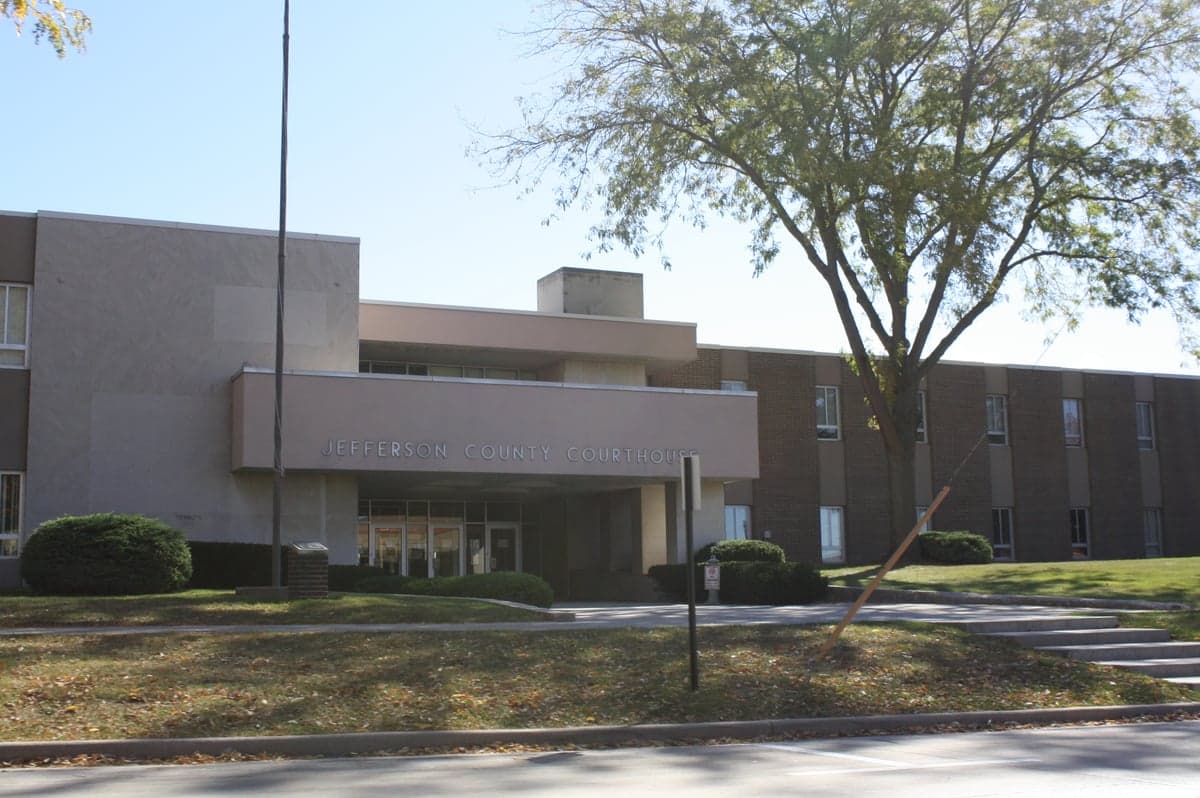
Photo: Wikipedia
Personal Sovereignty in Jefferson County
Moderate friction. Expect trade-offs in some aspect of personal liberty and independence.
What does Personal Sovereignty tell us?
Personal Sovereignty measures your capacity for self-reliance and independence with minimal government friction. Higher scores mean fewer barriers between you and the way you want to live... but it assumes you have the space you need and good neighbors.
What does this tell us?
Personal Sovereignty measures your capacity for self-reliance and independence with minimal government friction. Higher scores mean fewer barriers between you and the way you want to live... but it assumes you have the space you need and good neighbors.
State Policy
Energy independence: Importer (15% of energy produced in-state)
Personal Liberty
Homesteading

Personal Liberty Analysis
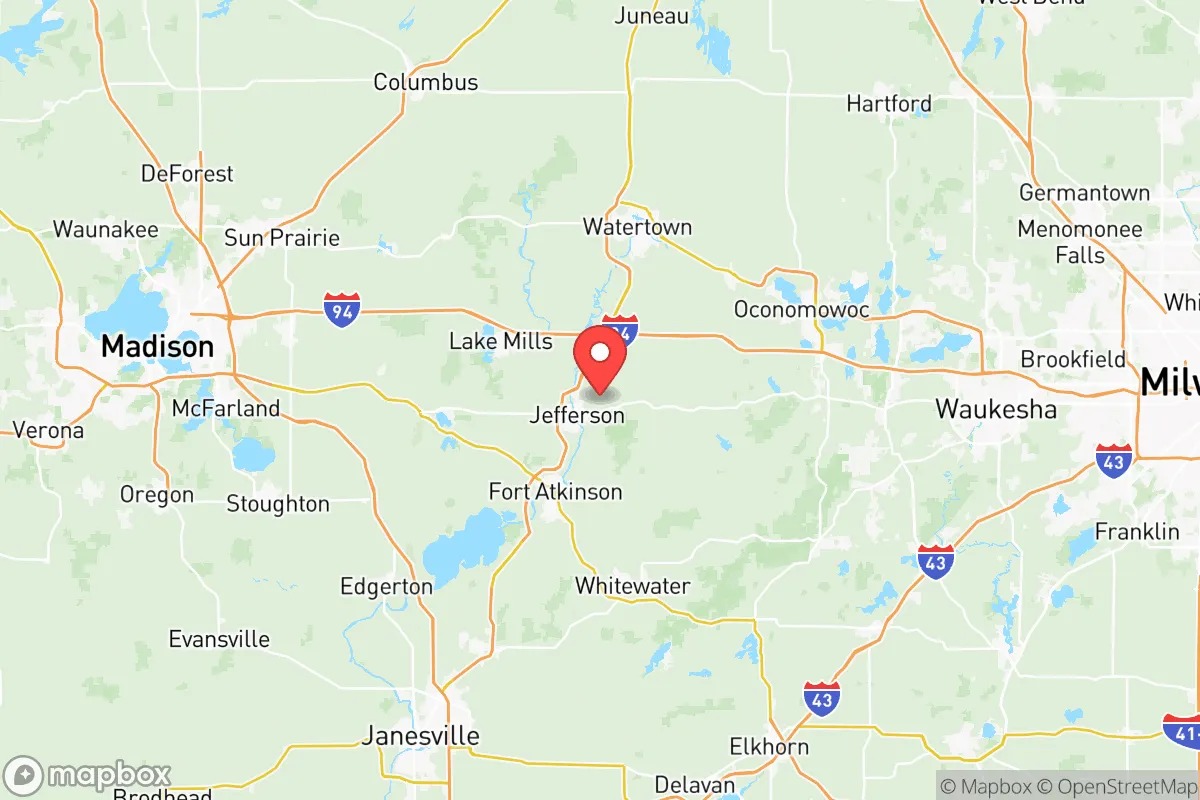
Jefferson County, Wisconsin offers a notably high degree of personal sovereignty relative to the state's urban centers, with a regulatory environment that generally favors individual autonomy in daily life, property use, and self-defense. The county's mix of small cities like Watertown, Fort Atkinson, and Jefferson, combined with extensive rural townships, creates a patchwork where personal freedom is often a matter of local ordinance and community norms. For a relocation-minded individual or family prioritizing independence, the area presents a compelling balance of low-tax, low-regulation living within a reasonable commute to larger job markets like Madison and Milwaukee.
Tax burden and regulatory posture: How Jefferson County compares to Dane and Waukesha
Jefferson County's tax burden is moderate by Wisconsin standards, but significantly lighter than neighboring Dane County (home to Madison). The county's property tax rate in 2025 averaged roughly $18.50 per $1,000 of assessed value, compared to Dane County's $22.00+ rate. This difference translates to hundreds of dollars in annual savings on a median-priced home. The regulatory posture is distinctly more permissive than in Dane County. Building permits, zoning variances, and business licenses are processed with less friction in towns like Ixonia and Sullivan, where town boards tend to favor property rights over restrictive planning. The county's general approach is "yes, unless there's a clear reason to say no," which contrasts with the more prescriptive codes found in cities like Madison or Milwaukee. For a small business owner or remote worker, the lower sales tax (5.5% combined state and county rate) and absence of local income taxes further reduce the cost of autonomy.
Self-defense and gun law specifics: What Wisconsin's Castle Doctrine means in Jefferson County
Wisconsin is a "shall-issue" state for concealed carry permits, and Jefferson County's sheriff's office processes applications efficiently, typically within the statutory 21-day window. The county is home to several active gun clubs and ranges, including the Jefferson County Shooting Sports Park near Jefferson, which hosts competitive events and training. The state's Castle Doctrine, codified in Wis. Stat. § 939.48, provides a strong legal presumption that a person using deadly force in their home, vehicle, or workplace acted reasonably. Jefferson County's district attorney has a track record of respecting this doctrine; no high-profile prosecutions of lawful self-defense have occurred in recent years. Open carry is legal without a permit, and local law enforcement in towns like Lake Mills and Waterloo generally takes a non-confrontational approach to visible firearms. The county's gun culture is practical and safety-oriented, with a strong emphasis on responsible ownership rather than political grandstanding.
Self-reliance and homesteading viability: Lot sizes, zoning, and off-grid feasibility across the county
Jefferson County's rural townships offer substantial opportunities for self-reliant living, but the feasibility varies sharply by location. In the unincorporated areas of Hebron and Cold Spring, minimum lot sizes of 5 to 10 acres are common, allowing for gardens, small livestock, and even hobby farms. Zoning codes in these townships are generally permissive: accessory structures like sheds, greenhouses, and chicken coops rarely require more than a simple permit. Off-grid living is legally feasible, though with caveats. Wisconsin law requires a septic system for any dwelling, which can cost $10,000–$20,000 to install. Solar panels are permitted statewide, but net metering rules from local utilities like Jefferson Utilities and Alliant Energy limit the size of systems that can be connected to the grid. Rainwater collection for outdoor use is unrestricted, but potable water must come from a well or municipal supply. In contrast, the city of Fort Atkinson has stricter codes on livestock and accessory structures, making true homesteading difficult within city limits. For a family seeking a balance of rural independence and reasonable commute to jobs, the townships around Palmyra offer the best combination of affordable land, permissive zoning, and proximity to Highway 12.
Personal liberties: Parental rights, medical autonomy, speech, and property in practice
Jefferson County's school boards, particularly in the Watertown Unified School District and Jefferson School District, have maintained a strong emphasis on parental rights, with transparent curriculum policies and active parent advisory committees. Wisconsin law requires parental consent for most medical procedures on minors, and the county's health department does not operate school-based clinics that bypass parental authority. Medical autonomy for adults is similarly robust: Wisconsin has no state-level vaccine mandate for private employers, and Jefferson County's public health orders during the pandemic were notably less restrictive than those in Dane County. Free speech is protected under both state and federal law, and the county's public meetings and town halls are generally open and civil. Property rights are well-protected, with eminent domain used sparingly and only for clear public infrastructure projects. The county's register of deeds maintains a straightforward recording system, and property disputes are typically resolved through mediation rather than heavy-handed code enforcement.
Overall, Jefferson County ranks as one of the more sovereignty-friendly areas in southern Wisconsin, offering a tangible escape from the regulatory density of Madison and Milwaukee without sacrificing access to urban amenities. For a family or individual who values the ability to make independent decisions about their home, health, and safety, the county provides a legal and cultural environment where personal responsibility is the norm. The key is choosing the right location within the county: rural townships for maximum self-reliance, small cities for a balance of services and freedom, and avoiding the few pockets where local ordinances lean toward the restrictive. In a state where political and regulatory divides are sharpening, Jefferson County remains a pragmatic middle ground for those who prioritize personal sovereignty above all else.

* Values derived from national, state, county, city and local statistics and may differ in a specific area. Last updated: 2026-07-13T23:42:12.000Z
Narrative content on this page is AI-generated and may contain mistakes. Verify any details that matter before acting on them.
ReloMaps may earn a commission from affiliate links at no extra cost to you.

