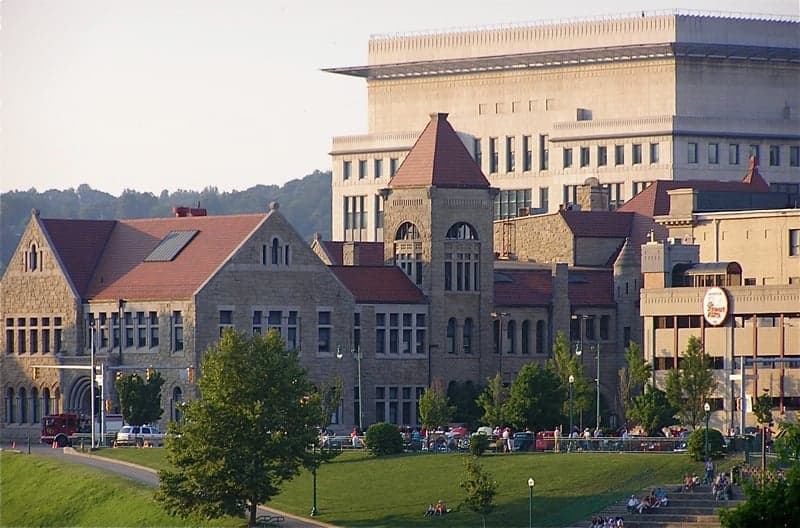
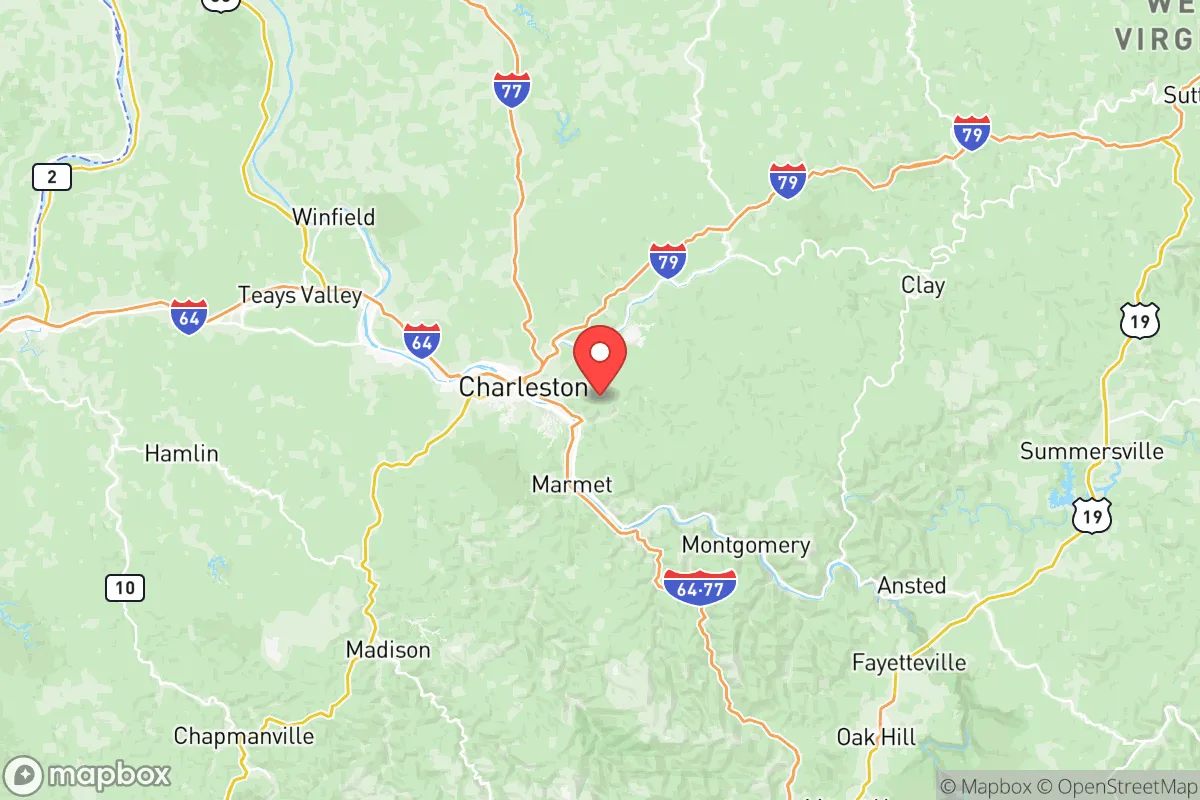
Photo: Wikipedia
Quality of Life in Kanawha County
A livable area that tracks near national norms for affordability, walkability, and neighborhood health.
What does Quality of Life tell us?
Quality of Life measures an area by evaluating factors like cost of living, nearby amenities, country club access, airport proximity, socioeconomic signals and neighborhood character. For large states, this is a general average — quality of life can vary dramatically between metro areas, suburbs, and rural communities within the same state.
What does this tell us?
Quality of Life measures an area by evaluating factors like cost of living, nearby amenities, country club access, airport proximity, socioeconomic signals and neighborhood character. For large states, this is a general average — quality of life can vary dramatically between metro areas, suburbs, and rural communities within the same state.
Cost of Living
35% below national average
153%
The Real Cost of Living in Kanawha County for 2026
| Tier | Individual | Family (4) |
|---|---|---|
| Survival | $14k | $26k |
| Comfortable | $26k | $39k |
| Luxury | $106k+ | $165k+ |
| Elite (Top 5%) | $135k+ | $209k+ |
Quality-of-Life Analysis
Kanawha County, West Virginia, offers a broad quality-of-life spectrum that ranges from the urban core of Charleston to quiet, unincorporated river communities and forested hollows, attracting everyone from state government professionals and healthcare workers to remote employees seeking low costs and outdoor recreation. With a cost-of-living index of 65 (35% below the U.S. average), a median home value of $135,000, and a median rent of $879, the county provides financial breathing room that is rare in most of the country. The average commute of just over 22 minutes means residents can live in a rural setting and still reach Charleston’s jobs and amenities quickly, making the trade-offs between convenience and space highly manageable.
Largest town(s) & population centers
Charleston, the state capital and Kanawha County’s anchor, is the primary population center and the hub for government, healthcare, and legal employment. Daily life here is walkable in the downtown core, with access to the Capitol Complex, Charleston Area Medical Center, and cultural venues like the Clay Center for the Arts & Sciences. Neighborhoods such as the East End and South Hills offer historic homes and a more urban-suburban feel, while Kanawha City along MacCorkle Avenue provides strip-mall convenience and river views. South Charleston, a separate incorporated city of roughly 13,000, functions as a dense suburban extension with its own commercial corridor along MacCorkle Avenue SE and a strong industrial base. For residents who want walkable coffee shops, restaurants, and a civic calendar, Charleston and South Charleston deliver the county’s most urban lifestyle, though housing here commands a premium — median home values in Charleston’s desirable neighborhoods can exceed $200,000, still well below national averages.
Smaller towns & rural pockets
Outside the capital corridor, Kanawha County contains a string of smaller towns and unincorporated communities that offer a quieter, more affordable pace. Dunbar, just west of Charleston, is a compact town of about 7,000 with a small downtown and easy access to the Kanawha River Trail. St. Albans, to the west, has a historic Main Street and a strong sense of local identity, with housing often available below the county median. Belle and Chesapeake, located along the Kanawha River southeast of Charleston, are unincorporated villages where mobile homes and older single-family houses sit close to the water and rail lines. Further into the hills, communities like Elkview (along the Elk River), Clendenin, and Pinch offer true rural living — winding two-lane roads, creekside lots, and properties with acreage. These areas are popular with hunters, anglers, and anyone seeking privacy, yet remain within a 20- to 30-minute drive of Charleston’s grocery stores and hospitals.
Cost & lifestyle range
The cost and lifestyle spread across Kanawha County is wide. At the higher end, South Hills and the East End of Charleston feature historic homes on tree-lined streets, with prices from $200,000 to over $400,000 and rents approaching $1,200 for a two-bedroom. These areas attract professionals who want walkability and proximity to the Capitol. At the lower end, unincorporated communities like Belle, Chesapeake, and Pond Gap offer homes for under $100,000 and rents as low as $600–$700, often in older manufactured homes or fixer-upper frame houses. The county’s overall median rent of $879 and median home value of $135,000 reflect this affordability gradient. Property taxes remain among the lowest in the nation, and the 22-minute average commute means even residents in the cheapest rural pockets can reach Charleston’s job centers without a punishing drive. The trade-off is access to amenities: rural areas lack sidewalks, public transit, and nearby grocery stores, while Charleston and South Charleston offer full-service supermarkets, medical offices, and dining within a five-minute drive.
Kanawha County best suits people who value low housing costs and short commutes above urban density and nightlife. Remote workers, state employees, healthcare professionals, and retirees all find a niche here — the first group can buy a home for cash in a rural hollow, the second can walk to the Capitol from a historic East End rowhouse, and the third can enjoy river views from a $90,000 cottage in Belle. The county’s diversity of settings, from the capital’s civic core to the quiet banks of the Elk and Kanawha rivers, means that the right fit depends almost entirely on how much space and solitude a resident wants relative to convenience.

Crime in Kanawha County
Generally safer than 68% of comparable U.S. locations.
Violent CrimeViolent Crime Analysis
Property CrimeProperty Crime Analysis
Crime Analysis
Kanawha County, West Virginia, reports a violent crime rate of 227.7 incidents per 100,000 residents and a property crime rate of 941 per 100,000, placing it in a middle tier for safety within the state. While these figures are lower than many national urban averages, the county’s overall safety picture is shaped by a sharp contrast between its core city, Charleston, and its more suburban and rural communities. Residents and prospective movers should weigh these statistics against the realities of local law enforcement coverage and the judicial philosophy of elected prosecutors in the region.
Crime in context
Kanawha County’s violent crime rate of 227.7 per 100,000 is roughly 39% below the national average of about 370 per 100,000, but it sits slightly above the West Virginia state average of approximately 220 per 100,000. Property crime in the county, at 941 per 100,000, is about 37% lower than the national property crime rate of roughly 1,500 per 100,000, yet it remains elevated compared to many surrounding rural counties such as Putnam or Boone. The disparity is largely driven by incidents concentrated in Charleston, the state capital and the county’s most populous city, where crime rates are notably higher than in outlying communities. Statewide, Kanawha County accounts for a disproportionate share of reported offenses, reflecting its role as the economic and population hub of southern West Virginia.
What residents experience
Daily life for most Kanawha County residents does not involve violent crime, but property crime — particularly theft from vehicles, burglary, and vandalism — is a recurring nuisance in denser areas. Charleston’s West Side and East End neighborhoods report the highest concentrations of both violent and property offenses, while areas like South Charleston, Dunbar, and St. Albans see moderate but lower rates. Suburban communities such as Cross Lanes, Nitro, and Sissonville are generally considered safer, with property crime rates well below the county average. A significant concern for residents is the lenient sentencing patterns associated with the progressive judicial philosophy of some Kanawha County circuit judges and the elected prosecutor’s office. Critics argue that a focus on rehabilitation over accountability for repeat offenders has led to shorter sentences and more plea deals for violent criminals, undermining public confidence in the justice system and contributing to recidivism. This approach, while well-intentioned, can result in offenders being back on the streets quickly, which directly impacts community safety and victim satisfaction.
Neighborhood-level safety varies considerably across Kanawha County. The safest areas tend to be the unincorporated communities and smaller towns on the county’s periphery, such as Elkview, Pinch, and Tornado, where crime rates are a fraction of Charleston’s. In contrast, the downtown Charleston corridor and areas near the interstate exchanges experience higher rates of drug-related crime, including fentanyl trafficking and associated violence. The Kanawha County Sheriff’s Office and local police departments maintain a visible presence, but resource constraints and the aforementioned judicial environment mean that prevention and prosecution are not always aligned. For those considering relocation, choosing a neighborhood with a strong community watch presence and lower population density is a practical strategy for minimizing risk.
* Values derived from national, state, county, city and local statistics and may differ in a specific area. Last updated: 2026-07-02T21:58:06.000Z
Narrative content on this page is AI-generated and may contain mistakes. Verify any details that matter before acting on them.
ReloMaps may earn a commission from affiliate links at no extra cost to you.

