
Photo: Wikipedia
Personal Sovereignty in Kanawha County
Strong independent fundamentals that actively favor personal liberty and low regulation.
What does Personal Sovereignty tell us?
Personal Sovereignty measures your capacity for self-reliance and independence with minimal government friction. Higher scores mean fewer barriers between you and the way you want to live... but it assumes you have the space you need and good neighbors.
What does this tell us?
Personal Sovereignty measures your capacity for self-reliance and independence with minimal government friction. Higher scores mean fewer barriers between you and the way you want to live... but it assumes you have the space you need and good neighbors.
State Policy
Energy independence: Net exporter (200% of energy produced in-state)
Personal Liberty
Homesteading

Personal Liberty Analysis
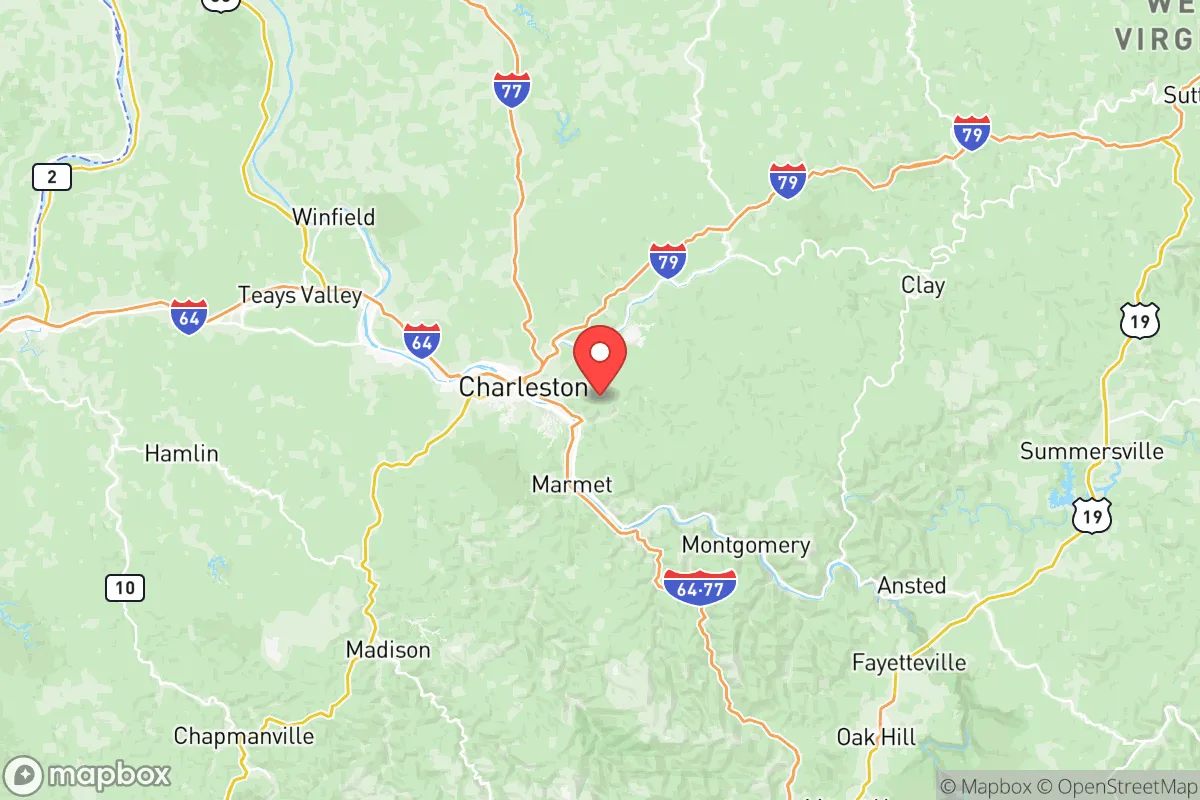
Kanawha County, West Virginia, offers a notably high degree of personal sovereignty, grounded in a state-level legal and tax framework that consistently prioritizes individual autonomy over collective mandates. For residents of Charleston, South Charleston, and the broader county, this translates into a lighter regulatory touch on property, firearms, and daily life than what is found in many mid-Atlantic or Northeastern states. The county’s environment is one where self-reliance is not just a cultural value but a practical reality, supported by low taxes, permissive gun laws, and a legal system that generally defers to individual and parental decision-making. While the county seat of Charleston introduces some urban density and associated regulations, the surrounding communities like St. Albans, Dunbar, and the more rural areas near Elkview and Sissonville offer a markedly different, more hands-off experience for those seeking maximum personal freedom.
Tax burden and regulatory climate in Kanawha County
West Virginia’s overall tax burden is among the lowest in the nation, and Kanawha County residents benefit directly from this. There is no state income tax on Social Security benefits, and the state’s personal income tax has been significantly reduced in recent years, with a flat rate of 3.99% in 2026. Property taxes in Kanawha County are assessed at 60% of appraised value, with a millage rate that keeps annual bills manageable—typically well under 1% of market value for owner-occupied homes. The regulatory posture is similarly light. West Virginia is a "right-to-work" state, and Kanawha County does not impose the kind of stringent local business licensing or zoning overlays common in more urbanized areas. However, the City of Charleston does maintain a more active code enforcement and business licensing regime than unincorporated parts of the county. For a small business owner or independent contractor, setting up shop in St. Albans or Dunbar is generally simpler and less costly than doing so within Charleston city limits. The county also lacks a local sales tax surcharge beyond the state’s 6% rate, keeping the cost of daily transactions low.
Self-defense laws and gun rights specifics in the county
Kanawha County is deeply embedded in West Virginia’s strong gun-rights culture. The state is a "constitutional carry" jurisdiction, meaning no permit is required to carry a concealed firearm for anyone legally allowed to possess one. This applies uniformly across Kanawha County, from downtown Charleston to the rural outskirts near Sissonville. The county sheriff’s office issues concealed carry permits primarily for reciprocity with other states, but the process is shall-issue and straightforward. West Virginia law also provides strong castle doctrine and stand-your-ground protections, with no duty to retreat in any place where a person is lawfully present. Local gun stores and shooting ranges are common, particularly along the I-64 corridor and in the Nitro area. There are no county-level firearm-specific ordinances that exceed state law, meaning no additional waiting periods, magazine capacity restrictions, or registration requirements. For a resident of Kanawha County, the legal framework for self-defense is among the most permissive in the United States.
Self-reliance and homesteading viability across Kanawha County
The feasibility of a self-reliant, homesteading lifestyle varies significantly within Kanawha County. In the more rural precincts around Elkview, Clendenin, and Sissonville, residential lots of one to five acres are common and affordable, with many properties already featuring wells, septic systems, and garden space. Zoning in these unincorporated areas is minimal, allowing for livestock, workshops, and accessory structures without the bureaucratic hurdles found in Charleston. Off-grid living is legally viable; West Virginia has no state-level prohibition on rainwater collection, and solar panel installation is straightforward, though net metering rules apply for grid-tied systems. The county health department does require septic system permits, but these are typically a routine process. In contrast, within the city limits of Charleston and South Charleston, lot sizes shrink, zoning becomes more prescriptive, and homeowners associations in newer subdivisions may impose additional restrictions. For someone serious about homesteading, the areas north and east of the Kanawha River, particularly toward Clendenin and Elkview, offer the most freedom to build and live independently.
Personal liberties: parental rights, medical autonomy, speech, and property
West Virginia law generally supports a broad interpretation of personal liberties, and Kanawha County reflects this. Parental rights are strongly protected; the state has a Parents’ Bill of Rights that affirms the fundamental right of parents to direct the upbringing, education, and healthcare of their children. This includes the ability to opt out of school curricula and medical treatments without undue state interference. Medical autonomy is similarly respected, with no state-level vaccine mandates for adults and a legal framework that supports informed consent. Free speech and property rights are robust; there are no county-level hate speech ordinances that exceed state law, and property use is governed by a clear set of nuisance and trespass laws that favor the owner. Eminent domain is constrained by state statute, and property tax increases on primary residences are capped by the state’s homestead exemption. For a resident of Kanawha County, the legal environment consistently defaults to individual choice, with the burden of proof falling on the government to justify any restriction.
Overall, Kanawha County offers a level of personal sovereignty that is high by national standards, particularly when compared to states in the Northeast or Pacific Coast. The combination of low taxes, permissive gun laws, viable off-grid living options in its rural areas, and strong protections for parental and medical autonomy creates an environment where self-reliant individuals and families can operate with minimal government interference. The primary trade-off is the urban-rural divide within the county: Charleston and South Charleston impose more regulation and higher costs, while the outlying communities of St. Albans, Dunbar, Elkview, and Sissonville provide a much freer hand. For a relocation-minded reader prioritizing personal freedom, Kanawha County represents a solid, practical choice within the broader Appalachian region.

* Values derived from national, state, county, city and local statistics and may differ in a specific area. Last updated: 2026-07-02T21:58:06.000Z
Narrative content on this page is AI-generated and may contain mistakes. Verify any details that matter before acting on them.
ReloMaps may earn a commission from affiliate links at no extra cost to you.

