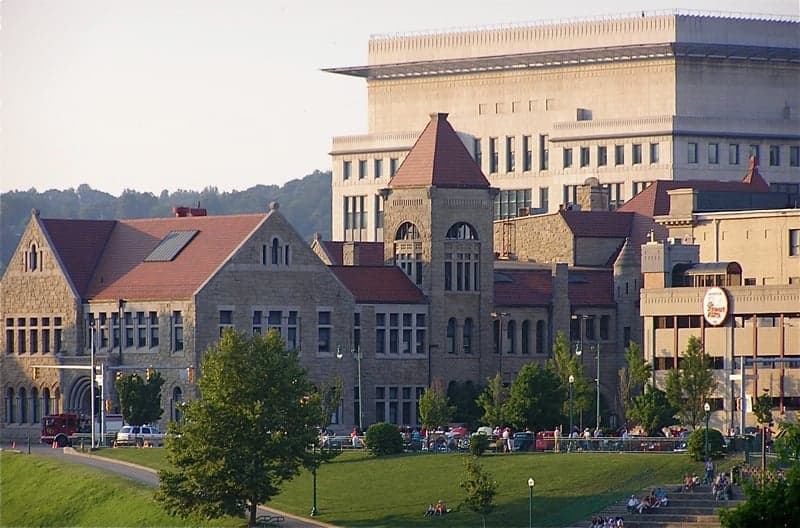
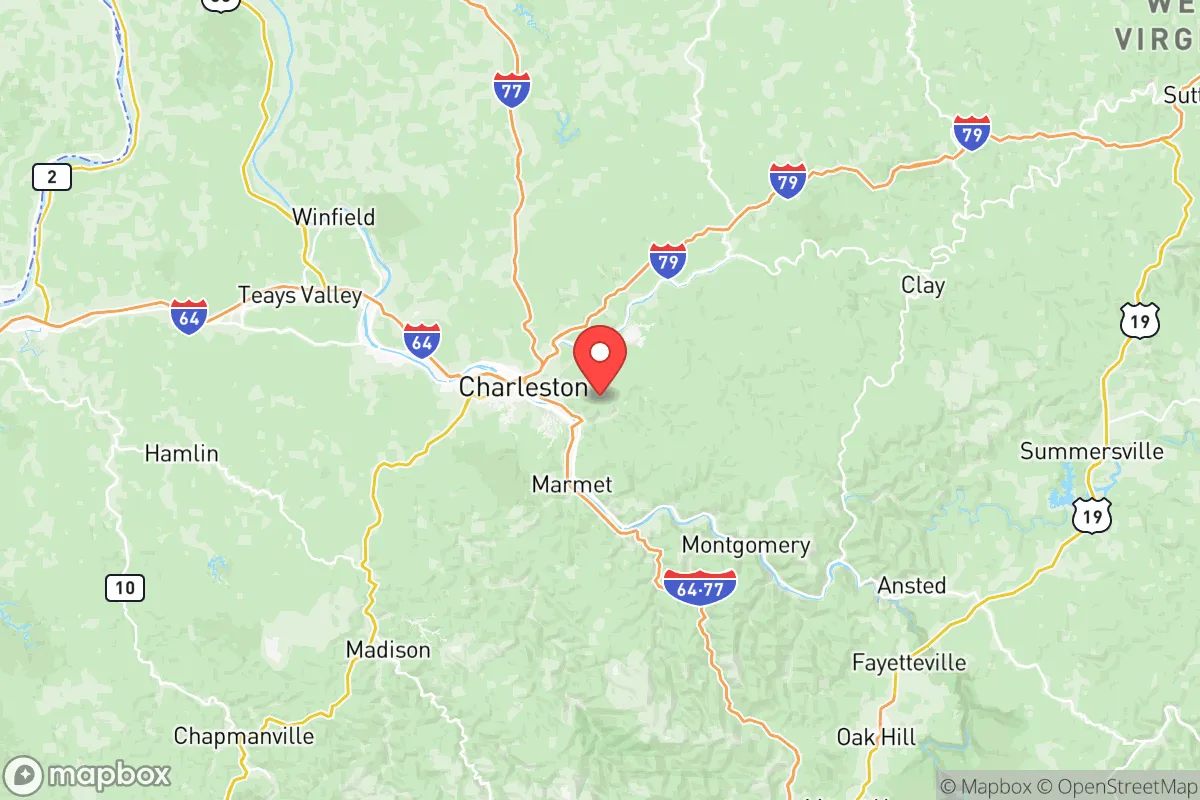
Photo: Wikipedia
Demographics of Kanawha County
Affluence Level in Kanawha County
A middle-class area roughly in line with national averages across income, home values, education, and employment.
People of Kanawha County
Kanawha County, West Virginia, is home to 178,198 residents, a population shaped overwhelmingly by its Appalachian heritage and the boom-and-bust cycles of the coal and chemical industries. The county is 86.2% white, with a Black population of 6.1% and a foreign-born share of just 0.7%, making it one of the least ethnically diverse counties in the United States. Its people are defined by a strong sense of place, deep family roots, and a cultural identity forged through centuries of resource extraction, labor struggles, and geographic isolation. For those moving in, Kanawha County offers a community where local history is not a distant concept but a living part of daily life.
Settlement & growth (pre-1960)
Long before European settlers arrived, the Kanawha Valley was a contested homeland for several Native American nations, including the Shawnee, Cherokee, and Mingo. The region’s salt licks and abundant game made it a vital hunting ground, but no permanent Native settlements existed at the time of European contact. The first Europeans to explore the area were French and British fur traders in the early 1700s, but permanent settlement did not begin until after the American Revolution.
The first major wave of settlers were Scots-Irish and English pioneers who pushed westward through the Shenandoah Valley in the late 1700s. These families, often moving as entire communities, followed the Kanawha River and established farms and small settlements. The town of Charleston, founded in 1788 as Fort Lee, quickly became the region’s political and commercial hub. Nearby St. Albans, settled around the same time, grew as a river port and farming community. These early settlers were largely subsistence farmers, and their Presbyterian and Baptist traditions remain influential in the county’s religious landscape today.
The discovery of vast salt deposits in the early 1800s transformed Kanawha County from a rural backwater into an industrial powerhouse. By the 1830s, the Kanawha Salt Works, centered around Malden, was the largest salt producer in the United States, attracting a wave of Irish immigrants who dug the wells and stoked the furnaces. Many of these Irish laborers settled in Malden and the western edge of Charleston, where their descendants remain. The salt boom also brought the first significant Black population to the county, as enslaved African Americans were forced to work in the salt furnaces and on the riverboats that transported the product.
The Civil War and Reconstruction brought further demographic change. Kanawha County was deeply divided, with Union and Confederate sympathizers often living side by side. After the war, the expansion of the coal industry drew a new wave of immigrants. Between 1880 and 1920, thousands of Italians, Poles, and Hungarians arrived to work in the mines and on the railroads. These communities concentrated in the coal camps and company towns that dotted the county, such as Belle, Chelyan, and Pratt. The Italian community in particular left a lasting mark, with Catholic churches and social clubs still active in these towns today.
The early 20th century also saw a significant internal migration of Black families from the rural South, drawn by the promise of steady work in the mines and chemical plants. The Black population in Kanawha County peaked in the 1940s, with vibrant communities in Charleston’s West Side and in the industrial town of South Charleston. The Great Depression and the subsequent New Deal programs, including the construction of the West Virginia Turnpike, reshaped the county’s economy and settlement patterns, but the fundamental character of the population remained overwhelmingly white and native-born.
Modern era (post-1965)
The 1965 Hart-Cellar Act had almost no impact on Kanawha County. The county’s foreign-born population remains at 0.7%, a figure that has barely budged in decades. Instead, the major demographic shifts of the modern era have been driven by domestic migration—specifically, the steady out-migration of young people and the return of some retirees.
The decline of the coal industry, which accelerated after the 1970s, triggered a population exodus that continues to this day. Kanawha County lost roughly 20% of its population between 1980 and 2020, with the most significant losses concentrated in the smaller coal towns. Cedar Grove, Glasgow, and Montgomery have all seen their populations shrink by more than a third since 1990. The people who left were disproportionately young adults and families with children, seeking jobs in the Sun Belt or in the Washington, D.C., suburbs.
At the same time, suburbanization reshaped the county’s internal geography. The post-war boom saw the rise of bedroom communities like Cross Lanes and Dunbar, which grew rapidly as Charleston’s white middle class moved out of the city center. This pattern accelerated after the 1970s, with the construction of the I-64 and I-77 corridors enabling commuters to live farther from the urban core. Today, the eastern end of the county, including Sissonville and Elkview, has become a popular destination for families seeking larger lots and lower taxes while remaining within commuting distance of Charleston.
The county’s racial composition has shifted only slightly. The Black population has declined from a peak of roughly 10% in 1950 to 6.1% today, as many Black families also left for better economic opportunities elsewhere. The Hispanic population, at 1.5%, and the East/Southeast Asian population, at 0.4%, remain tiny, concentrated almost entirely in Charleston and South Charleston. The Indian-subcontinent population, at 0.8%, is largely composed of professionals working in the healthcare and engineering sectors, with a small but visible community in Charleston’s South Hills neighborhood.
The future
The demographic trajectory of Kanawha County points toward continued population decline and aging. The county’s median age is 43, well above the national average, and the number of deaths has exceeded the number of births for several consecutive years. Without a significant influx of new residents, the population is projected to fall below 160,000 by 2040.
Diversity is unlikely to increase substantially. The county’s low foreign-born share and lack of major immigrant-attracting industries mean that the population will remain overwhelmingly white for the foreseeable future. The small Hispanic and Asian communities are expected to grow slowly, primarily through natural increase and the hiring of foreign-born professionals in the healthcare sector, but they will remain a tiny fraction of the total population.
The most significant demographic change may be the continued suburbanization of the county’s remaining population. As Charleston’s urban core continues to lose residents, the outlying towns and unincorporated areas—particularly along the I-79 corridor north of Charleston—are likely to see modest growth. The cultural identity of the county will remain deeply rooted in its Appalachian heritage, with an emphasis on self-reliance, family, and community ties.
For someone moving in now, Kanawha County offers a stable, low-cost, and deeply traditional community. The population is shrinking and aging, but it is also resilient and fiercely proud of its history. New residents will find a place where neighbors know each other, where local festivals celebrate coal and salt mining heritage, and where the pace of life is slower than almost anywhere else in the country. The county is not becoming more diverse or more cosmopolitan, but it is becoming more intentional about preserving the culture that has defined it for two centuries.

* Values derived from national, state, county, city and local statistics and may differ in a specific area. Last updated: 2026-07-02T21:58:06.000Z
Narrative content on this page is AI-generated and may contain mistakes. Verify any details that matter before acting on them.
ReloMaps may earn a commission from affiliate links at no extra cost to you.

