Photo: Wikipedia
Political ClimatePolitical Climate in Greenbrier County
Showing district-level results — no local-only data available.
Local Political AnalysisPolitical Analysis of Greenbrier County
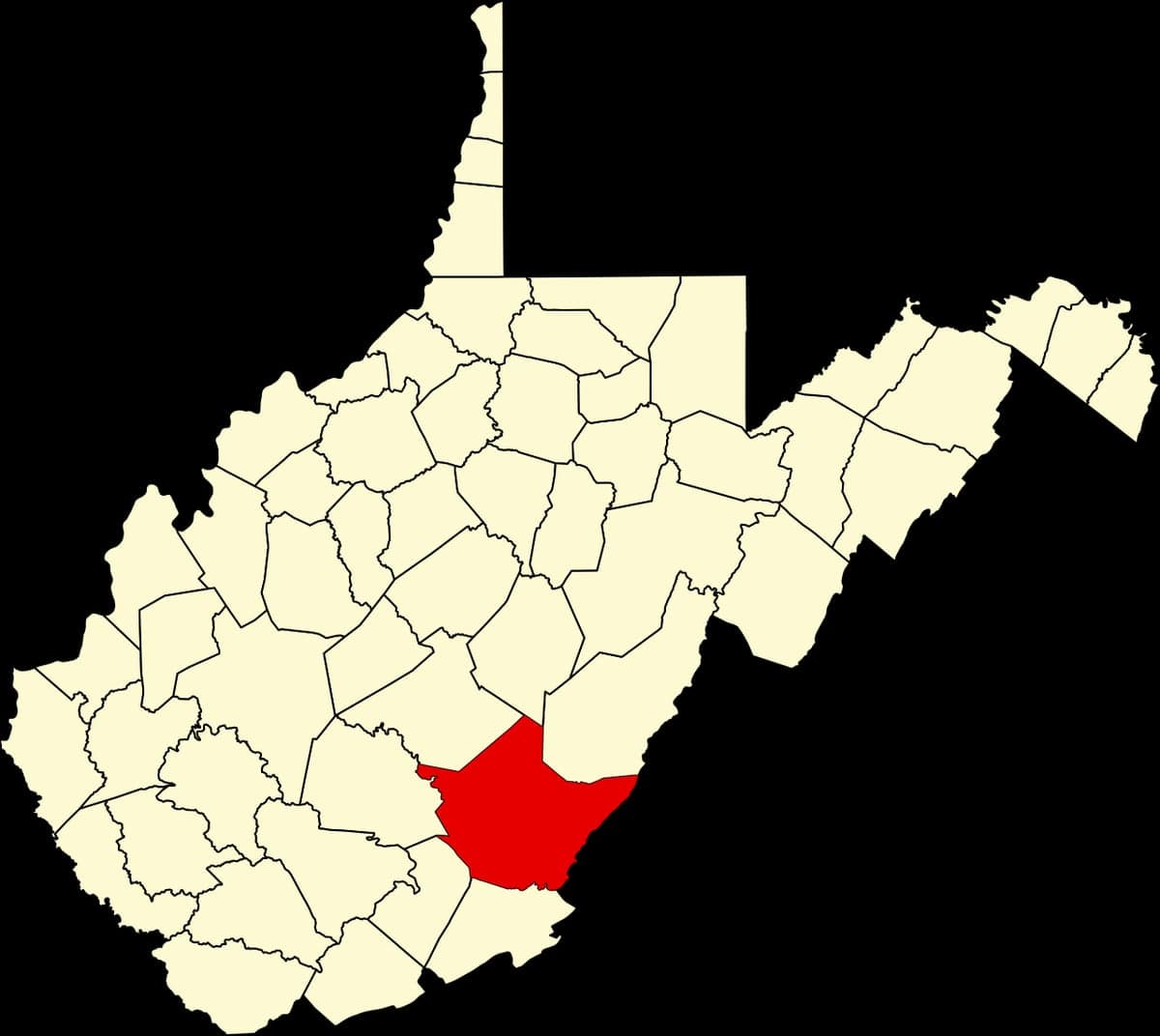
Greenbrier County, West Virginia, is a reliably Republican stronghold with a Cook Partisan Voting Index (PVI) of R+22, making it slightly more conservative than the state as a whole, which sits at R+21. This isn't a new development; the county has voted for the GOP presidential candidate in every election since 2000, and the margin has only widened. In 2024, Donald Trump carried the county by roughly 40 points, a reflection of the area's deep cultural and economic alignment with the national Republican platform, particularly on energy, gun rights, and rural autonomy. However, the county isn't a monolith—there are distinct pockets of blue and purple that make the local political landscape more nuanced than the top-line numbers suggest.
How it compares
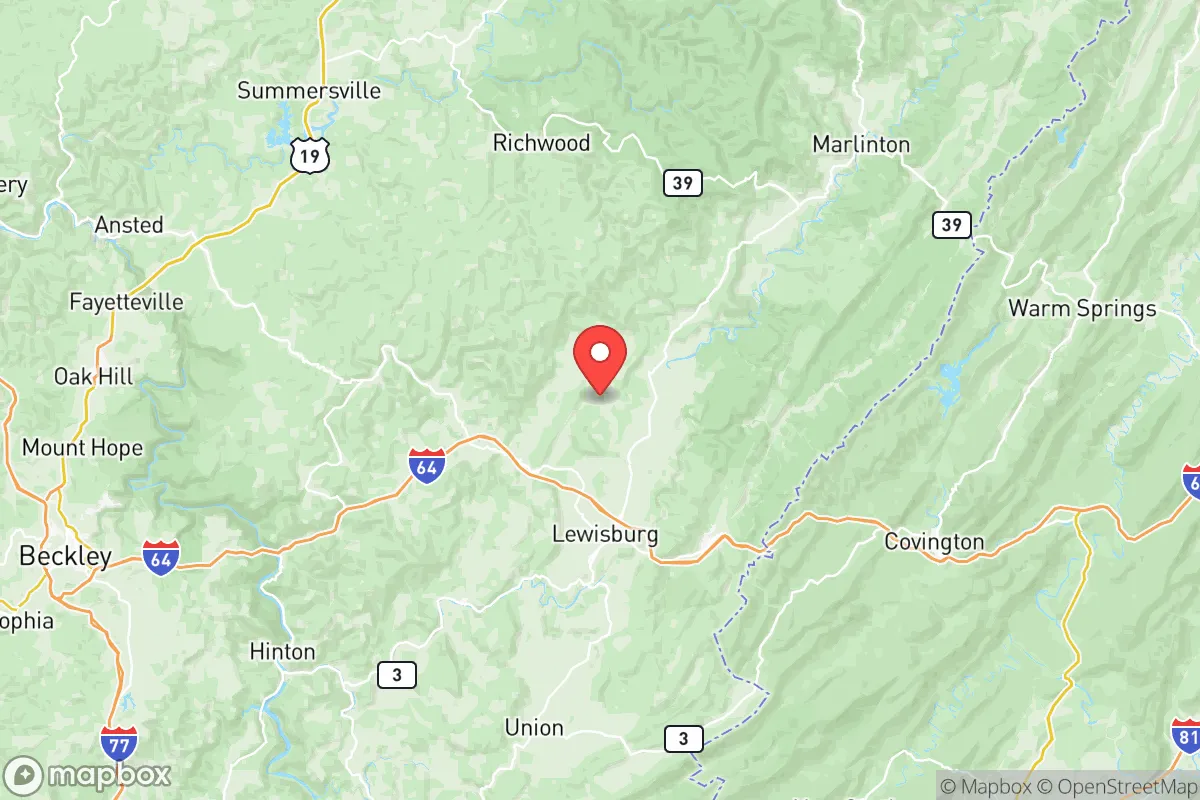
While Greenbrier County's R+22 PVI is nearly identical to the state's R+21, the internal dynamics differ significantly from West Virginia's more uniformly red regions. The county's political geography is split between the conservative rural towns and the more moderate, tourism-driven communities. Lewisburg, the county seat and a historic resort town, is the most liberal-leaning area, with precincts that have voted for Democratic candidates in recent local elections. In contrast, Ronceverte and White Sulphur Springs are more reliably red, driven by a strong working-class base tied to the coal and natural gas industries. The swing precincts are often found in the unincorporated areas around Fairlea and Maxwelton, where voters are more influenced by economic concerns than party loyalty. Compared to the rest of West Virginia, Greenbrier County has a slightly higher proportion of college-educated residents and retirees, which tempers some of the state's more populist tendencies. For instance, while the state as a whole has moved sharply right on cultural issues, Greenbrier County's local elections often see moderate Republicans and even a few Democrats winning seats on the county commission and school board.
What this means for residents
For conservative residents, the political climate is comfortable and affirming. Gun rights are broadly supported, and the county is a Second Amendment sanctuary, meaning local law enforcement is prohibited from enforcing certain state or federal gun laws. Tax policy is also favorable to property owners, with no state income tax on Social Security benefits and a relatively low property tax rate. For liberal residents, the reality is more about finding community in specific enclaves. Lewisburg offers a small but active Democratic club, and the local farmers' market and arts scene provide a social outlet that isn't overtly political. However, statewide policies—like the near-total abortion ban and the lack of non-discrimination protections for LGBTQ+ individuals—can feel isolating. The practical impact is that liberal residents often focus on local issues like education funding and infrastructure, where they can find common ground with conservative neighbors, rather than engaging in national political debates.
Culturally, Greenbrier County stands apart from the rest of West Virginia in a few key ways. The presence of the Greenbrier Resort, a historic luxury hotel, brings a steady stream of out-of-state visitors and a more cosmopolitan influence to the area. This has fostered a local economy that relies heavily on tourism, hospitality, and second-home owners, which creates a different set of priorities than the coal-dependent regions of the state. For example, the county has been more proactive in supporting renewable energy projects and outdoor recreation initiatives, such as the Greenbrier River Trail, which appeal to both conservative landowners and liberal environmentalists. The result is a political culture that, while overwhelmingly red, is more pragmatic and less ideologically rigid than the state's most conservative counties. If you're moving here, expect to find a place where your vote may not change the national outcome, but your voice can still shape local decisions—especially if you're willing to talk about roads, schools, and the cost of living rather than the latest cable news controversy.

State Political ClimatePolitical Climate in West Virginia
State Political AnalysisPolitical Environment in the State
West Virginia is one of the most reliably Republican states in the country, with a Cook Partisan Voting Index of R+21, meaning it votes about 21 points more Republican than the national average. This wasn't always the case—as recently as the 1990s, the state was a Democratic stronghold, but a massive realignment over coal, labor, and cultural issues has flipped it decisively. Today, the dominant coalition is a mix of rural conservatives, former union Democrats who shifted right on social and energy policy, and a growing number of out-of-state transplants seeking lower taxes and a slower pace of life.
Urban vs. rural divide
The political map of West Virginia is starkly divided between a handful of small urban centers and the vast, deeply red rural countryside. Charleston, the capital and largest city, is the only real blue dot—Kanawha County voted for Joe Biden in 2020, though by a narrow margin, and the city itself leans Democratic due to its concentration of government workers, educators, and healthcare professionals. Morgantown, home to West Virginia University, is another liberal-leaning pocket, driven by the student population and academic staff; Monongalia County has trended purple in recent cycles. Huntington and Wheeling are more mixed but still lean Republican, reflecting their older, working-class demographics. Outside these islands, the map is a sea of red. Mingo County, Logan County, and McDowell County in the southern coalfields routinely vote 75-80% Republican, a dramatic shift from their union-Democrat past. The Eastern Panhandle—counties like Berkeley and Jefferson—has become a conservative stronghold, fueled by retirees and commuters from the D.C. area who bring their Republican voting habits with them. The rural-urban split here isn't just about population density; it's about economic identity, with coal country and farming communities viewing the state's few cities as out of touch with their way of life.
Policy environment
West Virginia's policy environment is aggressively conservative, shaped by a Republican supermajority in the legislature and a governor's office that has been red since 2017. The state has no personal income tax on most forms of income—a major selling point for relocators—though it does have a corporate net income tax and a 6% sales tax. Property taxes are among the lowest in the nation, capped by the state constitution at a fraction of market value. The regulatory posture is business-friendly, with right-to-work laws on the books and minimal environmental oversight outside federal mandates. Education policy is a flashpoint: the state passed a school choice law in 2021 creating education savings accounts (ESAs) for students with disabilities, and in 2023 expanded ESAs to all students, making it one of the most expansive school choice programs in the country. Healthcare is a mixed bag—West Virginia expanded Medicaid under the Affordable Care Act, but the state has one of the highest uninsured rates and struggles with provider shortages, especially in rural areas. Election laws have tightened: the state requires a photo ID to vote, has limited early voting, and in 2021 passed a law restricting absentee ballot drop boxes and shortening the absentee application window. There is no automatic voter registration, and felons lose voting rights permanently unless individually restored by the governor.
Recent policy direction
The last five years have seen a hard right turn across multiple fronts. On gun and self-defense law, West Virginia became a constitutional carry state in 2016, allowing permitless concealed carry for adults 21 and older, and in 2021 passed a "Second Amendment Sanctuary" resolution barring state resources from enforcing federal gun laws. Parental and education rights have been a central focus: the 2023 ESA expansion was paired with a "Parents' Bill of Rights" requiring schools to notify parents of any changes to a child's mental or physical health services, effectively targeting LGBTQ+ curriculum and counseling. The state also banned transgender athletes from girls' sports in 2021 and restricted gender-affirming care for minors in 2023. On speech and privacy, West Virginia has no comprehensive data privacy law, and the legislature has not passed any significant surveillance reform. Medical and bodily autonomy is highly restricted: abortion is banned after 15 weeks with no exceptions for rape or incest, and a 2022 trigger law made performing an abortion a felony, though it is currently blocked by court order. Property rights are strong—the state has no statewide zoning, and eminent domain for private economic development is limited. Taxation has been trending downward: the personal income tax rate was cut from 6.5% to 3.99% in 2023, with a goal of full elimination. Voting and ballot access has tightened, as noted, with no same-day registration and a strict voter ID law.
Civil unrest & political movements
West Virginia has a history of labor militancy, but modern political movements are more cultural than economic. The 2018 teachers' strike—which shut down every school in the state for two weeks—was a rare moment of cross-partisan unity, driven by low pay and rising healthcare costs. Since then, organized labor has been weakened by right-to-work laws, though the United Mine Workers still holds sway in coal counties. On the right, the "Second Amendment Sanctuary" movement has been strong, with over 40 counties passing resolutions. Immigration politics are muted—the state has one of the smallest foreign-born populations in the country—but there have been symbolic resolutions opposing sanctuary cities, even though none exist. Election integrity controversies flared after 2020, with the state GOP pushing for the voter ID law and restrictions on absentee ballots, though no major fraud was ever documented. A notable flashpoint is the Mountain Valley Pipeline, which has drawn protests from environmental activists and some landowners, leading to clashes with law enforcement in counties like Nicholas and Greenbrier. New residents won't see daily protests, but they'll notice a strong undercurrent of distrust toward federal authority, especially in the coalfields, where "Keep the Government Out" signs are common.
Projection
Over the next 5-10 years, West Virginia is likely to become even more Republican, but with a shifting flavor. The old coal-based economy is shrinking, and in-migration from the Eastern Panhandle—driven by remote workers and retirees from the D.C. area—is bringing a more suburban, culturally conservative but economically moderate population. These new residents tend to support school choice and low taxes but are less hostile to environmental regulation and healthcare expansion than the native coal-country base. The state's population is aging and declining overall, which could amplify the political power of the few growing areas like Berkeley County and Monongalia County. The Democratic Party is essentially non-competitive at the state level, and the real political fights are now within the GOP—between the establishment wing and a more populist, anti-establishment faction that pushes for further tax cuts, school privatization, and cultural battles. Expect continued movement on tax elimination, further restrictions on abortion if the courts allow, and ongoing fights over education funding. The state's deep poverty and addiction crisis will remain unresolved, as neither party has proposed a comprehensive solution beyond cutting taxes and hoping the private sector fills the gap.
For a new resident, the bottom line is this: if you're conservative, you'll find a state that matches your values on taxes, guns, and education, with a government that actively pushes those priorities. If you're liberal, you'll be in a clear minority, especially outside Charleston and Morgantown, and you'll face a policy environment that is actively hostile to your views on abortion, LGBTQ+ rights, and labor. The state is safe, quiet, and affordable, but the political climate is not neutral—it's a place where your vote is unlikely to change the outcome, but where local politics directly shape your daily life in ways that are hard to ignore.
* Values derived from national, state, county, city and local statistics and may differ in a specific area. Last updated: 2026-07-03T04:37:26.000Z
Narrative content on this page is AI-generated and may contain mistakes. Verify any details that matter before acting on them.
ReloMaps may earn a commission from affiliate links at no extra cost to you.

