Photo: Wikipedia
Demographics of Greenbrier County
Affluence Level in Greenbrier County
A below-average socioeconomic profile. Incomes, home values, and educational attainment trail the U.S., with higher poverty and unemployment.
People of Greenbrier County
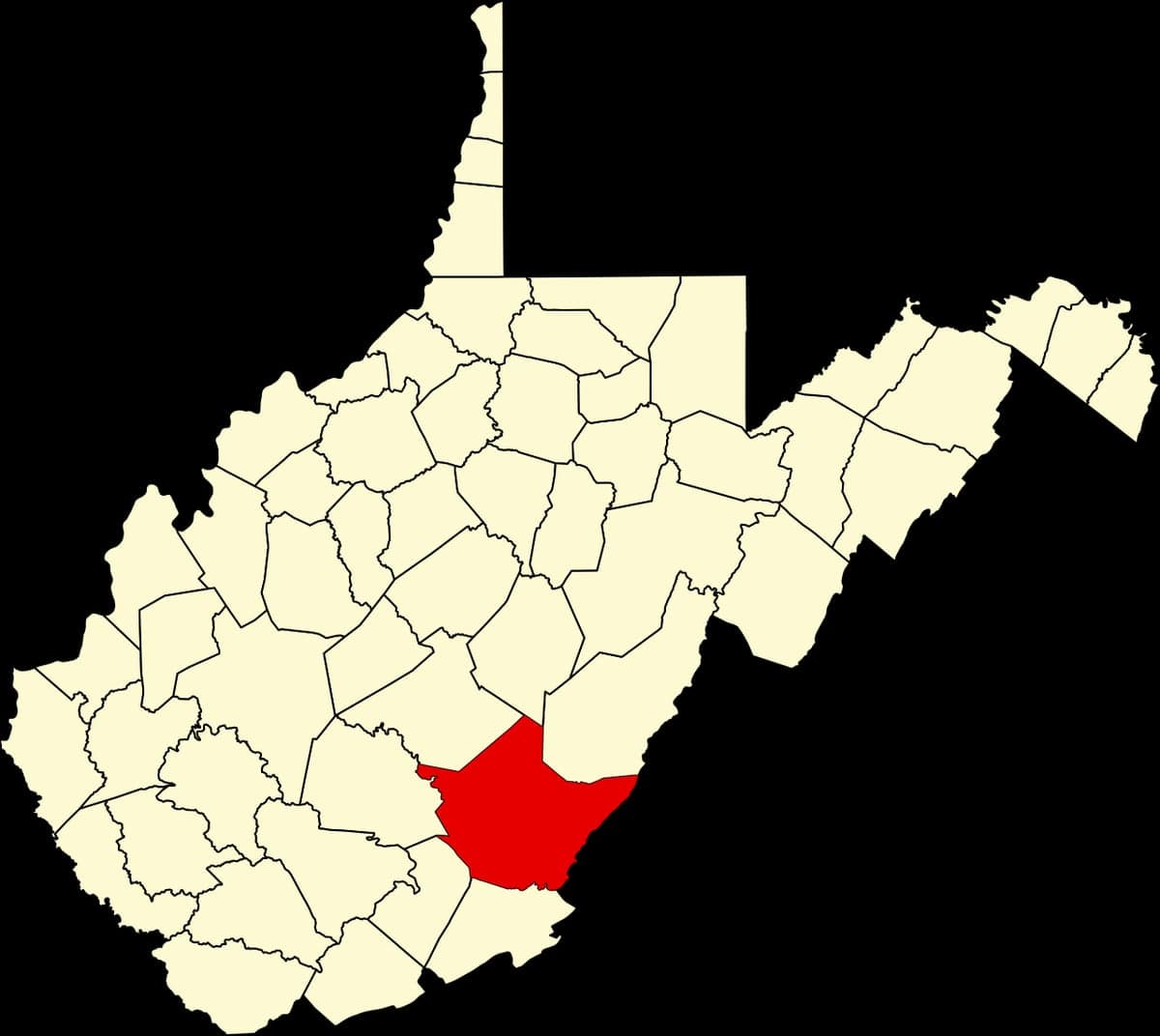
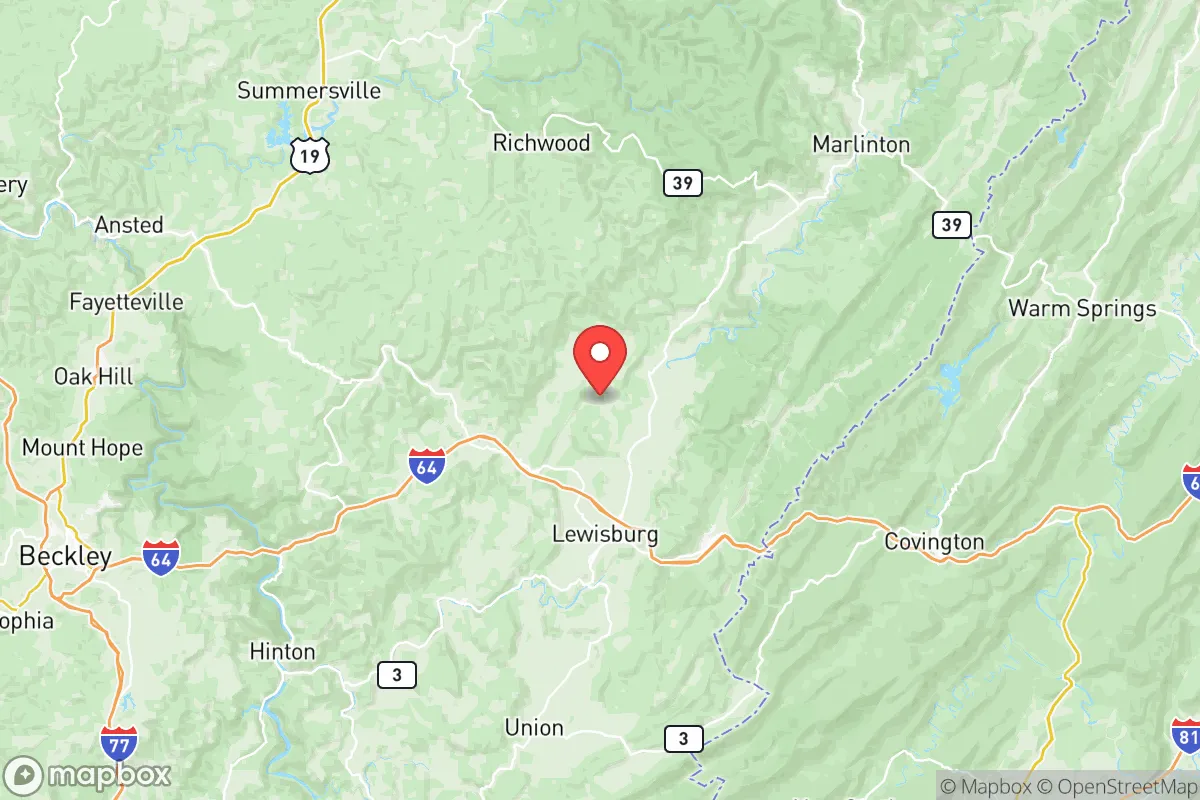
Today, Greenbrier County, West Virginia, is home to approximately 32,688 residents, a population that remains overwhelmingly White (91.8%) and deeply rooted in its Appalachian heritage. The county is characterized by a low population density, a strong sense of local identity tied to the surrounding mountains and the Greenbrier River, and a distinctive cultural marker: a significant concentration of descendants of 18th-century Scots-Irish and German settlers. With a foreign-born population of just 0.6% and a college-educated rate of 22.1%, the county is one of the least ethnically diverse in the nation, a fact that shapes its social and political character as a traditionally conservative, family-oriented community.
Settlement & growth (pre-1960)
Long before European settlement, the land that is now Greenbrier County was part of the vast hunting grounds of the Shawnee and Cherokee nations. These Native peoples used the region’s abundant game and salt licks, but established no permanent villages within the county’s present boundaries. The first Europeans to explore the area were British and French fur traders in the early 1700s, but permanent settlement did not begin until after the French and Indian War.
The first major wave of settlers arrived in the 1760s and 1770s, almost exclusively Scots-Irish and English pioneers pushing westward from Virginia and Pennsylvania. They were drawn by the promise of fertile bottomland along the Greenbrier River and the protection offered by Fort Spring and Fort Savannah (near present-day Lewisburg). These early families—names like McClung, Rader, and Renick—established the county’s first permanent settlements, including Lewisburg (founded 1782), Ronceverte, and White Sulphur Springs. The Scots-Irish, in particular, brought a fiercely independent, Presbyterian-influenced culture that remains a bedrock of the county’s identity.
A second, smaller wave of German-speaking immigrants arrived in the early 1800s, settling primarily in the northern part of the county around Fairlea and Falling Spring. These families were often Lutheran or Reformed, and they established farms and small mills. Unlike the Scots-Irish, who were largely frontier subsistence farmers, the Germans tended to concentrate on more intensive agriculture and craftsmanship. By the 1850s, the county’s population had grown to roughly 8,000, with the economy centered on livestock, grain, and the emerging resort trade at the White Sulphur Springs hotel (now The Greenbrier).
The post-Civil War era brought little new immigration to Greenbrier County. The region’s mountainous terrain and lack of large-scale industry meant it was largely bypassed by the waves of Southern and Eastern European immigrants who flooded into West Virginia’s coal fields in the late 1800s and early 1900s. Instead, the county’s population grew through natural increase and limited domestic migration from neighboring Virginia counties. The railroad’s arrival in the 1870s spurred the growth of Ronceverte as a timber and railroad hub, and Alderson became a center for the lumber and railroad industries. By 1900, the population had reached 18,000, but it remained almost entirely native-born White, with a small Black population (roughly 5-7%) descended from enslaved families who stayed after emancipation.
The Great Depression and World War II saw a modest out-migration of young people seeking work in Northern industrial cities, but the county’s population remained stable. The 1950 census recorded 31,000 residents, a number that would barely change for the next 70 years. The post-war boom largely passed Greenbrier County by, as the economy remained tied to agriculture, timber, and the seasonal resort trade at White Sulphur Springs.
Modern era (post-1965)
The 1965 Hart-Cellar Act, which dramatically reshaped American immigration, had almost no effect on Greenbrier County. The county’s foreign-born population today stands at just 0.6%, a figure that has not meaningfully increased in decades. Unlike much of the United States, Greenbrier County did not experience significant immigration from Latin America, Asia, or the Indian subcontinent. The small Hispanic population (1.8%) and even smaller Black population (2.2%) are largely the result of domestic migration, not international immigration.
The most significant demographic shift since 1965 has been a slow, steady out-migration of younger residents to larger metropolitan areas, combined with an influx of retirees and second-home buyers drawn to the area’s natural beauty and low cost of living. This trend has been most pronounced in Lewisburg, which has seen a modest revival of its historic downtown and an increase in residents from the Washington, D.C., and Richmond areas. The town’s arts scene and the presence of the Greenbrier Valley Theatre have attracted a small but noticeable number of college-educated newcomers, raising the county’s college-educated rate to 22.1%—still below the national average but higher than many rural West Virginia counties.
The Asian population (East/Southeast Asian) remains negligible at 0.4%, and the Indian subcontinent population is 0.1%. These communities are concentrated almost entirely in Lewisburg and Ronceverte, often associated with medical professionals at the Greenbrier Valley Medical Center or faculty at the West Virginia School of Osteopathic Medicine. There are no ethnic enclaves or distinct immigrant neighborhoods in the county. The Black population, at 2.2%, is most visible in Lewisburg and White Sulphur Springs, where families have lived for generations, though their numbers have declined steadily since the 1950s due to out-migration.
Domestically, the county has seen a small but steady stream of new residents from other parts of West Virginia and from neighboring Virginia, drawn by relatively affordable housing and a slower pace of life. Towns like Rainelle and Quinwood in the western part of the county have experienced population decline, while Lewisburg and the area around White Sulphur Springs have held steady or grown slightly.
The future
Greenbrier County’s population is projected to remain stable or decline slightly over the next 10-20 years, mirroring broader trends in rural West Virginia. The county is not becoming more diverse; the White share of the population is likely to remain above 90% for the foreseeable future. The small Hispanic and Asian populations may grow incrementally, but they will remain a tiny fraction of the total. The most significant demographic change will be aging: the county’s median age (roughly 47) is already well above the national average, and the proportion of residents over 65 is expected to increase as younger people continue to leave for job opportunities elsewhere.
New residents will likely continue to be domestic migrants—retirees, remote workers, and second-home buyers—concentrating in Lewisburg and the White Sulphur Springs area. The county’s cultural identity will remain rooted in its Scots-Irish and German heritage, with a strong emphasis on family, church, and outdoor recreation. There is little prospect of the kind of rapid suburbanization or ethnic diversification seen in other parts of the country.
For someone moving in now, Greenbrier County offers a stable, culturally homogeneous community with a deep sense of history and place. The population is not growing, but it is not shrinking as fast as many other rural counties. The character of the area is likely to remain largely unchanged: conservative, family-oriented, and overwhelmingly White, with a small but established Black community and a tiny, scattered presence of other ethnic groups. The future is one of slow, gentle decline in population, with a modest influx of affluent retirees and remote workers in the county’s most attractive towns.

* Values derived from national, state, county, city and local statistics and may differ in a specific area. Last updated: 2026-07-03T04:37:26.000Z
Narrative content on this page is AI-generated and may contain mistakes. Verify any details that matter before acting on them.
ReloMaps may earn a commission from affiliate links at no extra cost to you.

