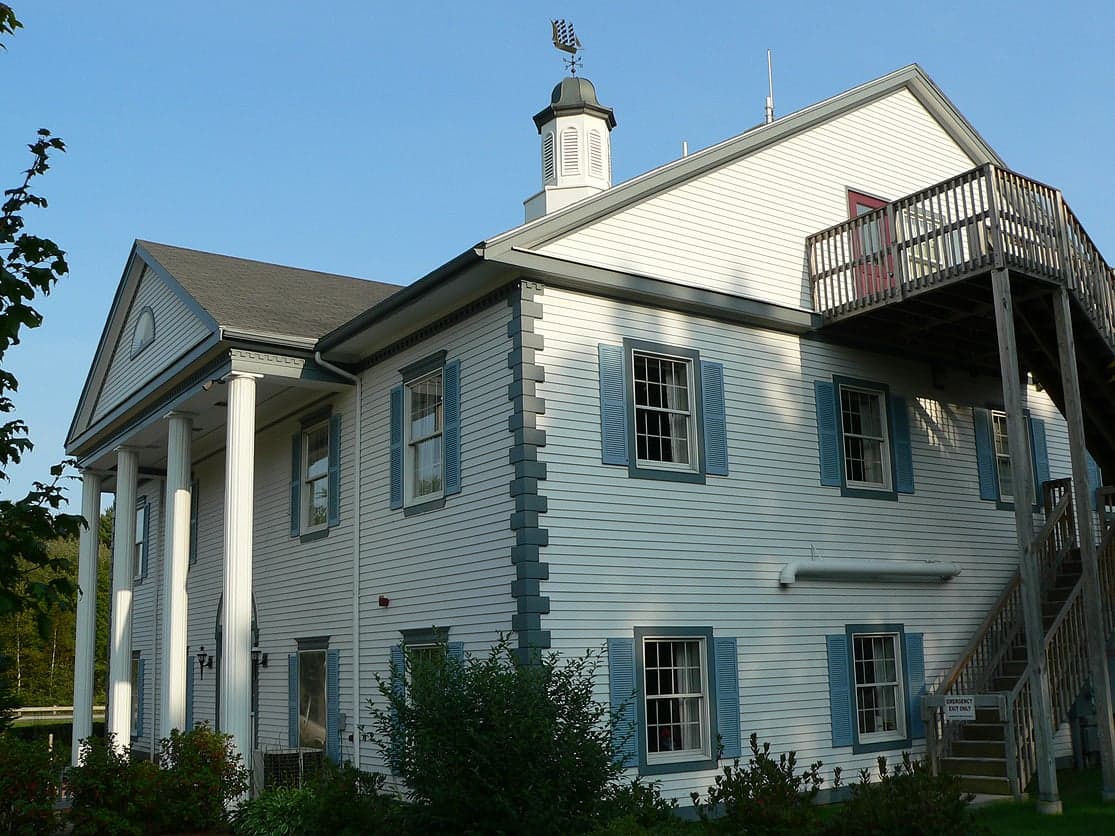
Photo: Wikipedia
Political ClimatePolitical Climate in Wells, ME
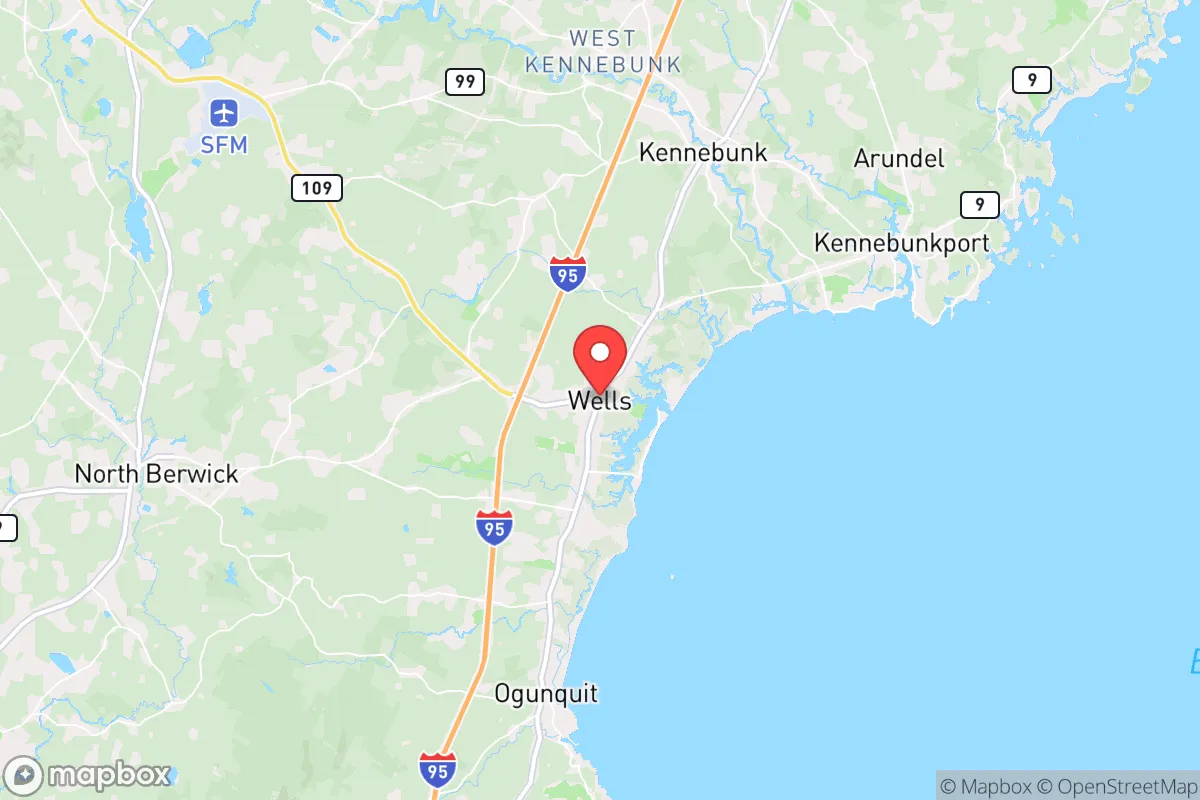
District shown is the primary district for this city’s centroid. Cities may span multiple districts.
Local Political AnalysisPolitical Analysis of Wells, ME
Wells, Maine, leans reliably Democratic, with a Cook Partisan Voting Index (PVI) of D+11, making it significantly more liberal than the state of Maine as a whole, which is considered a competitive swing state. This isn't a recent shift; the town has been trending blue for over a decade, driven largely by an influx of retirees and second-home owners from Massachusetts and other parts of New England. While the town itself votes solidly Democratic, you don't have to drive far to see a stark contrast—head just a few miles inland to towns like Sanford or north to Alfred, and you'll find a much more conservative, working-class electorate that feels increasingly disconnected from the coastal corridor's politics.
How it compares
Maine's statewide political identity is famously independent and split, with a history of electing centrist governors like Janet Mills and Paul LePage, and splitting its presidential votes between parties. Wells, however, is an outlier within that landscape. Its D+11 rating places it in the same league as Portland and South Portland, not the rest of York County. For context, the neighboring town of Ogunquit is even more liberal, while Kennebunkport, despite its Bush-family ties, also leans Democratic but with less intensity. The real political dividing line in the region is the Maine Turnpike: communities along the coast from Kittery to Portland are increasingly blue, while the inland towns and rural areas to the west and north are solidly red. This means a Wells resident lives in a bubble of relative political homogeneity compared to the state's overall purple hue.
What this means for residents
For liberal residents, Wells feels like a safe harbor. Local town council races and school board decisions tend to reflect progressive priorities, and you'll see plenty of yard signs for Democratic candidates in the summer months. Conservative residents, however, are not silenced—they're just outnumbered. In practice, this means a Republican voter in Wells might feel their voice is less influential in local elections, but they are still represented at the state level by a mix of legislators from the wider district. The town's politics are less about fiery ideological battles and more about managing growth, property taxes, and the tension between year-round residents and the seasonal population. The biggest local flashpoints aren't national culture wars; they're debates over short-term rentals, beach access, and school funding.
Culturally, Wells embodies a classic Maine coast contradiction: it's a tourist-driven economy with a strong sense of local identity. The town's Democratic lean doesn't translate into a radical progressive agenda; it's more of a pragmatic, fiscally moderate liberalism that prioritizes environmental protection and smart development over sweeping social change. You won't find the same activist energy as in Portland, but you also won't find the anti-tax fervor of inland towns. The trajectory is clear: as coastal property values rise and more out-of-state buyers move in, Wells will likely continue its slow drift leftward, widening the gap with the rest of Maine. For anyone moving here, the takeaway is simple: if you're liberal, you'll feel right at home; if you're conservative, you'll find your people just a short drive inland, but you'll need to get used to being in the minority at the local coffee shop.

State Political ClimatePolitical Climate in Maine
State Political AnalysisPolitical Environment in the State
Maine has long been known as a politically independent and pragmatic state, but its overall lean has shifted notably leftward over the past two decades. While it voted for Bill Clinton in 1992 and 1996, it also backed George W. Bush in 2000, making it a true swing state at the time. Since 2008, however, Maine has voted Democratic in every presidential election, with margins growing from 4 points in 2016 to over 10 points in 2020. The state’s unique ranked-choice voting system and its split electoral college votes—where two congressional districts can diverge—mean that the political reality is far more nuanced than the statewide blue tint suggests. For a conservative relocator, the key takeaway is that Maine is not a monolith; it’s a state where your experience will vary dramatically depending on whether you settle in Portland, Bangor, or the rural interior.
Urban vs. rural divide
The political map of Maine is a textbook case of urban-rural polarization. The Portland metro area, including South Portland, Westbrook, and Scarborough, is the state’s Democratic stronghold, driving the party’s margins with high turnout and progressive activism. In 2020, Cumberland County—home to Portland—gave Joe Biden over 60% of the vote. Conversely, the vast rural interior, including counties like Piscataquis, Somerset, and Washington, voted heavily for Donald Trump, often by 20-30 point margins. The Second Congressional District, which covers the northern and eastern parts of the state, has flipped between parties in recent cycles, electing Republican Bruce Poliquin in 2014 and 2016, then Democrat Jared Golden in 2018 and 2020. This district is one of the few in the nation where a conservative Democrat can still win, reflecting the independent streak of places like Bangor, Lewiston, and the mill towns along the Penobscot River. For a conservative family, towns like Ellsworth, Hampden, or even the outskirts of Augusta offer a more politically balanced environment than the Portland suburbs.
Policy environment
Maine’s state-level policy environment has shifted leftward over the past decade, but it retains some moderate features that distinguish it from deep-blue New England neighbors. The state has a progressive income tax structure with rates ranging from 5.8% to 7.15%, and a sales tax of 5.5% that is relatively low by regional standards. Property taxes are high, often exceeding 1.5% of assessed value, which is a significant consideration for homeowners. On education, Maine has a strong public school system with relatively high per-pupil spending, but school choice options are limited compared to states like Florida or Arizona. The state has expanded Medicaid under the Affordable Care Act and has a robust public health infrastructure. Election laws include same-day voter registration, no-excuse absentee voting, and ranked-choice voting for federal and state primaries, which some conservatives view as complicating the voting process. Gun laws are moderate: Maine does not require a permit to carry a concealed firearm, but it does have a "yellow flag" law that allows law enforcement to temporarily seize firearms from individuals deemed a danger to themselves or others. For a conservative relocator, the lack of a permit requirement for concealed carry is a notable plus, while the tax burden and limited school choice are potential drawbacks.
Recent policy direction
In the last five years, Maine has enacted several pieces of legislation that signal its policy trajectory. The state passed a paid family and medical leave program in 2023, funded by a payroll tax split between employers and employees, which takes effect in 2025. It also expanded abortion access by removing the requirement that only physicians can perform the procedure, allowing advanced practice clinicians to do so. On gun policy, the legislature passed a 72-hour waiting period for firearm purchases in 2023, overriding a veto from Governor Janet Mills. On the other hand, Maine has not enacted a "red flag" law, and the "yellow flag" law remains in place. On education, the state has moved to increase funding for public schools but has not expanded charter schools or voucher programs. On property rights, Maine has a strong tradition of local control, but recent land use regulations have tightened in coastal areas, affecting development. For a conservative, the direction is clearly leftward, but the pace is slower than in Massachusetts or Vermont. The state’s independent governor, Janet Mills, has acted as a brake on the most progressive proposals, but the Democratic-controlled legislature has pushed through significant changes.
Civil unrest & political movements
Maine has not seen the level of civil unrest seen in larger states, but there have been notable flashpoints. In 2020, Portland saw protests following the murder of George Floyd, with some property damage and clashes between demonstrators and counter-protesters. The city’s status as a sanctuary city has been a point of contention, with conservative groups arguing that it attracts undocumented immigrants and strains local resources. In 2023, a controversy erupted over the state’s response to the Lewiston mass shooting, which killed 18 people, leading to debates over gun policy and mental health funding. On the right, the Maine Republican Party has seen a rise in populist and libertarian factions, with groups like the Maine Gun Owners Association and the Maine Policy Institute advocating for limited government and gun rights. The state has also seen a small but vocal secessionist movement in the northern counties, with some residents pushing for a "State of Northern Maine" separate from the more liberal southern region. For a new resident, the political climate is generally civil, but the divide between Portland and the rest of the state is palpable in everyday conversations.
Projection
Over the next 5-10 years, Maine is likely to continue its gradual leftward shift, driven by in-migration from southern New England and other blue states. The Portland metro area is growing faster than the rest of the state, attracting younger, more progressive residents. However, the rural areas are also seeing an influx of remote workers and retirees from conservative-leaning states, which could slow the trend. The Second Congressional District will remain a battleground, with both parties investing heavily in races there. The state’s aging population—Maine has the oldest median age in the nation—means that healthcare and property tax policy will remain central issues. For a conservative relocator, the best bet is to target the rural and exurban areas where the political climate is more balanced, such as the towns around Bangor, the Midcoast region, or the western mountains. The state’s independent streak and tradition of pragmatism mean that even as the legislature leans left, there is still room for conservative voices in local government and school boards.
For a new resident, the bottom line is that Maine offers a mix of political environments depending on where you settle. If you choose Portland or its suburbs, you will be in a solidly Democratic area with progressive policies on taxes, guns, and social issues. If you choose a rural town in the interior or along the coast, you will find a more conservative or independent community where your vote carries more weight. The state’s high property taxes and limited school choice are practical concerns, but the lack of a permit requirement for concealed carry and the strong tradition of local control are appealing for many conservatives. Maine is not a red state, but it is a state where a conservative can live comfortably if they pick the right town and engage in local politics. The key is to understand that the political climate is not uniform, and your experience will be shaped by your specific location and community.
* Values derived from national, state, county, city and local statistics and may differ in a specific area. Last updated: 2026-10-11T02:56:50.000Z
Narrative content on this page is AI-generated and may contain mistakes. Verify any details that matter before acting on them.
ReloMaps may earn a commission from affiliate links at no extra cost to you.

