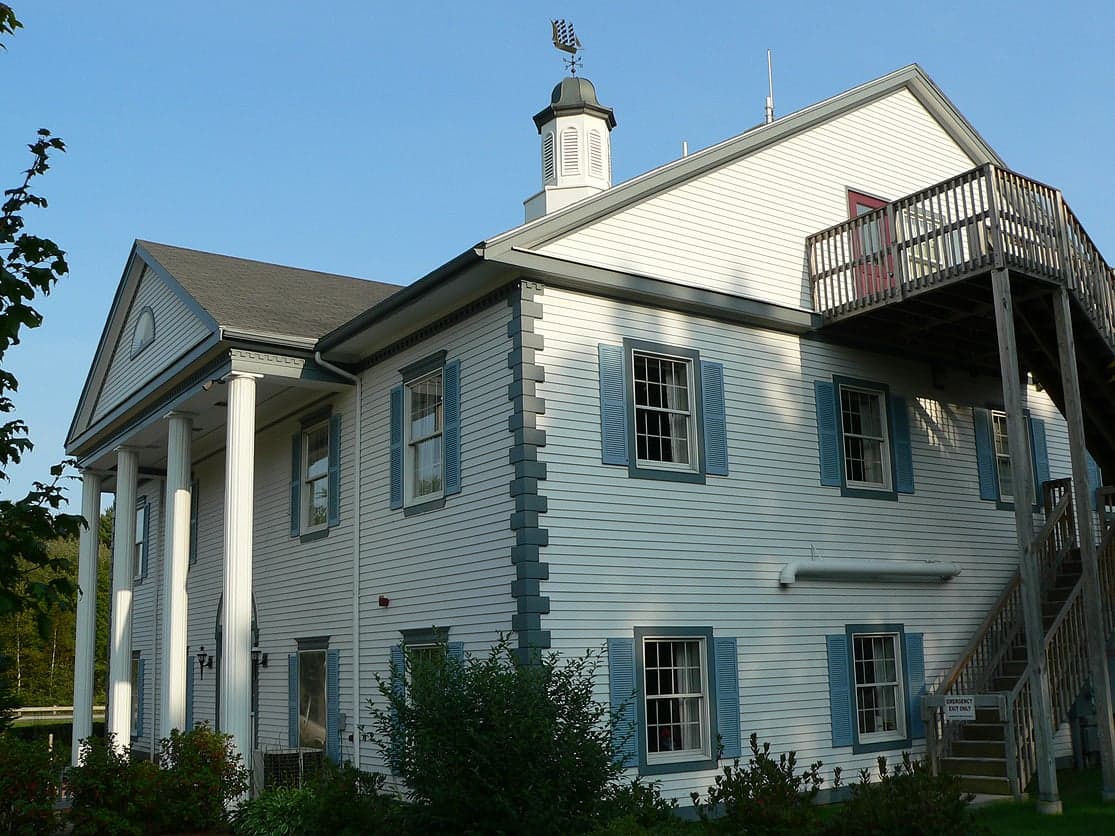
Photo: Wikipedia
Demographics of Wells, ME
Historical data isn't available for Wells, ME. Trends shown are for York County, ME.
Affluence Level in Wells, ME
An upper-middle-class area. Household wealth, education levels, and homeownership run ahead of national benchmarks.
People of Wells, ME
The people of Wells, Maine, today form a small, predominantly white community of 1,196 residents, characterized by a quiet, family-oriented character and a notably high proportion of college-educated adults at 38.5%. The population is overwhelmingly non-Hispanic white (92.9%) with a small Black community (5.9%) and virtually no foreign-born residents (0.4%), creating a demographic profile that is both stable and homogeneous. Distinctive markers include a strong sense of local heritage tied to the town's historic village centers and a population that skews older, reflecting its appeal as a peaceful coastal enclave for retirees and established families.
How the city was settled and grew
Wells was first settled in the early 1640s by English colonists drawn to the area's abundant salt marshes and timber, making it one of the oldest continuously inhabited towns in Maine. The original settlers clustered around the Wells Village area, near the confluence of the Webhannet and Ogunquit rivers, where they established farms and a small shipbuilding industry. Throughout the 18th and 19th centuries, the population remained small and overwhelmingly of English and Scottish descent, with growth driven by subsistence agriculture and later by the arrival of Irish immigrants who worked on the railroad and in the burgeoning summer tourism industry. These Irish families settled primarily in the Wells Beach and Moody neighborhoods, where they built boarding houses and supported the seasonal economy. By the mid-20th century, Wells had developed a distinct character as a summer resort town, with a permanent population that swelled during the warmer months.
Modern era (post-1965)
Following the 1965 Immigration and Nationality Act, Wells experienced minimal demographic change, as the town's remote coastal location and lack of major industrial employers did not attract significant international migration. The post-1965 period instead saw steady domestic in-migration, primarily from other parts of New England and the Mid-Atlantic states, as families and retirees sought a quieter, more affordable alternative to southern Maine's more crowded coastal towns. These newcomers settled predominantly in the Drakes Island and Wells Branch neighborhoods, drawn by waterfront property and newer suburban-style housing developments. The Black population, now at 5.9%, is a small but notable presence, concentrated in the Wells Village area and likely reflecting a mix of long-resident families and newer arrivals drawn by employment in the service and healthcare sectors. The town's college-educated share, at 38.5%, is significantly higher than the national average, a trend driven by the influx of professionals and remote workers who value the area's quality of life and proximity to Portland and Boston.
The future
Looking ahead, Wells is likely to remain a predominantly white, low-diversity community, with demographic change driven more by domestic migration than by international immigration. The town's very low foreign-born share (0.4%) and zero Hispanic population suggest that future growth will come primarily from white, college-educated households moving from elsewhere in New England. The Wells Branch and Moody neighborhoods are expected to see the most new development, as they offer available land for single-family homes and easier access to Route 1 and the Maine Turnpike. The population may age further, as younger families are priced out by rising coastal real estate values, potentially shifting the town's cultural identity toward an even more retirement-oriented character. Over the next 10-20 years, Wells will likely become slightly more diverse at the margins, but its core demographic profile — white, older, and well-educated — is expected to persist.
For someone moving in now, Wells offers a stable, safe, and culturally homogeneous environment with strong schools and a deep sense of local history. The town is becoming a quieter, more residential version of its former self, with less emphasis on summer tourism and more on year-round family and retirement living. New residents should expect a community that values tradition and privacy, where newcomers are welcomed but expected to integrate into the existing social fabric.

* Values derived from national, state, county, city and local statistics and may differ in a specific area. Last updated: 2026-10-11T02:56:50.000Z
Narrative content on this page is AI-generated and may contain mistakes. Verify any details that matter before acting on them.
ReloMaps may earn a commission from affiliate links at no extra cost to you.

