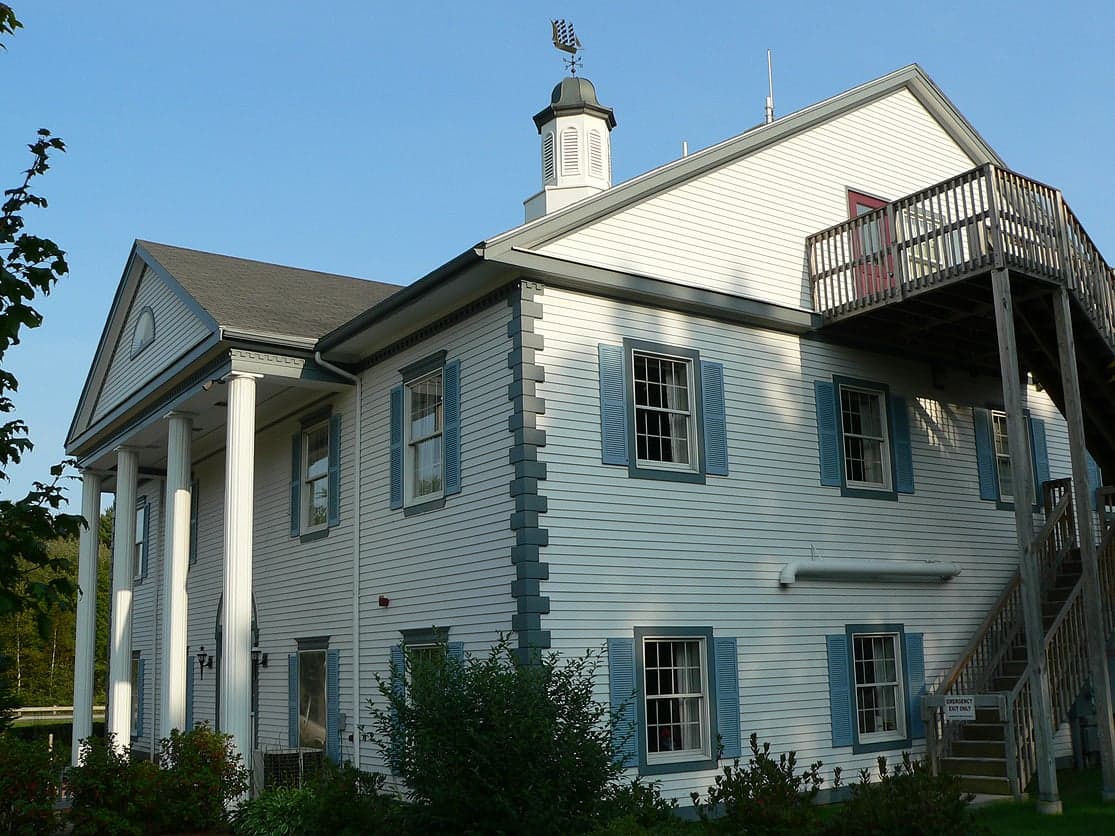
Photo: Wikipedia
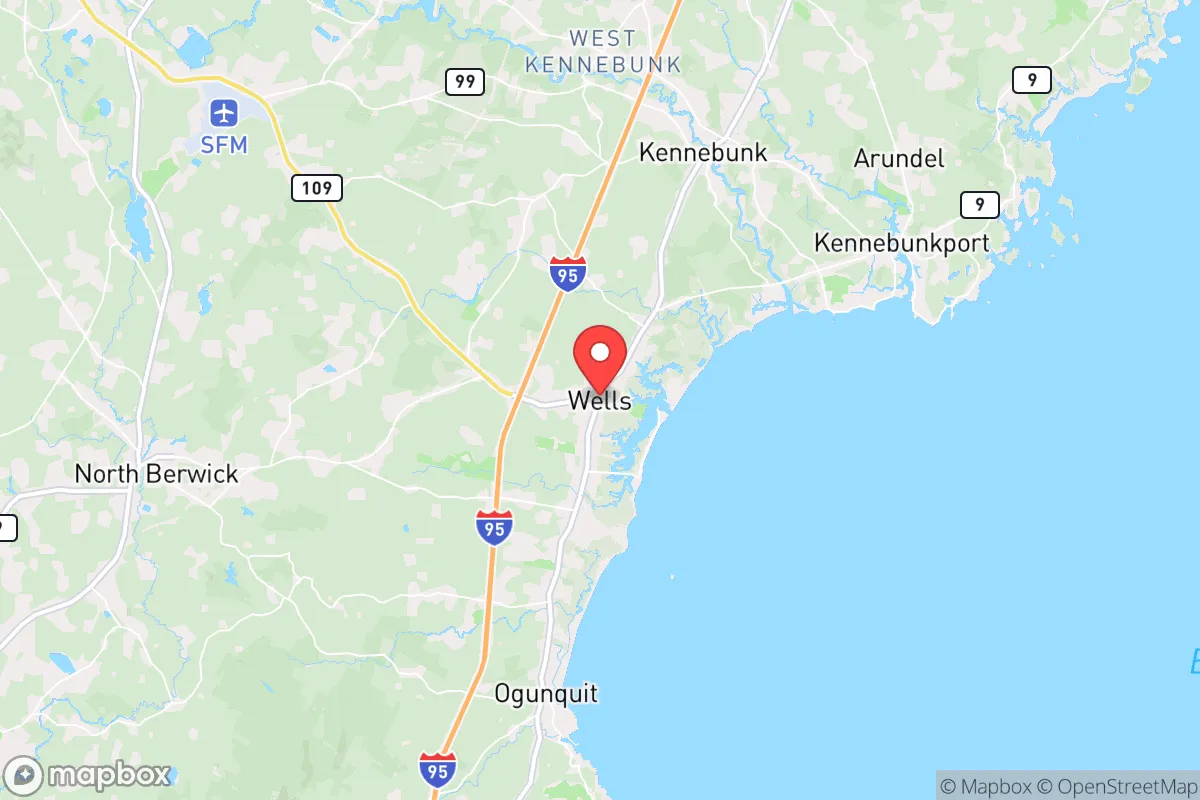
Personal Sovereignty in Wells, ME
Viable for self-reliance. Generally workable, though some barriers may limit total independence.
What does Personal Sovereignty tell us?
Personal Sovereignty measures your capacity for self-reliance and independence with minimal government friction. Higher scores mean fewer barriers between you and the way you want to live... but it assumes you have the space you need and good neighbors.
What does this tell us?
Personal Sovereignty measures your capacity for self-reliance and independence with minimal government friction. Higher scores mean fewer barriers between you and the way you want to live... but it assumes you have the space you need and good neighbors.
State Policy
Energy independence: Importer (30% of energy produced in-state)
Personal Liberty
Homesteading

Personal Liberty Analysis
Wells, Maine, offers a notably high degree of personal sovereignty within the constraints of a New England state that leans interventionist on certain fronts. For the relocation-minded individual or family who prioritizes autonomy, the town presents a mixed but generally favorable environment: a light-touch local government, a strong tradition of self-reliance, and a tax burden that, while not the lowest in the nation, is competitive within the region. The key to maximizing personal freedom here lies in understanding where state-level regulations impose limits and where local culture and zoning carve out significant room for independent living.
Tax burden and regulatory posture in Wells compared to southern Maine
Maine's overall tax burden is among the highest in the U.S., but Wells benefits from a relatively favorable position within the state. The town's property tax rate, as of the latest assessments, hovers around $12.50 per $1,000 of assessed value, which is moderate for York County and significantly lower than coastal communities like Kennebunk or Ogunquit. There is no local sales tax, and Maine's state income tax, while graduated up to 7.15%, is applied to a narrower base than in many high-tax states. The regulatory posture in Wells is best described as pragmatic. The town's comprehensive plan emphasizes managed growth rather than restriction, and the code enforcement office is known for being accessible and rule-oriented rather than adversarial. Zoning is present but not oppressive; the town allows for home-based businesses, accessory dwelling units, and agricultural uses in most residential zones without requiring a lengthy special exception process. For a reader accustomed to heavy-handed municipal bureaucracy, Wells will feel refreshingly straightforward.
Self-defense and gun law specifics in Maine and York County
Maine is a "shall-issue" state for concealed carry permits, and Wells residents enjoy some of the most permissive firearm laws in the Northeast. No permit is required to purchase a rifle, shotgun, or handgun, and there is no state-level registration of firearms. Open carry is legal without a permit, and concealed carry requires a permit issued by the local police department or the county sheriff's office, which must be granted if the applicant meets statutory criteria. The Wells Police Department processes permits efficiently, typically within 30 days. Maine also has a strong "stand your ground" law, codified in Title 17-A, which removes any duty to retreat before using deadly force in self-defense if the person is lawfully present. There is no magazine capacity limit, no assault weapons ban, and no red flag law as of 2026, though legislative proposals on the latter surface periodically. For the self-defense-minded individual, Wells offers a legal environment that respects the right to keep and bear arms with minimal state interference.
Self-reliance and homesteading viability in Wells: lot sizes, zoning, and off-grid feasibility
Wells is one of the few remaining coastal towns in southern Maine where genuine homesteading is still feasible. Minimum lot sizes in the rural residential zones are one acre, and many properties available for purchase range from two to ten acres, offering enough space for a substantial garden, small orchard, and livestock. The town's zoning ordinance explicitly permits the keeping of chickens, goats, and horses on lots of one acre or more, with no requirement for a special permit. Beekeeping is allowed by right. Off-grid living is legally possible but requires navigating state-level building codes. Maine does not mandate connection to the electrical grid, and wells and septic systems are standard for rural properties. However, the state's energy code requires that any new dwelling meet minimum insulation and efficiency standards, which adds cost but does not prohibit alternative energy sources. Solar panels, wind turbines, and wood heat are all common and unregulated at the local level. The town's transfer station accepts recyclables and household waste for a modest fee, and there is no municipal trash pickup requirement, allowing residents to manage their own waste disposal. For the self-reliant individual, Wells offers a regulatory environment that supports rather than obstructs independent living.
Personal liberties in Wells: parental rights, medical autonomy, speech, and property
Maine's state-level policies on medical autonomy and parental rights are more restrictive than in many parts of the country, but local enforcement in Wells tends to be moderate. The state has mandatory vaccination requirements for school attendance, with only medical exemptions recognized, which is a significant limitation for families seeking full medical autonomy. However, homeschooling is well-established and lightly regulated; parents need only file a notice of intent and provide annual assessments, with no curriculum approval or home inspection required. On speech and assembly, Wells is a community where conservative viewpoints are expressed openly and without social penalty. The town's political makeup is roughly evenly split, with a slight Republican lean in local elections, and public discourse is civil. Property rights are strongly protected; the town does not have a rent control ordinance, and there are no inclusionary zoning requirements that force property owners to subsidize housing. The eminent domain authority is used sparingly and only for public infrastructure projects. For the reader who values the ability to speak freely, educate their children as they see fit, and control their property without government overreach, Wells provides a solid foundation, with the caveat that state-level mandates on vaccination and certain healthcare decisions may require strategic planning.
Overall, Wells ranks as one of the stronger environments for personal sovereignty in coastal New England. The combination of permissive gun laws, homestead-friendly zoning, a pragmatic local government, and a culture of self-reliance places it well ahead of most Massachusetts or Connecticut alternatives. The primary trade-offs are Maine's state income tax and the vaccination mandate for public school attendance. For the relocation-minded individual or family who values autonomy and is willing to accept those state-level constraints, Wells offers a rare balance of coastal access, personal freedom, and a community that respects the right to live as you see fit.

* Values derived from national, state, county, city and local statistics and may differ in a specific area. Last updated: 2026-10-11T02:56:50.000Z
Narrative content on this page is AI-generated and may contain mistakes. Verify any details that matter before acting on them.
ReloMaps may earn a commission from affiliate links at no extra cost to you.

