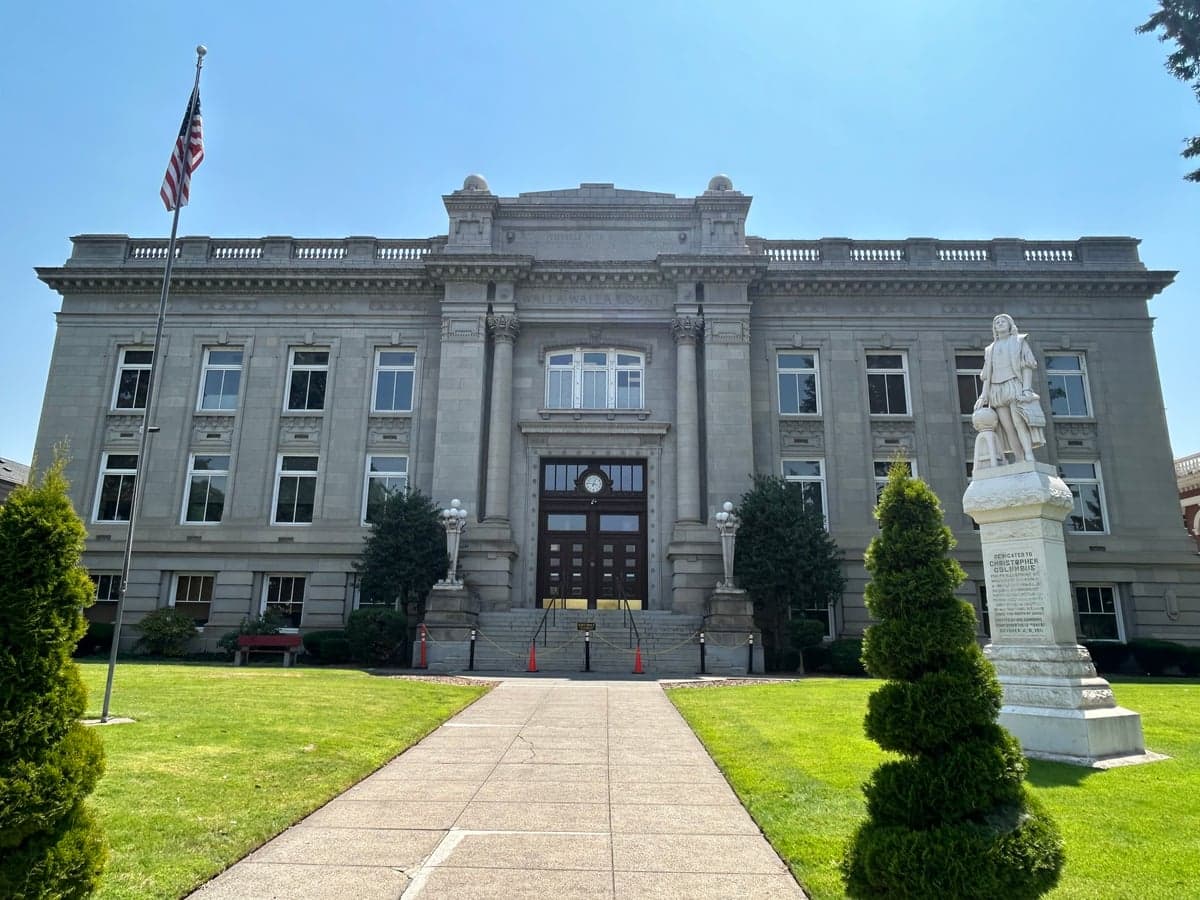
Photo: Wikipedia
Quality of Life in Walla Walla County
A livable area that tracks near national norms for affordability, walkability, and neighborhood health.
What does Quality of Life tell us?
Quality of Life measures an area by evaluating factors like cost of living, nearby amenities, country club access, airport proximity, socioeconomic signals and neighborhood character. For large states, this is a general average — quality of life can vary dramatically between metro areas, suburbs, and rural communities within the same state.
What does this tell us?
Quality of Life measures an area by evaluating factors like cost of living, nearby amenities, country club access, airport proximity, socioeconomic signals and neighborhood character. For large states, this is a general average — quality of life can vary dramatically between metro areas, suburbs, and rural communities within the same state.
Cost of Living
11% above national average
67%
The Real Cost of Living in Walla Walla County for 2026
| Tier | Individual | Family (4) |
|---|---|---|
| Survival | $18k | $33k |
| Comfortable | $73k | $107k |
| Luxury | $130k+ | $202k+ |
| Elite (Top 5%) | $155k+ | $240k+ |
Quality-of-Life Analysis
Walla Walla County offers a quality-of-life spectrum that ranges from the walkable, amenity-rich core of its largest city to the quiet, agricultural rhythms of its unincorporated crossroads and farmsteads. The county's character is shaped by its position in the southeastern corner of Washington, where the Blue Mountains meet the wheat fields of the Palouse. People drawn to the county typically fall into one of three groups: professionals and retirees who want the cultural and medical infrastructure of a small city, families seeking affordable acreage within commuting distance of that city, and agricultural workers or hobby farmers who prefer the isolation of the valley floor or the foothills.
Largest town(s) & population centers
The county is dominated by the city of Walla Walla (pop. ~34,000), which functions as the region's economic and cultural anchor. Daily life here centers on a compact downtown with a historic district, a growing wine-tasting scene, and institutions such as Whitman College and Walla Walla University. The city also hosts the region's primary hospital (Providence St. Mary Medical Center) and the Walla Walla Regional Airport, which offers commercial flights to Seattle. The adjacent town of College Place (pop. ~9,000) is effectively a contiguous suburb, home to Walla Walla University and a quieter, more residential feel. Both towns offer the county's highest density of grocery stores, restaurants, and retail, and the average commute of 14.9 minutes reflects how most residents live within a short drive of work, school, and services.
Smaller towns & rural pockets
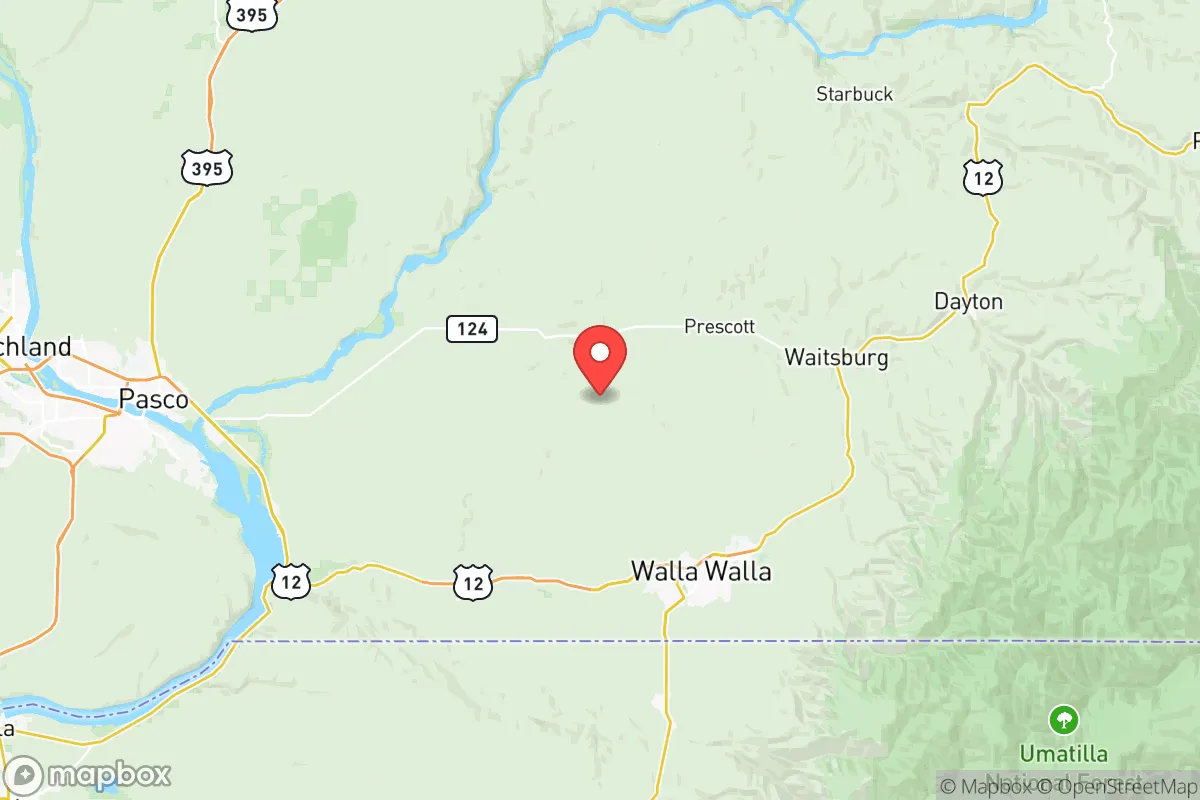
Outside the Walla Walla–College Place corridor, the county's smaller communities offer a markedly different pace. Waitsburg (pop. ~1,200) sits 18 miles north on the Touchet River and has preserved a walkable Main Street with a handful of cafes, a brewery, and a historic hotel; it attracts a mix of retirees and remote workers who value small-town quiet. Prescott (pop. ~300) lies 20 miles east along US-12 and is a true agricultural service town, with a grain elevator, a small school, and little else in the way of commerce. Dixie (pop. ~200) and Touchet (pop. ~400) are unincorporated communities along the Walla Walla River that consist largely of farmhouses, mobile homes, and a few churches. The far southeastern corner of the county, near the Oregon border, contains the Umapine area, a scattering of homes on large lots amid wheat and pea fields. These pockets offer the lowest housing costs in the county but require a 20- to 30-minute drive for groceries, medical care, or a sit-down meal.
Cost & lifestyle range
The county's cost-of-living index of 111 (11% above the national average) is driven almost entirely by housing in the Walla Walla city limits. The median home value of $375,600 and median rent of $1,113 reflect a market that has been pushed upward by wine-country tourism and second-home buyers, particularly in the neighborhoods near downtown and the airport. At the high end, homes in the Pleasant Street and Boyer Avenue corridors can exceed $600,000, while newer subdivisions on the south side of Walla Walla routinely list above $450,000. At the low end, a three-bedroom house on a half-acre in Prescott or Dixie can still be found for under $250,000, and rental options in those areas are scarce but often below $900 per month. The trade-off is access: a resident of Prescott has no supermarket, no urgent care, and no gas station after 8 PM, while a resident of central Walla Walla can walk to a farmers market, a library, and multiple medical clinics. The county's average commute of under 15 minutes applies mainly to those living in or near the city; rural residents typically drive 20 to 35 minutes each way to work in Walla Walla or at the state prison in Burbank (Franklin County line).
Walla Walla County works best for people who want a clear trade-off between convenience and space. Those who thrive here are comfortable driving 15 to 30 minutes for a major errand, value the county's low crime rates and strong public schools, and appreciate that the region's cultural amenities — a symphony, a film festival, a half-dozen winery tasting rooms — are concentrated in a single walkable downtown rather than spread across a sprawling metro. The county is less suited to those who need immediate access to a major airport, a wide variety of specialty retail, or a dense social scene outside the wine-and-college-town orbit.

Crime in Walla Walla County
Crime rates similar to the national median for U.S. locations.
Violent CrimeViolent Crime Analysis
Property CrimeProperty Crime Analysis
Crime Analysis
Walla Walla County presents a mixed safety picture for prospective residents. The county's violent crime rate of 282.8 per 100,000 residents sits below the national average but above the safest rural counties in Washington, while its property crime rate of 1,958.4 per 100,000 is notably elevated. Understanding where crime concentrates and how local law enforcement and prosecutorial policies differ across the county's communities is essential for anyone evaluating relocation to this southeastern Washington region.
Crime in context
Walla Walla County's violent crime rate of 282.8 per 100,000 is roughly 20% below the national average of approximately 370 per 100,000, but it runs higher than many neighboring rural counties in eastern Washington. The property crime rate of 1,958.4 per 100,000 exceeds both the national average of about 1,950 and the Washington state average of roughly 2,200, placing the county in a middle tier for property offenses. The city of Walla Walla itself accounts for the majority of reported incidents, while smaller communities like College Place, Waitsburg, and Prescott report significantly lower crime volumes. The county's proximity to the Oregon border and its position along major transportation corridors contribute to drug-related and property crime patterns that law enforcement agencies in the region have noted in recent annual reports.
What residents experience
Residents of Walla Walla County most frequently encounter property crimes — theft, burglary, and vehicle break-ins — rather than violent offenses. The Walla Walla Police Department and the Walla Walla County Sheriff's Office both report that vehicle prowls and mail theft are the most common complaints, particularly in neighborhoods near the downtown core and along the Highway 12 corridor. Violent crime, while less common, is concentrated in specific areas: the city of Walla Walla's central districts see higher rates of assault and robbery, while outlying towns like Dixie and Touchet report almost no violent incidents year over year. The county's prosecutorial approach under the Walla Walla County Prosecutor's Office has historically been moderate, though recent trends toward progressive diversion programs for drug offenders have raised concerns among some residents about repeat property crimes. College Place, which shares a border with Walla Walla city, benefits from its own police force and consistently reports lower crime rates than its larger neighbor, making it a popular choice for families seeking safer suburban living within commuting distance of the county's employment centers.
Neighborhood-level variation
Crime in Walla Walla County is not evenly distributed. The city of Walla Walla's downtown and near-east side neighborhoods experience the highest concentration of both property and violent crime, driven largely by poverty, homelessness, and drug activity. In contrast, the western neighborhoods of Walla Walla near Whitman College and the outlying communities of Waitsburg and Prescott report crime rates that are a fraction of the county average. Waitsburg, with a population under 1,200, recorded fewer than 10 total property crimes in the most recent reporting year. College Place offers a middle ground: its crime rates are roughly half those of Walla Walla city, and its proximity to the Walla Walla University campus provides an additional layer of community policing and neighborhood watch activity. For those considering a move to the area, the safest housing options are found in the smaller towns and the western residential districts of Walla Walla city, while the downtown core and areas near the county's industrial zones warrant closer scrutiny of block-level crime data.
* Values derived from national, state, county, city and local statistics and may differ in a specific area. Last updated: 2026-07-07T17:48:20.000Z
Narrative content on this page is AI-generated and may contain mistakes. Verify any details that matter before acting on them.
ReloMaps may earn a commission from affiliate links at no extra cost to you.

