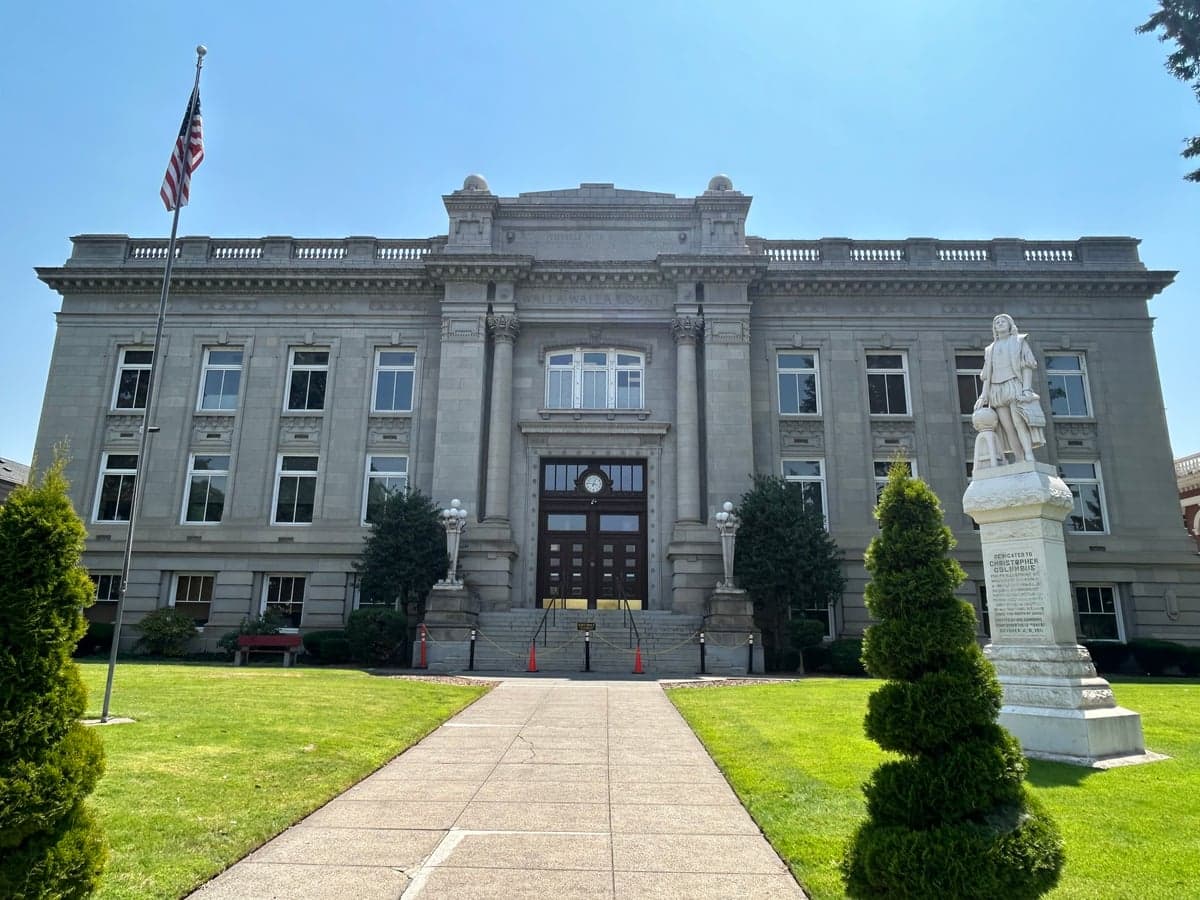
Photo: Wikipedia
Personal Sovereignty in Walla Walla County
Viable for self-reliance. Generally workable, though some barriers may limit total independence.
What does Personal Sovereignty tell us?
Personal Sovereignty measures your capacity for self-reliance and independence with minimal government friction. Higher scores mean fewer barriers between you and the way you want to live... but it assumes you have the space you need and good neighbors.
What does this tell us?
Personal Sovereignty measures your capacity for self-reliance and independence with minimal government friction. Higher scores mean fewer barriers between you and the way you want to live... but it assumes you have the space you need and good neighbors.
State Policy
Energy independence: Importer (55% of energy produced in-state)
Personal Liberty
Homesteading

Personal Liberty Analysis
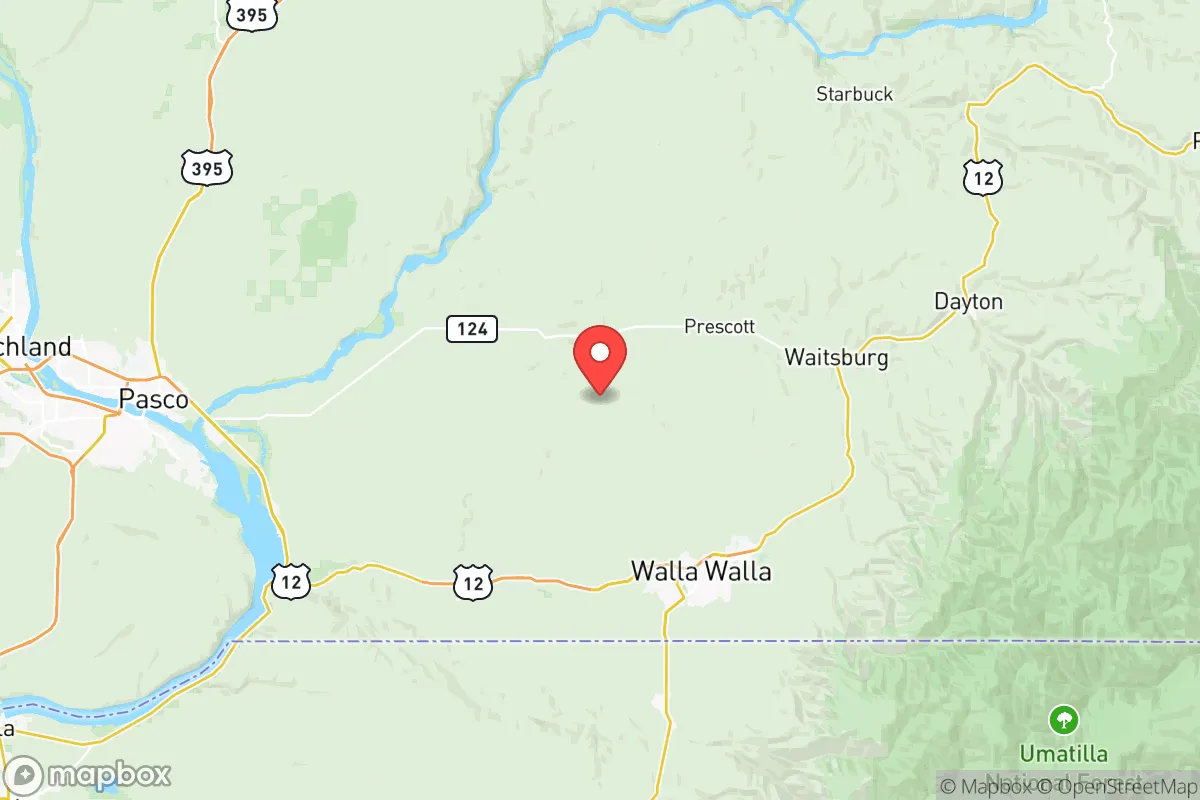
Walla Walla County offers a notably high degree of personal sovereignty relative to the Puget Sound region, though it operates within the broader constraints of Washington state law. The county's rural character, agricultural economy, and Eastern Washington political leanings create an environment where individual autonomy is generally respected, but residents must navigate state-level mandates on firearms, taxes, and land use that are more restrictive than in Idaho or Montana. For a relocation-minded individual or family prioritizing personal freedom, the key question is how much of that state-level overhead actually intrudes on daily life in places like Walla Walla city, College Place, Waitsburg, Dayton, Prescott, and the unincorporated areas of the county.
Tax burden and regulatory posture in Walla Walla County vs. Washington state
Washington state has no personal income tax, which is a major draw for sovereignty-minded residents, but it compensates with a high state sales tax (6.5% base, plus local rates) and above-average property taxes. Walla Walla County's combined sales tax rate is 8.4% as of 2026, which is moderate by state standards but higher than neighboring Columbia County (8.1%) and significantly higher than Oregon's 0% sales tax just across the border. Property taxes in the county average roughly 1.1% of assessed value, slightly below the state median, though agricultural land receives preferential valuation under Washington's open space tax program — a meaningful benefit for homesteaders. The county's regulatory posture is generally light-touch compared to King County. Building permits in unincorporated areas are processed with less friction, and the county's comprehensive plan allows for a range of agricultural and rural uses without the overlay of urban growth boundaries that constrain development in western Washington cities. However, the state's Growth Management Act still applies, meaning rural subdivisions and lot splits face review under the county's critical areas ordinance, which protects wetlands and steep slopes. For a practical comparison: a homeowner in Waitsburg or Prescott can add a workshop or accessory dwelling unit with fewer hurdles than a counterpart in Olympia or Bellingham, but the state's energy code and septic regulations are non-negotiable.
Self-defense and gun law specifics in Walla Walla County
Washington state has moved toward stricter firearm regulation in recent years, and Walla Walla County sits within that legal framework. The state requires a background check for all firearm sales, including private transactions, and prohibits the open carry of firearms at public demonstrations and on Capitol grounds. Magazine capacity is limited to 10 rounds for rifles and 17 rounds for handguns under the state's 2022 ban, which remains in effect pending ongoing litigation. Walla Walla County itself is a Second Amendment sanctuary, with the Board of County Commissioners having passed a resolution in 2023 affirming its commitment to protecting gun rights and directing county resources away from enforcing certain state firearm restrictions deemed unconstitutional. This creates a practical tension: state law is the letter, but local enforcement posture is permissive. Concealed carry permits are issued by the county sheriff's office with a shall-issue policy, and the sheriff has publicly stated that his office will not proactively enforce the magazine ban. For residents of Dayton and Waitsburg, where hunting and sport shooting are deeply embedded in local culture, the practical experience is one of relatively unimpeded access to firearms, though purchasing new standard-capacity magazines requires out-of-state travel or online orders from sellers willing to ship. The county has multiple gun ranges and a strong culture of responsible firearm ownership, with the Walla Walla Gun Club and the Dayton Rod and Gun Club serving as community hubs.
Self-reliance and homesteading viability across Walla Walla County
Homesteading and off-grid living are feasible in Walla Walla County, but the viability varies sharply by location and depends on water access and zoning. The county's rural zoning districts allow for a minimum lot size of 5 acres in the Agricultural-Rural zone, which covers most of the unincorporated area outside the urban growth boundaries of Walla Walla city and College Place. In practice, many properties in the Touchet Valley and around Prescott are sold as 10- to 40-acre parcels with existing wells and septic systems. Off-grid solar is legal and common, though net metering with the local utility (Columbia REA or Pacific Power) requires interconnection agreements. Rainwater collection is permitted for outdoor use without a permit, but potable rainwater systems must meet state Department of Health standards. The county's building department does not require permits for agricultural structures under 1,000 square feet, which covers most barns and workshops. Livestock keeping is unrestricted on parcels over 5 acres, and the county's right-to-farm ordinance protects agricultural operations from nuisance complaints — a critical feature for anyone raising pigs, goats, or poultry near suburban edges. The limiting factor is water: the county averages 15-20 inches of annual precipitation, and irrigation rights are fully allocated in many watersheds. New wells in the Walla Walla Basin require a permit from the Department of Ecology, and approval is not guaranteed. For a homesteader, a property with an existing water right in the Touchet River basin or near Dayton is far more viable than a raw parcel in the drier southern part of the county near the Oregon border.
Personal liberties in Walla Walla County: parental rights, medical autonomy, speech, and property
Parental rights are broadly respected in Walla Walla County, with the school districts in Walla Walla, College Place, and Dayton maintaining policies that allow parents to opt their children out of sex education and review instructional materials. The county's school boards have been the site of active debate over library content and transgender student policies, but the outcomes have been moderate compared to more conservative districts in central Washington. Medical autonomy is shaped by state law: Washington has legalized assisted suicide, recreational cannabis, and abortion access, all of which are available in Walla Walla County. The county has one hospital (Providence St. Mary Medical Center) and a network of clinics, and vaccine mandates for healthcare workers remain in place under state regulation. For those seeking alternatives to conventional medicine, the regulatory environment is permissive — naturopaths and acupuncturists are licensed, and supplement sales are unrestricted. Free speech protections are robust, with the county hosting a range of political viewpoints from the conservative Walla Walla County Republican Party to more progressive groups in the city. Property rights are the area of greatest tension: Washington's law on landlord-tenant relations is tenant-friendly, and the state's ban on rent control does not prevent local ordinances. Walla Walla city has a just-cause eviction ordinance, which limits a landlord's ability to non-renew a lease without stated grounds. In unincorporated areas and smaller towns like Waitsburg and Prescott, property owners face fewer restrictions on short-term rentals and land use, though the state's new law on accessory dwelling units (ADUs) mandates that local governments allow them in residential zones.
Overall, Walla Walla County offers a sovereignty profile that is strong for Washington state but moderate by national standards. A resident who values low taxes, gun rights, and homesteading will find the county far more accommodating than the Seattle metro area, but will still encounter state-level constraints on magazine capacity, private firearm sales, and water rights that would not exist in Idaho or Montana. For the relocation-minded individual or family, the county's sweet spot is the rural fringe — places like Waitsburg, Dayton, and Prescott — where local enforcement is permissive, neighbors are self-reliant, and the regulatory overhead of state government feels distant. The trade-off is access: these areas are 3-4 hours from Spokane or Portland, and the local economy is driven by agriculture, healthcare, and the state penitentiary. For someone who prioritizes personal freedom over urban amenities, Walla Walla County is a viable option within a blue state, but it is not a libertarian enclave — it is a pragmatic, agricultural community that has learned to coexist with Olympia's mandates while preserving as much local control as possible.

* Values derived from national, state, county, city and local statistics and may differ in a specific area. Last updated: 2026-07-07T17:48:20.000Z
Narrative content on this page is AI-generated and may contain mistakes. Verify any details that matter before acting on them.
ReloMaps may earn a commission from affiliate links at no extra cost to you.

