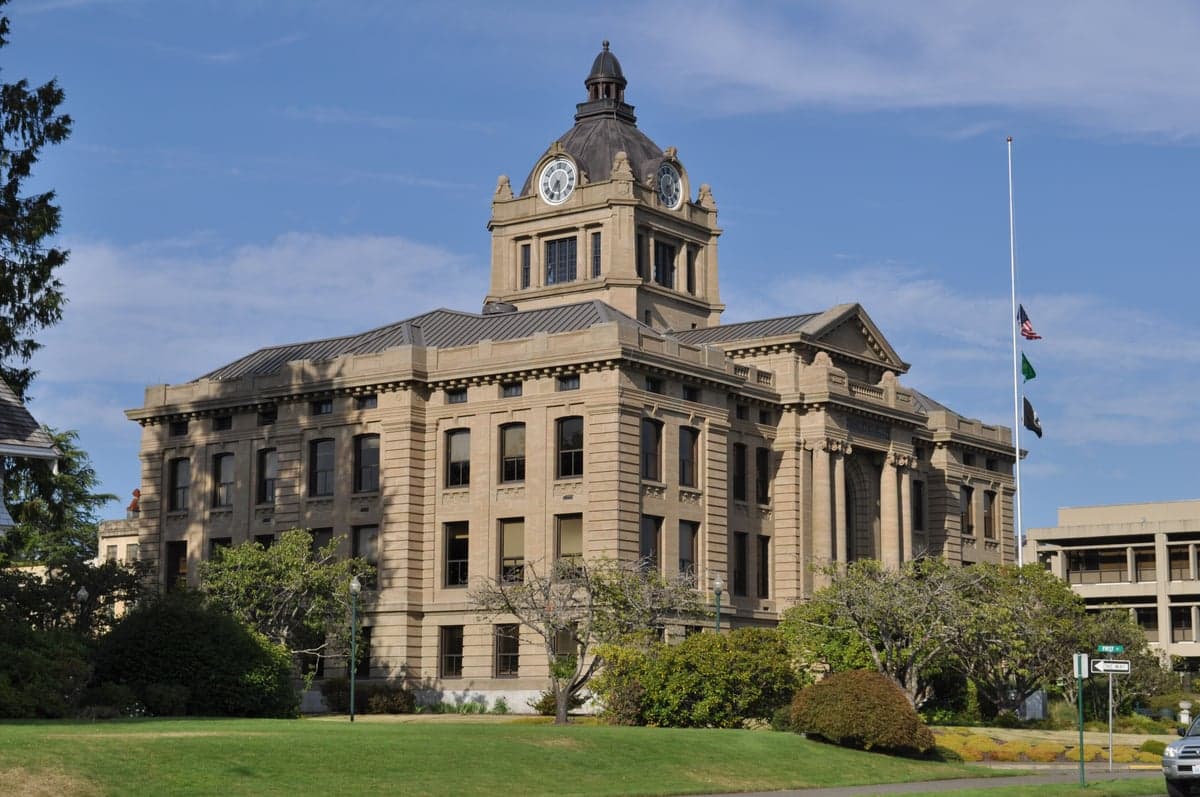
Photo: Wikipedia
Personal Sovereignty in Grays Harbor County
Viable for self-reliance. Generally workable, though some barriers may limit total independence.
What does Personal Sovereignty tell us?
Personal Sovereignty measures your capacity for self-reliance and independence with minimal government friction. Higher scores mean fewer barriers between you and the way you want to live... but it assumes you have the space you need and good neighbors.
What does this tell us?
Personal Sovereignty measures your capacity for self-reliance and independence with minimal government friction. Higher scores mean fewer barriers between you and the way you want to live... but it assumes you have the space you need and good neighbors.
State Policy
Energy independence: Importer (55% of energy produced in-state)
Personal Liberty
Homesteading

Personal Liberty Analysis
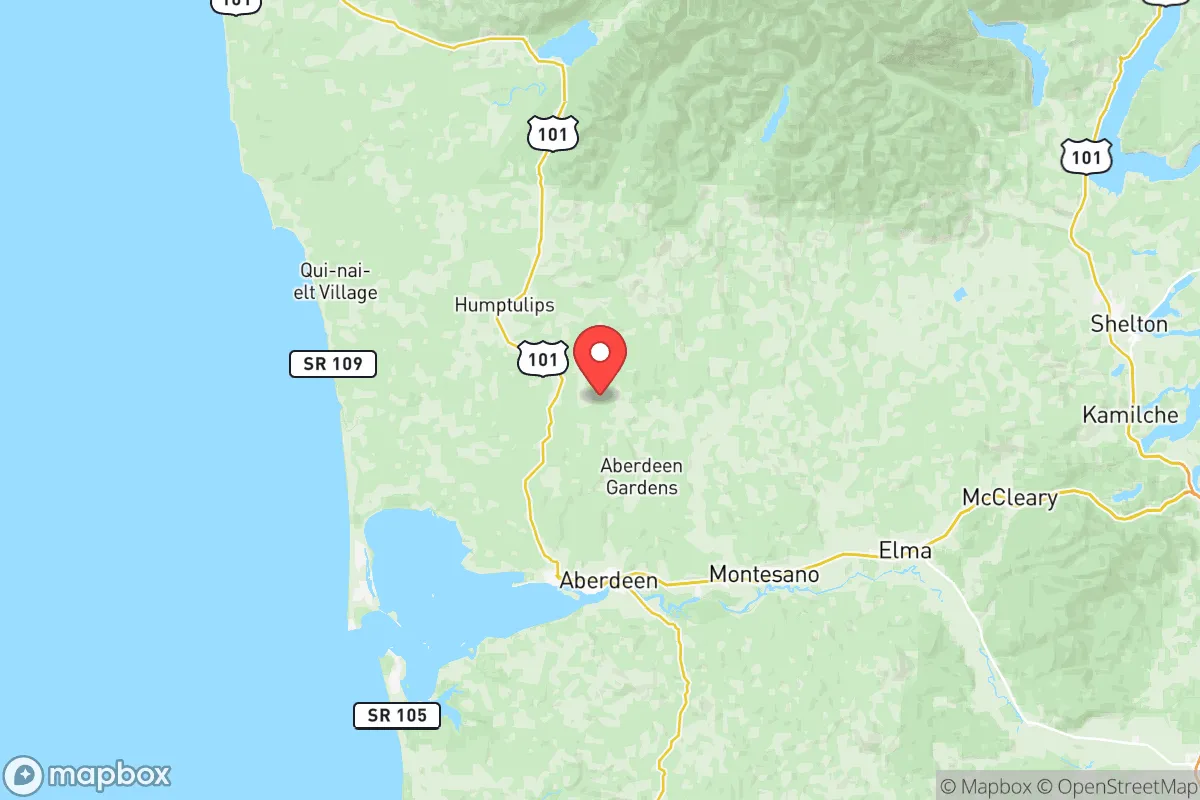
Grays Harbor County, Washington offers a notably mixed personal sovereignty environment that tilts toward self-reliance in its rural areas while coastal and incorporated zones maintain tighter regulatory postures. Situated along the Pacific coast between Aberdeen and Ocean Shores, this county of roughly 75,000 residents presents a freedom profile that differs starkly from urban Western Washington — property rights are stronger, land-use rules are looser, and the general attitude toward personal autonomy is more permissive than in King or Pierce Counties. However, Washington State’s overall legal framework imposes constraints on medical autonomy, firearm carry, and tax freedom that even a rural county cannot fully escape, making Grays Harbor a partial sovereignty destination rather than a total refuge.
Tax burden and regulatory posture in Grays Harbor County
Washington’s lack of a state income tax provides a baseline advantage for Grays Harbor residents — all earned income, investment gains, and retirement withdrawals are untaxed at the state level. The county’s property tax rate, however, sits at roughly 1.05% of assessed value, slightly above the state average of 0.93%, driven by school levies and port district bonds. Sales tax in Grays Harbor County is 9.4% (state base plus local options), which is moderate for Washington but high compared to rural Idaho or Texas. The regulatory environment is a split reality: unincorporated areas and towns like Elma, Montesano, and Hoquiam have minimal zoning enforcement, no local building permit requirements for many accessory structures, and limited business licensing overhead. In contrast, the incorporated city of Aberdeen enforces a citywide rental housing inspection program and maintains stricter commercial permitting timelines. The county’s Building & Fire Code Enforcement division is understaffed — a fact some residents exploit for greater de facto freedom, as inspection cycles for septic, well, and structural permits can stretch 6-10 months, effectively creating a light-touch environment by default. For a freedom-oriented reader, the key takeaway is that unincorporated Grays Harbor offers a land-use posture closer to rural Oregon or eastern Washington than to Seattle’s suburban ring, while the incorporated towns still run a tighter ship.
Self-defense rights and gun law specifics in Grays Harbor County
Washington State’s gun laws are restrictive by national standards, and Grays Harbor County operates within those constraints. The state requires a purchase permit or background check for all firearm transfers, including private sales, and prohibits standard-capacity magazines over 10 rounds (enacted 2022). Concealed carry requires a permit — the county sheriff’s office issues CPLs with a typical 30-day processing window, and issuance is shall-issue. Open carry is legal without a permit for those 18 and over, but local law enforcement in Aberdeen and Hoquiam has been known to treat it as disorderly conduct if carried in public spaces with an apparent confrontational intent. The county’s rural character does affect enforcement: in Hoquiam, Elma, and unincorporated areas around Lake Quinault, sheriff’s deputies and local police are generally more permissive about casual open carry during hunting or outdoor recreation, and range use on private property is common without complaints. However, institutional constraints are real — Grays Harbor has no “stand your ground” statute (Washington follows a duty-to-retreat rule), and the state’s 2019 I-1639 imposed enhanced background checks and waiting periods for semiautomatic rifles. For self-defense-minded residents, Montesano and the Humptulips area are where enforcement is lightest; Aberdeen’s city limits see the highest rate of police interaction with armed individuals, often during traffic stops. The practical sovereignty here is woodsmanship and situational awareness — you can defend your home with a firearm, but the legal costs of a defensive shooting outside the home are significant compared to Idaho or Montana.
Self-reliance and homesteading viability in Grays Harbor County
Grays Harbor County is one of the more viable off-grid and homesteading counties in Washington, owing to its ample rainfall (60-90 inches annually), moderate land prices, and lenient unincorporated zoning. Lot sizes in unincorporated areas can be as small as 1 acre for a single-family dwelling with no minimum floor area requirement, but rural parcels of 5-20 acres near Humptulips, McCleary, and the Wynoochee Valley are routinely listed for $3,000–$8,000 per acre — well below the Puget Sound median. The county’s Comprehensive Plan designates most rural land as “Resource Management” or “Rural Residential,” permitting accessory dwellings, farm stands (under 500 sq ft with no building permit), and small-scale livestock operations without special use permits. Off-grid feasibility is strong on water but challenging on waste: wells can be drilled without a county permit if the total depth is under 200 feet and daily withdrawal under 5,000 gallons, but septic systems require a county health department review ($450 fee) and percolation testing. Solar feasibility is marginal — Grays Harbor receives only 1,800 annual sunlight hours (Seattle gets 2,100), making propane or delivered heating oil a near-necessity for winter. The towns of Elma and Montesano are best for turnkey homesteading with existing well and septic infrastructure, while the Hoquiam River valley offers raw timbered parcels where county code enforcement is virtually absent — but access roads may be unmaintained. For a family looking to raise chickens, keep goats, and grow a full diet, Grays Harbor is more workable than any county within 90 minutes of Seattle.
Personal liberties in Grays Harbor County: parental rights, medical choice, property, and speech
On parental rights, Washington State mandates sex education in public schools that includes LGBTQ+ content, and Grays Harbor’s school districts (Aberdeen, Hoquiam, Montesano, and North Beach) follow the statewide curriculum with limited local opt-out for individual lessons. Homeschooling is straightforward: file an annual intent form with the local school district, no curriculum approval is needed, and the county’s four districts collectively reported roughly 700 homeschool students in 2024-2025. Medical autonomy is heavily constrained by state law — Washington is a “vaccine mandate” state for school entry (personal belief exemptions do not apply to MMR), and Grays Harbor offers no special carve-outs. However, the county’s rural healthcare providers (Summit Pacific Medical Center in Elma, Grays Harbor Community Hospital) are generally amenable to alternative treatment discussions; naturopathic physicians are licensed and practice actively in the area. Property rights are strong: the county does not have rent control, no commercial rent stabilization exists, and short-term rental (STR) regulation is minimal — only Aberdeen requires an STR permit ($150/year). Free speech is protected under the First Amendment, but the county’s 2024-2025 budget includes a $50,000 line item for “public safety communications” restricted to official press releases, meaning public comment at council and commissioner meetings is the primary avenue for citizen speech — a practical constraint on direct civic participation. The net for a conservative-leaning family: you have significant parental control over your child’s education and modest property autonomy, but you cannot opt out of state-mandated health regulations or school curriculum without moving to the eastern side of the Cascades.
Overall, Grays Harbor County occupies a middle tier of personal sovereignty in the Pacific Northwest — significantly freer than King, Pierce, or Snohomish counties in land use, property rights, and de facto enforcement, but constrained by Washington’s statewide gun laws, tax structure, and medical mandates. Compared to Idaho’s Boundary County or Montana’s Lake County, Grays Harbor trails in gun freedom and medical choice; compared to Oregon’s coastal counties, it offers stronger homeschooling flexibility and no income tax. For a single individual or family willing to trade perfect freedom for affordable coastal land, abundant water, a lower cost of living, and a hands-off rural culture, Grays Harbor delivers a workable autonomy arrangement — especially in the unincorporated corridors around Elma, Montesano, and the Humptulips Valley, where county government is most remote and everyday life is governed more by personal judgment than local ordinance.

* Values derived from national, state, county, city and local statistics and may differ in a specific area. Last updated: 2026-09-14T09:46:48.000Z
Narrative content on this page is AI-generated and may contain mistakes. Verify any details that matter before acting on them.
ReloMaps may earn a commission from affiliate links at no extra cost to you.

