
Photo: Wikipedia
Political ClimatePolitical Climate in Waihee, HI
District shown is the primary district for this city’s centroid. Cities may span multiple districts.
Local Political AnalysisPolitical Analysis of Waihee, HI
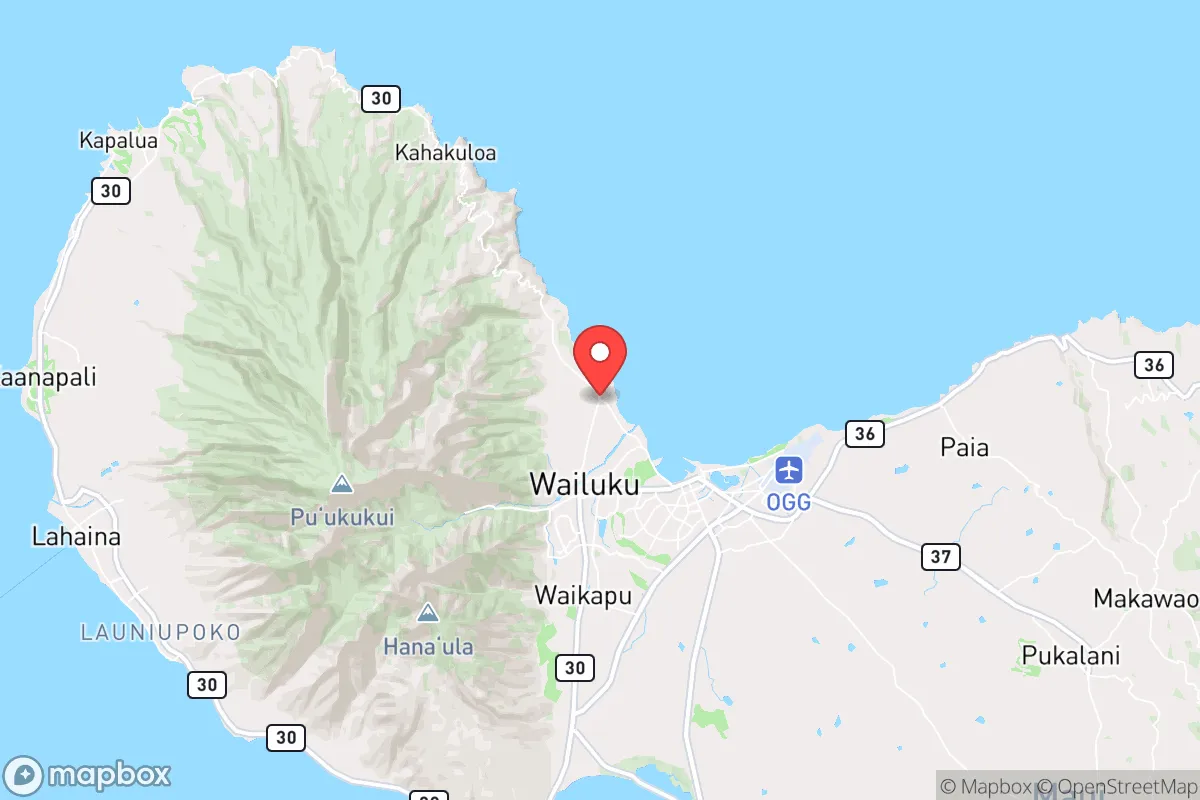
Waihee, a small community on Maui’s north shore, leans solidly Democratic, with a Cook PVI of D+12 that places it among the more reliably blue areas in the state. This isn’t a recent shift—locals will tell you the precinct has voted Democratic in every presidential election since at least 2000, often by margins of 15 to 20 points. The lean is driven by a mix of native Hawaiian families, working-class residents employed in tourism and agriculture, and a growing number of remote workers who’ve moved in from the mainland, most of whom bring progressive leanings. Compared to the rest of Hawaii, HI—which as a whole has no official Cook PVI but consistently votes Democratic by double digits in statewide races—Waihee is actually a bit more moderate on economic issues, though it’s just as liberal on social and environmental ones.
How it compares
Waihee’s D+12 rating puts it in the same ballpark as nearby Kahului (D+14) and Wailuku (D+13), but it’s noticeably more conservative than the ultra-blue resort towns of Wailea and Kihei, which often hit D+18 or higher. The contrast is sharpest with upcountry communities like Kula and Makawao, where a mix of ranching families and libertarian-leaning farmers can push precincts to D+5 or even toss-up status in local races. In state legislative terms, Waihee sits in Hawaii’s 5th Senate District, represented by Democrat Gil Keith-Agaran, and the 8th House District, held by Democrat Troy Hashimoto—both of whom win re-election with 60-70% of the vote. The surrounding county of Maui leans D+16 overall, so Waihee is a bit more purple than its neighbors, but still far from competitive in general elections. The real action is in the Democratic primary, where turnout in Waihee runs about 25% higher than the county average, and where candidates’ positions on water rights, agricultural land use, and tourism management can swing the outcome.
What this means for residents
For liberal residents, Waihee’s political climate means their values are broadly reflected in local policy—there’s strong support for public transit expansion, renewable energy mandates, and affordable housing initiatives, all of which have passed county council with Waihee precinct votes in favor. Conservative residents aren’t shut out, but they do have to work harder to be heard. The local Republican Party chapter in Waihee has about 40 active members, and they’ve had success on single issues like property tax caps and opposition to short-term rental bans, which have drawn bipartisan support. In practice, most political conversations here are pragmatic rather than ideological—neighbors disagree on national politics but come together on local concerns like beach access, traffic on Route 340, and the cost of living. The precinct’s voter turnout in the 2024 general election was 68%, slightly above the county average, and about 12% of ballots were cast for Republican candidates, a share that’s held steady for a decade.
Culturally, Waihee stands apart from the rest of Hawaii, HI in its stronger attachment to traditional Hawaiian land stewardship practices—there’s a locally elected ‘ohana council that advises the county on coastal management, and the community successfully blocked a resort development in 2022 through a grassroots campaign that crossed party lines. Policy-wise, the area has been a testing ground for “circular economy” initiatives, like a community composting program and a tool library, both funded by county grants that passed with Waihee’s support. The long-term trajectory points toward a slow moderation on economic issues—rising home prices are pushing out some working-class families, and newer residents tend to be more liberal on social issues but more skeptical of new taxes. If you’re moving here, expect a community where politics is less about red vs. blue and more about how to keep the island livable for everyone, with all the messy compromise that entails.

State Political ClimatePolitical Climate in Hawaii
State Political AnalysisPolitical Environment in the State
Hawaii is a deeply blue state in federal elections, having voted for the Democratic presidential candidate by margins of 20 to 30 points in every cycle since 2008, but its local politics are far more complex and pragmatic than the national label suggests. The dominant coalition is a multi-ethnic, union-backed Democratic machine that has held the governorship and legislature for decades, though it operates with a distinctly moderate, pro-business, and culturally conservative bent on many issues. Over the past 10-20 years, the state has seen a slow but steady rightward drift on economic and housing policy, even as social issues remain firmly progressive, creating a unique environment where a conservative relocator might find surprising common ground with longtime locals.
Urban vs. rural divide
The political map of Hawaii is not a simple urban-rural split like on the mainland. The core of Democratic power is Honolulu on Oahu, which casts roughly 70% of the state’s votes and reliably delivers 60-65% Democratic margins. However, within Honolulu, neighborhoods like Kahala and Hawaii Kai lean more moderate or even Republican in local races, while Waianae and Kalihi are solidly progressive. The real contrast is between Oahu and the Neighbor Islands. Hilo on the Big Island is a progressive stronghold, but Kailua-Kona and the North Kohala coast have growing libertarian-leaning and conservative populations, fueled by mainland transplants and agricultural interests. Maui’s Kihei and Wailea areas lean moderate, while Kahului is union-heavy and blue. Kauai is the most politically mixed, with Hanalei trending progressive and Lihue more conservative. The rural areas of Molokai and Lanai are culturally conservative but vote Democratic due to strong union ties and federal dependency.
Policy environment
Hawaii’s policy environment is a study in contradictions. The state has the highest combined state and local tax burden in the nation, with no local property tax but a statewide property tax that averages around 0.5% of assessed value — low by mainland standards. Income tax rates are steep, topping out at 11% for individuals earning over $200,000. There is no statewide sales tax, but counties levy a general excise tax (GET) of 4.5% that applies to nearly all goods and services, effectively functioning as a sales tax. Regulatory posture is heavy: housing construction is notoriously slow due to strict land-use laws, environmental reviews, and a powerful Office of Planning. Education policy is centralized under the state Department of Education, the only statewide school district in the U.S., which limits local control but also prevents the kind of school board culture wars seen elsewhere. Healthcare is dominated by the nonprofit Hawaii Medical Service Association (HMSA), and the state has near-universal coverage through employer mandates and Medicaid expansion. Election laws are relatively open: same-day registration, no-excuse absentee voting, and all-mail ballots for most elections, which boosts turnout but has drawn criticism from conservatives over ballot security.
Recent policy direction
Recent legislation shows a state moving left on social issues but right on economic pragmatism. In 2023, the legislature passed Act 40, which expanded gun restrictions by requiring a permit to purchase ammunition and raising the minimum age for rifle purchases to 21 — a response to the 2023 Honolulu shooting. Self-defense laws remain restrictive: Hawaii is a “may-issue” state for concealed carry, and open carry is effectively banned. On education, Act 51 (2024) created a pilot program for charter school expansion, a nod to parental choice advocates, but the powerful teachers’ union blocked broader school choice measures. Property rights saw a major shift with Act 12 (2023), which streamlined permitting for accessory dwelling units (ADUs) to address the housing crisis, a rare bipartisan win. Medical and bodily autonomy: Hawaii codified abortion rights in Act 1 (2023), making it a “sanctuary state” for abortion providers. Privacy and surveillance: the state passed Act 206 (2024), limiting police use of facial recognition technology, but also expanded wiretapping powers for drug investigations. Voting access: Act 46 (2023) made voter registration automatic when getting a driver’s license, which conservatives argue erodes ballot integrity. Taxation: the 2024 session saw a modest income tax cut for middle brackets, but the top rate remains unchanged.
Civil unrest & political movements
Hawaii has a long history of organized protest, most notably the Mauna Kea telescope protests (2019-2020), which united Native Hawaiian sovereignty activists with environmentalists and some conservative property-rights groups against the Thirty Meter Telescope. This movement was largely peaceful but highlighted deep tensions over land use and indigenous rights. The Hawaii Sovereignty Movement remains active, with groups like the Nation of Hawaii pushing for secession or self-governance, though it has no electoral traction. On the right, the Hawaii Republican Party is small but vocal, with a libertarian streak focused on reducing the GET and loosening land-use regulations. Immigration politics are muted compared to the mainland, as Hawaii has a low undocumented population, but the state has a “sanctuary” policy in practice — police do not inquire about immigration status. Election integrity controversies flared in 2020 when some GOP activists questioned the all-mail system, but no major fraud was found. Visible flashpoints for a new resident: you’ll see “Protect Mauna Kea” signs on the Big Island, and in Honolulu, occasional protests outside the state capitol over housing costs or tourism impacts.
Projection
Over the next 5-10 years, Hawaii’s political trajectory is toward a more pragmatic, less ideological center, driven by demographic shifts and in-migration. The state’s population has been declining since 2016, with an exodus of native-born residents to cheaper mainland states, while incoming transplants from California and the West Coast tend to be wealthier and more moderate. This is slowly eroding the old union-Democratic machine’s grip. Expect continued pressure to loosen housing regulations — the ADU reform was just the start — and a gradual lowering of the GET, which is regressive and unpopular. Social issues will remain progressive, but the state’s fiscal realities (high debt, underfunded pensions) will force moderation on spending. The Republican Party may gain a few more legislative seats, especially on the Big Island and Maui, but a GOP governor remains unlikely. A conservative relocator moving in now should expect to find a state where their economic views (lower taxes, less regulation) have growing traction, but their social views will be out of step with the majority — and that’s unlikely to change.
Bottom line for a new resident: If you’re conservative, you’ll find Hawaii’s political climate frustrating on social issues but surprisingly aligned on economic pragmatism and property rights. You’ll need to get comfortable with being in the minority on cultural matters, but you’ll also find that many locals — even Democrats — share your frustration with high taxes, slow permitting, and the cost of living. The key is to engage locally: neighborhood boards, county councils, and the state legislature are where the real decisions happen, and a single determined voice can have outsized impact. For liberals, Hawaii offers a stable, progressive environment with strong social safety nets, but be prepared for a slower pace of change and a political culture that values consensus over confrontation.
* Values derived from national, state, county, city and local statistics and may differ in a specific area. Last updated: 2026-07-12T14:07:24.000Z
Narrative content on this page is AI-generated and may contain mistakes. Verify any details that matter before acting on them.
ReloMaps may earn a commission from affiliate links at no extra cost to you.

