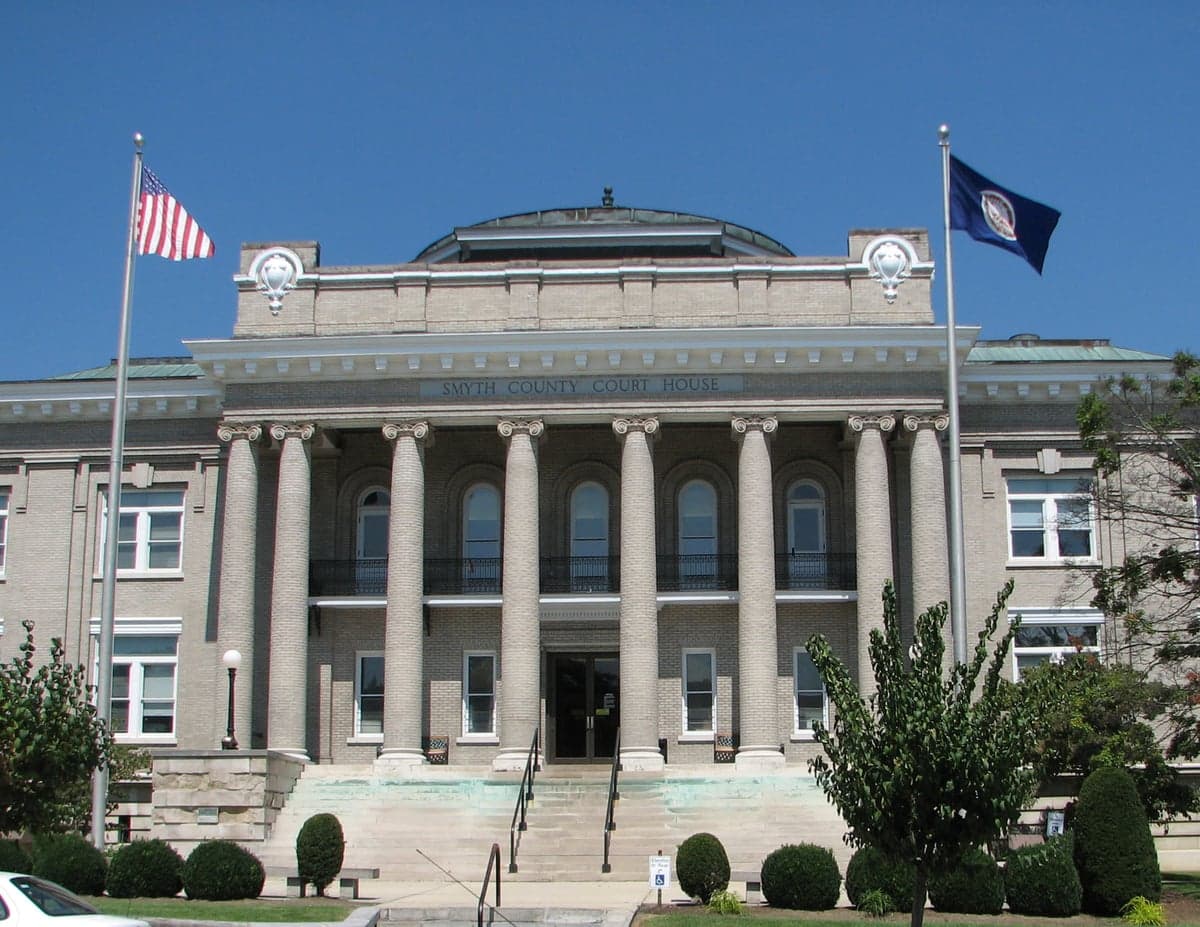
Photo: Wikipedia
Quality of Life in Smyth County
A livable area that tracks near national norms for affordability, walkability, and neighborhood health.
What does Quality of Life tell us?
Quality of Life measures an area by evaluating factors like cost of living, nearby amenities, country club access, airport proximity, socioeconomic signals and neighborhood character. For large states, this is a general average — quality of life can vary dramatically between metro areas, suburbs, and rural communities within the same state.
What does this tell us?
Quality of Life measures an area by evaluating factors like cost of living, nearby amenities, country club access, airport proximity, socioeconomic signals and neighborhood character. For large states, this is a general average — quality of life can vary dramatically between metro areas, suburbs, and rural communities within the same state.
Cost of Living
46% below national average
130%
The Real Cost of Living in Smyth County for 2026
| Tier | Individual | Family (4) |
|---|---|---|
| Survival | $11k | $21k |
| Comfortable | $24k | $36k |
| Luxury | $85k+ | $131k+ |
| Elite (Top 5%) | $108k+ | $168k+ |
Quality-of-Life Analysis
Smyth County, Virginia, offers a spectrum of quality-of-life options that range from the walkable, historic downtown of its county seat to deeply rural hollows and mountain-side communities, all within a county of roughly 30,000 residents. The county’s character shifts noticeably from the commercial and civic hub of Marion to the quieter, more isolated pockets of Saltville, Chilhowie, and the unincorporated crossroads that dot the valleys and ridges. People are drawn to different parts of Smyth County based on whether they prioritize small-city amenities, tight-knit village life, or the privacy and space of rural acreage, all while benefiting from a cost of living index of 54 (well below the national average of 100).
Largest town(s) & population centers
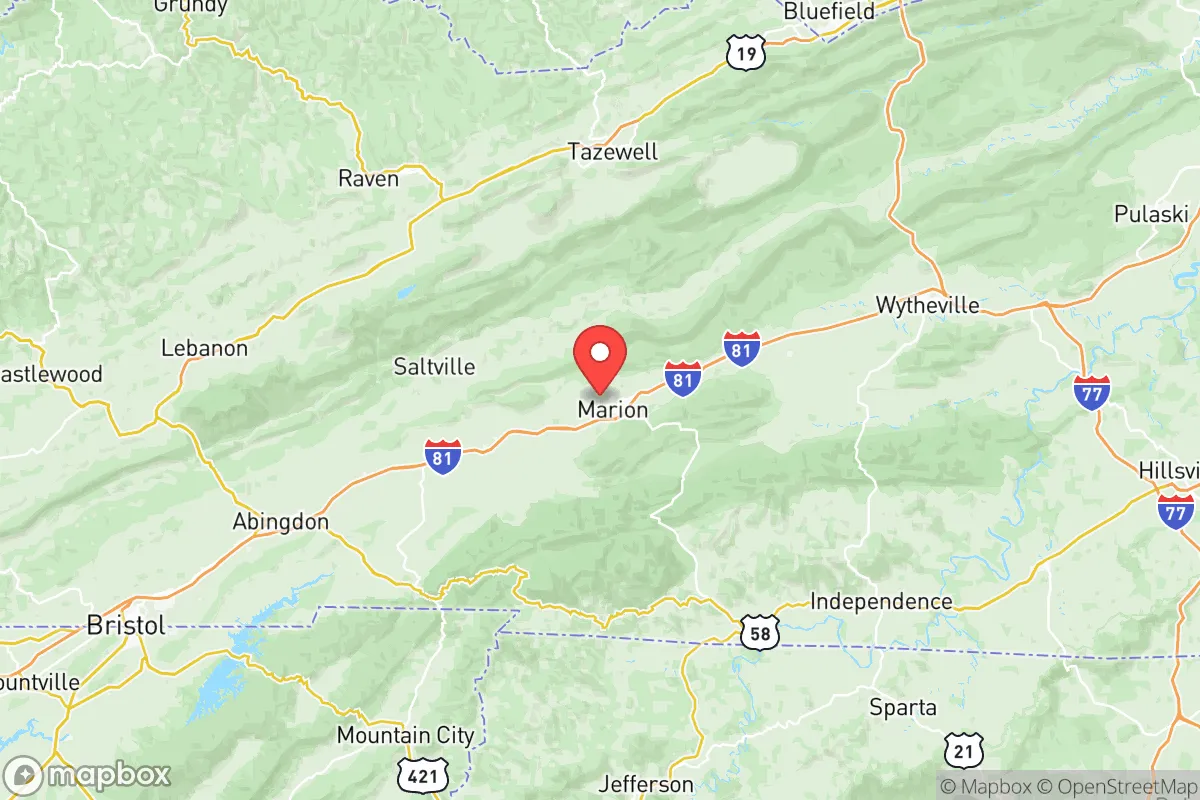
Marion, the county seat and largest town with roughly 5,800 residents, is the commercial, governmental, and cultural anchor of Smyth County. Daily life here centers on a compact, walkable downtown along Main Street, anchored by the historic Lincoln Theatre and the Wayne C. Henderson School of Appalachian Arts. Residents have access to a Walmart Supercenter, a regional hospital (Smyth County Community Hospital), and a range of local restaurants and shops. The town’s layout is relatively flat along the Middle Fork of the Holston River, making it the most pedestrian-friendly area in the county. Chilhowie, about 10 miles west, is the second-largest incorporated town with roughly 1,700 residents, offering a quieter, more residential feel with its own small downtown, a Food City grocery, and the popular Chilhowie Farmers Market. Saltville, to the northeast, is a historic industrial town of about 2,000 people, known for its salt mining heritage and the Saltville Museum; its daily life is slower-paced and more centered on local history and outdoor recreation along the Saltville Riverwalk.
Smaller towns & rural pockets
Beyond the three main towns, Smyth County is dotted with unincorporated communities that each have a distinct identity. Adwolf, just south of Marion, is a residential area with a mix of subdivisions and farmland, home to the county’s only public golf course. Atkins, along I-81, is a small crossroads community with a few gas stations and fast-food outlets, serving as a commuter node. Seven Mile Ford is a narrow valley community along the river, known for its historic Ford and a handful of churches and homes. Rural Retreat, in the county’s western end, is a tiny incorporated town (pop. ~1,400) with a classic small-town main street, a grocery store, and a strong sense of local identity. The most remote rural pockets lie in the Iron Mountains and Walker Mountain areas, where gravel roads lead to scattered homes on large parcels, offering complete seclusion and mountain views.
Cost & lifestyle range
The cost of living in Smyth County is remarkably low across the board, but the trade-offs between town and country are clear. In Marion, a typical three-bedroom home sells for around $125,800 (the county median), and median rent is $692 per month, offering affordable access to sidewalks, utilities, and nearby shopping. The average commute countywide is 22.7 minutes, but Marion residents often have commutes under 10 minutes. At the lower end of the cost spectrum, older homes in Saltville or rural areas like Atkins can be found for under $90,000, though these often require more maintenance and a longer drive for groceries or medical care. At the higher end, newer subdivisions on the outskirts of Marion (e.g., along Lee Highway or near the Marion Country Club) feature homes in the $200,000–$300,000 range, offering more square footage and land while still keeping a 15-minute commute to town. Lifestyle differences are stark: town residents enjoy walkable streets and community events, while rural residents trade convenience for space, privacy, and lower property taxes.
Who thrives in Smyth County? Retirees on fixed incomes, remote workers seeking low overhead, and families who value outdoor recreation (fishing, hiking the Mount Rogers National Recreation Area, or ATV riding) will find the most to appreciate here. The county’s mix of affordable town living and deep rural seclusion means it suits both those who want a small-town social life and those who prefer solitude, as long as they are comfortable with limited dining, entertainment, and shopping options compared to larger metro areas like Bristol or Roanoke. The key is matching one’s tolerance for driving distance to amenities with the specific community’s character—Marion for convenience, Chilhowie for quiet, Saltville for history, and the mountain hollows for true escape.

Crime in Smyth County
Generally safer than 60% of comparable U.S. locations.
Violent CrimeViolent Crime Analysis
Property CrimeProperty Crime Analysis
Crime Analysis
Smyth County, Virginia, presents a mixed safety picture for prospective residents. While its violent crime rate of 210.8 per 100,000 residents sits below the national average, its property crime rate of 1,394.5 per 100,000 is notably higher than both state and national benchmarks, making property-related offenses the primary concern for those relocating to the area. The county's rural character and small-town atmosphere in places like Marion and Saltville offer a quieter lifestyle, but crime data suggests that vigilance regarding theft and burglary is warranted across the region.
Crime in context
When compared to broader trends, Smyth County's violent crime rate is a relative bright spot. At 210.8 per 100,000 residents, it is significantly lower than the national average of roughly 380 per 100,000 and also below the Virginia state average of approximately 240 per 100,000. This indicates that serious offenses like homicide, rape, robbery, and aggravated assault are less common here than in many other parts of the country. However, the property crime picture is less favorable. The county's rate of 1,394.5 per 100,000 exceeds the national average of around 1,950 per 100,000 but is still a concern, particularly when compared to the Virginia state average of roughly 1,200 per 100,000. This suggests that larceny, burglary, and motor vehicle theft occur at a frequency that demands attention from both law enforcement and residents. The 27th Judicial Circuit, which covers Smyth County, operates with a traditional approach to prosecution, which helps maintain the lower violent crime numbers, but property crime remains a persistent challenge.
What residents experience
Daily life in Smyth County is generally safe, but the nature of crime varies by location. In the county seat of Marion, the largest town, residents report a mix of minor thefts and occasional drug-related incidents, typical of a small Appalachian community. Saltville, a historic town to the north, tends to see lower crime rates, benefiting from its tight-knit community and smaller population. Conversely, areas along the Interstate 81 corridor, particularly near the Atkins and Chilhowie exits, experience higher rates of property crime, including vehicle break-ins and package theft, likely driven by transient traffic. The presence of the Mount Rogers Regional Jail in the county ensures that offenders are processed locally, but the judicial philosophy in the region is conservative and focused on accountability, which is a positive for public safety. Residents in more remote areas like Rural Retreat often cite a sense of security, though they must contend with the risk of isolated burglaries targeting unoccupied homes.
Neighborhood-level variation
While county-wide data provides a baseline, safety in Smyth County is not uniform. The town of Marion has a visible police presence and a community-oriented approach, but its downtown area and some older residential streets see occasional petty crime. In contrast, the more affluent neighborhoods on the outskirts of Marion, such as those near the Hungry Mother State Park, report very low incident rates. Saltville consistently ranks as one of the safest areas in the county, with a strong neighborhood watch culture. However, the unincorporated areas along the Middle Fork of the Holston River can be more isolated, leading to longer response times and higher vulnerability to property crime. For those considering a move, focusing on established neighborhoods with active community associations and avoiding properties directly adjacent to major highways or commercial zones can significantly reduce risk. The overall trend is that Smyth County is a safe place to live for those who are aware of their surroundings and take standard precautions, particularly against theft.
* Values derived from national, state, county, city and local statistics and may differ in a specific area. Last updated: 2026-11-05T03:08:38.000Z
Narrative content on this page is AI-generated and may contain mistakes. Verify any details that matter before acting on them.
ReloMaps may earn a commission from affiliate links at no extra cost to you.

