Photo: Wikipedia
Demographics of Smyth County
Affluence Level in Smyth County
A below-average socioeconomic profile. Incomes, home values, and educational attainment trail the U.S., with higher poverty and unemployment.
People of Smyth County
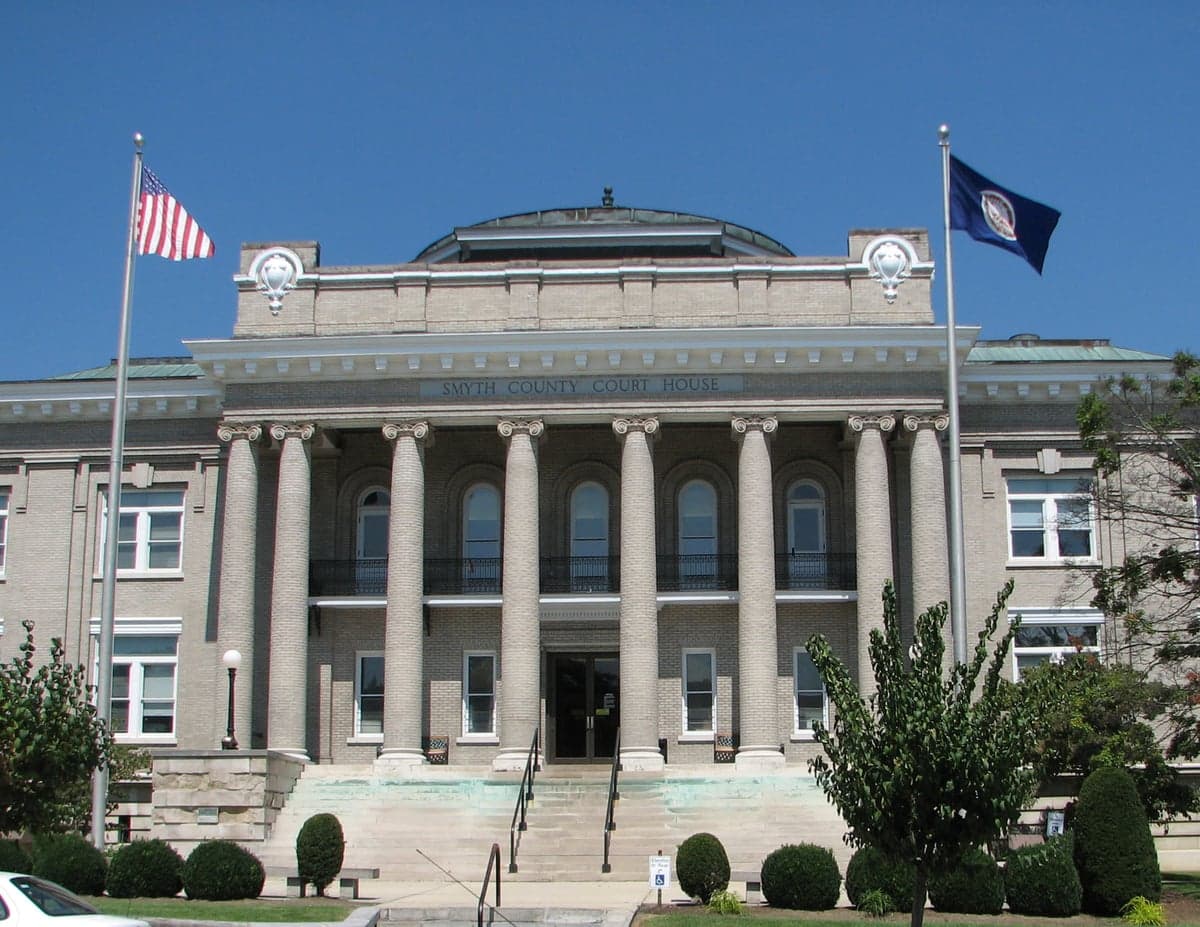
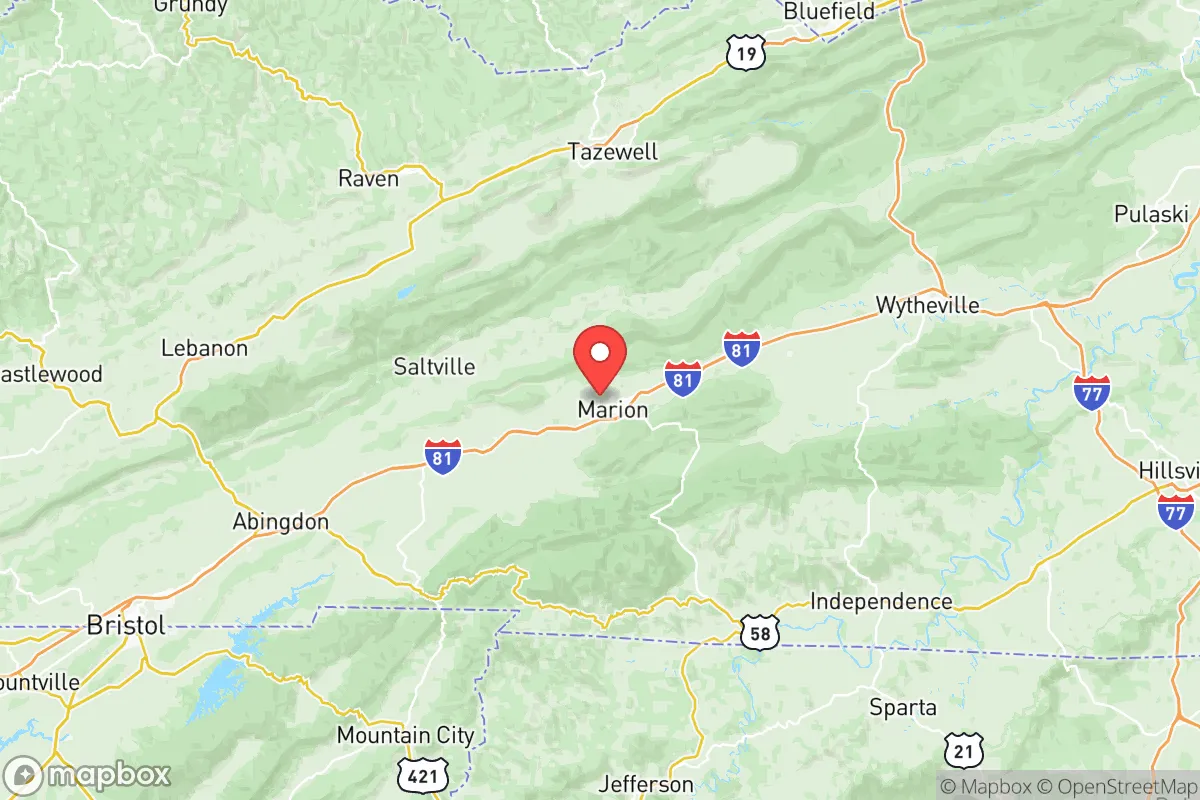
The 29,585 residents of Smyth County, Virginia, form a predominantly white, native-born population with a strong Appalachian cultural identity rooted in centuries of Scots-Irish and German settlement. With a foreign-born share of just 1.3% and a population that is 93.7% white, the county remains one of the least ethnically diverse in Southwest Virginia. Its people are concentrated in the towns of Marion (the county seat), Chilhowie, and Saltville, and the county's character is defined by its rural, family-oriented communities, a legacy of manufacturing and mining, and a slower pace of life that appeals to those seeking an affordable, low-crime environment away from urban centers.
Settlement & growth (pre-1960)
Long before European settlers arrived, the area now known as Smyth County was part of the vast hunting grounds of the Cherokee and Shawnee nations. These Native peoples used the Great Indian Warpath, which ran through the region, for travel and trade. The first European explorers were likely German and Scots-Irish frontiersmen pushing westward from the Tidewater region in the mid-1700s, following the Great Wagon Road through the Shenandoah Valley. By the 1760s, permanent settlements began to appear along the Middle Fork of the Holston River, particularly in what would become Marion and Chilhowie.
The county was officially formed in 1832 from parts of Washington and Wythe counties, named after General Alexander Smyth, a Virginia politician and War of 1812 officer. The primary draw for early settlers was the fertile bottomlands of the Holston River valley and the abundant timber and game of the surrounding Blue Ridge and Iron Mountains. The Scots-Irish, who made up the largest share of these early arrivals, were drawn by the promise of cheap land and religious freedom, establishing a pattern of subsistence farming and small-scale livestock raising. German settlers, though fewer in number, also arrived, bringing with them skills in metalworking and milling that would later prove valuable.
The discovery of salt in the 1790s transformed the region. Saltville, just north of the county line (and later part of Smyth County), became a critical industrial center during the Civil War, producing salt essential for preserving food for the Confederate army. This industry drew a wave of laborers, including a small number of enslaved African Americans who worked in the saltworks. After the war, the salt industry continued to attract workers, and the town of Saltville grew into a company town dominated by the Mathieson Alkali Works. Meanwhile, the arrival of the Norfolk and Western Railway in the late 19th century opened up the county's timber and coal resources, leading to the founding of smaller communities like Adwolf, Atkins, and Seven Mile Ford as railroad stops and supply centers.
Throughout the early 20th century, Smyth County's economy diversified into furniture manufacturing, textiles, and food processing. The town of Marion became the commercial and governmental hub, while Chilhowie developed as a manufacturing center, home to a major Burlington Industries textile plant that employed hundreds. This period saw a modest influx of workers from other parts of Appalachia, but the county's population remained overwhelmingly native-born and white. The African American population, never large, declined further after the Great Migration, as many left for industrial jobs in the North. By 1960, Smyth County's population was approximately 25,000, with a character firmly rooted in its Scots-Irish and German heritage, a strong Protestant work ethic, and a conservative social outlook.
Modern era (post-1965)
The 1965 Hart-Cellar Act, which dramatically reshaped U.S. immigration patterns, had virtually no impact on Smyth County. The county's foreign-born population remains at just 1.3%, one of the lowest rates in Virginia. Unlike many parts of the country that saw waves of immigration from Latin America, Asia, and the Indian subcontinent, Smyth County has remained a demographic outlier. The Hispanic population is only 2.0%, and the East/Southeast Asian population is a mere 0.3%. There is no measurable Indian subcontinent population. This lack of diversity is a direct result of the county's rural location, limited economic opportunities compared to urban centers, and the absence of established ethnic enclaves that might attract new immigrants.
The post-1965 period has been defined not by immigration but by domestic out-migration and economic restructuring. The decline of the U.S. furniture and textile industries hit Smyth County hard. The closure of the Burlington Industries plant in Chilhowie in the 1990s, along with the downsizing of other manufacturing facilities, led to significant job losses and population decline. Young adults, in particular, have left for college and career opportunities in the larger cities of the Roanoke Valley, the Tri-Cities (Bristol, Johnson City, Kingsport), and the Charlotte metro area. This out-migration has contributed to an aging population and a slight overall population decrease from a peak of around 33,000 in the 1980s to the current 29,585.
Suburbanization within the county has been modest but noticeable. The unincorporated areas around Marion, particularly along the I-81 corridor, have seen some new residential development, as have the outskirts of Chilhowie. However, this growth has been slow and has not fundamentally altered the county's rural character. The population remains concentrated in the three main towns—Marion, Chilhowie, and Saltville—with the rest spread across small crossroads communities and family farms. The county's racial composition has remained remarkably stable, with the white population holding steady at over 93% and the Black population at 2.0%.
The future
Demographic projections for Smyth County suggest continued stability rather than dramatic change. The county is not expected to become significantly more diverse in the near future. The low foreign-born share and the lack of major immigrant-attracting industries mean that the Hispanic and Asian populations are likely to remain small, though they may grow incrementally as some workers are drawn to the region's lower cost of living and jobs in healthcare, logistics, and the growing outdoor recreation sector. The county's population is projected to remain flat or decline slightly, as out-migration of young adults continues to offset any in-migration of retirees or remote workers.
One emerging trend is the slow but steady arrival of domestic migrants from higher-cost areas in Northern Virginia, the Washington D.C. metro area, and the Northeast. These new residents, often retirees or remote workers, are drawn by the county's low housing costs, natural beauty, and slower pace of life. They tend to settle in the more scenic areas around Marion and along the Middle Fork of the Holston River, as well as in the rural areas near Saltville. This in-migration is modest in scale but could gradually shift the county's cultural and political dynamics, introducing more diverse perspectives while still preserving its core Appalachian identity.
The county's cultural identity is likely to remain rooted in its Scots-Irish and German heritage, with a strong emphasis on family, faith, and self-reliance. The growing interest in outdoor recreation—hiking, fishing, and hunting in the Jefferson National Forest and along the Virginia Creeper Trail—may attract a new wave of residents who value the natural environment. However, the county's economic challenges, including a low college attainment rate (18.1%) and a limited job market, will continue to shape its demographic future. Without a significant economic catalyst, Smyth County is likely to remain a predominantly white, rural, and aging community for the foreseeable future.
For someone moving in now, Smyth County offers a stable, affordable, and safe environment with a strong sense of community and deep historical roots. It is a place where the past is still very much present, and where the pace of change is slow. New residents will find a welcoming but insular population, a landscape of rolling hills and small towns, and a way of life that prizes tradition and neighborliness. The county is not becoming more diverse or dynamic, but for those seeking a quiet, family-oriented life in the Appalachian highlands, it remains a compelling choice.

* Values derived from national, state, county, city and local statistics and may differ in a specific area. Last updated: 2026-11-05T03:08:38.000Z
Narrative content on this page is AI-generated and may contain mistakes. Verify any details that matter before acting on them.
ReloMaps may earn a commission from affiliate links at no extra cost to you.

