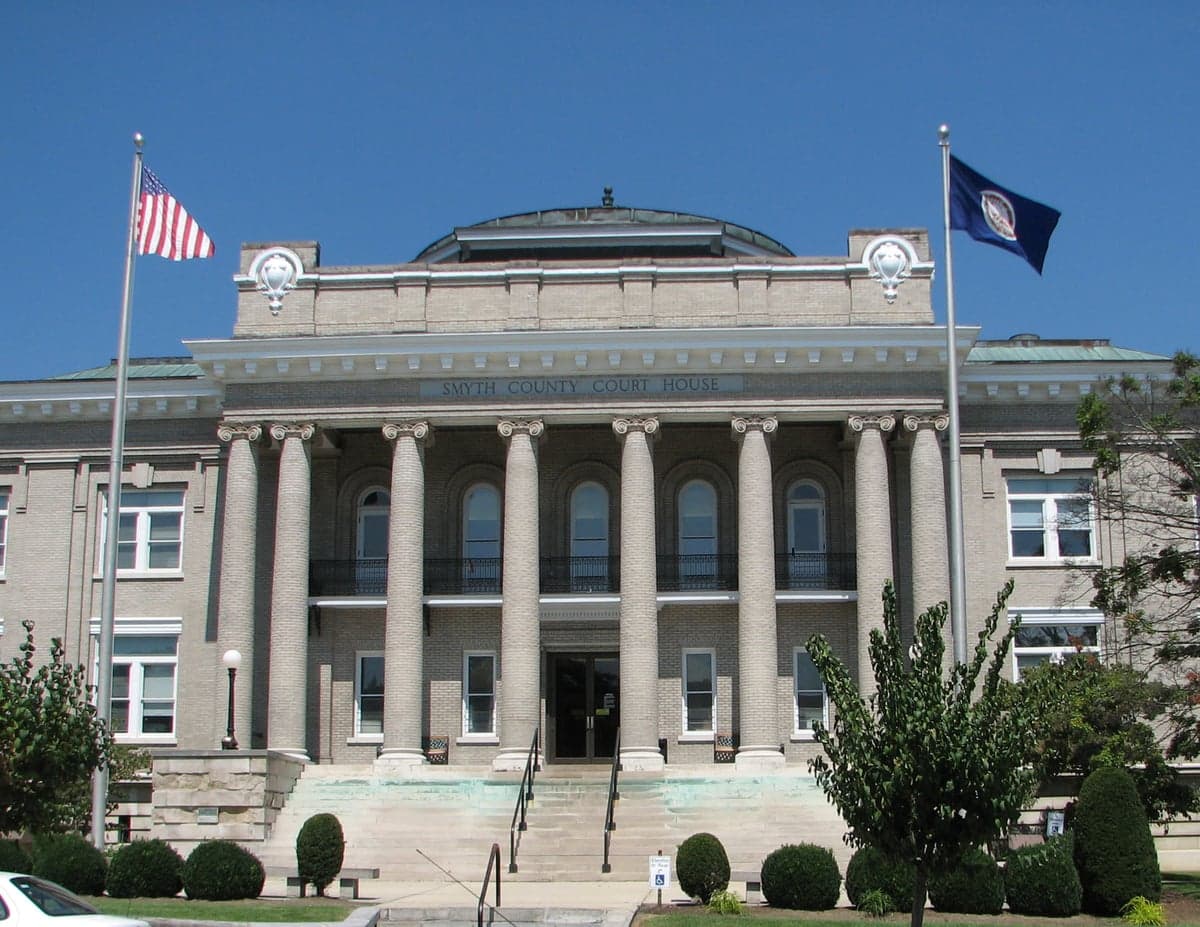
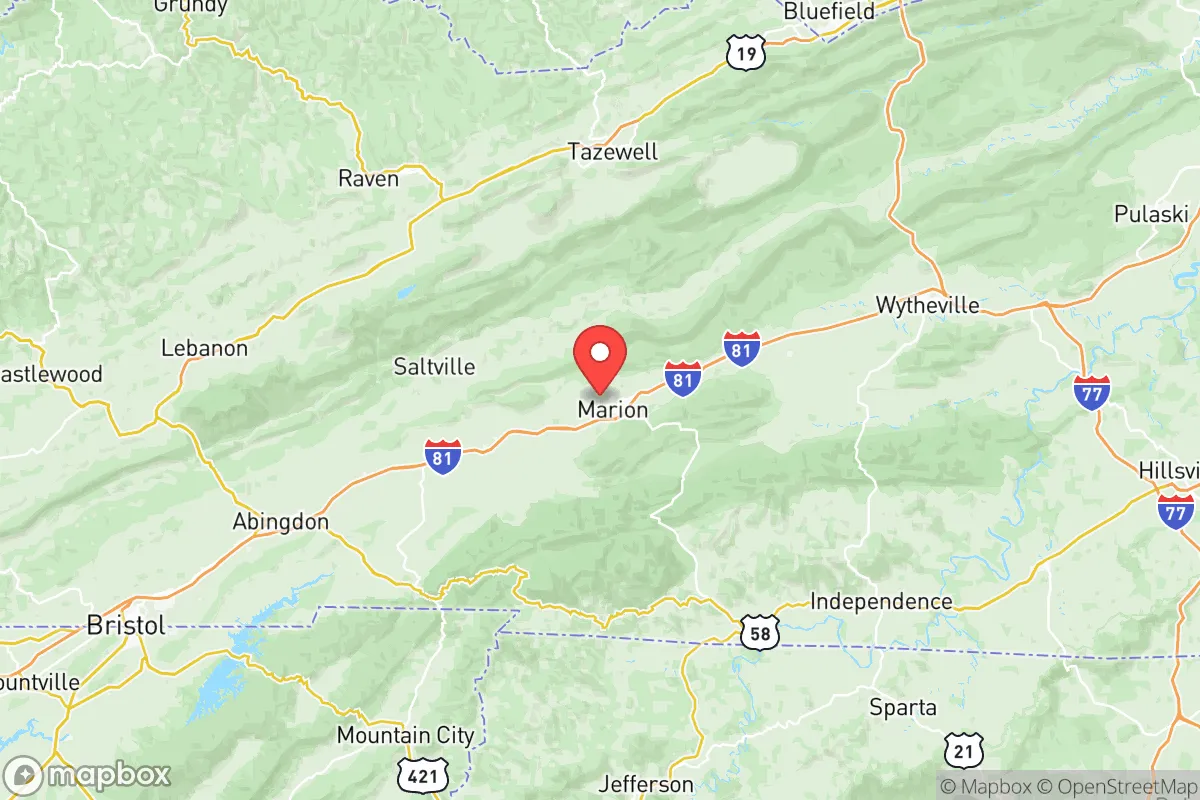
Photo: Wikipedia
Personal Sovereignty in Smyth County
Viable for self-reliance. Generally workable, though some barriers may limit total independence.
What does Personal Sovereignty tell us?
Personal Sovereignty measures your capacity for self-reliance and independence with minimal government friction. Higher scores mean fewer barriers between you and the way you want to live... but it assumes you have the space you need and good neighbors.
What does this tell us?
Personal Sovereignty measures your capacity for self-reliance and independence with minimal government friction. Higher scores mean fewer barriers between you and the way you want to live... but it assumes you have the space you need and good neighbors.
State Policy
Energy independence: Importer (32% of energy produced in-state)
Personal Liberty
Homesteading

Personal Liberty Analysis
Smyth County, Virginia, offers a notably high degree of personal sovereignty, rooted in a combination of low state-level tax burdens, permissive self-defense laws, and a regulatory environment that generally favors individual autonomy over government oversight. Located in the southwestern part of the state, the county’s culture and legal landscape are shaped by a rural, self-reliant ethos that stands in contrast to the more restrictive policies found in Northern Virginia and the Richmond metro area. For individuals and families prioritizing personal freedom, Smyth County presents an environment where the state’s constitutional framework—including a right-to-work law, a strong Second Amendment guarantee, and limited local government interference—creates a foundation for significant personal autonomy.
Tax burden and regulatory posture in Smyth County
Virginia’s overall tax burden is moderate compared to other states, but Smyth County benefits from the state’s relatively low personal income tax rate (a flat 5.75% on taxable income) and a sales tax rate of 5.3% (state plus local), which is below the national average. Property taxes in Smyth County are among the lowest in the state, with a real estate tax rate of approximately $0.50 per $100 of assessed value in 2025, significantly less than the statewide average of around $0.80. This low rate directly reduces the cost of land ownership, a key factor for those seeking self-sufficiency. The county’s regulatory posture is light-touch: there is no county-wide zoning in unincorporated areas, meaning residents in places like Chilhowie, Saltville, and Marion (the county seat) can often build structures, operate small businesses, or keep livestock without the layers of permitting common in more urbanized jurisdictions. However, the towns themselves—Marion, Saltville, and Chilhowie—do have their own zoning ordinances, so anyone planning to live within town limits should verify specific setback and use rules. The county also lacks a local business license tax for many small home-based operations, further reducing bureaucratic friction. Virginia’s right-to-work law, enshrined in the state constitution, means union membership cannot be a condition of employment, which aligns with the area’s preference for individual employment contracts.
Self-defense and gun law specifics in Smyth County
Virginia is a shall-issue state for concealed handgun permits, and Smyth County’s circuit court processes applications efficiently, typically within 45 days. The state does not require a permit to openly carry a firearm, and the county’s sheriff’s office has a reputation for being supportive of Second Amendment rights. In 2024, Virginia’s General Assembly passed a law allowing permitless concealed carry for adults 21 and older, effective July 1, 2025, which further expands personal sovereignty in self-defense. The state also has a Castle Doctrine law, meaning there is no duty to retreat in one’s home or vehicle when facing an imminent threat. Stand Your Ground protections apply outside the home as well, provided the individual is lawfully present. Smyth County’s rural character means that gun ownership is widespread and culturally normalized; in towns like Adwolf and Atkins, it is common to see firearms in vehicles or on private property without incident. The county has no local ordinances restricting firearm possession beyond state law, and the sheriff’s office does not engage in proactive enforcement of state-level magazine capacity limits (which are currently 10 rounds for long guns, though enforcement is lax in rural areas). For those moving from states with more restrictive gun laws, Smyth County offers a legal environment where self-defense choices are largely left to the individual.
Self-reliance and homesteading viability in Smyth County
Homesteading and off-grid living are highly viable in Smyth County, particularly in unincorporated areas where zoning is minimal. Minimum lot sizes in the county’s agricultural and rural districts are typically 1 to 3 acres, but many parcels of 5 to 20 acres are available at prices well below the national median—often $3,000 to $6,000 per acre in 2025. Places like Seven Mile Ford and Rural Retreat offer large tracts of land with few restrictions on building methods, including the use of alternative construction like earthbags, straw bale, or tiny homes, as long as they meet the Virginia Uniform Statewide Building Code (which applies to all habitable structures). Off-grid water is straightforward: the county allows private wells, and rainwater collection is legal without a permit. Solar panels are permitted without special county approval, and net metering is available through Appalachian Power, the dominant utility, though the process requires a standard interconnection agreement. Septic systems require a permit from the Virginia Department of Health, but the county’s soil conditions are generally favorable for conventional drain fields. Composting toilets are allowed if they meet state health code standards. The county does not have a county-wide noise ordinance, so generators, woodworking, or livestock (including chickens, goats, and cattle) are typically unrestricted outside town limits. For those seeking maximum self-reliance, the area around Groseclose and Rich Valley offers the most freedom, with very low population density and minimal county oversight.
Personal liberties in Smyth County: parental rights, medical autonomy, and property
Virginia law generally respects parental rights in education and healthcare decisions. The state allows parents to homeschool under a simple notice requirement (no teacher certification needed), and Smyth County Public Schools does not have a reputation for aggressive enforcement of truancy or curriculum oversight. Medical autonomy is supported by Virginia’s broad scope of practice for naturopathic and chiropractic care, though the state does require licensure for most healthcare providers. The county has no local mandates regarding vaccine status for adults, and the state’s emergency powers were curtailed by the General Assembly in 2023, limiting the governor’s ability to impose prolonged public health restrictions without legislative approval. Property rights are strong: Virginia is a “pure” fee simple state, meaning there are no state-level restrictions on land use beyond environmental regulations (e.g., wetland protections under the Chesapeake Bay Preservation Act, which does not apply to Smyth County as it lies outside the Bay watershed). The county does not have a transfer tax on real estate sales, and there is no county-level property tax on vehicles or business inventory. Speech is protected under the First Amendment, and Smyth County has no local hate speech or “bias incident” ordinances that could chill expression. The county’s small population (roughly 30,000) means that community norms, rather than formal regulations, often govern social interactions, but the legal framework leaves individuals with wide latitude to live according to their own values.
Overall, Smyth County ranks among the most sovereignty-friendly areas in Virginia for those seeking low taxes, minimal regulation, and strong personal liberties. Compared to the heavily regulated environments of Northern Virginia or the increasingly restrictive policies in cities like Richmond and Charlottesville, Smyth County offers a legal and cultural landscape where self-reliance is not just tolerated but expected. The combination of low property taxes, permissive gun laws, viable off-grid living, and respect for parental and property rights makes it a strong candidate for individuals and families who prioritize personal freedom over government-provided services. For those willing to accept the trade-offs of rural life—limited public transit, fewer healthcare specialists, and a slower pace—Smyth County provides a foundation for genuine autonomy.

* Values derived from national, state, county, city and local statistics and may differ in a specific area. Last updated: 2026-11-05T03:08:38.000Z
Narrative content on this page is AI-generated and may contain mistakes. Verify any details that matter before acting on them.
ReloMaps may earn a commission from affiliate links at no extra cost to you.

