
Photo by Lukas Souza on Unsplash
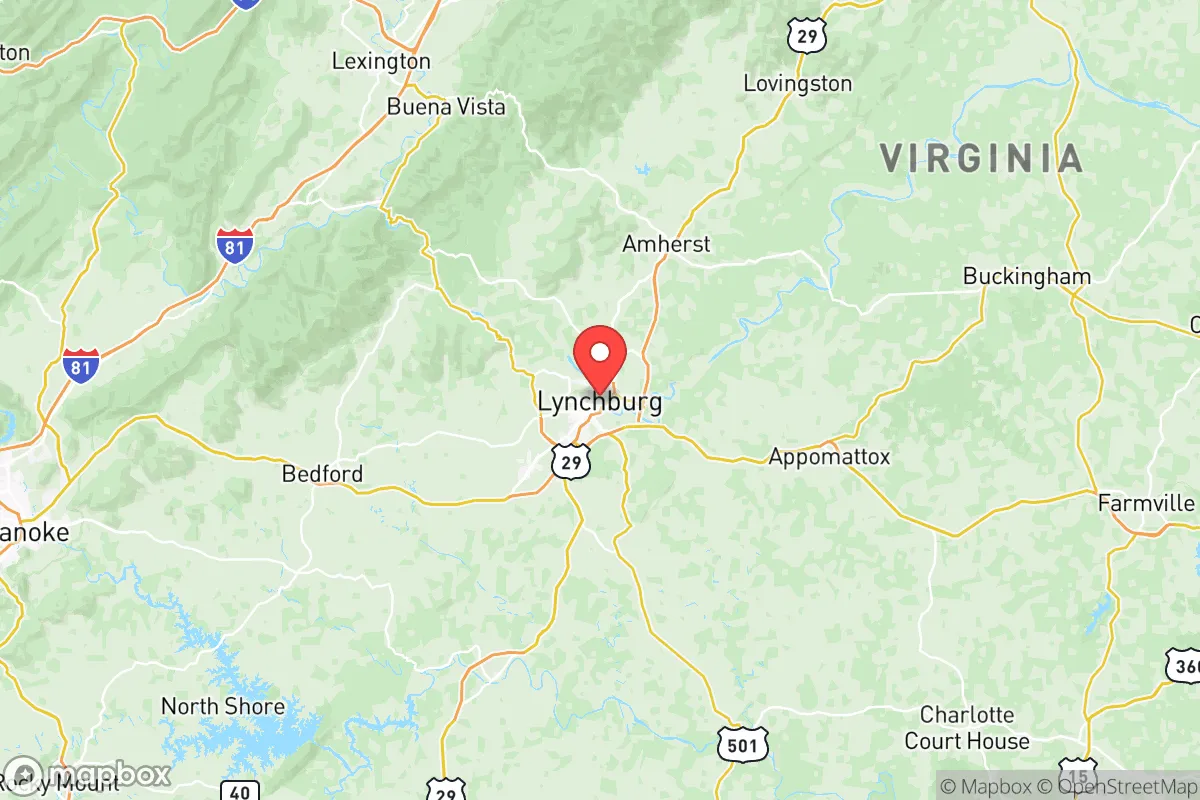
Strategic Assessment of Lynchburg City County
Meaningful friction. Expect exposure to either population pressure, blast zones, or natural disaster risk. Consider buying a retreat property.
What does the Strategic Assessment tell us?
Our Strategic Assessment grades tactical survivability of an area. Major population centers, military targets, fallout zones, natural disasters, and border exposure all drive risk — lower exposure means a more defensible position in a crisis.
This is heavily inspired by Joel Skousen's Strategic Relocation book. Highly recommended you checkout the book ($)What does this tell us?
Our Strategic Assessment grades tactical survivability of an area. Major population centers, military targets, fallout zones, natural disasters, and border exposure all drive risk — lower exposure means a more defensible position in a crisis.
This is heavily inspired by Joel Skousen's Strategic Relocation book. Highly recommended you checkout the book ($)Strategic Pillars

Key Distances
Strategic Assessment Analysis
Lynchburg City County, Virginia, offers a compelling strategic position for relocators prioritizing resilience and self-sufficiency, combining the advantages of a mid-sized urban center with proximity to significant rural buffer zones. Nestled in the foothills of the Blue Ridge Mountains along the James River, the area benefits from a diversified economy anchored by education, healthcare, and manufacturing, which provides a stable foundation less vulnerable to the boom-and-bust cycles of single-industry towns. For those assessing long-term security, Lynchburg’s location—roughly 180 miles southwest of Washington, D.C., and 110 miles west of Richmond—places it outside the immediate blast and fallout zones of major East Coast population centers while still offering access to regional infrastructure and supply chains.
Geographic position and natural advantages for long-term security
Lynchburg’s geography is a primary asset for resilience planning. The city sits on the southern edge of the Shenandoah Valley, with the Blue Ridge Parkway and the Appalachian Trail running within 20 miles to the west, providing natural barriers and escape routes into sparsely populated national forest land. The James River, which flows through the city, offers a reliable freshwater source, though its industrial history means careful site selection for well water is advisable. The surrounding terrain—rolling hills and valleys—creates natural defensibility, with numerous choke points along major routes like U.S. 29 and U.S. 460 that could be secured in a grid-down scenario. The area’s elevation, averaging around 700 feet, reduces flood risk compared to coastal Virginia, though low-lying neighborhoods near the river, such as those in the College Hill and Diamond Hill districts, have experienced periodic flooding during heavy rain events. The moderate climate supports year-round agriculture, with a growing season of roughly 180 days, making small-scale food production viable for prepared households.
Risks, exposures, and proximity to fallout-relevant landmarks
While Lynchburg avoids the highest-risk zones, several factors warrant consideration. The city is within 50 miles of two nuclear power plants: the North Anna Generating Station (45 miles northeast, in Louisa County) and the Surry Power Station (80 miles southeast). A major incident at either facility could place Lynchburg in a downwind plume path depending on weather patterns, though prevailing winds typically carry fallout eastward toward the coast. More immediately, Lynchburg is home to the BWX Technologies plant, a major nuclear components manufacturer that fabricates reactor cores for the U.S. Navy’s submarine and aircraft carrier fleet. This facility, located on the south bank of the James River, is a potential target for both state and non-state actors, and its presence means the city has a higher baseline risk profile than comparably sized inland towns. Additionally, the city lies within 100 miles of Fort Barfoot (formerly Fort Pickett, 70 miles southeast), a Virginia Army National Guard training base that could become a staging area during national emergencies, potentially drawing military traffic and logistical disruptions. For relocators concerned about electromagnetic pulse (EMP) effects, Lynchburg’s distance from major grid nodes offers some protection, but the city’s power infrastructure is still connected to the PJM Interconnection grid, which serves 65 million people from the Mid-Atlantic to the Midwest.
Practical resilience for a relocator: food, water, energy, and defensibility
For those serious about self-sufficiency, Lynchburg County presents a mixed picture. Water access is a clear strength: the James River provides a year-round surface water source, and the city’s municipal water system draws from the river with treatment plants capable of serving the population under normal conditions. However, households should plan for filtration and storage, as the river carries agricultural runoff and industrial residue from upstream operations. The surrounding counties—Amherst, Bedford, and Campbell—offer abundant rural land for well drilling, with typical depths of 150–300 feet yielding reliable groundwater in most areas. Food production potential is solid: the region has a strong farming tradition, with local farmers’ markets in Lynchburg and nearby Forest providing access to fresh produce, meat, and dairy. For off-grid food security, the area’s soil quality varies—clay-heavy in the valleys, loamier on the slopes—but raised-bed gardening and greenhouse cultivation are practical for most properties. The energy landscape is favorable: Lynchburg is served by Appalachian Power, a subsidiary of American Electric Power, which maintains a relatively reliable grid compared to coastal regions. Solar potential is moderate, with the region receiving about 200 sunny days per year, and net metering policies in Virginia allow homeowners to offset consumption. For backup power, wood heating is viable given the surrounding forestland, though air quality regulations in the city limit outdoor burning. Defensibility is a standout feature: the city’s layout, with the James River forming a natural southern boundary and the Blue Ridge Mountains to the west, creates a bowl-like geography that can be monitored from elevated positions in the Peaks of Otter and the surrounding ridges. Rural properties in Bedford County, just west of Lynchburg, offer the best combination of seclusion, water access, and defensible terrain, with many parcels backing onto national forest land that provides a buffer against encroachment.
Overall, Lynchburg City County rates as a strong but not exceptional choice for the resilience-minded relocator. Its primary advantages are geographic: distance from major metropolitan targets, reliable water from the James River, and defensible terrain with multiple egress routes into the Appalachian backcountry. The presence of the BWX Technologies plant is a genuine risk factor that cannot be ignored, but it is a known and manageable hazard for those who plan accordingly—unlike the diffuse threats of a major city. For families and individuals who want a functioning small city with hospitals, schools, and supply chains, but who also value the ability to retreat to a rural property within 30 minutes, Lynchburg offers a realistic balance. The key trade-off is between access to amenities and exposure to infrastructure vulnerabilities; those willing to live 15–20 minutes outside the city limits, in areas like Forest or Goode, can largely mitigate the risks while retaining the benefits. For the strategic relocator, Lynchburg is a solid B+—not a bug-out paradise, but a viable long-term base with room to grow food, store supplies, and build community.

* Values derived from national, state, county, city and local statistics and may differ in a specific area. Last updated: 2026-06-15T20:40:40.000Z
Narrative content on this page is AI-generated and may contain mistakes. Verify any details that matter before acting on them.
ReloMaps may earn a commission from affiliate links at no extra cost to you.

