
Photo by Lukas Souza on Unsplash
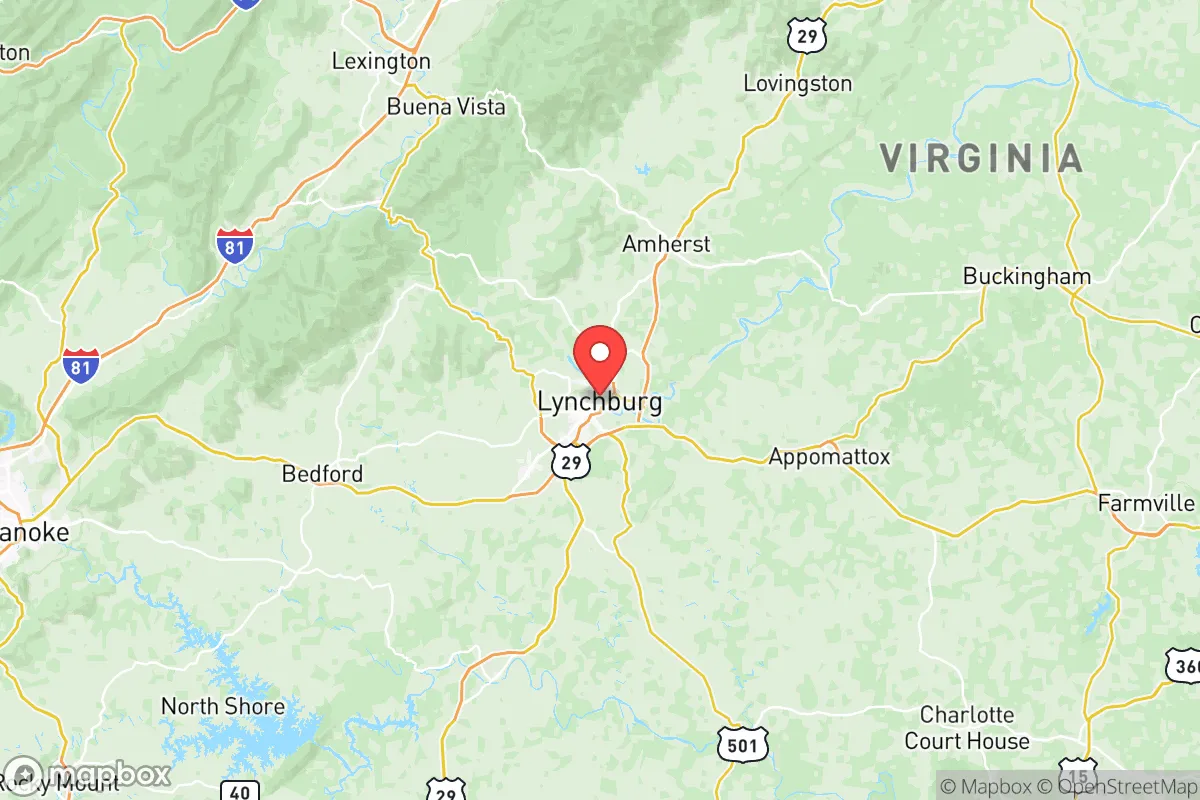
Personal Sovereignty in Lynchburg City County
Viable for self-reliance. Generally workable, though some barriers may limit total independence.
What does Personal Sovereignty tell us?
Personal Sovereignty measures your capacity for self-reliance and independence with minimal government friction. Higher scores mean fewer barriers between you and the way you want to live... but it assumes you have the space you need and good neighbors.
What does this tell us?
Personal Sovereignty measures your capacity for self-reliance and independence with minimal government friction. Higher scores mean fewer barriers between you and the way you want to live... but it assumes you have the space you need and good neighbors.
State Policy
Energy independence: Importer (20% of energy produced in-state)
Personal Liberty
Homesteading

Personal Liberty Analysis
Lynchburg City County, Virginia, offers a notably high degree of personal sovereignty compared to many urban centers in the Mid-Atlantic, particularly for those who prioritize fiscal conservatism, self-defense rights, and a lighter regulatory touch. As an independent city, Lynchburg operates its own government and school system, but its political culture is deeply influenced by the surrounding, more rural counties like Bedford and Campbell. The result is an environment where individual autonomy is generally respected, though it operates within the framework of a state that has become more competitive politically in recent years. For a relocation-minded individual or family seeking a balance of personal freedom and community stability, Lynchburg presents a compelling, if nuanced, option.
Tax burden and regulatory posture in Lynchburg City County
Lynchburg’s tax burden is moderate relative to the national average, but it is notably lighter than in Northern Virginia or the Richmond metro area. The city levies a real estate tax rate of $1.11 per $100 of assessed value, which is competitive for an independent city in the state. There is no city-level income tax; residents pay Virginia’s state income tax, which has a top marginal rate of 5.75%. The regulatory posture in Lynchburg is generally business-friendly, with a streamlined permitting process for residential construction and renovations. However, the city’s zoning code is more structured than in unincorporated areas of Bedford County, where property owners in places like Forest or Goode often face fewer restrictions on home-based businesses and accessory structures. For a family looking to operate a small workshop or run a side business from home, the city limits of Lynchburg are workable, but the surrounding county jurisdictions offer a noticeably lighter touch.
Self-defense and gun law specifics in central Virginia
Virginia is a "shall-issue" state for concealed handgun permits, and Lynchburg’s local circuit court processes applications efficiently, typically within the 45-day statutory window. The city itself is home to a strong gun culture, with multiple indoor and outdoor shooting ranges, including the Lynchburg Shooting Range and the Bedford Gun Club just outside the city. Open carry is legal for anyone 18 or older who can legally possess a firearm, and there are no local ordinances in Lynchburg that restrict magazine capacity or ban specific firearm types. The state preempts local gun laws, meaning the city council cannot pass stricter regulations than state law allows. This is a critical point of stability for Second Amendment advocates. For those living in the more rural parts of the county, such as Rustburg or Madison Heights, discharging a firearm on private property is generally permissible, provided it is done safely and not within 100 yards of a occupied dwelling without permission.
Self-reliance and homesteading viability in Lynchburg and surrounding areas
True off-grid living is more feasible in the unincorporated areas surrounding Lynchburg than within the city limits. Inside the city, minimum lot sizes are typically around 6,000 to 10,000 square feet in residential zones, which limits the space for substantial gardening, livestock, or rainwater catchment systems. However, in areas like Forest and Goode, zoning allows for agricultural uses on parcels as small as one to two acres, and many properties there already feature chicken coops, small orchards, and personal wells. The city’s building code requires connection to municipal water and sewer where available, which can be a barrier for those seeking full independence. For a family serious about homesteading, the best strategy is to look at properties just outside the city limits in Bedford or Campbell counties, where regulations on composting toilets, solar panel installation, and rainwater collection are far more permissive. The local climate supports a long growing season, and the Lynchburg Community Market provides a ready outlet for selling surplus produce.
Personal liberties in Lynchburg: parental rights, medical autonomy, and property
Lynchburg’s political and cultural climate strongly supports parental rights in education. The city’s school board has maintained a policy of transparency regarding curriculum materials, and there is active community involvement in school board meetings. Medical autonomy is a more complex issue; Virginia does not have a state-level religious or philosophical exemption to vaccine mandates for school attendance, though Lynchburg’s conservative population has pushed back against mandates in practice. Property rights are well-protected, with no rent control and a relatively low rate of eminent domain usage. The city’s zoning board of appeals is known for granting variances for fence heights, home occupations, and accessory dwelling units when the request is reasonable. For speech and assembly, Lynchburg is a stronghold of free expression, with a vibrant conservative media presence and a history of peaceful public demonstrations on both sides of the political aisle. The presence of Liberty University reinforces a culture that values individual conscience and limited government intervention in personal decisions.
Overall, Lynchburg City County offers a level of personal sovereignty that is significantly higher than in Northern Virginia or the Tidewater region, and it compares favorably to many mid-sized cities in the Southeast. The regulatory environment is moderate but predictable, the gun culture is robust and legally protected, and the surrounding rural areas provide genuine opportunities for self-reliant living. For a family or individual who values personal freedom and is willing to navigate the balance between city services and county-level autonomy, Lynchburg stands out as a practical and principled choice in the Commonwealth.

* Values derived from national, state, county, city and local statistics and may differ in a specific area. Last updated: 2026-06-15T20:40:40.000Z
Narrative content on this page is AI-generated and may contain mistakes. Verify any details that matter before acting on them.
ReloMaps may earn a commission from affiliate links at no extra cost to you.

