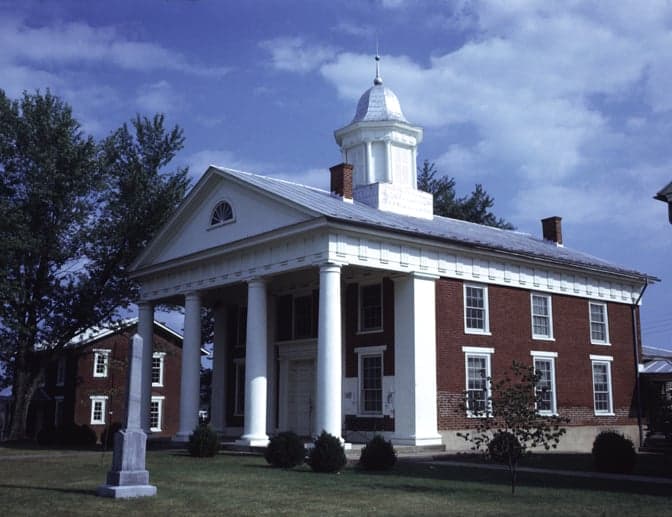
Photo: Wikipedia
Quality of Life in Greene County
A livable area that tracks near national norms for affordability, walkability, and neighborhood health.
What does Quality of Life tell us?
Quality of Life measures an area by evaluating factors like cost of living, nearby amenities, country club access, airport proximity, socioeconomic signals and neighborhood character. For large states, this is a general average — quality of life can vary dramatically between metro areas, suburbs, and rural communities within the same state.
What does this tell us?
Quality of Life measures an area by evaluating factors like cost of living, nearby amenities, country club access, airport proximity, socioeconomic signals and neighborhood character. For large states, this is a general average — quality of life can vary dramatically between metro areas, suburbs, and rural communities within the same state.
Cost of Living
22% above national average
95%
The Real Cost of Living in Greene County for 2026
| Tier | Individual | Family (4) |
|---|---|---|
| Survival | $24k | $45k |
| Comfortable | $61k | $90k |
| Luxury | $143k+ | $222k+ |
| Elite (Top 5%) | $168k+ | $261k+ |
Quality-of-Life Analysis
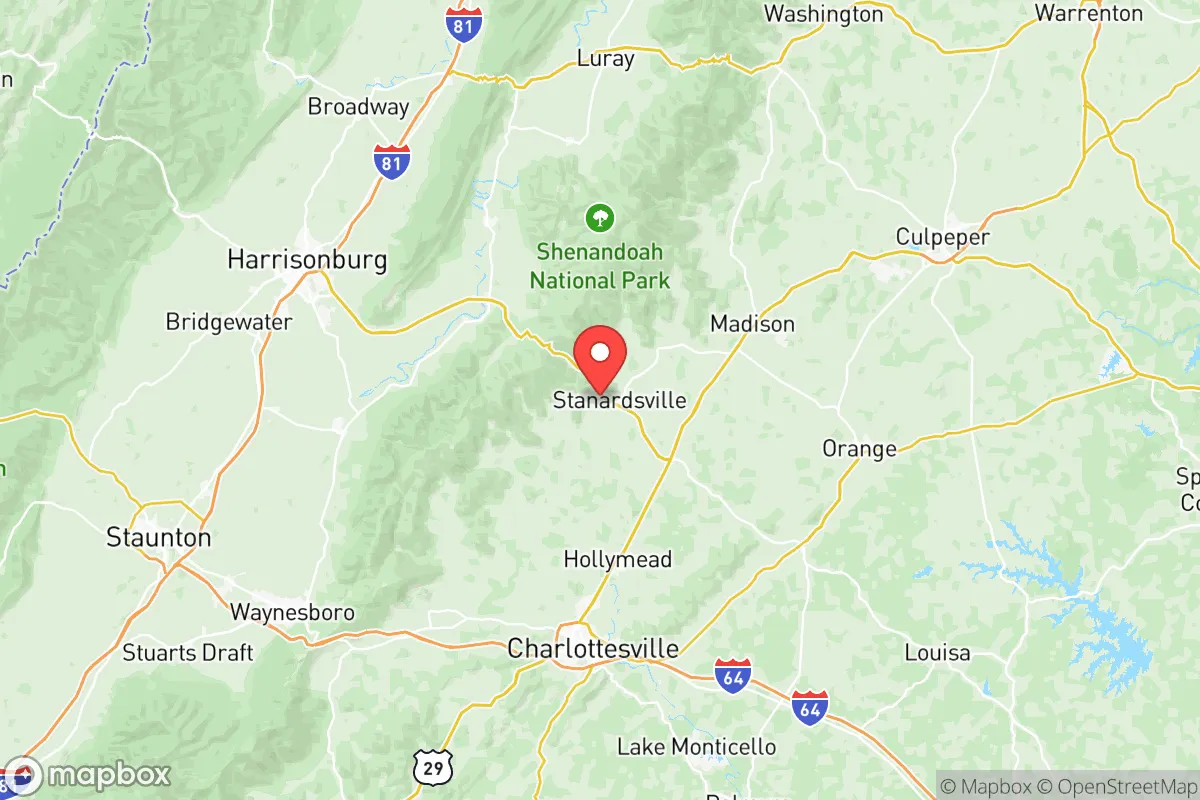
Greene County, Virginia, offers a genuine spectrum of living environments, from the walkable historic core of its only incorporated town to deep-rural hollows and mountain-side subdivisions, drawing everyone from University of Virginia employees and remote tech workers to farmers and retirees seeking land. The county’s character shifts noticeably within a 15-minute drive: the compact, service-oriented hub of Stanardsville contrasts with the unincorporated crossroads of Ruckersville and the quiet, forested pockets near the Shenandoah National Park boundary. This range means a resident’s daily experience—commute length, social scene, and housing type—depends heavily on which of these distinct zones they choose.
Largest town(s) & population centers
Stanardsville is the county seat and the only incorporated town, with a population around 2,300. Daily life here centers on a walkable Main Street with a historic courthouse, local restaurants like the Lightwell Gallery & Café, and community events such as the Greene County Farmers Market. Housing is a mix of older single-family homes on tree-lined streets and newer subdivisions on the town’s fringe. Ruckersville, an unincorporated community along US-29, functions as the county’s commercial spine, with big-box retail, grocery stores, and fast-food chains that serve commuters heading south to Charlottesville (20 minutes) or north to Culpeper. Ruckersville has no real town center; life there is car-dependent and oriented around strip plazas, making it the most convenient but least picturesque option in the county.
Smaller towns & rural pockets
Beyond the two main nodes, Greene County is defined by its unincorporated communities and rural crossroads. Quinque, a tiny settlement near the Rapidan River, is a cluster of homes and farmland with no commercial services—residents drive 10–15 minutes to Stanardsville or Ruckersville for supplies. Amicus, further south, is little more than a named intersection with scattered houses and deep woods. The western edge of the county, along the Swift Run Gap area and the base of the Blue Ridge Mountains, contains large-lot subdivisions and hobby farms popular with retirees and second-home owners who value mountain views and privacy. These pockets have no sidewalks, streetlights, or public water; life is quiet, dark, and self-reliant.
Cost & lifestyle range
The county’s overall cost of living index of 122 (22% above the US average) masks a wide internal spread. At the high end, newer subdivisions in the Ruckersville area and near Stanardsville’s outskirts see median home values around $315,300, with some mountain-view properties exceeding $500,000. These areas attract professionals willing to pay a premium for a short commute to Charlottesville (the average county commute is 31.6 minutes) while avoiding city home prices. At the low end, older homes in Quinque and along rural routes like Dyke Road can be found for under $200,000, though they often need significant work. Median rent of $1,502 is concentrated in Ruckersville’s apartment complexes; rental options are scarce in the rest of the county. Property taxes are moderate (Greene County’s rate is about $0.68 per $100 of assessed value), but residents in unincorporated areas pay for private well and septic maintenance, adding a hidden cost to the cheaper purchase price.
This county works best for people who want a clear trade-off: proximity to Charlottesville’s jobs and culture without paying Albemarle County prices, but with a willingness to accept longer drives for groceries and fewer dining or entertainment options. Families with school-age children often choose Stanardsville for its elementary school walkability, while remote workers and retirees gravitate toward the mountain-edge properties near Swift Run Gap for space and solitude. Commuters who prioritize a predictable 30-minute drive on US-29 tend to settle in Ruckersville. Greene County does not offer urban amenities or a vibrant nightlife; its appeal lies in the ability to choose between a small-town Main Street, a highway-adjacent convenience zone, or a genuinely rural homestead—all within a single, compact county.

Crime in Greene County
Generally safer than 60% of comparable U.S. locations.
Violent CrimeViolent Crime Analysis
Property CrimeProperty Crime Analysis
Crime Analysis
Greene County, Virginia, presents a mixed safety picture for prospective residents. The county's violent crime rate of 209.8 per 100,000 residents is notably lower than the national average, but its property crime rate of 1,392.4 per 100,000 sits slightly above the national benchmark. This places Greene County in a middle tier for safety within the broader Charlottesville region, where outcomes vary significantly between the county's small towns and unincorporated communities.
Crime in context
When compared to Virginia's statewide violent crime rate of roughly 240 per 100,000, Greene County's 209.8 figure is about 13% lower, a meaningful gap that reflects the county's rural and exurban character. However, the property crime rate of 1,392.4 per 100,000 exceeds the national average of approximately 1,200 per 100,000, driven largely by thefts from vehicles and outbuildings in areas near the county's main transportation corridors. Stanardsville, the county seat and largest town, sees a concentration of these property incidents, particularly along Route 29 and near the county government complex. By contrast, the more remote communities of Ruckersville and Dyke report significantly lower property crime volumes, though their small populations can produce volatile per-capita rates from year to year. The county's location along the Route 29 corridor, which connects Charlottesville to Northern Virginia, contributes to transient property crime, with offenders often targeting vehicles parked at trailheads in Shenandoah National Park access points within the county.
What residents experience
Daily life in Greene County is generally safe, but residents do encounter property crime as the most common public safety issue. The violent crime that does occur is overwhelmingly non-stranger: domestic disputes and acquaintance assaults account for the majority of incidents, meaning random violence against the public is rare. Standard and Quinque, two smaller unincorporated communities, report near-zero violent crime in most years. The county is served by the 16th Judicial Circuit, which covers Greene and surrounding counties. Prosecutorial philosophy in this circuit has remained relatively conservative, with a focus on charging and sentencing that prioritizes victim rights and public safety over progressive diversion programs. This stands in contrast to the approach seen in nearby Charlottesville and Albemarle County, where more liberal district attorneys have implemented policies that critics argue reduce accountability for property and drug offenders. For Greene County residents, the practical effect is that offenders from outside the county who commit crimes locally are more likely to face meaningful consequences, reducing the revolving-door dynamic that plagues more progressive jurisdictions.
Neighborhood-level variation
Safety in Greene County varies more by proximity to major roads than by neighborhood boundaries. Properties along the Route 33 corridor between Stanardsville and the Swift Run Gap entrance to Shenandoah National Park experience higher rates of vehicle break-ins and theft from unsecured sheds. The Greene Highlands area, a newer subdivision near Ruckersville, reports lower property crime due to its limited access and neighborhood watch activity. The county's rural western sections, including areas near Browns Cove, see almost no violent crime but do experience occasional trespassing and theft from hunting camps. Residents in all areas should secure outbuildings and vehicles, as opportunistic theft remains the primary risk. The county sheriff's office maintains a visible presence, with response times under 10 minutes in the Stanardsville area and up to 25 minutes in the most remote western portions of the county.
* Values derived from national, state, county, city and local statistics and may differ in a specific area. Last updated: 2026-09-07T21:40:59.000Z
Narrative content on this page is AI-generated and may contain mistakes. Verify any details that matter before acting on them.
ReloMaps may earn a commission from affiliate links at no extra cost to you.

