Quality of Life in Falls Church City County
A livable area that tracks near national norms for affordability, walkability, and neighborhood health.
What does Quality of Life tell us?
Quality of Life measures an area by evaluating factors like cost of living, nearby amenities, country club access, airport proximity, socioeconomic signals and neighborhood character. For large states, this is a general average — quality of life can vary dramatically between metro areas, suburbs, and rural communities within the same state.
What does this tell us?
Quality of Life measures an area by evaluating factors like cost of living, nearby amenities, country club access, airport proximity, socioeconomic signals and neighborhood character. For large states, this is a general average — quality of life can vary dramatically between metro areas, suburbs, and rural communities within the same state.
Cost of Living
156% above national average
57%
The Real Cost of Living in Falls Church City County for 2026
| Tier | Individual | Family (4) |
|---|---|---|
| Survival | $35k | $66k |
| Comfortable | $184k | $271k |
| Luxury | $270k+ | $419k+ |
| Elite (Top 5%) | $318k+ | $493k+ |
Quality-of-Life Analysis
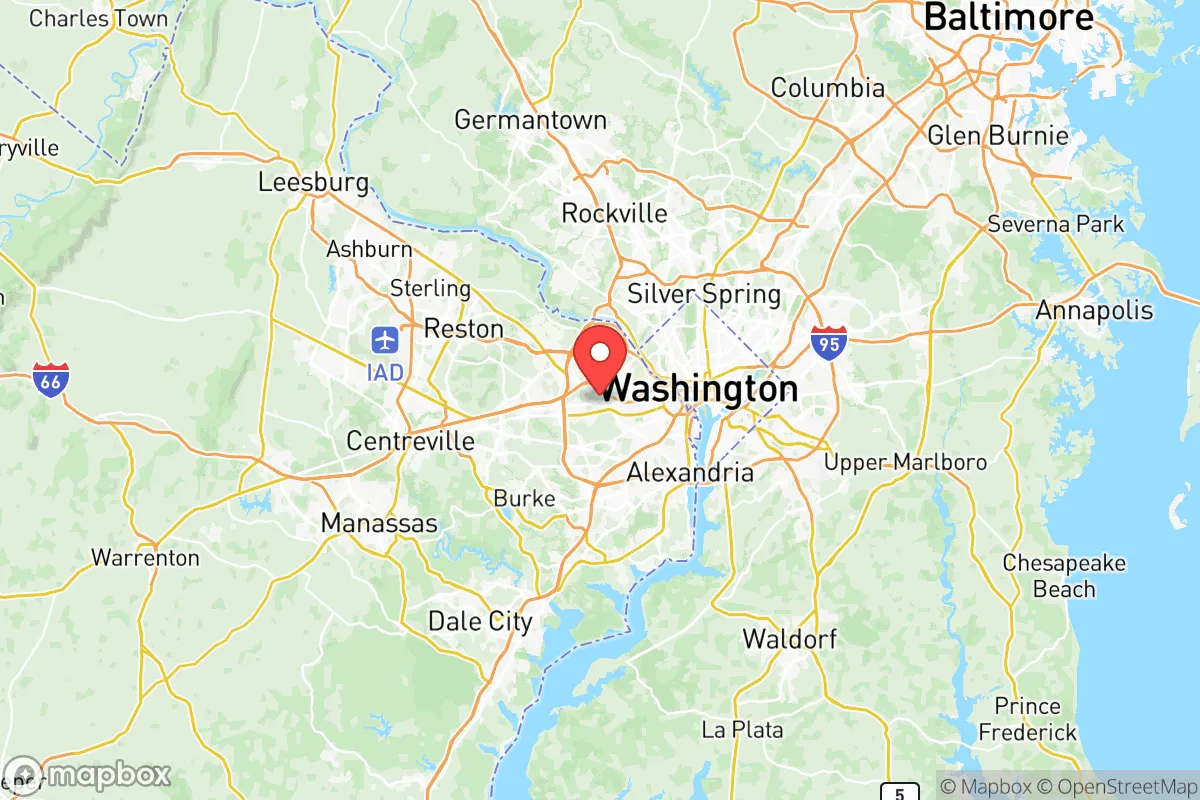
Falls Church City County, Virginia, is a unique jurisdiction in the Washington, D.C. metropolitan area: it is an independent city that functions as its own county, meaning there are no unincorporated rural areas or smaller towns within its 2.2 square miles. The entire county is a single, dense, urbanized population center, making the "range of quality-of-life options" a spectrum of housing types and neighborhood microclimates rather than a geographic spread from town to countryside. Residents are drawn here by the promise of a top-ranked public school system, a walkable small-town feel, and immediate access to the nation's capital, with the trade-off being one of the highest costs of living in the Commonwealth.
Largest town(s) & population centers
The entirety of Falls Church City County is the City of Falls Church itself, a compact community of roughly 14,000 residents. There are no separate towns or villages within the county lines. Daily life here is defined by a highly walkable downtown core along Broad Street (Route 7), anchored by the State Theatre, local restaurants like Clare and Don's Beach Shack, and the Falls Church Farmers Market. The city is bisected by the Washington & Old Dominion (W&OD) Trail, a paved rail-trail that serves as a commuter and recreational artery. Housing is a mix of historic bungalows, post-war Cape Cods, and newer infill townhome developments. The average commute of 27.5 minutes reflects the city's proximity to Arlington, Tysons Corner, and Washington, D.C., though many residents rely on the East Falls Church Metro station (on the Orange and Silver lines) for a car-free commute.
Smaller towns & rural pockets
Because Falls Church City County is an independent city with fixed boundaries, it contains no smaller towns, unincorporated communities, or rural pockets. The entire land area is fully developed, with a density of roughly 6,400 people per square mile. Residents seeking a rural or small-town lifestyle must look to neighboring Fairfax County communities like Great Falls or Clifton, or to Loudoun County's western reaches. Within the city limits, the closest approximation to a "quiet pocket" is the area around Cherry Hill Park and the Falls Church Episcopal Church historic district, where tree-lined streets and larger lots offer a more suburban feel, but this is still within a dense urban grid.
Cost & lifestyle range
The cost of living in Falls Church City County is extreme, with a composite index of 256 (more than 2.5 times the national average). The median home value of $1,005,400 and median rent of $2,205 place it among the most expensive jurisdictions in Virginia. However, there is a meaningful range within the city. The most affordable entry points are typically older garden-style apartments and condos near the Seven Corners border area (where Falls Church meets Fairfax County) and smaller post-war ramblers in the West End neighborhood. At the high end, single-family homes in the Broadmont and Lake Barcroft neighborhoods (the latter technically in Fairfax County but often associated with Falls Church) command prices well above the city median, often exceeding $1.5 million. The lifestyle range is correspondingly narrow: nearly all residents share the same walkable core, the same school district (Falls Church City Public Schools, consistently ranked among Virginia's top 5), and the same commute patterns. The primary variable is housing type—whether one lives in a historic home, a new townhouse, or a rental apartment.
This county is best suited for professionals and families who prioritize elite public education and a walkable urban village lifestyle above all else, and who have the financial resources to afford one of the most expensive housing markets in the Mid-Atlantic. It is not a place for those seeking rural acreage, suburban sprawl, or a low cost of living. The trade-off is clear: extreme density and high prices in exchange for a top-tier school system, a zero-minute commute to the W&OD Trail, and a Metro ride to downtown D.C. in under 30 minutes.

Crime in Falls Church City County
Generally safer than 60% of comparable U.S. locations.
Violent CrimeViolent Crime Analysis
Property CrimeProperty Crime Analysis
Crime Analysis
Falls Church City County, an independent city in Northern Virginia, reports a violent crime rate of 209 incidents per 100,000 residents and a property crime rate of 1,389.4 per 100,000. These figures place the city in a complex safety landscape: while its violent crime rate is notably lower than nearby jurisdictions like Alexandria or Arlington, it sits above the safest suburbs in the region. The property crime rate, driven largely by thefts from vehicles and package thefts, is a more pressing concern for residents, particularly in areas with higher foot traffic and commercial density.
Crime in context
Falls Church City’s violent crime rate of 209 per 100K is roughly 40% lower than the national average of approximately 370 per 100K and significantly below the Virginia state average of about 240 per 100K. However, it is higher than neighboring Fairfax County’s rate of roughly 150 per 100K, reflecting the city’s denser, more urban character. The property crime rate of 1,389.4 per 100K is below the national average of 1,954 per 100K but above Fairfax County’s rate of approximately 1,100 per 100K. The city’s location near the intersection of major commuter routes (I-66, Route 7, and Route 29) contributes to transient property crime, as opportunistic thefts from vehicles parked at Metro stations or shopping centers are common. The progressive judicial philosophy prevalent in Northern Virginia’s courts, including the 19th Judicial Circuit which covers Falls Church, has led to concerns among residents about lenient sentencing for repeat property offenders. This approach, while intended to reduce incarceration rates, has resulted in a perception that criminals face minimal consequences for non-violent offenses, potentially emboldening property crime rings that operate across the D.C. suburbs.
What residents experience
Daily life in Falls Church City is generally safe, with most violent crime being non-random and occurring between acquaintances. The city’s police department, which employs about 40 sworn officers, maintains a visible presence in the downtown area along Broad Street and in the residential neighborhoods surrounding the city’s two elementary schools. Residents report that package thefts and vehicle break-ins are the most common nuisances, particularly in the areas near the East Falls Church Metro station and along the Washington & Old Dominion Trail. The city’s proximity to Arlington and Washington D.C. means that some property crime is committed by individuals traveling from those jurisdictions, where progressive district attorneys have implemented policies that reduce prosecution of low-level thefts. In Falls Church City itself, the neighborhoods west of Washington Street and south of Route 7 tend to experience fewer incidents, while the commercial corridors near the intersection of Broad Street and Washington Street see higher rates of shoplifting and vehicle-related thefts. The city’s small size—just 2.2 square miles—means that crime patterns shift quickly, and no neighborhood is entirely insulated from the regional property crime trends.
Neighborhood-level variation in Falls Church City is less pronounced than in larger jurisdictions, but some patterns emerge. The area around the Falls Church City Public Schools campus (including George Mason High School and Mary Ellen Henderson Middle School) is considered one of the safest, with low incident reports and strong neighborhood watch participation. Conversely, the commercial district along Broad Street near the Falls Church City line with Arlington sees more frequent property crimes, particularly thefts from vehicles parked at the Harris Teeter and other retail locations. The city’s proximity to the progressive prosecutorial policies of Arlington County and Alexandria—where district attorneys have implemented cash bail reform and declined to prosecute certain property crimes—creates a spillover effect, as offenders from those areas target Falls Church City’s relatively affluent neighborhoods. Residents in the Lake Barcroft area and the neighborhoods near the Falls Church Volunteer Fire Department station report feeling safe walking at night, but caution that locking vehicles and securing packages is essential to avoid becoming a victim of opportunity-based crime. The city’s independent police force works closely with the Fairfax County Police Department on regional crime initiatives, but the lack of a unified regional approach to prosecution remains a concern for residents who want to see stronger consequences for repeat offenders.
* Values derived from national, state, county, city and local statistics and may differ in a specific area. Last updated: 2026-06-17T22:01:31.000Z
Narrative content on this page is AI-generated and may contain mistakes. Verify any details that matter before acting on them.
ReloMaps may earn a commission from affiliate links at no extra cost to you.

