Political ClimatePolitical Climate in Falls Church City County
Showing district-level results — no local-only data available.
Local Political AnalysisPolitical Analysis of Falls Church City County
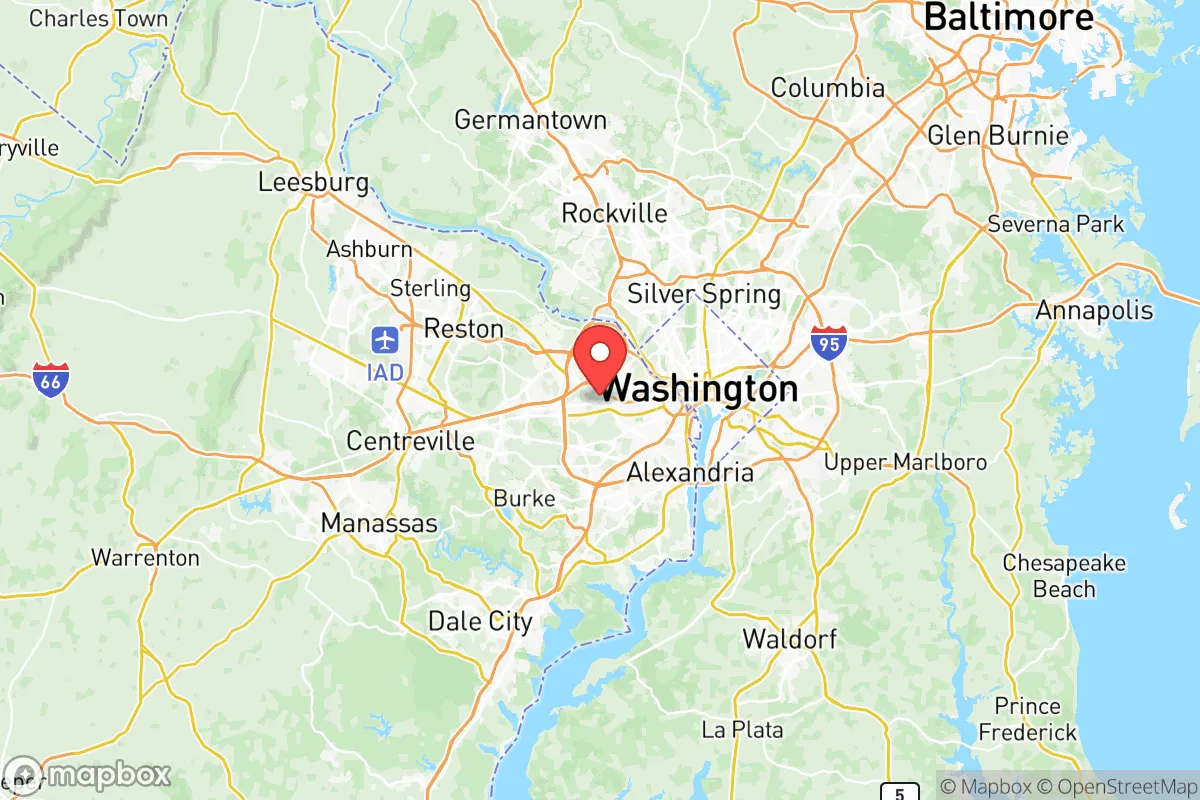
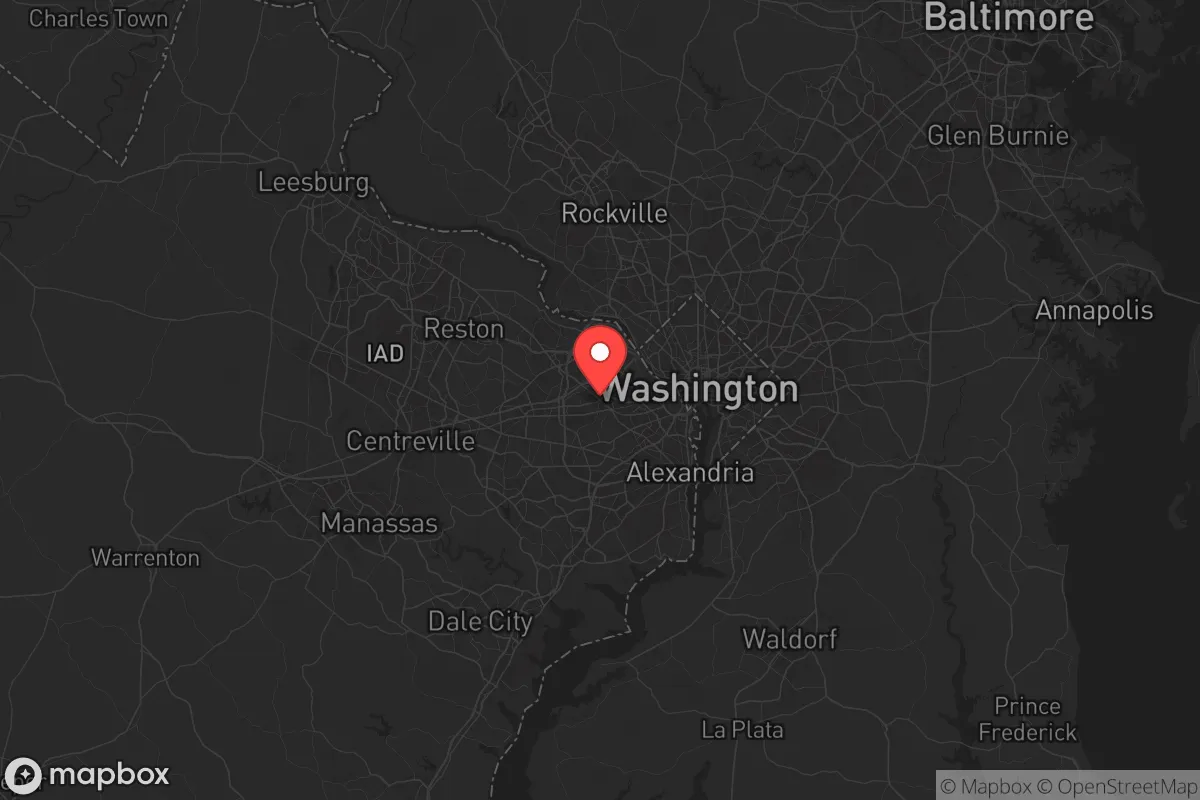
Falls Church City County is one of the most reliably Democratic jurisdictions in Virginia, with a Cook Partisan Voting Index (PVI) of D+26, meaning it votes about 26 points more Democratic than the national average. This is a dramatic contrast to the state of Virginia as a whole, which sits at D+4, reflecting a much more competitive and purple political landscape. The city has been trending blue for decades, but the shift has accelerated sharply since 2016, driven by an influx of highly educated professionals and families working in the D.C. metro area. In the 2024 presidential election, Falls Church delivered over 75% of its vote to the Democratic candidate, while Virginia overall was decided by a much narrower margin.
How it compares
Falls Church City County is politically distinct from nearly every other jurisdiction in Virginia. While the state as a whole is a lean-Democratic swing state, Falls Church is a deep-blue enclave more comparable to Arlington or Alexandria than to the rest of the Commonwealth. Within the city itself, there is very little political variation—the entire county is essentially one precinct, and it votes overwhelmingly blue. There are no towns or neighborhoods within Falls Church City County that lean red; the closest conservative-leaning areas are in neighboring Fairfax County, such as the Clifton area or parts of western Fairfax. The contrast with Virginia's rural and exurban regions is stark: places like Franklin County or the Shenandoah Valley vote Republican by margins similar to Falls Church's Democratic margins. The D+22 gap between Falls Church and the state average is one of the largest in Virginia, underscoring how the city functions as an outlier in an otherwise competitive state.
What this means for residents
For liberal residents, Falls Church offers a political environment where their views are the clear majority, and local policy reflects that—strong public school funding, progressive land-use policies, and a focus on sustainability. Conservative residents, however, are a small minority, and they often find themselves out of step with local governance. There are no Republican elected officials at the city level, and conservative viewpoints are rarely represented in public discourse. This can create a sense of isolation for right-leaning residents, though many appreciate the city's high-quality services and low crime rates regardless of political alignment. The practical effect is that local elections are effectively decided in the Democratic primary, and general elections are largely ceremonial. For families moving to the area, the political climate is a major consideration: those who prioritize progressive policies will find a welcoming home, while those seeking a more balanced political environment may prefer nearby areas like Loudoun County or parts of Fairfax County where the electorate is more evenly split.
Culturally, Falls Church's deep-blue politics translate into a community that values inclusivity, environmentalism, and education. The city was an early adopter of renewable energy goals and has a robust network of community organizations focused on social justice. One notable policy distinction is the city's independent school system, which is among the highest-rated in Virginia and benefits from the local tax base—a reflection of the community's willingness to fund public services. For newcomers, the political climate is less about partisan conflict and more about a shared civic ethos, though that consensus can feel exclusionary to those with different views. Looking ahead, Falls Church is likely to remain a Democratic stronghold, with its PVI potentially deepening as the D.C. suburbs continue to grow and diversify. The city's trajectory mirrors that of other inner-ring suburbs nationwide, where education and income levels correlate strongly with Democratic voting patterns.

State Political ClimatePolitical Climate in Virginia
State Political AnalysisPolitical Environment in the State
Virginia has shifted from a reliably conservative Southern state to a competitive but Democratic-leaning commonwealth, with a Cook Partisan Voting Index of D+4. Over the last 10-20 years, the transformation has been driven almost entirely by explosive growth in the Washington, D.C. suburbs, particularly in Northern Virginia, which now dominates state elections and pulls the entire state leftward. While the rest of the state—especially the Shenandoah Valley, Southside, and Southwest Virginia—remains deeply Republican, the population weight of the D.C. exurbs has made Virginia a state where Democrats control the governorship, both chambers of the legislature (as of 2024), and the presidential vote, but where statewide races are still decided by razor-thin margins in a handful of suburban swing precincts.
Urban vs. rural divide
The political map of Virginia is a textbook case of the urban-rural split. The Democratic coalition is anchored by the densely populated crescent from Arlington and Alexandria through Fairfax County and down to Richmond and Norfolk. Northern Virginia alone accounts for roughly one-third of the state's vote, and it delivers margins of 60-70% for Democrats. Richmond and Hampton Roads add another layer of blue. In contrast, rural and exurban areas—Roanoke, Lynchburg, the Shenandoah Valley, and the coal country of far Southwest Virginia—vote Republican by equally lopsided margins. The key battleground is the suburban ring around Richmond and the exurban counties of Loudoun and Prince William, which have flipped from red to blue over the past two decades. Loudoun County, once a Republican stronghold, now votes Democratic by double digits, driven by an influx of highly educated, white-collar professionals who commute to D.C.
Policy environment
Virginia's policy environment reflects its purple-to-blue status. The state has a relatively moderate tax burden—income tax rates range from 2% to 5.75%, and the sales tax is 5.3% (higher in some localities). Property taxes are set at the local level and vary widely; Northern Virginia's rates are among the highest in the state. The regulatory posture is business-friendly in many respects, with a right-to-work law on the books and a strong technology and defense sector. Education policy has been a flashpoint: the state has seen heated debates over school funding, transgender student policies, and critical race theory, with the Democratic-controlled legislature passing laws that expand LGBTQ+ protections in schools while Republican localities have pushed back with parental rights resolutions. Healthcare policy leans left: Virginia expanded Medicaid under the Affordable Care Act in 2018, and the state has some of the strongest abortion protections in the South, with no gestational limit on abortion access. Election laws are moderately accessible: Virginia has no-excuse absentee voting, early voting in person, and same-day voter registration, but also requires a photo ID to vote.
Recent policy direction
Over the past five years, Virginia has moved decisively left on several fronts. In 2020, the Democratic-controlled legislature passed the Virginia Clean Economy Act, mandating a transition to 100% carbon-free electricity by 2050. Gun laws have tightened significantly: the state now requires universal background checks, a one-handgun-per-month limit, and a "red flag" law allowing temporary seizure of firearms from individuals deemed a threat. In 2021, Virginia legalized simple possession of marijuana for adults 21 and over, though a regulated retail market has been slow to materialize. On education, the state repealed its ban on "sanctuary cities" for immigration and passed laws prohibiting discrimination based on sexual orientation and gender identity in housing and employment. On the other hand, Republican Governor Glenn Youngkin, elected in 2021, managed to push through a repeal of the state's grocery tax and signed a bill expanding school choice through lab schools and charter schools. The state has also seen a fierce battle over parental rights in education, with Youngkin issuing executive orders on "parental notification" policies that have been challenged in court. On voting, the state has expanded access, but a 2024 law requiring citizenship verification for voter registration has drawn controversy. For a relocator weighing liberties, the picture is mixed: gun rights have been curtailed, but marijuana is legal; taxes are moderate but rising in high-growth areas; and the state offers strong protections for bodily autonomy while also maintaining a right-to-work labor environment.
Civil unrest & political movements
Virginia has been a flashpoint for political movements on both sides. The 2017 Unite the Right rally in Charlottesville and the subsequent violence put the state on the national map for far-right activism and anti-fascist counter-protests. Since then, the state has seen organized conservative movements around parental rights in schools, with groups like the Virginia Parents Union staging large rallies at the state capitol. On the left, the 2020 racial justice protests in Richmond led to the removal of Confederate statues on Monument Avenue and a broader reckoning with the state's Confederate heritage. Immigration politics are less visible than in border states, but Northern Virginia's sanctuary policies have been a recurring issue, with some localities limiting cooperation with federal immigration enforcement. Election integrity has been a persistent controversy: after the 2020 election, Virginia Republicans pushed for a forensic audit of voting machines, though no widespread fraud was found. The state's political climate is generally civil in day-to-day life, but the divide between the D.C. suburbs and the rest of the state is palpable, and a new resident will quickly notice the cultural and political gulf between, say, Arlington and Abingdon.
Projection
Over the next 5-10 years, Virginia is likely to continue its slow drift leftward, driven by ongoing population growth in Northern Virginia and the Richmond suburbs. The state's in-migration is heavily skewed toward educated, younger, and more diverse populations who lean Democratic. However, the pace of change may slow as the state reaches a new equilibrium: the rural and exurban areas are not shrinking fast enough to become irrelevant, and the Democratic coalition's internal tensions—between moderates and progressives, and between the D.C. suburbs and the rest of the state—could create openings for Republican candidates who can appeal to swing voters on economic and education issues. The 2025 gubernatorial election will be a key test: if a Democrat wins, it will confirm the state's blue trajectory; if a Republican wins, it will show that the state remains genuinely competitive. For someone moving in now, expect a state where the political environment will continue to be shaped by the D.C. exurbs, where taxes and regulations will likely trend upward, and where cultural battles over education and individual liberties will remain front and center.
For a new resident, the bottom line is that Virginia offers a politically diverse environment where your experience will depend heavily on where you live. If you settle in Northern Virginia or Richmond, you'll find a blue, progressive, and highly educated community with strong public services and high costs. If you choose the Shenandoah Valley or Southwest Virginia, you'll find a red, culturally conservative, and more affordable lifestyle. The state government will lean left for the foreseeable future, but local control is strong, and many conservative-leaning counties have passed resolutions asserting their autonomy on issues like gun rights and parental involvement in schools. If you're a conservative looking for a state where your vote will reliably count in statewide elections, Virginia is not that—but if you're willing to engage in the political process, your vote will matter more here than in a deep red or deep blue state. For liberals, Virginia offers a comfortable and increasingly progressive environment, but one where the political fight is never fully settled.
* Values derived from national, state, county, city and local statistics and may differ in a specific area. Last updated: 2026-06-17T22:01:31.000Z
Narrative content on this page is AI-generated and may contain mistakes. Verify any details that matter before acting on them.
ReloMaps may earn a commission from affiliate links at no extra cost to you.

